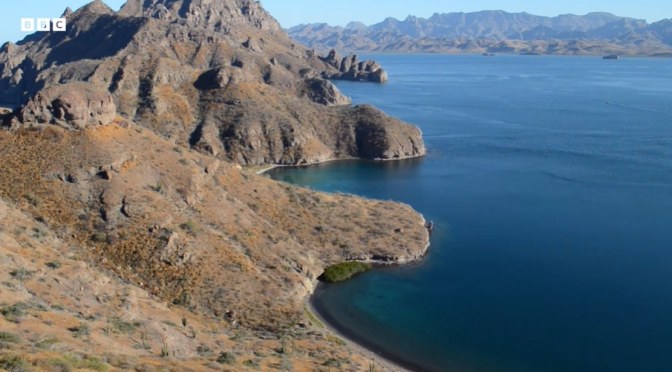
BBC Earth (January 7, 2024) – Journey to the coastal deserts of Baja California to witness marine turtles laying their eggs and dolphins gliding through the ocean.
It is the only desert in the world surrounded by two seas, a geologically isolated peninsula sets the stage for a myriad of remarkable plants and animals exemplifying adaptations to an isolated and arid environment. The Baja California Desert is the peninsular arm of the mainland Sonoran Desert, and although closely related to each other, they contain dramatically different evolutionary histories.
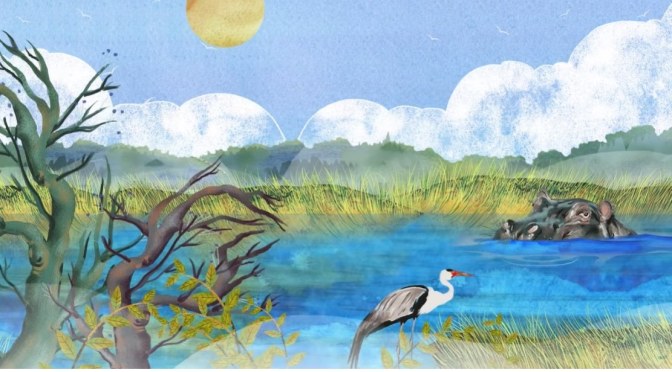
National Geographic (December 18, 2023) – As the rivers of the Okavango Basin pump life into an otherwise dry African region, a team of researchers and local communities, supported by the Okavango Eternal partnership, follow the flow every year to determine how we can preserve these vital water systems.
National Geographic (November 14, 2023) – Dominica: The Nature Island (2023) follows the National Geographic Pristine Seas team as they partner with local leadership to conduct the first full-island survey of the marine ecosystems around the island.
The scientific results from the international team’s weeks of work will help inform the Dominican government and its people in their resilience planning to ensure their marine environment’s irreplaceable assets continue to sustain the well-being of many generations of Dominicans.
After the harrowing experiences of Hurricane Maria in 2017, Dominica committed to transforming the island into the world’s first climate resilient nation.
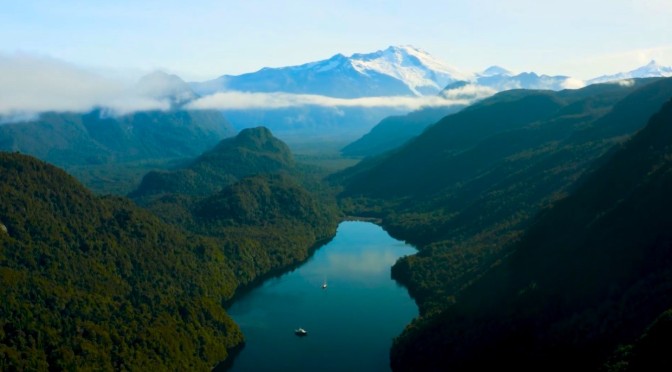
SeaLegacy Films (October 16, 2023) – At the foot of the iconic mountain peaks of Chilean Patagonia, just below the blue surface of the sea, lies a biodiverse and pristine kelp forest. In this episode of “Sea of Hope,” Mission Blue ocean policy expert Max Bello and Chilean Environment Minister Maisa Rojas join the SeaLegacy team to explore how wonderful and spectacular this unique ecosystem is. in the world.
Abundant and diverse life forms find their home in the world’s longest continuous kelp forest, just off the coast, in a region home to hundreds of fjords and more than 40,000 islands and islets. Join our co-founder Andy Mann as he embarks with the exploration team on an adventure to discover the treasures of Chilean Patagonia and evaluate the health of this productive and wild ecosystem. Discover the natural neon colors, the huge stems of kelp, some of the marine characters that inhabit the area, and the impressive carbon capture abilities of the underwater forests!
Natural World Facts Films (June 17, 2023) – Explore the wonders of the deep ocean as you’ve never seen them before. This is a collaborative film series with Schmidt Ocean Institute, using their extensive library of 4K footage from an array of deep sea ecosystems.
Below are the episodes in order (subject to change):
1 – The Twilight Zone
2 – The Midnight Zone
3 – The Abyssal Plain
4 – Seamounts and Canyons
5 – Hydrothermal Vents
Schmidt Ocean Institute is a non-profit oceanographic research foundation that has been pioneering deep-sea research and discovery since 2009, on board their old vessel RV Falkor and their brand new RV Falkor (too), the most advanced marine research vessels in the world.
Their remotely operated vehicle (ROV) SuBastian is equipped with a suite of sensors and a 4K camera that has illuminated the depths and live-streamed dives around the world. All footage shown is filmed and provided by Schmidt Ocean Institute.
SeaLegacy (May 26, 2023) – Five years after its protection, Mexico’s Revillagigedo National Park bounds with a resurgence of life– welcoming back the region’s incredible native species, like the endangered giant manta ray. Co-founder Cristina Mittermeier and marine scientist Frida Lara explore what’s possible when we give aquatic life space to recover and thrive.
The pair greet a giant manta as an old friend, as it flips, flies, and glides through the water. The curious creature holds great symbolic significance and plays a vital ecological role within the ocean and all the marine life impacted by its sheer presence. The bounty and diversity of life Cristina captures within Revillagigedo National Park prove that protecting our marine ecosystems is the solution to saving our ocean.
Only brightened by the endangered giant manta’s presence, this region’s achievements act as a guiding light of hope for conservation worldwide.
DW Documentary (May 19, 2023) – Human pollution is increasing worldwide. The overexploitation of nature is endangering biodiversity and plastics and chemicals are destroying many of humanity’s nature-based livelihoods.
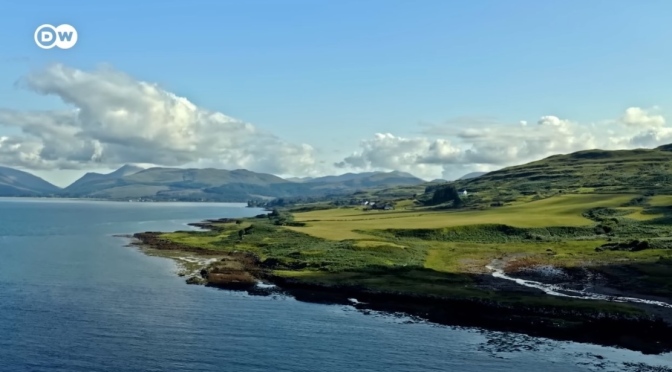
But there is hope. The UK is not exactly known for its stringent environmental policy and following Brexit, many fear that standards are likely to deteriorate. But the UK is also home to coastal regions and islands characterized by wild beauty — and breathtaking diversity. The documentary takes us through some of the most remote landscapes of the country, from the Shetland Islands to Cornwall, the Hebrides and many other areas.
In each location, the film shows the amazing biodiversity of fauna and flora present. The Pembrokeshire Coast National Park in Wales is known for large breeding colonies of many seabird species. Few people live on the Hebrides, located off Scotland. These wild islands are still a natural paradise of rocks, sand and moor. As such, they are biotopes for exotic species such as puffins and guillemots.
In this cinematic journey to the most beautiful natural sites in Britain, viewers meet the people who are trying to protect species threatened by extinction by preserving their habitats. It is a story of hope, one that indicates that a change in people’s thinking is taking place.
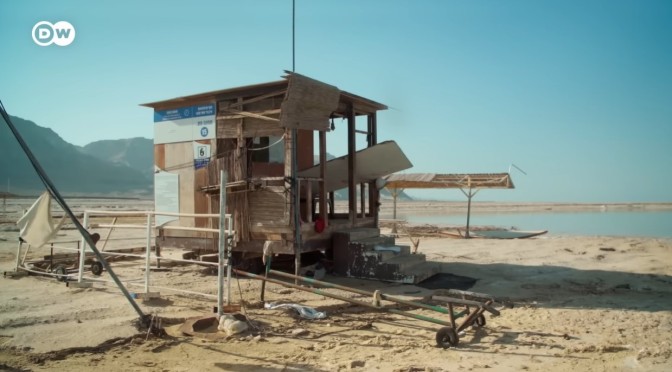
DW Documentary (May 1, 2023) – The Dead Sea, shared by Israelis, Jordanians and Palestinians, is drying up. The salt lake, famous for its exceptional geographical location and its healing properties, is the deepest of its kind on earth.
The drying up of the Dead Sea is causing widespread damage, from huge sinkholes to abandoned beaches and collapsed roads. This is not an act of nature. It is the result of overconsumption and poor water management. If something is not done soon, very little of the Dead Sea will remain. In a region marked by ongoing conflict, natural resources are being depleted. To save the Dead Sea, surrounding countries must work together.
Three individuals — a Jordanian, an Israeli and a Palestinian — feel they can’t just sit idly by. They decide to draw the world’s attention to the problem with a heroic act. In an unprecedented and extremely dangerous undertaking, the three decide to swim across the Dead Sea, from Jordan to Israel, to highlight the plight of the dying waters.
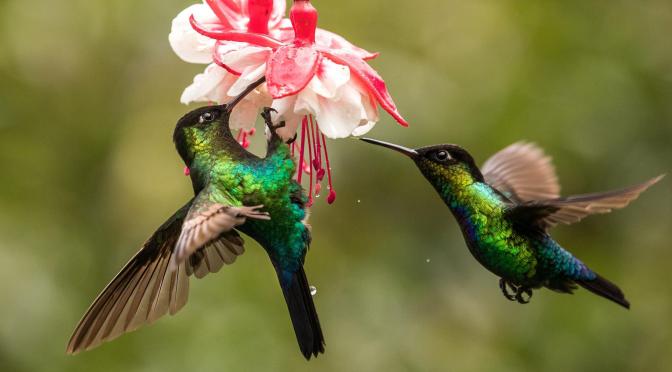
Nature on PBS (April 12, 2023) – Discover how tiny hummingbirds influence their many flowering kingdoms and their ripple effects on macaws, quetzals, monkeys, tapirs and more. Set in the exotic landscapes of Costa Rica.
Costa Rica’s motto is Pura Vida – Pure Life – and this deceptively small country is bursting with some of the most spectacular wildlife and pristine ecosystems in the world. All this diversity thrives, in part, thanks to one surprising little creature: hummingbirds.
Venture across Costa Rica’s wild and rugged landscapes, from volcanic peaks to coastal jungle to misty cloud forests, and discover the nation’s dazzling diversity of hummingbirds. There are more than 50 species of hummingbirds here, and they play an outsize role in maintaining some of the richest and wildest environments on Earth.
The Hummingbird Effect premiered on April 12, 2023.
National Trust (April 10, 2023) – In this episode of The Wild Life, a new series of nature films from the National Trust, presenter Gemma Hunt discovers how the charity’s rangers are doing all they can to protect wildlife at Blakeney National Nature Reserve in Norfolk.
With an introduction from Julia Bradbury, this film will transport you to the four-mile-long shingle spit of Blakeney Point, cared for by the National Trust. The spit provides protection for Blakeney Harbour and the surrounding salt marshes are home to a vast array of wildlife. Blakeney Point is also home to England’s largest grey seal colony, over-wintering wildfowl and summer-breeding terns.
Join Gemma as she meets the National Trust rangers who work around the clock to care for this stretch of coastline, which is loved by walkers, sightseers and wildlife enthusiasts. You’ll meet ranger Duncan Halpin who spends seven months of the year living in a remote lifeboat house. During this time, he monitors the seal pups and makes sure endangered birds such as little terns have safe places to nest.
News, Views and Reviews For The Intellectually Curious


 National Geographic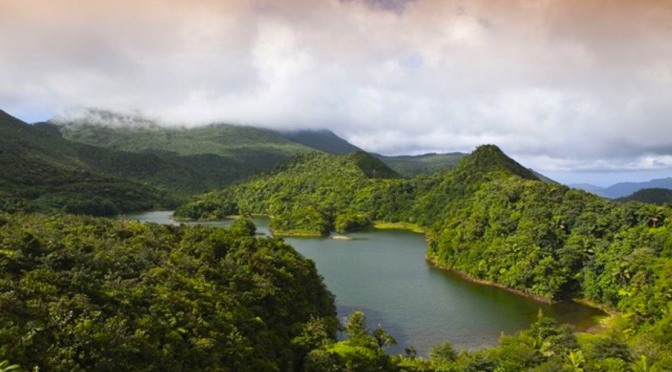
 SeaLegacy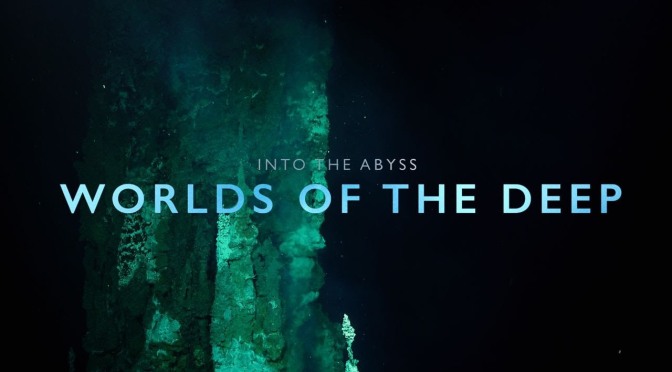
 Natural World Facts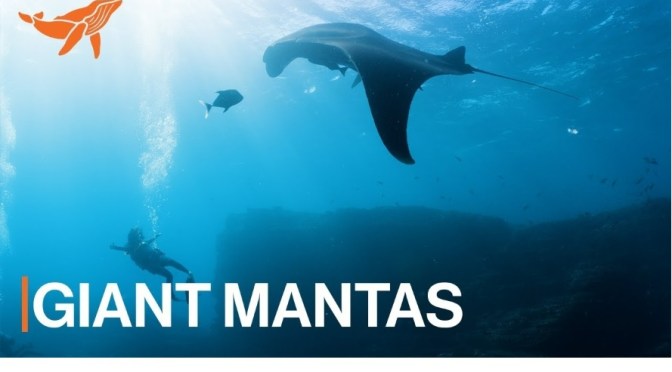



 Boomers Daily