

From a Stanford Medicine online release:
 In a study published online Sept. 10 in the American Journal of Lifestyle Medicine, Hamidi, along with other Stanford researchers, examined survey results on sleep and nutrition from 245 Stanford physicians and found that a better diet is associated with reduced side effects of sleep deprivation.
Physicians face significant barriers to eating well at work due to long hours, a heavy workload and limited access to healthy meals, snacks and drinks. The findings of this study suggest that by providing healthy options at work, employers could help reduce the brain fogginess, difficulty concentrating and irritability caused by poor sleep among health care providers. And, as a result, help improve patient care.
“Potential mechanisms for the effect of diet on cognitive performance include regulation of hormones, neurotransmitters, and blood flow as well as reduction of oxidative stress and inflammation. The effects of diet on sleep quality have been attributed to the role of dietary factors in regulation of peripheral circadian clocks and to the synthesis of hormones and neurotransmitters that are involved in sleep regulation.”
To read more: http://med.stanford.edu/news/all-news/2019/10/to-fight-effects-of-sleep-deprivation–reach-for-healthy-snacks-.html

 In summary, dietary fructose, but not glucose, supplementation of HFD impairs mitochondrial size, function, and protein acetylation, resulting in decreased fatty acid oxidation and development of metabolic dysregulation.
 Our findings suggest that higher adherence to a Mediterranean diet is associated with better cognitive performance, and therefore less cognitive decline, in older but not middle-aged individuals.
 2 years of moderate calorie restriction significantly reduced multiple cardiometabolic risk factors in young, non-obese adults. These findings suggest the potential for a substantial advantage for cardiovascular health of practicing moderate calorie restriction in young and middle-aged healthy individuals, and they offer promise for pronounced long-term population health benefits.
 Breakfast
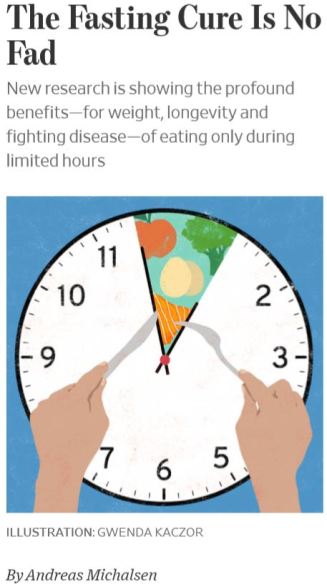 At the Charité University Hospital in Berlin, I’ve employed what’s called intermittent fasting, or time-restricted eating, to help patients with an array of chronic conditions. These include diabetes, high blood pressure, rheumatism and bowel diseases, as well as pain syndromes such as migraines and osteoarthritis.
 Unlike carbohydrates or fats, proteins are the only nutrients that can be used to build new cells that can form tissue, said Dr. Walter, a registered dietitian.
  Boomers Daily