Category Archives: Business

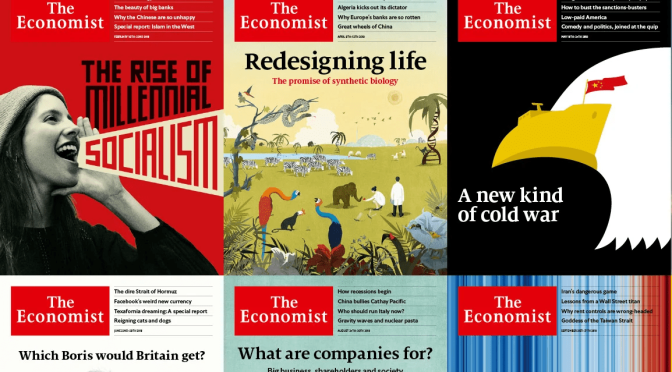
THE ECONOMIST MAGAZINE – SEPTEMBER 6, 2025 PREVIEW

THE ECONOMIST MAGAZINE: The latest issue featuresAmerica’s missing opposition

Donald Trump is unpopular. Why is it so hard to stand up to him?

Republicans are servile. Courts are slow. Can the Democrats rouse themselves?

How Europe’s hard right threatens the economy

At best, the continent should expect stagnation, at worst a bond-market rout

Xi Jinping’s anti-American party

To see the cost of Trump’s bullying, tally the world leaders flocking to China 

Schools should banish smartphones from the classroom

Grades will rise—and pupils will be happier

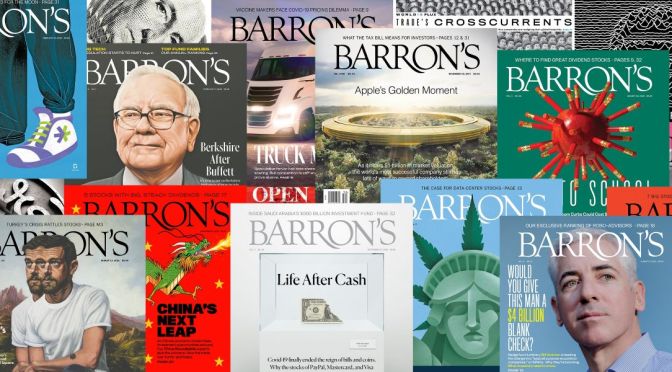
BARRON’S MAGAZINE – SEPTEMBER 1, 2025 PREVIEW

BARRON’S MAGAZINE: The latest issue features ‘Citadel’s Ken Griffin on Markets, the Fed, and Building His Firm for the Next Century’

Citadel’s Ken Griffin on Markets, the Fed, and Building His Firm for the Next Century

Griffin’s ambition, strategic vision, and tech savvy have propelled Citadel into Wall Street’s upper echelons. This could be just the start.

Big Changes Are Coming to Charitable Giving. How to Get Maximum Savings.

Many Americans may get a new tax break, but those who itemize face new limits on deductions. Planning now makes sense.

Hedge Funds’ New Secret Weapon

New companies are collecting any kind of business and consumer economic activity they can get their hands on and selling it to investors.

Small-Cap Stocks Are Rallying Again. This Time It’s Real.

Paul R. La Monica

THE ECONOMIST MAGAZINE – AUGUST 30, 2025 PREVIEW

THE ECONOMIST MAGAZINE: The latest issue features ‘What Brazil Can Teach America’

Brazil offers America a lesson in democratic maturity

It is a test case for how countries recover from a populist fever

Humiliation, vindication—and a giant test for India

Trump has triggered a trade and defence crisis: how should Modi respond?

How much danger is America’s central bank in?

Whether Lisa Cook stays or goes, important norms have been broken

France’s government is on the brink of collapse, again

Emmanuel Macron looks likely to lose another prime minister over an attempt to curb public debt

Don’t forget the downsides of China’s innovation push

China’s industrial policy attracts fans abroad, critics at home

BARRON’S MAGAZINE – AUGUST 25, 2025 PREVIEW

BARRON’S MAGAZINE: The latest issue features ‘Private Equity Is Headed for Your 401(k). The Industry Is Celebrating. Should You?’

Private Equity Is Headed for Your 401(k). The Industry Is Celebrating. Should You?

The Trump administration is taking the handcuffs off the private-market industry. The outcome for retirement savers will be complicated.

Walmart and Other Retailers Have Eaten the Cost of Tariffs. Now It Is the Consumer’s Turn.

While last quarter’s sales were strong, price increases could be felt starting now.

Want to Work Fewer Hours? How to Ask Without Sabotaging Your Career.

Be ready to hear “no,” and more tips from financial advisors and an HR manager.

Tariffs Won’t Break the Economy. Corporate Shakedowns Might.

An economy as large and as diversified as the U.S. can handle tariffs. The president’s other actions pose a bigger risk.

THE ECONOMIST MAGAZINE – AUGUST 23, 2025 PREVIEW

THE ECONOMIST MAGAZINE: The latest issue features All-American silicon‘…

Donald Trump’s fantasy of home-grown chipmaking

To remain the world’s foremost technological power, America needs its friends

A new opposition could be a healthy sign for Syria

Ahmed al-Sharaa, the new president, needs to bring his critics closer

Who will America’s president listen to next on Ukraine?

The problem with Donald Trump’s fast-moving, unpredictable diplomacy

Pregnant women need protecting from heatwaves

As temperatures rise, so must understanding of the risks

BARRON’S MAGAZINE – AUGUST 18, 2025 PREVIEW

BARRON’S MAGAZINE: The latest issue features ‘Powell’s Legacy and the Fed’s Independence Are on the Line at Jackson Hole

Powell’s Legacy and the Fed’s Independence Are on the Line at Jackson Hole

Federal Reserve Chair Jerome Powell will offer an economic outlook at the central bank’s annual symposium. The subtext of this year’s speech is more important.

Big Pharma Has a New Vision for Selling Drugs. It’s Going to the Mattresses.

Amid pressure from the White House, U.S. drug companies are experimenting with direct-to-consumer sales models that cut out the middlemen.

What’s a ‘Safe’ Savings Withdrawal Rate? It May Be More Than You Think.

The inventor of the “4% rule” has revised his math. What to know about giving yourself a pay hike.

The Fed Hasn’t Always Been Independent. Trump Is Testing Its Boundaries.

Before Paul Volcker became an all-powerful Fed chief in 1979, the agency frequently deferred to the White House.

THE ECONOMIST MAGAZINE – AUGUST 16, 2025 PREVIEW

THE ECONOMIST MAGAZINE: The latest issue features How to win at foreign policy

How to win at foreign policy

Donald Trump’s capricious dealmaking destabilizes the world

Xi Jinping’s weaponisation of rare-earth elements will ultimately backfire

How the West can break China’s grip on these vital minerals

America and its Asian allies need to spend more to deter China

It should be a two-way street

The shutdown of ocean currents could freeze Europe

When climate change poses a strategic threat, it needs a strategic response

Why South Africa should scrap Black Economic Empowerment

The ruling party’s flagship policy is a cause of the country’s problems, not a solution

BARRON’S MAGAZINE – AUGUST 11, 2025 PREVIEW

BARRON’S MAGAZINE: The latest issue features ‘Everyone Is Along for the Crypto Ride Now, Even if It Ends Badly

Everyone Is Along for the Crypto Ride Now, Even if It Ends Badly

The guardrails are off as crypto prices soar. The next crash will hurt.

How Quantum Computing Could Upend Bitcoin

Hackers stand to gain “a superpower.” Will the crypto industry be ready?

5% Yields Are Hard to Find. Here Are 4 Dividend Stocks You Can Count On.

With elevated inflation, income investments that can keep up with the pace of rising prices are crucial.

THE ECONOMIST MAGAZINE – AUGUST 9, 2025 PREVIEW

THE ECONOMIST MAGAZINE: The latest issue features Why Israel must hold itself to account

Why Israel must hold itself to account

And how it can be made to do so

Donald Trump’s awful trade policy will outlast him

He thinks America is winning. It is not

Buy now, pay later gets a bad rap. But it could be useful

Provided lenders open up

From Perks to Power: The Rise Of The “Hard Tech Era”

By Michael Cummins, Editor, August 4, 2025

Silicon Valley’s golden age once shimmered with the optimism of code and charisma. Engineers built photo-sharing apps and social platforms from dorm rooms that ballooned into glass towers adorned with kombucha taps, nap pods, and unlimited sushi. “Web 2.0” promised more than software—it promised a more connected and collaborative world, powered by open-source idealism and the promise of user-generated magic. For a decade, the region stood as a monument to American exceptionalism, where utopian ideals were monetized at unprecedented speed and scale. The culture was defined by lavish perks, a “rest and vest” mentality, and a political monoculture that leaned heavily on globalist, liberal ideals.

That vision, however intoxicating, has faded. As The New York Times observed in the August 2025 feature “Silicon Valley Is in Its ‘Hard Tech’ Era,” that moment now feels “mostly ancient history.” A cultural and industrial shift has begun—not toward the next app, but toward the very architecture of intelligence itself. Artificial intelligence, advanced compute infrastructure, and geopolitical urgency have ushered in a new era—more austere, centralized, and fraught. This transition from consumer-facing “soft tech” to foundational “hard tech” is more than a technological evolution; it is a profound realignment that is reshaping everything: the internal ethos of the Valley, the spatial logic of its urban core, its relationship to government and regulation, and the ethical scaffolding of the technologies it’s racing to deploy.

The Death of “Rest and Vest” and the Rise of Productivity Monoculture

During the Web 2.0 boom, Silicon Valley resembled a benevolent technocracy of perks and placation. Engineers were famously “paid to do nothing,” as the Times noted, while they waited out their stock options at places like Google and Facebook. Dry cleaning was free, kombucha flowed, and nap pods offered refuge between all-hands meetings and design sprints.

“The low-hanging-fruit era of tech… it just feels over.”
—Sheel Mohnot, venture capitalist

The abundance was made possible by a decade of rock-bottom interest rates, which gave startups like Zume half a billion dollars to revolutionize pizza automation—and investors barely blinked. The entire ecosystem was built on the premise of endless growth and limitless capital, fostering a culture of comfort and a lack of urgency.

But this culture of comfort has collapsed. The mass layoffs of 2022 by companies like Meta and Twitter signaled a stark end to the “rest and vest” dream for many. Venture capital now demands rigor, not whimsy. Soft consumer apps have yielded to infrastructure-scale AI systems that require deep expertise and immense compute. The “easy money” of the 2010s has dried up, replaced by a new focus on tangible, hard-to-build value. This is no longer a game of simply creating a new app; it is a brutal, high-stakes race to build the foundational infrastructure of a new global order.

The human cost of this transformation is real. A Medium analysis describes the rise of the “Silicon Valley Productivity Trap”—a mentality in which engineers are constantly reminded that their worth is linked to output. Optimization is no longer a tool; it’s a creed. “You’re only valuable when producing,” the article warns. The hidden cost is burnout and a loss of spontaneity, as employees internalize the dangerous message that their value is purely transactional. Twenty-percent time, once lauded at Google as a creative sanctuary, has disappeared into performance dashboards and velocity metrics. This mindset, driven by the “growth at all costs” metrics of venture capital, preaches that “faster is better, more is success, and optimization is salvation.”

Yet for an elite few, this shift has brought unprecedented wealth. Freethink coined the term “superstar engineer era,” likening top AI talent to professional athletes. These individuals, fluent in neural architectures and transformer theory, now bounce between OpenAI, Google DeepMind, Microsoft, and Anthropic in deals worth hundreds of millions. The tech founder as cultural icon is no longer the apex. Instead, deep learning specialists—some with no public profiles—command the highest salaries and strategic power. This new model means that founding a startup is no longer the only path to generational wealth. For the majority of the workforce, however, the culture is no longer one of comfort but of intense pressure and a more ruthless meritocracy, where charisma and pitch decks no longer suffice. The new hierarchy is built on demonstrable skill in math, machine learning, and systems engineering.

One AI engineer put it plainly in Wired: “We’re not building a better way to share pictures of our lunch—we’re building the future. And that feels different.” The technical challenges are orders of magnitude more complex, requiring deep expertise and sustained focus. This has, in turn, created a new form of meritocracy, one that is less about networking and more about profound intellectual contributions. The industry has become less forgiving of superficiality and more focused on raw, demonstrable skill.

Hard Tech and the Economics of Concentration

Hard tech is expensive. Building large language models, custom silicon, and global inference infrastructure costs billions—not millions. The barrier to entry is no longer market opportunity; it’s access to GPU clusters and proprietary data lakes. This stark economic reality has shifted the power dynamic away from small, scrappy startups and towards well-capitalized behemoths like Google, Microsoft, and OpenAI. The training of a single cutting-edge large language model can cost over $100 million in compute and data, an astronomical sum that few startups can afford. This has led to an unprecedented level of centralization in an industry that once prided itself on decentralization and open innovation.

The “garage startup”—once sacred—has become largely symbolic. In its place is the “studio model,” where select clusters of elite talent form inside well-capitalized corporations. OpenAI, Google, Meta, and Amazon now function as innovation fortresses: aggregating talent, compute, and contracts behind closed doors. The dream of a 22-year-old founder building the next Facebook in a dorm room has been replaced by a more realistic, and perhaps more sober, vision of seasoned researchers and engineers collaborating within well-funded, corporate-backed labs.

This consolidation is understandable, but it is also a rupture. Silicon Valley once prided itself on decentralization and permissionless innovation. Anyone with an idea could code a revolution. Today, many promising ideas languish without hardware access or platform integration. This concentration of resources and talent creates a new kind of monopoly, where a small number of entities control the foundational technology that will power the future. In a recent MIT Technology Review article, “The AI Super-Giants Are Coming,” experts warn that this consolidation could stifle the kind of independent, experimental research that led to many of the breakthroughs of the past.

And so the question emerges: has hard tech made ambition less democratic? The democratic promise of the internet, where anyone with a good idea could build a platform, is giving way to a new reality where only the well-funded and well-connected can participate in the AI race. This concentration of power raises serious questions about competition, censorship, and the future of open innovation, challenging the very ethos of the industry.

From Libertarianism to Strategic Governance

For decades, Silicon Valley’s politics were guided by an anti-regulatory ethos. “Move fast and break things” wasn’t just a slogan—it was moral certainty. The belief that governments stifled innovation was nearly universal. The long-standing political monoculture leaned heavily on globalist, liberal ideals, viewing national borders and military spending as relics of a bygone era.

“Industries that were once politically incorrect among techies—like defense and weapons development—have become a chic category for investment.”
—Mike Isaac, The New York Times

But AI, with its capacity to displace jobs, concentrate power, and transcend human cognition, has disrupted that certainty. Today, there is a growing recognition that government involvement may be necessary. The emergent “Liberaltarian” position—pro-social liberalism with strategic deregulation—has become the new consensus. A July 2025 forum at The Center for a New American Security titled “Regulating for Advantage” laid out the new philosophy: effective governance, far from being a brake, may be the very lever that ensures American leadership in AI. This is a direct response to the ethical and existential dilemmas posed by advanced AI, problems that Web 2.0 never had to contend with.

Hard tech entrepreneurs are increasingly policy literate. They testify before Congress, help draft legislation, and actively shape the narrative around AI. They see political engagement not as a distraction, but as an imperative to secure a strategic advantage. This stands in stark contrast to Web 2.0 founders who often treated politics as a messy side issue, best avoided. The conversation has moved from a utopian faith in technology to a more sober, strategic discussion about national and corporate interests.

At the legislative level, the shift is evident. The “Protection Against Foreign Adversarial Artificial Intelligence Act of 2025” treats AI platforms as strategic assets akin to nuclear infrastructure. National security budgets have begun to flow into R&D labs once funded solely by venture capital. This has made formerly “politically incorrect” industries like defense and weapons development not only acceptable, but “chic.” Within the conservative movement, factions have split. The “Tech Right” embraces innovation as patriotic duty—critical for countering China and securing digital sovereignty. The “Populist Right,” by contrast, expresses deep unease about surveillance, labor automation, and the elite concentration of power. This internal conflict is a fascinating new force in the national political dialogue.

As Alexandr Wang of Scale AI noted, “This isn’t just about building companies—it’s about who gets to build the future of intelligence.” And increasingly, governments are claiming a seat at that table.

Urban Revival and the Geography of Innovation

Hard tech has reshaped not only corporate culture but geography. During the pandemic, many predicted a death spiral for San Francisco—rising crime, empty offices, and tech workers fleeing to Miami or Austin. They were wrong.

“For something so up in the cloud, A.I. is a very in-person industry.”
—Jasmine Sun, culture writer

The return of hard tech has fueled an urban revival. San Francisco is once again the epicenter of innovation—not for delivery apps, but for artificial general intelligence. Hayes Valley has become “Cerebral Valley,” while the corridor from the Mission District to Potrero Hill is dubbed “The Arena,” where founders clash for supremacy in co-working spaces and hacker houses. A recent report from Mindspace notes that while big tech companies like Meta and Google have scaled back their office footprints, a new wave of AI companies have filled the void. OpenAI and other AI firms have leased over 1.7 million square feet of office space in San Francisco, signaling a strong recovery in a commercial real estate market that was once on the brink.

This in-person resurgence reflects the nature of the work. AI development is unpredictable, serendipitous, and cognitively demanding. The intense, competitive nature of AI development requires constant communication and impromptu collaboration that is difficult to replicate over video calls. Furthermore, the specialized nature of the work has created a tight-knit community of researchers and engineers who want to be physically close to their peers. This has led to the emergence of “hacker houses” and co-working spaces in San Francisco that serve as both living quarters and laboratories, blurring the lines between work and life. The city, with its dense urban fabric and diverse cultural offerings, has become a more attractive environment for this new generation of engineers than the sprawling, suburban campuses of the South Bay.

Yet the city’s realities complicate the narrative. San Francisco faces housing crises, homelessness, and civic discontent. The July 2025 San Francisco Chronicle op-ed, “The AI Boom is Back, But is the City Ready?” asks whether this new gold rush will integrate with local concerns or exacerbate inequality. AI firms, embedded in the city’s social fabric, are no longer insulated by suburban campuses. They share sidewalks, subways, and policy debates with the communities they affect. This proximity may prove either transformative or turbulent—but it cannot be ignored. This urban revival is not just a story of economic recovery, but a complex narrative about the collision of high-stakes technology with the messy realities of city life.

The Ethical Frontier: Innovation’s Moral Reckoning

The stakes of hard tech are not confined to competition or capital. They are existential. AI now performs tasks once reserved for humans—writing, diagnosing, strategizing, creating. And as its capacities grow, so too do the social risks.

“The true test of our technology won’t be in how fast we can innovate, but in how well we can govern it for the benefit of all.”
—Dr. Anjali Sharma, AI ethicist

Job displacement is a top concern. A Brookings Institution study projects that up to 20% of existing roles could be automated within ten years—including not just factory work, but professional services like accounting, journalism, and even law. The transition to “hard tech” is therefore not just an internal corporate story, but a looming crisis for the global workforce. This potential for mass job displacement introduces a host of difficult questions that the “soft tech” era never had to face.

Bias is another hazard. The Algorithmic Justice League highlights how facial recognition algorithms have consistently underperformed for people of color—leading to wrongful arrests and discriminatory outcomes. These are not abstract failures—they’re systems acting unjustly at scale, with real-world consequences. The shift to “hard tech” means that Silicon Valley’s decisions are no longer just affecting consumer habits; they are shaping the very institutions of our society. The industry is being forced to reckon with its power and responsibility in a way it never has before, leading to the rise of new roles like “AI Ethicist” and the formation of internal ethics boards.

Privacy and autonomy are eroding. Large-scale model training often involves scraping public data without consent. AI-generated content is used to personalize content, track behavior, and profile users—often with limited transparency or consent. As AI systems become not just tools but intermediaries between individuals and institutions, they carry immense responsibility and risk.

The problem isn’t merely technical. It’s philosophical. What assumptions are embedded in the systems we scale? Whose values shape the models we train? And how can we ensure that the architects of intelligence reflect the pluralism of the societies they aim to serve? This is the frontier where hard tech meets hard ethics. And the answers will define not just what AI can do—but what it should do.

Conclusion: The Future Is Being Coded

The shift from soft tech to hard tech is a great reordering—not just of Silicon Valley’s business model, but of its purpose. The dorm-room entrepreneur has given way to the policy-engaged research scientist. The social feed has yielded to the transformer model. What was once an ecosystem of playful disruption has become a network of high-stakes institutions shaping labor, governance, and even war.

“The race for artificial intelligence is a race for the future of civilization. The only question is whether the winner will be a democracy or a police state.”
—General Marcus Vance, Director, National AI Council

The defining challenge of the hard tech era is not how much we can innovate—but how wisely we can choose the paths of innovation. Whether AI amplifies inequality or enables equity; whether it consolidates power or redistributes insight; whether it entrenches surveillance or elevates human flourishing—these choices are not inevitable. They are decisions to be made, now. The most profound legacy of this era will be determined by how Silicon Valley and the world at large navigate its complex ethical landscape.

As engineers, policymakers, ethicists, and citizens confront these questions, one truth becomes clear: Silicon Valley is no longer just building apps. It is building the scaffolding of modern civilization. And the story of that civilization—its structure, spirit, and soul—is still being written.

*THIS ESSAY WAS WRITTEN AND EDITED UTILIZING AI