

Times Literary Supplement (July 17, 2024): The latest issue features ‘World at War’ – Humanity’s appetite for organized violence; Should we have babies; Posture panic; The boy on the burning deck and Wales…

Times Literary Supplement (July 17, 2024): The latest issue features ‘World at War’ – Humanity’s appetite for organized violence; Should we have babies; Posture panic; The boy on the burning deck and Wales…
Stephen Sedley
Rae Armantrout
Thomas Meaney
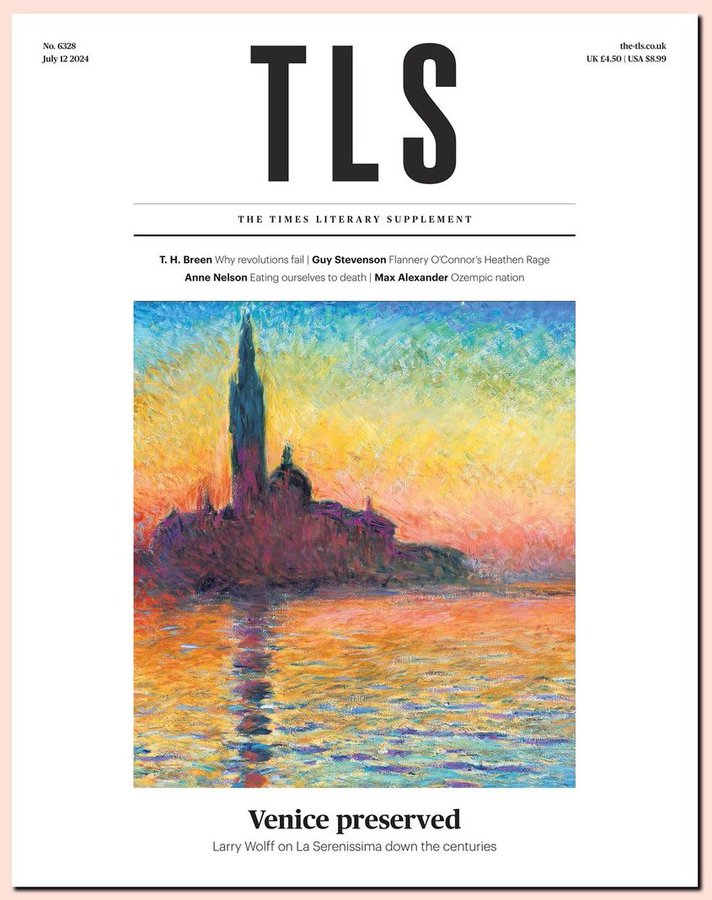
Times Literary Supplement (July 10, 2024): The latest issue features ‘Ven ice Preserved – La Serenissima down the centuries; Why revolutions fail; Eating ourselves to death and Ozempic nation…


Literary Review – July 2, 2024: The latest issue features ‘A Tale of Two Fabulists’, North America Ablaze, Pascal Decoded, League of Dictators and Roffey’s Rage…
American Civil Wars: A Continental History, 1850–1873 By Alan Taylor
A mountain of historical studies testifies to enduring interest in the American Civil War, a conflict still politically relevant in a nation riven over how to remember it. Those doubting that there is anything fresh to say about the bloodiest event in the republic’s history should read Pulitzer Prize winner Alan Taylor’s brilliant, panoramic account of the conflict.
Travellers in the Golden Realm: How Mughal India Connected England to the World By Lubaaba Al-Azami
One contender for the title of centre of the civilised world in the early 17th century is the Mughal Empire. Lubaaba Al-Azami describes it as ‘a global capital and commercial hub’. The Mughal Empire reached its zenith between the reigns of Babur, the first emperor, who established the ‘golden realm’ in 1526, and his great-great-great-grandson the sixth emperor, Aurangzeb, who died in 1707. This was a time when the artists of the fabulously wealthy Mughal dynasty were building the Taj Mahal and writing and illuminating the Padshahnama.
Vertigo: The Rise and Fall of Weimar Germany 1918–1933 By Harald Jähner (Translated from German by Shaun Whiteside)
Takeover: Hitler’s Final Rise to Power By Timothy W Ryback
The Weimar Republic (so called as the parliament which drafted its constitution in 1919 sat in Weimar owing to unrest in Berlin) lasted for fourteen years and four months, two years longer than the Third Reich that succeeded it. Its history is beset with ironies. Its first president, Friedrich Ebert, a social democrat (and a former innkeeper), turned out to be the embodiment of petit-bourgeois conservatism. Having ditched the monarchy, he made a bargain with the army: they would defend the nascent republic in return for maintaining the old officer corps. This enabled the regime to survive five chaotic years marked by numerous violent attempts to overthrow it from both the Left and the Right.
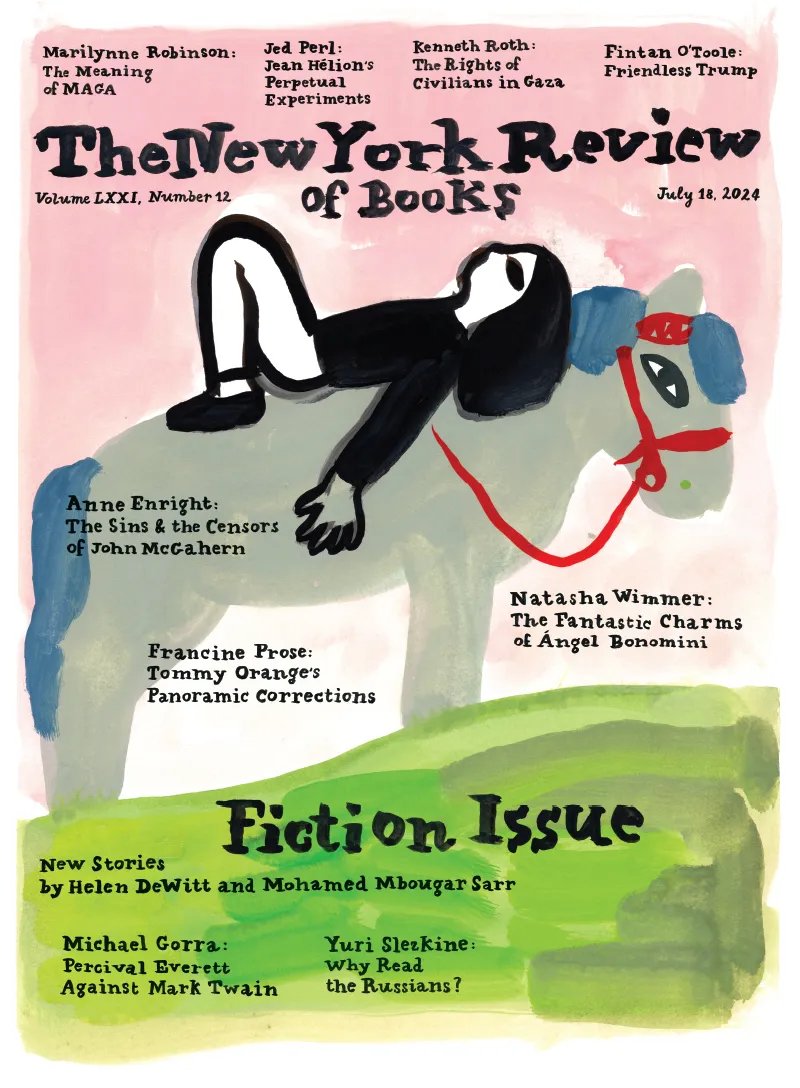

The French artist Jean Hélion approached painting with a philosophical precision, each style a hypothesis to be investigated and tested.
Jean Hélion: La Prose du monde – an exhibition at the Musée d’Art Moderne de Paris, March 22–August 18, 2024
In James, Percival Everett’s smart, funny, brutal retelling of The Adventures of Huckleberry Finn, Everett takes readers deeper into the capricious yet certain violence of American slavery, giving the characters a life that seems to lift off the page.
James by Percival Everett
The short fiction of Ángel Bonomini possesses a lightness that sets him apart from contemporaries like Borges and Cortázar.
The Novices of Lerna by Ángel Bonomini, translated from the Spanish by Jordan Landsman
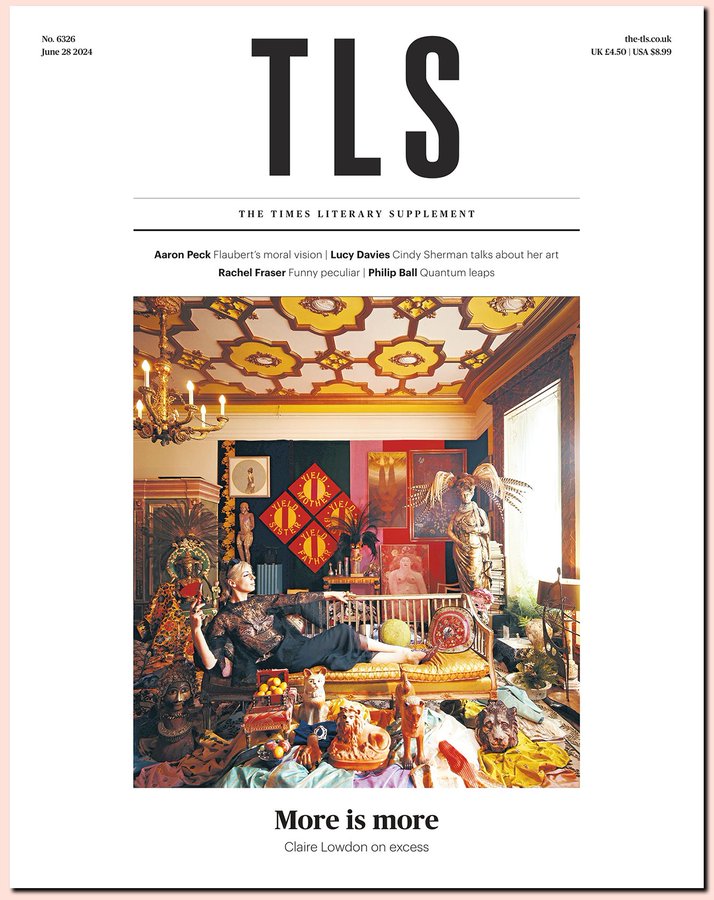
Times Literary Supplement (June 26, 2024): The latest issue features ‘More is More’ – Claire Lowdon on excess; Flaubert’s moral vision; Twenty years of British Politics; Quantum Mechanics and Medieval women….
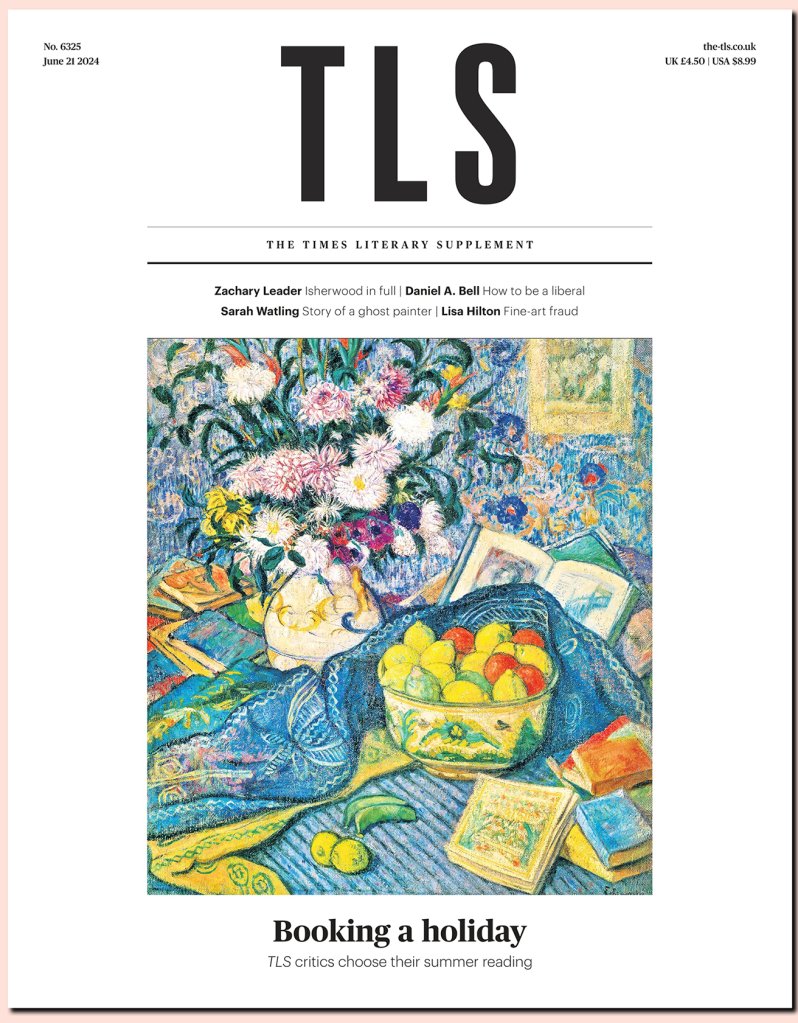
Times Literary Supplement (June 19, 2024): The latest issue features ‘Booking A Holiday’ – TLS critics choose their summer reading; Artistic license – The relationship between ‘loveliness and lucre’; Christopher Isherwood in full; How to be a Liberal; Story of a ghost painter and Fine-art fraud…
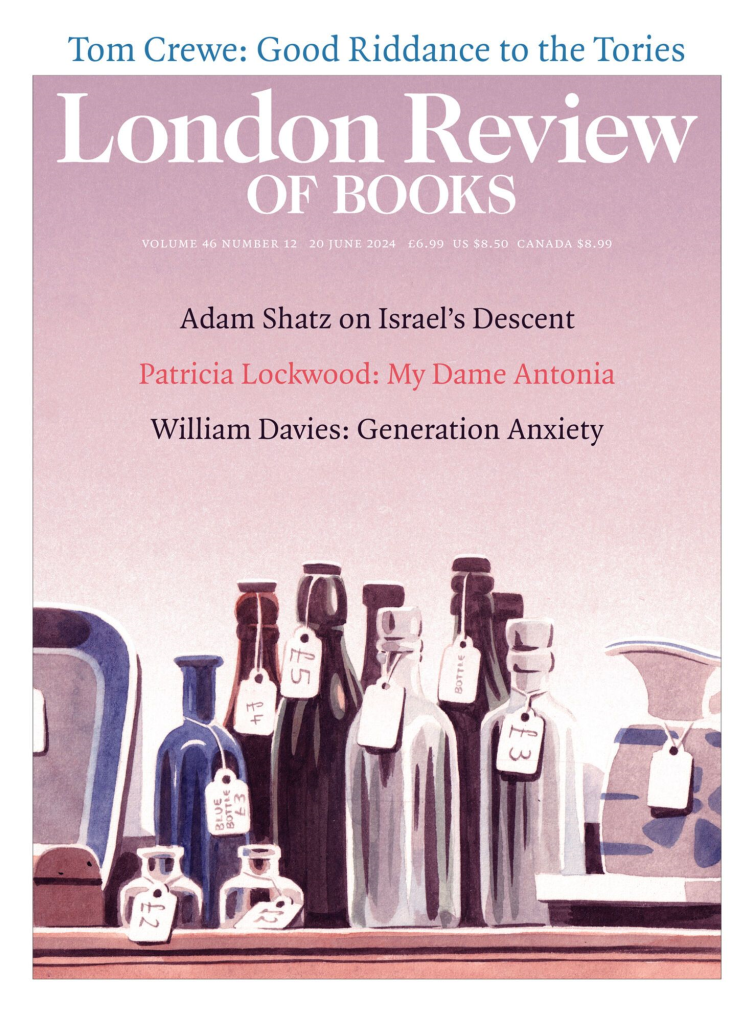
The Anxious Generation: How the Great Rewiring of Childhood Is Causing an Epidemic of Mental Illness
by Jonathan Haidt.
Allen Lane, 385 pp., £25, March, 978 0 241 64766 0
In the 1980s the term ‘anxiety’ was almost eliminated from the lexicon of American psychiatry. The infamous DSM-III (the third edition of the Diagnostic and Statistical Manual of Mental Disorders) took an axe to various legacies of psychoanalysis that had dominated psychiatric thinking in the postwar decades. Among them was a preoccupation with anxiety. Anything and everything could, it seemed, be attributed to anxiety: whether it presented as a specific phobia or a panic attack, a somatic symptom or just a lurking sense of dread, anxiety was at the root. It was this sort of all-purpose explanation, with no apparent scientific rigour or falsifiability, that the authors of DSM-III were trying to root out.
When Ariel Sharon withdrew more than eight thousand Jewish settlers from the Gaza Strip in 2005, his principal aim was to consolidate Israel’s colonisation of the West Bank, where the settler population immediately began to increase. But ‘disengagement’ had another purpose: to enable Israel’s air force to bomb Gaza at will, something they could not do when Israeli settlers lived there.
The State of Israel v. the Jews
by Sylvain Cypel, translated by William Rodarmor.
Other Press, 352 pp., £24, October 2022, 978 1 63542 097 5
The Palestinians of the West Bank have been, it seems, gruesomely lucky. They are encircled by settlers determined to steal their lands – and not at all hesitant about inflicting violence in the process – but the Jewish presence in their territory has spared them the mass bombardment and devastation to which Israel subjects the people of Gaza every few years.
Deux peuples pour un état?: Relire l’histoire du sionisme
by Shlomo Sand.
Seuil, 256 pp., £20, January, 978 2 02 154166 3
Our Palestine Question: Israel and American Jewish Dissent, 1948-78
by Geoffrey Levin.
Yale, 304 pp., £25, February, 978 0 300 26785 3
Tablets Shattered: The End of an American Jewish Century and the Future of Jewish Life
by Joshua Leifer.
Dutton, 398 pp., £28.99, August, 978 0 593 18718 0
The Necessity of Exile: Essays from a Distance
by Shaul Magid.
Ayin, 309 pp., £16.99, December 2023, 979 8 9867803 1 3
Deluge: Gaza and Israel from Crisis to Cataclysm
edited by Jamie Stern-Weiner.
OR Books, 336 pp., £17.99, Ap
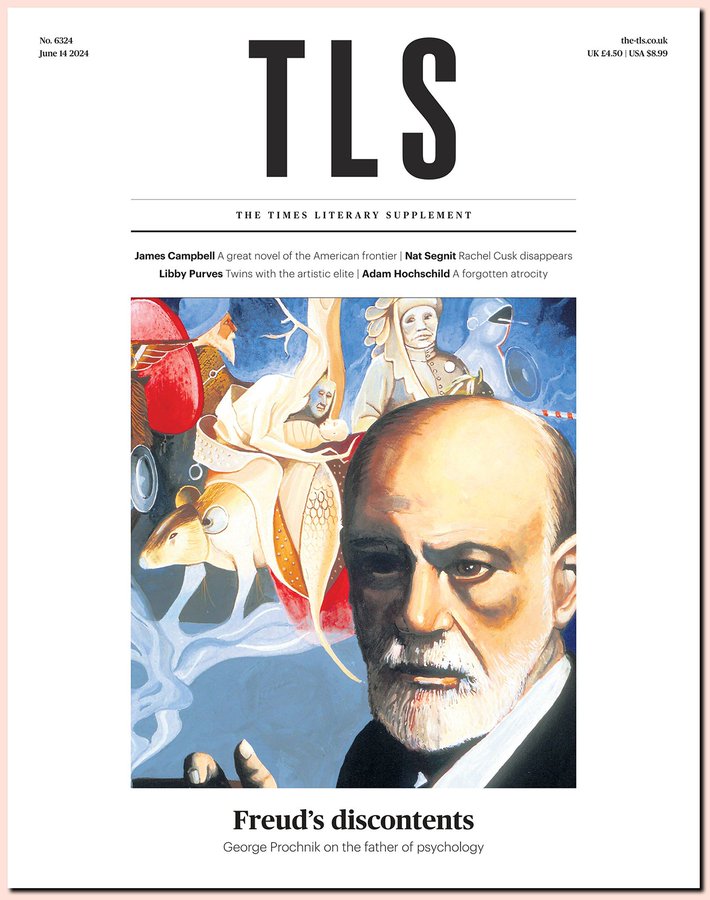
Times Literary Supplement (June 13, 2024): The latest issue features Freud’s Discontents – George Prochnik on the father of psychology; A great novel on the American Frontier; Death becomes them – The mourning rituals of the Victorians; Cover-up – An atrocity committed by US troops in the Philippines….
In the Renaissance, reading became both a passion and a pose of detachment—for those who could afford it—from the pursuits of wealth and power.
A Marvelous Solitude: The Art of Reading in Early Modern Europe by Lina Bolzoni, translated from the Italian by Sylvia Greenup
Untold Futures: Time and Literary Culture in Renaissance England
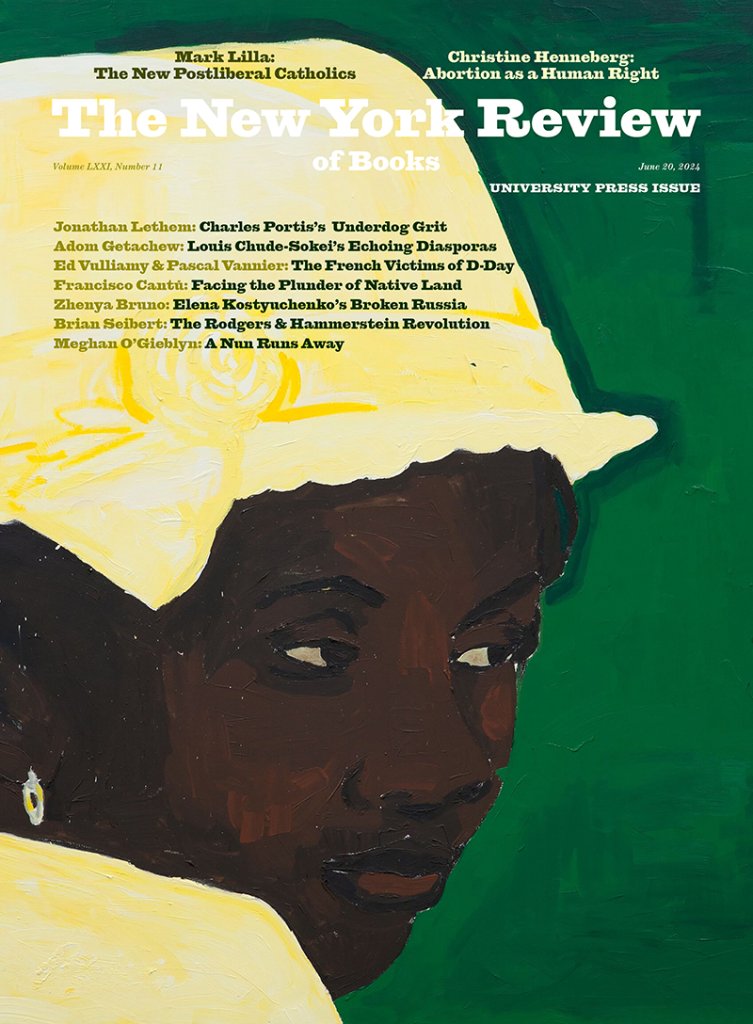
The scholar Louis Chude-Sokei does the urgent work of reimagining the African diaspora as multiple diasporas.
Floating in a Most Peculiar Way by Louis Chude-Sokei
The Last “Darky”: Bert Williams, Black-on-Black Minstrelsy, and the African Diaspora by Louis Chude-Sokei
The Sound of Culture: Diaspora and Black Technopoetics by Louis Chude-Sokei
 Boomers Daily