From a Hyperallergic.com online review:
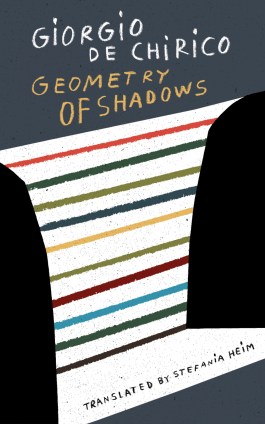 “Everywhere is the wait and the gathering,” concludes “Resort.” A kind of soporific haze has seeped into de Chirico’s imagination, asserted through evocations of sleeping and dreaming. Even the violence and ambiguous sexual imagery of “The Mysterious Night” yield to a final note of definitive somnolence: “Everything sleeps; even the owls and the bats who also in the dream dream of sleeping.”
“My room,” he writes, “is a beautiful vessel,” and from there he propels his imagination outward across space and time, geography and history. Indeed, “faraway” (lontani, lontano) is one of his favorite adjectives.  He daydreams of Mexico or Alaska and invokes a future-oriented “avant-city” and a distant day where he is immortalized, albeit in an old-fashioned mode as a “man of marble.”
The paintings of Giorgio de Chirico invariably call to mind a cluster of adjectives: haunting, enigmatic, evocative, poetic. But unlike many artists whose poetry remains wordless and confined to the canvas, de Chirico was also a writer whose texts have been praised and even translated by such art-world luminaries as Louise Bourgeois and John Ashbery. A new collection provides us with more of de Chirico’s writings. Translated into English by Stefania Heim, Geometry of Shadows presents the relatively compact totality of the artist’s extant poems and poetic fragments written in Italian, complementing his memoirs and the novel Hebdomeros (in French), which have been available in English for some time.
To read more: https://hyperallergic.com/520898/geometry-of-shadows-by-giorgio-de-chirico/

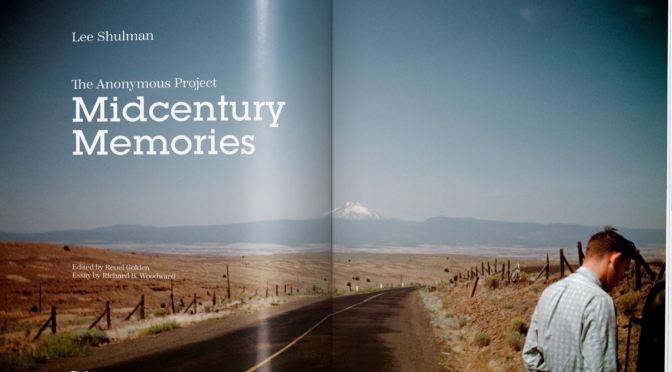
 50 years ago, people used film cameras just as we use smartphones in the age of Instagram. They photographed their meals, holidays, loved ones, celebrations, and family reunions. Imagining the past lives of these strangers is the beauty and mystery of The Anonymous Project, which curates just under 300 images from this vast collection of 700,000+ Kodachrome slides. The places, dates, and people may be unknown, but the stories in these snapshots are universally familiar.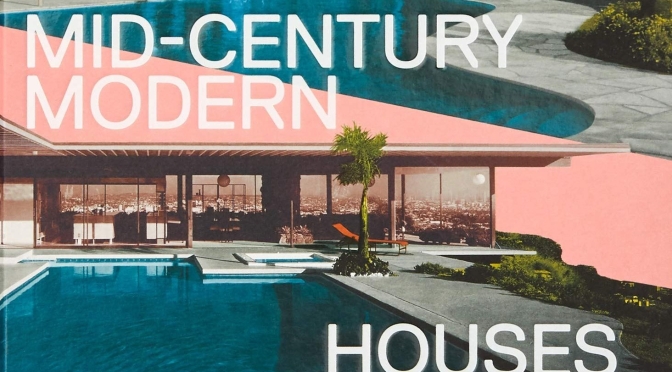
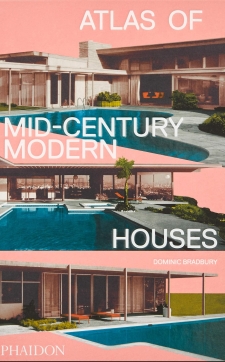 “If one imagines a list of the greatest, most influential houses of the twentieth century, it seems highly likely that the mid-century period will dominate,” writes Bradbury in the book’s introduction, going on to name such famous edifices as the three famous glass houses by Philip Johnson, Ludwig Mies van der Rohe, and Lino Bo Bardi, respectively; Richard Neutra’s Kaufmann House; and Luis Barragán’s Cuadra San Cristóbal. “One could, of course, go on.…” he writes.
 Experienced outdoor enthusiasts and those lacing-up their boots for their first time: prepare to hike the diverse American landscape. Whether aiming to conquer epic expeditions, or simply complete a day hike to recharge, paths of every size await the intrepid wayfarer in Wanderlust USA, a book that serves as a blueprint for adventurous souls in search of new summits.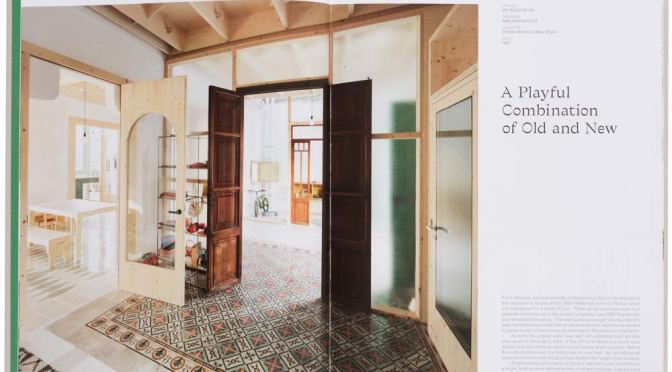
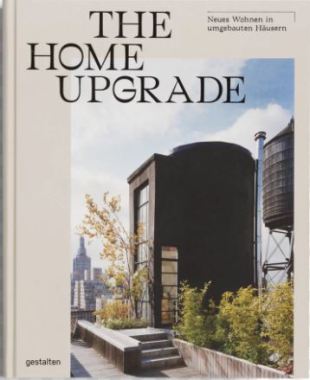 The Home Upgrade looks beyond big budget projects and explores homes where the seemingly impossible has been achieved. For architects striking out on their own, such projects offer the opportunity to flex their muscles and lead a project for the first time. A home in Brooklyn, featured in the book, was refurbished after Hurricane Sandy ravaged the Eastern Seaboard in 2012. The living space was raised above the high-water line, an answer to the grim fact that once-in-a-generation occurrences are a new reality.
 For the second year in a row, editors at The New York Times got together for a live taping of the podcast to discuss the Book Review’s list of the year’s 10 Best Books. “These are books that we think will endure, that will be looked at and read and consulted and referred to well after the year in which they were named,” says Pamela Paul, the editor of The New York Times Book Review, as part of her introductory remarks about what the editors look for in their selections.



 The complementary pair—Onassis the sophisticate, and Simon the nervous hippie—were close until Onassis died in 1994. Over a sprawling conversation, Simon discussed seeing the “goofy” side of Onassis, what she misses about performing and what she envied about Onassis.
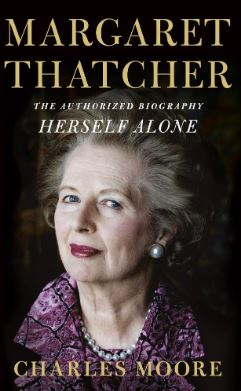 “I don’t think you can think about British politics or British history without thinking about her a very great deal,” Charles Moore, the authorized biographer of Margaret Thatcher, says of his subject on this week’s podcast. “And to some extent, you can’t think about the history of the modern West without thinking about her a very great deal.”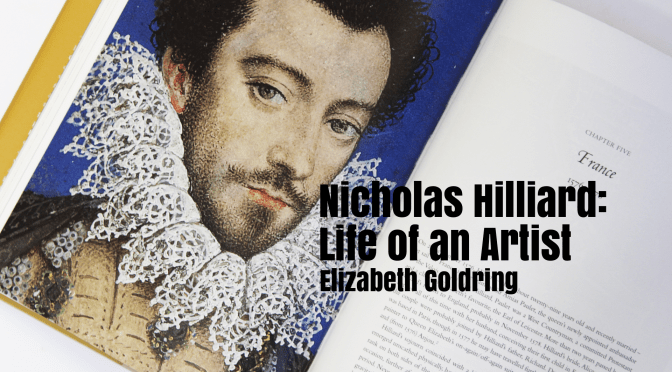
 One of the most impressive aspects of the book is the wealth of contextual material, which never feels digressional but illuminatingly sets the scene for Hilliard’s remarkable life and achievement. His early life in Exeter; the family networks of goldsmiths in Devon and London; the political, religious and cultural worlds he would have encountered in London, Geneva, Paris and also – usually overlooked – in Wesel and Frankfurt; all make for compelling reading. This book is not just the definitive biography of Hilliard but essential reading for anyone interested in late 16th- and early 17th-century England.

 In this artist’s book of 120 iPhone and iPad drawings,
 Boomers Daily