
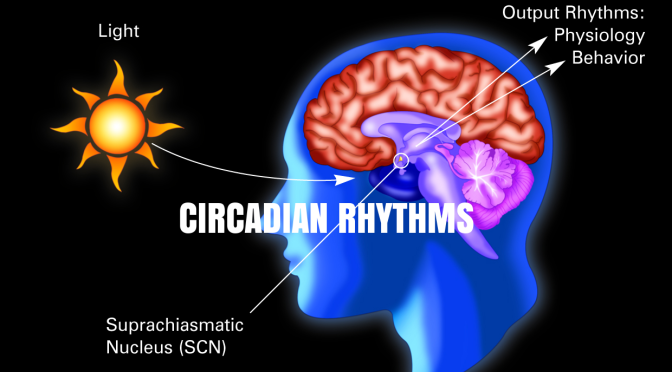
From a Sleep Review Magazine online article:
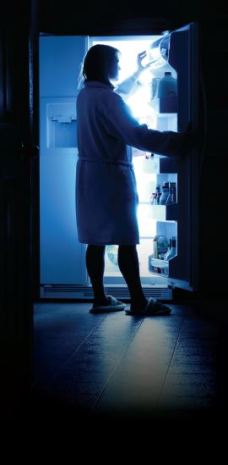 When people are awake during the night, their behaviors are often mismatched with their internal body clocks. This can lead to nighttime eating, which can influence the way the body processes sugar and could lead to a higher risk in diabetes. “What happens when food is eaten when you normally should be fasting?” Scheer asked the audience. “What happens is that your glucose tolerance goes out the window….So your glucose levels after a meal are much higher.” This can increase people’s risk for diabetes.
Frank Scheer, PhD, professor of medicine at Harvard Medical School and director of the medical chronobiology program at Brigham and Women’s Hospital in Boston, says disruption of the body’s circadian rhythms may be one major reason why more Americans are living with preventable diseases. During his keynote talk at the 2019 AAST annual meeting in St. Louis, he outlined how recent research supports the hypothesis that higher rates of shiftwork and other forms of nighttime disruption could be contributing to increased rates of obesity, diabetes, and other common ailments.
To read more: http://www.sleepreviewmag.com/2019/10/circadian-rhythm-disruption-increase-preventable-diseases/

 Chief among these delicacies is Cuban lard bread, which is what inspired the opening of Pilar Cuban Bakery: Ricardo Barreras, the owner of Pilar Cuban Eatery, next door, decided to start baking it himself, using dough, shipped frozen, from a trusted supplier in Florida. When he realized that his kitchen wasn’t big enough for the operation, he figured he might as well open a second place.
 Measles is a dangerous infection that can kill. As many as 100,000 people die from the disease each year. For those who survive infection, the virus leaves a lasting mark—it appears to wipe out the immune system’s memory. News Intern Eva Fredrick joins host Sarah Crespi to talk about a pair of studies that looked at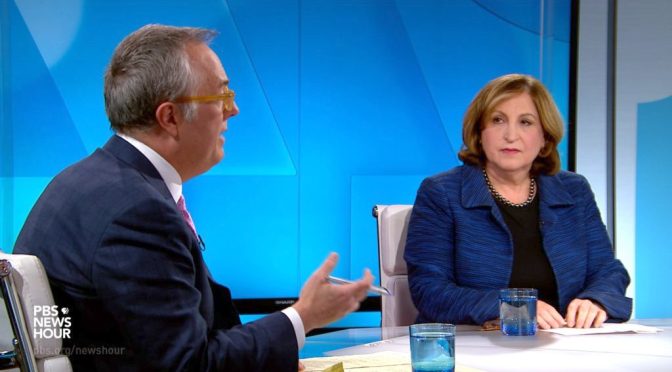
 Washington Post columnist Ruth Marcus and syndicated columnist Michael Gerson join Amna Nawaz to analyze the week’s political news, including details emerging from witness depositions in the impeachment inquiry about President Trump’s dealings with Ukraine, current public opinion on Trump and impeachment and 2020 campaign updates, including the withdrawal of Democrat Beto O’Rourke.




 Being with people at the end of life is very intense work. You are regularly seeing a part of life that a lot of people don’t see, or see very rarely. How do you feel that affects your relationships generally and your friendship specifically?
 The acclaimed biographer Edmund Morris
 For new patients, whose visits entail more work than those of established patients,
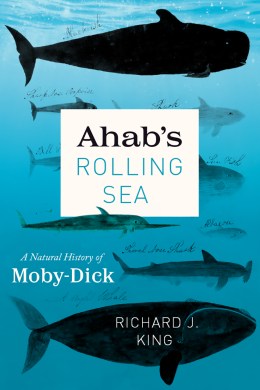 A revelation for Moby-Dick devotees and neophytes alike, Ahab’s Rolling Sea is a chronological journey through the natural history of Melville’s novel. From white whales to whale intelligence, giant squids, barnacles, albatross, and sharks, Richard J. King examines what Melville knew from his own experiences and the sources available to a reader in the mid-1800s, exploring how and why Melville might have twisted what was known to serve his fiction. King then climbs to the crow’s nest, setting Melville in the context of the American perception of the ocean in 1851—at the very start of the Industrial Revolution and just before the publication of On the Origin of Species.
 Boomers Daily