

From a Stanford Medicine online article:
 “A simple example would be copper and fiber wires. When you’re putting wires in a new facility, it’s easier to put in many more than you need that moment because putting them in 5 years from now or 10 years from now is quite hard. Something like 85 percent of our copper wires and fiber optic cables are dark right now because we know we’re going to need them in the future.”
When you consider the fast pace of technological advances today, you wonder how do you go about building a new hospital and keep the technology relevant for 10, 20 or even 50 years? I put that question to Stanford Health Care’s technology wiz Gary Fritz. He told me:
“We try to do something we call future-proof the hospital. We tried to make design decisions and technology decisions that allow us to move to the current or the next generation technology as easily as possible.”

 One of the immune system’s jobs is to protect us from harmful bacterial. And the beneficial organisms that we refer to as probiotics contribute to this effort in a number of ways. In the gut, a robust population of beneficial bacteria can help crowd out harmful bacteria, making it harder for them to thrive. In addition, probiotic bacteria can influence the activity of our own immune cells, regulating inflammation, barrier function, and cell-to-cell signaling.
 Hear this week’s science news, with Nick Howe and Shamini Bundell. This week, a new 3D printer allows quick shifting between many materials, and understanding the link between gut microbes and liver disease.
 NPR’s Tamara Keith and Amy Walter of the Cook Political Report join Judy Woodruff to discuss the latest political news, including whether open hearings could change Americans’ minds about impeachment, implications for Joe Biden’s presidential campaign, the potential entry of Michael Bloomberg into the Democratic race, Sen. Amy Klobuchar’s comments about standards for female politicians and more.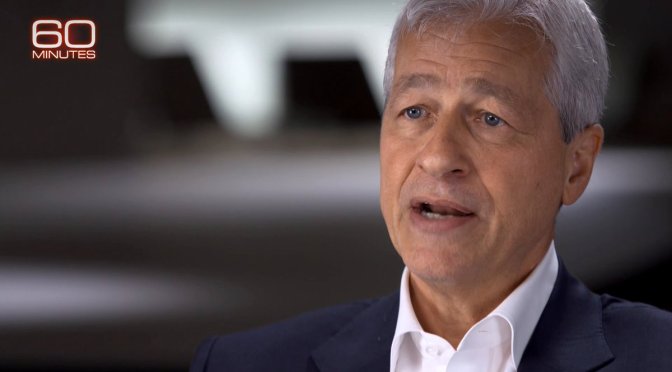
 From a November 10, 2019 “60 Minutes” program: In an interview with Lesley Stahl, the chairman and CEO of JPMorgan Chase talks about Elizabeth Warren and the state of the global economy.
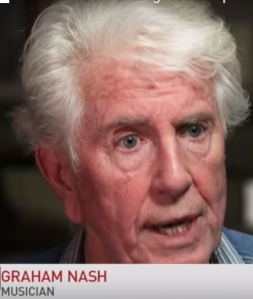 Two-time Rock and Roll Hall of Fame inductee Graham Nash has hits aplenty spanning his nearly six-decade career. But the 77-year-old singer-songwriter recently chose to perform a special run of shows featuring his lesser-known first two solo albums in their entirety, which together describe a crucial chapter in his personal and artistic life. Tom Casciato recently spoke to Nash to learn more.
 Syndicated columnist Mark Shields and New York Times columnist David Brooks join Judy Woodruff to discuss the week’s political news, including the impact of released impeachment inquiry transcripts, what we might learn from the upcoming public hearings, the possible entry of Michael Bloomberg into the 2020 presidential race and results from state elections in Kentucky, Pennsylvania and Virginia.
 Most historical accounts of slavery were written by colonists and planters. Researchers are now using the tools of archaeology to learn more about the
 This week our correspondent joined Emmanuel Macron on his visit to China. The French president is stretching his diplomatic wings, and has some striking views about Europe’s place in the world. The state of Texas has been reliably Republican for decades, but its demographics are changing; could it at last turn blue? And how Japan is dealing with its epidemic of public-transport groping.
 Recent polls in early voting states show Pete Buttigieg’s popularity surging among Democratic voters. The mayor of South Bend, Indiana, is now in the top tier of candidates vying for the chance to challenge President Trump in the 2020 presidential election. But with that growing support comes rising scrutiny. Judy Woodruff talks to Buttigieg about health care, taxes and uniting a divided country.
 Boomers Daily