Audio

Covid-19: ‘The Rise Of The RNA Vaccines’ (Podcast)

Benjamin Thompson, Noah Baker and Elie Dolgin discuss RNA vaccines.

In this episode:

01:16 How RNA vaccines came to prominence

In less than a year, two RNA vaccines against COVID-19 were designed, tested and rolled out across the world. We discuss these vaccines’ pros and cons, how RNA technology lends itself to rapid vaccine development, and what this means for the fight against other diseases.

News feature: How COVID unlocked the power of RNA vaccines

09:20 The hurdles for trialling new COVID-19 vaccines

Multiple candidates for new COVID-19 vaccines are still being developed, which may offer advantages over the vaccines currently available. However, running placebo-controlled trials of these candidates is becoming increasingly difficult, so researchers are looking for different ways to evaluate them.

News: Search for better COVID vaccines confounded by existing rollouts

14:45 How long will COVID vaccines be effective?

There is much concern around the world about two faster-spreading variants of SARS-CoV-2. We get an update on whether these variants could render vaccines ineffective.

News: Could new COVID variants undermine vaccines? Labs scramble to find out

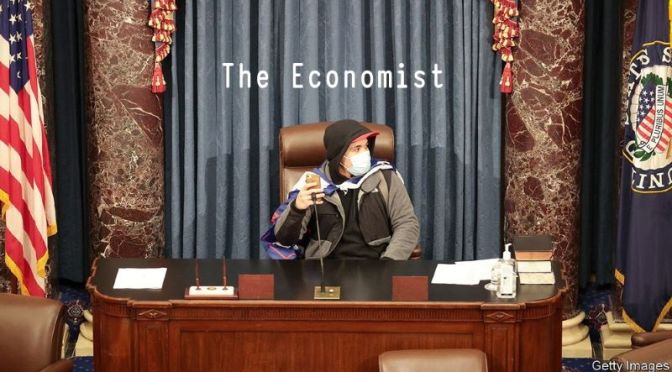
Morning News Podcast: Second Impeachment, Capitol Mob Charges

President Trump impeached by the House for second time, criminal charges proliferate against members Capitol mob, and young Montana girl writes letter to officer injured in Capitol riots.

Technology Podcast: Covid “Growth”, Magnetic Tape & Herbal Remedies

Covid-19 has catalysed scientific advancement and boosted technological optimism. Could innovation be the answer to decades of slowing growth in Western countries? Also, why magnetic tape still reigns supreme in “cold” data storage. And how effective are traditional herbal remedies at treating tropical diseases?

Science Podcast: Dire Wolf Extinction, Pluto’s Blue Haze & Mice Empathy

DNA clues point to how dire wolves went extinct, and a round-up of the main impacts of Brexit on science.

In this episode:

00:45 Dire wolf DNA

Dire wolves were huge predators that commonly roamed across North America before disappearing around 13,000 years ago. Despite the existence of a large number of dire wolf fossils, questions remain about why this species went extinct and how they relate to other wolf species. Now, using DNA and protein analysis, researchers are getting a better understanding of what happened to these extinct predators.

Research Article: Perri et al.

11:43 Research Highlights

The secret to Pluto’s blue haze, and the neural circuitry underlying mice empathy.

Research Highlight: Ice bathes Pluto in a blue haze

Research Highlight: Brain maps show how empathetic mice feel each other’s pain

13:31 Post-Brexit science

In December, a last minute trade-deal between the UK and EU clarified what the future relationship between the two regions would look like, after Brexit. We discuss the implications of this trade-deal for science funding, the movement of researchers, and data sharing.

News Explainer: What the landmark Brexit deal means for science

23:18 Briefing Chat

We discuss some highlights from the Nature Briefing. This time, concerns about contaminating water on the moon, and the spy satellites that spied out environmental change.

Nature News: Will increasing traffic to the Moon contaminate its precious ice?

The New York Times: Inside the C.I.A., She Became a Spy for Planet Earth

Morning News Podcast: Impeachment, Capitol Police & Online Returns

‘Several’ Capitol police officers suspended over pro-Trump riot, Democrats, GOP face defining moments after Capitol riot, and Amazon, Walmart tell consumers to skip returns of unwanted items.

Morning News Podcast: Articles Of Impeachment, More Arrests Of Rioters

Democrats demand accountability for President Trump’s actions. If their push to invoke the 25th Amendment fails, they’ll try to impeach him again. But what difference does it make if his term is up in nine days?

Law enforcement officials continue to investigate and arrest rioters, but they’re also preparing for next week’s inauguration. Far-right extremists say they’ll be back. And only about a third of the available coronavirus vaccines have been administered. The incoming Biden administration plans to make nearly all vaccines immediately available.

World News: Trump’s Legacy, China Issues & Stock Prices (Podcast)

A selection of three essential articles read aloud from the latest issue of The Economist. This week: the shame and the opportunity of Trump’s legacyhow to deal with China (8:50), and why the crazy upward march in stock prices might just continue (15:45).

Sunday Morning Podcast: Headlines From Zurich, London & Tokyo (2021)

The weekend’s top news with Monocle’s Tyler Brûlé, Urs Bühler, Eemeli Isoaho and Chandra Kurt, with commentary from our editors in London and Tokyo. Plus: what’s on the pages of Greece’s ‘Kathimerini’ newspaper.

Morning News Podcast: Fallout From Washington DC Riots, Covid Job Losses

Two members of President Trump’s cabinet resigned on Thursday. Democrats in Congress say it’s not the secretaries who need to go, but Trump himself. Many signs suggested this week’s pro-Trump rally would be a riot.

Why didn’t authorities seem to believe it? And the pandemic continues to drag the job market down. The Labor Department says 19 million Americans are still depending on unemployment benefits. 

Science Podcast: Ash Trees At Risk, Organizing Active Matter And Robot Swarms

Freelance journalist Gabriel Popkin and host Sarah Crespi discuss what will happen to ash trees in the United States as federal regulators announce dropping quarantine measures meant to control the emerald ash borer—a devastating pest that has killed tens of millions of trees since 2002. 

Instead of quarantines, the government will use tiny wasps known to kill the invasive beetles in hopes of saving the ash. Sarah also talks with Pavel Chvykov, a postdoctoral researcher at the Massachusetts Institute of Technology, about the principles for organizing active matter—things like ant bridges, bird flocks, or little swarms of robots.