The fall of Kabul, the capital, sealed the country’s fate: after 20 years, the Taliban are back in charge—a fearsome outcome for its people and for the Biden administration.
As capital punishment fades, life sentences proliferate; that comes with its own costs and iniquities. And visiting an enclave in Uruguay that is in many ways more Russian than Russia.
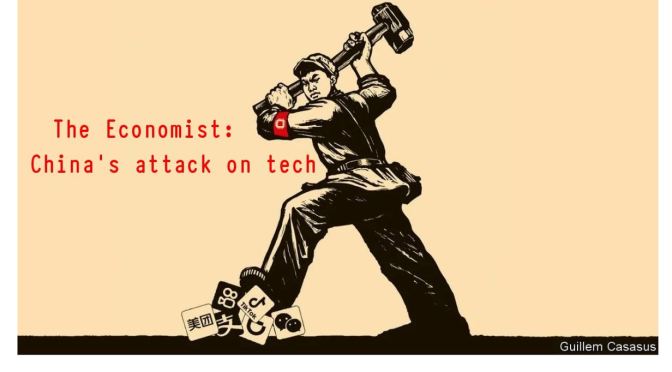
A selection of three essential articles read aloud from the latest issue of The Economist. This week: China’s attack on tech, function in Washington (10:09), and our prediction model for Germany’s election (17:15)
Monocle’s Emma Nelson and guests cover the weekend’s defining stories. Plus: what’s making headlines in Finland and what’s on the pages of Italy’s ‘La Repubblica’ newspaper.
Georgina Godwin sets the tone for the weekend as Simon Brooke leafs through the morning newspapers and Monocle editor in chief Andrew Tuck joins with his regular weekend column.
We assess China’s ‘five-year plan’ for its economy and ask what it means for the country’s private firms. Plus: the latest on Lithuania’s plans to build a wall on its border with Belarus, and Zürich’s Design Biennale.
Charles Piller, an investigative journalist for Science, talks with host Sarah Crespi about a risky trial of vitamin D in asthmatic children that has caused a lot of concern among ethicists.
They also discuss how the vitamin D trial connects with a possibly dangerous push to compare new treatments with placebos instead of standard-of-care treatments in clinical trials.
Next, Birhanu Eshete, professor of computer and information science at the University of Michigan, Dearborn, talks with producer Joel Goldberg about the risks of exposing machine learning algorithms online—risks such as the reverse engineering of training data to access proprietary information or even patient data.
The Senate has passed the first part of President Joe Biden’s mammoth plan, which is now tied to a far more ambitious part two. We examine their prospects for passage.
Zambia is undertaking a pivotal election—but it seems far from a fair fight to oust the incumbent. And our Germany-election tracker cuts through reams of data and tricky electoral politics.
Researchers uncover how grid cells fire in a 3D space to help bats navigate, and a fabric that switches between being stiff and flexible.
In this episode:
00:47 Mapping a bat’s navigation neurons in 3D
Grid cells are neurons that regularly fire as an animal moves through space, creating a pattern of activity that aids navigation. But much of our understanding of how grid cells work has involved rats moving in a 2D plane. To figure out how the system works in a 3D space, researchers have mapped the brain activity of bats flying freely around a room.
09:59 A flexible fabric that transforms from soft to rigid (and back again)
Researchers have created a ‘tunable’ fabric, inspired by medieval chainmail, that when compressed changes from flexible to rigid. The stiffened structure can hold 30 times its own weight, and the team behind it suggest this material could be used to build temporary shelters or have medical applications.
This week the UN’s Intergovernmental Panel on Climate Change released its long awaited report detailing compiling the latest climate science data. Nature’s Jeff Tollefson joins us to discuss the report and the warnings it contains for our warming world.
As Greece’s wildfires show no sign of abating, we speak to a correspondent on the ground. We also check in with Lynne O’Donnell in Kabul for the latest on the rapid Taliban advance. Plus: astrology in print.
Inoculation or testing requirements are spreading nearly as fast as the Delta variant. But it is not clear they will actually drive more people to get vaccinated.
A broad semiconductor shortage has hit plenty of industries; we examine supply-chain subtleties that have made it particularly bad for carmakers. And why Mumbai is suffering from a plague of snakes.
News, Views and Reviews For The Intellectually Curious






 Boomers Daily