

Tag Archives: Villages

Arts/History: Smithsonian Magazine – July/Aug 2023


Smithsonian Magazine – July/August Issue: American Tapestries- Three artists creating bold new versions of a cherished art form; In search of Willa Cather; Archaeology of the world’s oldest village, and more…
A Massive Archive Tells the Story of Early African American Photographers
/https://tf-cmsv2-smithsonianmag-media.s3.amazonaws.com/filer_public/fe/e2/fee2954d-03e4-4587-8579-109266029f90/julaug2023_e12_saam-daguerreotypes.jpg)
Arresting portraits, now a part of the Smithsonian collections, illuminate the little-known role these artists played in chronicling 19th-century life
“Before daguerreotypes, if you wanted a portrait made, you commissioned a painter,” says John Jacob, SAAM’s director of photography, as we study Rhoda’s portrait. “Photography democratized portraiture because it was significantly cheaper. But until we acquired these images, we weren’t able to show in our collection that African Americans were part of this process, as photographers and subjects, and also as entrepreneurs and innovators, experimenting with the latest technology and investing in it.”
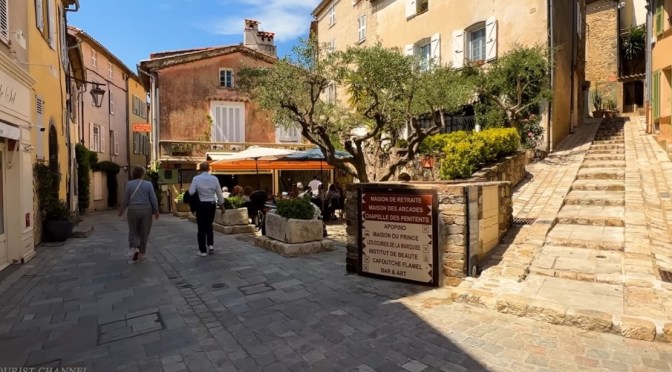
Village Walks: Grimaud In The South Of France (4K)

Boasting some well-preserved heritage, Grimaud contains a plethora of pretty little cobbled streets in bloom, village squares, archways and restored period homes. In the old village, you can also see the beautiful Church of St. Michael, built in the late 12th century in the Provençal Romanesque style. It houses a fresco from 1850 depicting St. Michael, St. Peter and St. Bartholomew, as well as contemporary stained glass windows made in 1975 by the jeweller Jacques Gautier.
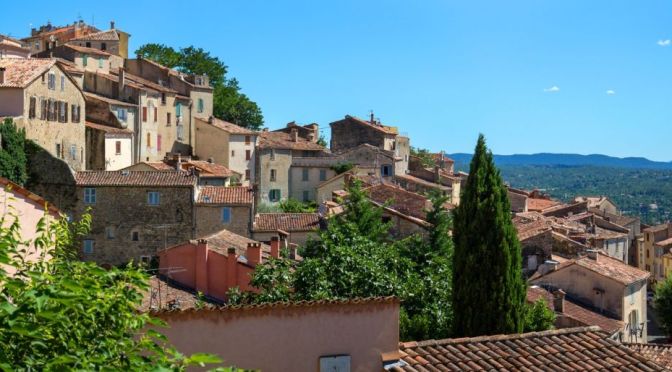
Village Walks: Fayence In The South Of France (4K)
A fine example of traditional Provençal architecture, Fayence lies on the D562 road between Draguignan and Grasse, and is a gateway for visitors wishing to explore the surrounding area. North of the town, the D563 road leads through oak forested hills to Mons and beyond to the Route Napoléon which links Nice to Grenoble through the Alps.
Fayence has long been a secret destination for tourists driving towards the interior countryside of the Var with its deep gorges, rocky outcrops, vineyards, fields of lavender and olive groves along the way. It is an unmissable stop for the lovers of historical towns and relaxing landscapes characteristic of Provence. The long summers are warm averaging around 25C and dropping to a mild 10C from December until February.
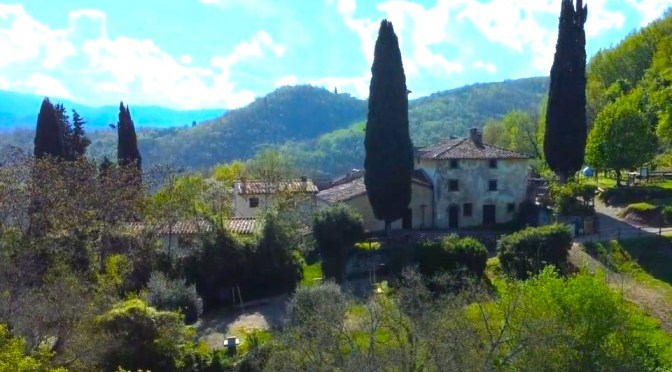
Travel: Aerial Tour Of The Village Of Barbiani, Italy

Barbiana is located in the region of Tuscany. Tuscany’s capital, Florence is approximately 14 mi away from Barbiana (as the crow flies). The distance from Barbiana to Italy’s capital Rome (Rome) is approximately 149 miles.
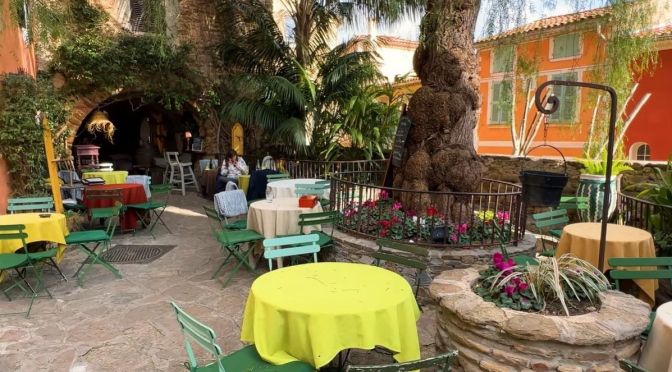
Village Walks: Bormes-les-Mimosas, South Of France
Bormes-les-Mimosas (February 2023) is a small village in the Var clinging to the side of a hill, a sort of flowery balcony over an intense blue Mediterranean. Lower down, Le Lavandou and its beaches, the fort of Brégançon not far from the open sea then the sunny coasts of the Côte d’Azur.
This French commune is located on the edge of the Mediterranean and in the southern part of the Moorish massif. Like any locality in the region, the climate is Mediterranean with high heat in July. The tourist attractions of this city are many. The most important of these is the old castle which is located on a hill. Then comes St. Francis Square where you can see a statue of St. Francis de Paul, a famous monk who lived there in the fifteenth century.
Filmed and edited by 
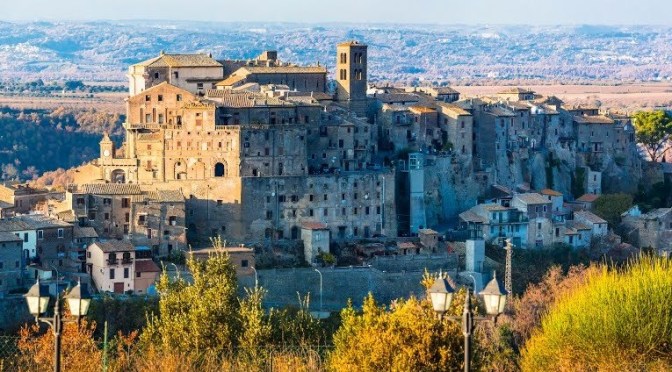
Walking Tours: Village Of Bomarzo In Central Italy
Bomarzo is a town of the province of Viterbo (Lazio, central Italy), in the lower valley of the Tiber. Bomarzo’s main attraction is a garden, usually referred to as the Bosco Sacro (Sacred grove) or, locally, Bosco dei Mostri (“Monsters’ Grove”), named after the many larger-than-life sculptures,
Video timeline: 0:00 – [Drone intro🌐] 1:30 – [Walking tour begins👣 / Via del Castello (Castle Alley)🏰] 2:50 – [Statue of St.Anselmo – [Via del Castello (Castle Alley)] 3:33 – [Porta Nuova (New Gate)🏛] 5:00 – [Entrance to the old town📸] 6:20 – [Via Borghese & Borghese Palace] 7:40 – [Piazza Duomo⛲] 8:30 – [Duomo of Bomarzo / Church of St.Maria Assunta – *tour inside*⛪☀️] 12:33 – […re-used old roman funeral statues?🏺] 13:38 – [Via Regina Elena] 14:38 – [Via della Pace (Alley of Peace)🌹] 15:30 – [Piazza G.Pepe⛲] 15:55 – [Church of St.Anselmo – *tour inside*⛪☀️] 18:34 – [Via Daniele Manin] 19:40 – [Panorama on the valley⛺] 20:50 – [Via Vittorio Emanuele] 21:10 – [Charity Exhibit for less privileged people🎈] 22:30 – [Beware of the cat!🐱] 26:00 – [Piazza Garibaldi⛲] 28:18 – [Very charming narrow passage…📸] 29:50 – [Porta Nuova (New Gate)🏰] 32:30 – […descending to the eastern part of Bomarzo…👟] 35:46 – [Piazza della Repubblica⛲]
some sculpted in the bedrock, which populate this predominantly barren landscape. It is the work of Pier Francesco Orsini, called Vicino (1528–1588), a condottiero or mercenary and a patron of the arts. The park of Bomarzo was intended not to please, but to astonish, and like many Mannerist works of art, its symbolism is arcane; for example, one large sculpture is of one of Hannibal’s war elephants, which mangles a Roman legionary, and another is a statue of Ceres lounging on the bare ground, with a vase of “fruits of the earth” perched on her head. The many monstrous statues appear to be unconnected to any rational plan and appear to have been strewn almost randomly about the area, sol per sfogare il Core (“just to set the heart free”) as one inscription on an obelisk says.
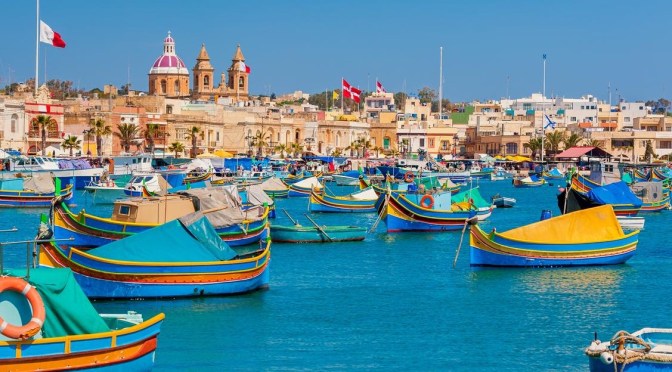
Village Views: Marsaxlokk In Southeastern Malta (8K)

Inhabited and well-known since antiquity, Marsaxlokk was used as a port by Phoenicians, Carthaginians and also has the remains of a Roman-era harbour. Marsaxlokk is sometimes referred to as Portus Herculis, due to the association of Marsaxlokk Bay with the Roman and Punic remains at Tas-Silġ.
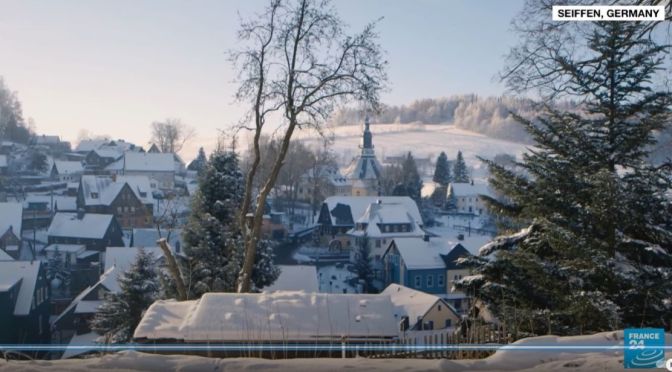
German Villages: Seiffen – Home Of The Nutcracker

Seiffen is a charming “Toy Story” village in eastern Germany’s wooded Erzgebirge (known in English as the Ore Mountains). Located off the beaten tourist path, minutes from the Czech Republic border, it’s the 19th-century birthplace of nutcrackers, the whimsical wooden figures that are a traditional symbol of Christmas in many cultures.

Village Walks: Lacoste In The Luberon, France (4K)
Opposite the village of Bonnieux, Lacoste is set on one of the Luberon’s most impressive sites. Perched on the northern slopes of the Petit Luberon Mountain, this charming village of 420 residents offers spectacular views over the Calavon Valley and the Mountains of Vaucluse. The walls of the towering ruined castle standing above Lacoste appear to protect the authentic Provençal village.
 Boomers Daily