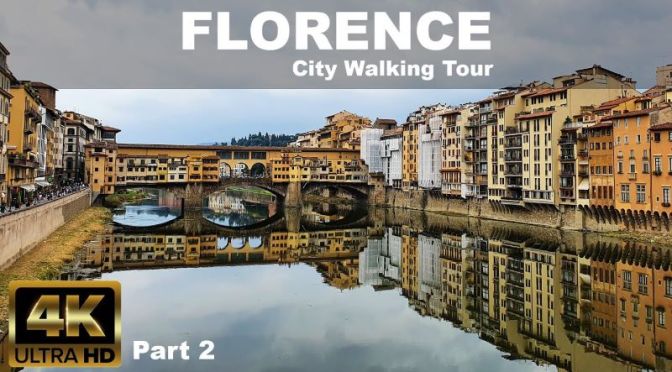
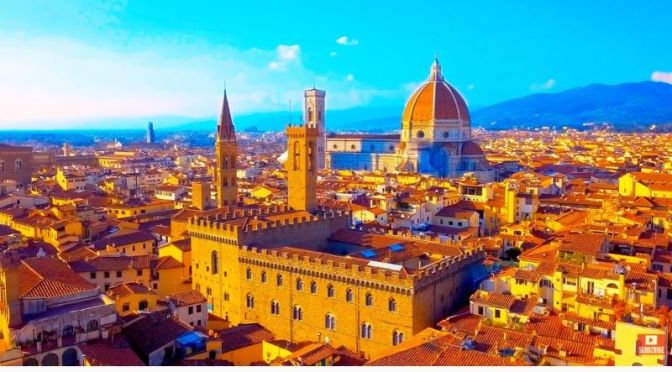
Florence, capital of Italy’s Tuscany region, is home to many masterpieces of Renaissance art and architecture. One of its most iconic sights is the Duomo, a cathedral with a terracotta-tiled dome engineered by Brunelleschi and a bell tower by Giotto. The Galleria dell’Accademia displays Michelangelo’s “David” sculpture. The Uffizi Gallery exhibits Botticelli’s “The Birth of Venus” and da Vinci’s “Annunciation.”
Video Timeline 00:10 Piazza del Duomo – Cattedrale di Santa Maria del Fiore 10:51 Via Roma 12:05 Piazza della Repubblica 13:40 Via dei Calzaiuoli 16:00 Piazza della Signoria – Marzocco 18:00 Loggia dei Lanzi 27:00 Ponte Vecchio
Florence, capital of Italy’s Tuscany region, is home to many masterpieces of Renaissance art and architecture. One of its most iconic sights is the Duomo, a cathedral with a terracotta-tiled dome engineered by Brunelleschi and a bell tower by Giotto. The Galleria dell’Accademia displays Michelangelo’s “David” sculpture. The Uffizi Gallery exhibits Botticelli’s “The Birth of Venus” and da Vinci’s “Annunciation.”
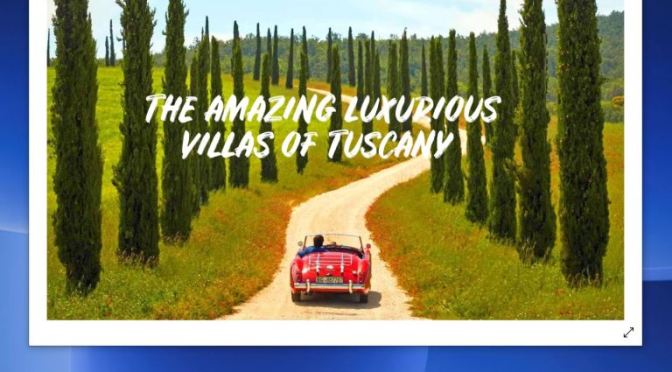
Tuscany is a region in central Italy. Its capital, Florence, is home to some of the world’s most recognizable Renaissance art and architecture, including Michelangelo’s “David” statue, Botticelli’s works in the Uffizi Gallery and the Duomo basilica. Its diverse natural landscape encompasses the rugged Apennine Mountains, the island of Elba’s beaches on the Tyrrhenian Sea and Chianti’s olive groves and vineyards.
Borgo San Felice – An Ancient Tuscan Stone Village Dating Back to Medieval Times in the Heart of Tuscany, in 1992 It Was Converted Into a Luxury Hotel Following a Lengthy Conservative Restoration Project.
Borgo Vendita – Near Siena, and About Half an Hour From Arezzo and Florence, Between the Banks of the Arno and the Soft Hills of Chianti. A Medieval Village With an Ancient Flavor, but With a Modern Layout, Surrounded by Unspoiled Countryside.
Castello Di Leonina – In the Heart of the Famous Crete Senesi, Surrounded by the Most Evocative Views of the Tuscan Countryside, Stands Castello Di Leonina, a Thirteenth-century Fortress That Was Formerly the Residence of the Chigi Family and the Country Residence of Future Pope Alexander Vii, and is Today an Exclusive 4-star Hotel Just Outside Siena.
Villa Antinori – One of Tuscany’s Most Famous Villas A Villa That Once Belonged to the Mona Lisa’s Presumed Model is Up for Sale in Italy. The Villa Antinori Was Once Owned by the Family of Silk Merchant Francesco Del Giocondo, Whose Wife Lisa Gherardini is Widely Believed to Have Sat for Leonardo Da Vinci’s World-famous Portrait.
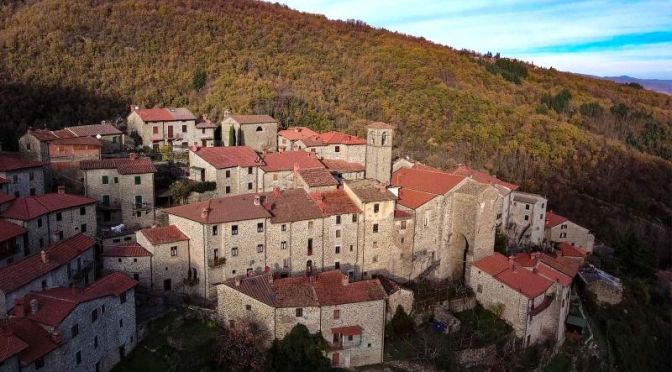
Raggiolo, the small village characterized by ancient fortifications, narrow and cobbled streets, small houses with tiny patches of land supported by dry stone walls, the village still perfectly preserves its original characteristics.
Located on the slopes of Pratomagno in the Casentino valley in the center of famous historical and tourist resorts such as La Verna, Camaldoli, Poppi and Arezzo, easily reachable along the roads that are themselves part of the beauty of the journey. In the silence of places pervaded by a kind of suspension of time, Raggiolo dominates its magnificently outdated valley from above. It presents itself with the simplicity of someone who has deep roots, more than millenary and an ancient and noble historical legacy of pride, of daily confrontation with the harshness of life, of ancestry that extends into the night of the centuries.
Stories of Longobards, of feudal lords and in particular of a Corsican colony that the tradition of the town has deduced here centuries ago. Stubborn people that of Raggiolo, indomitable and cunning, tempered by fatigue. Mountain people with a life marked by dried chestnuts, by familiarity with the forest and with animals, by transhumance in the Maremme. Fast with the billhook and the pinnate, daring in the use of the knife, of unusual physical vigor, lively intelligence. And a hard misery to endure in the intense cold of winters among polenta, boiled chestnuts and cheese.
Curiosity: ✱”La Brigata di Raggiolo” is the name of the local pro loco. Thanks to this association, the village is full of interesting cultural, folkloristic and territorial promotion activities that are held throughout the year. In particular, we should remember “The talks of Raggiolo”, an annual event where scholars of various kinds meet in this village to discuss topics related to Pratomagno and the “Festa di Castagnatura”, a festival dedicated to chestnuts which is generally held in the last weekend of October.
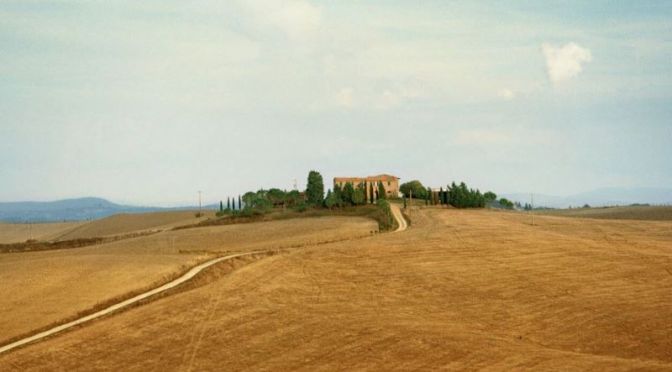
Even now, the approach to the 1,200-acre property is just as it must have been centuries ago: a long, winding ride through pale, undulating fields, leading to a dignified hilltop retreat. The three-story ivy-wrapped building is ringed by 20-foot obelisk-like cypress trees — a private citadel entered through a wrought-iron gate. Beyond the vista of olive groves, another fortresslike outcropping is visible in the distance: the mottled russet city of Siena, three miles away.
WHEN RENÉ CAOVILLA, the 82-year-old Venetian shoe designer, was first shown the Tuscan villa he bought in 1977, he fell in love with it instantly. He wasn’t only taken with the house, a 15th-century red brick monastery that had undergone a slow transformation into an austere 20-bedroom private home in the 17th century, but the Chianti landscape as well — the whole of classical history evoked in a flash.
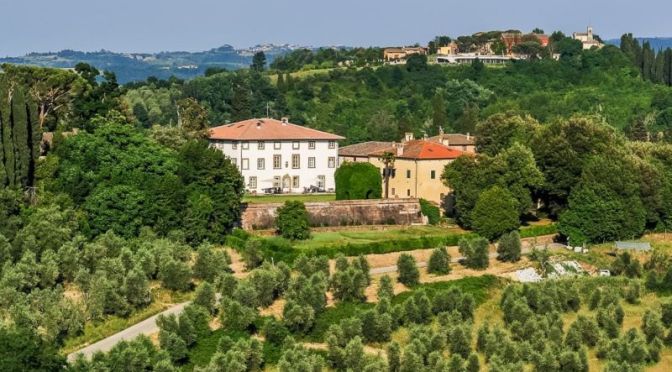
Magnificent and elegant luxury villa in Tuscany built in 1893 in the late Tuscan Renaissance style that dominates the plain of Pistoia and offers a spectacular panoramic view towards Florence. The exclusive villa near Florence is a testimony of the aesthetic culture of the end of the century and of the taste of high society of that time, with the creation of unique and exclusive artifacts and locals for the most important persons of the nobility and of the rich international community that, at that time, was attending Florence.
The most famous artist-decorators then active in Tuscany, such as Peter Baldoncoli Francesco Morini, Mariano Coppedè and Giuseppe Michelucci, participated in the realization of this residence, which is typical of Sixteenth-century style and it was celebrated as a dwelling worthy of the Renaissance. The interiors feature rich finishes, beautiful antique furnishings and wonderful wall-paintings.
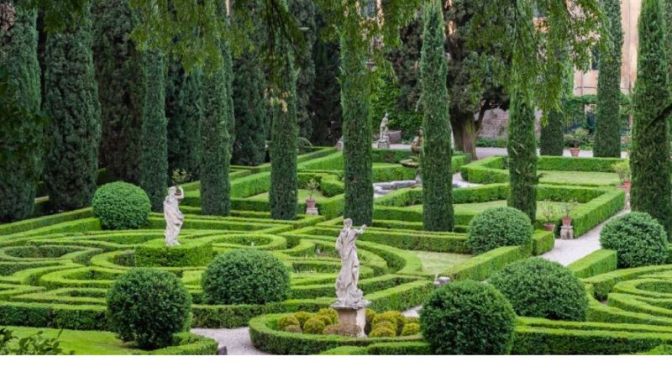
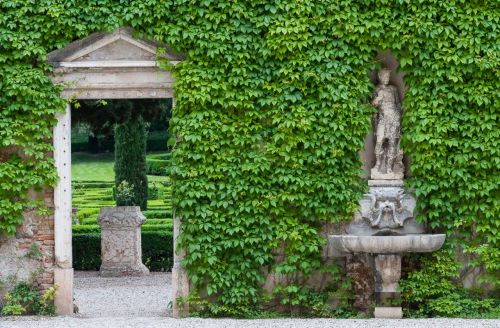
Giardino Giusti in Verona and Villa Fracanzan Piovene: The centuries-old Italian gardens that evoke the romance of Romeo and Juliet.
November 7, 2020
The name Giusti has been synonymous with one of Italy’s most celebrated Renaissance gardens since the late 16th century. Originally wool-dyers from Prato in Tuscany, the Giusti family had moved its business north in the previous century, settling in an unglamorous industrial suburb of Verona. Within a few generations, its members were rich and had also acquired the requisite antiquarian and artistic tastes of true Renaissance gentlefolk.
The garden created by Agostino Giusti between 1565 and 1580 was intended to fulfil various functions. It had to showcase his collection of Roman inscriptions and to serve as a setting for the lavish theatrical and musical productions—the predecessors of opera—then in vogue. To this day, the garden retains the surprise element of a stage set, presenting a magnificent and entertaining spectacle that totally confounds one’s expectations of a city garden.
Villa Fatti, one of the symbols of Sansepolcro’s recent history. On the hills overlooking the beautiful historic center of the town, in a very panoramic position with a spectacular view over the underlying Tiber Valley, we find a magnificent 2,610-sqm manorial villa with park and Italian garden. Laid over five floors, this impressive building currently houses 10 beautiful bedrooms (with the possibility of creating many more), offices and a huge professional kitchen ideal to start a prestigious restaurant, maybe coupled with a luxury boutique hotel.
Early morning fog in Tuscany around Laterina and Pratomagno, Italy.
Laterina is a frazione of Laterina Pergine Valdarno in the Province of Arezzo in the Italian region Tuscany, located about 50 kilometres (31 mi) southeast of Florence and about 14 kilometres (9 mi) northwest of Arezzo.
The first historical evidence related to this wonderful Tuscan estate with over three hundred hectares of grounds for sale are in a document dated 8 November 1044, found in Pisa’s State Archives.
Since then, this villa has seen a number of prestigious owners, including noble families such as the Counts Mastiani-Brunacci and Della Gherardesca, who gave their contribution into maintaining this property’s splendour throughout the centuries. The villa we see today dates back to the 17th century and includes a Renaissance garden that was carefully renovated and brought back to utmost splendour, framing what is currently a wonderful luxury resort equipped with all comforts.
The property is in the middle of a vast fauna and game reserve measuring 320 hectares and featuring unsoiled forests and stunning expanses of olive trees, besides being home to a big number of buildings that measure 18,000 sqm overall, part of which have beed restored and fit for residential use, while others are currently into disuse but may be rebuilt or renovated. The resort has been completely renovated and is home to two suites with jacuzzi and to ten bedrooms that have been carefully furnished in a Tuscan style with unique pieces.
Each room offers a wonderful view of its surroundings, the Italian-style garden, the villages nearby and leafy hills. The main body includes several warehouses, apartments of the agritourism resort and garages, but there are also a wonderful swimming pool measuring 140 sqm, a tennis court, an Italian-style garden and a park. Some extraordinary features of this Tuscan estate for sale are its private grass airport, with a hangar to store plane, a hangar for helicopters and a pad, a lake used for fishing and watering fields, and a private hunting reserve measuring over 300 hectares.
News, Views and Reviews For The Intellectually Curious





 Boomers Daily