The militia, which has targeted ships it says are connected to Israel, has vowed not to stop until the siege in Gaza ends and claims that a new U.S.-led maritime task force cannot deter the attacks.
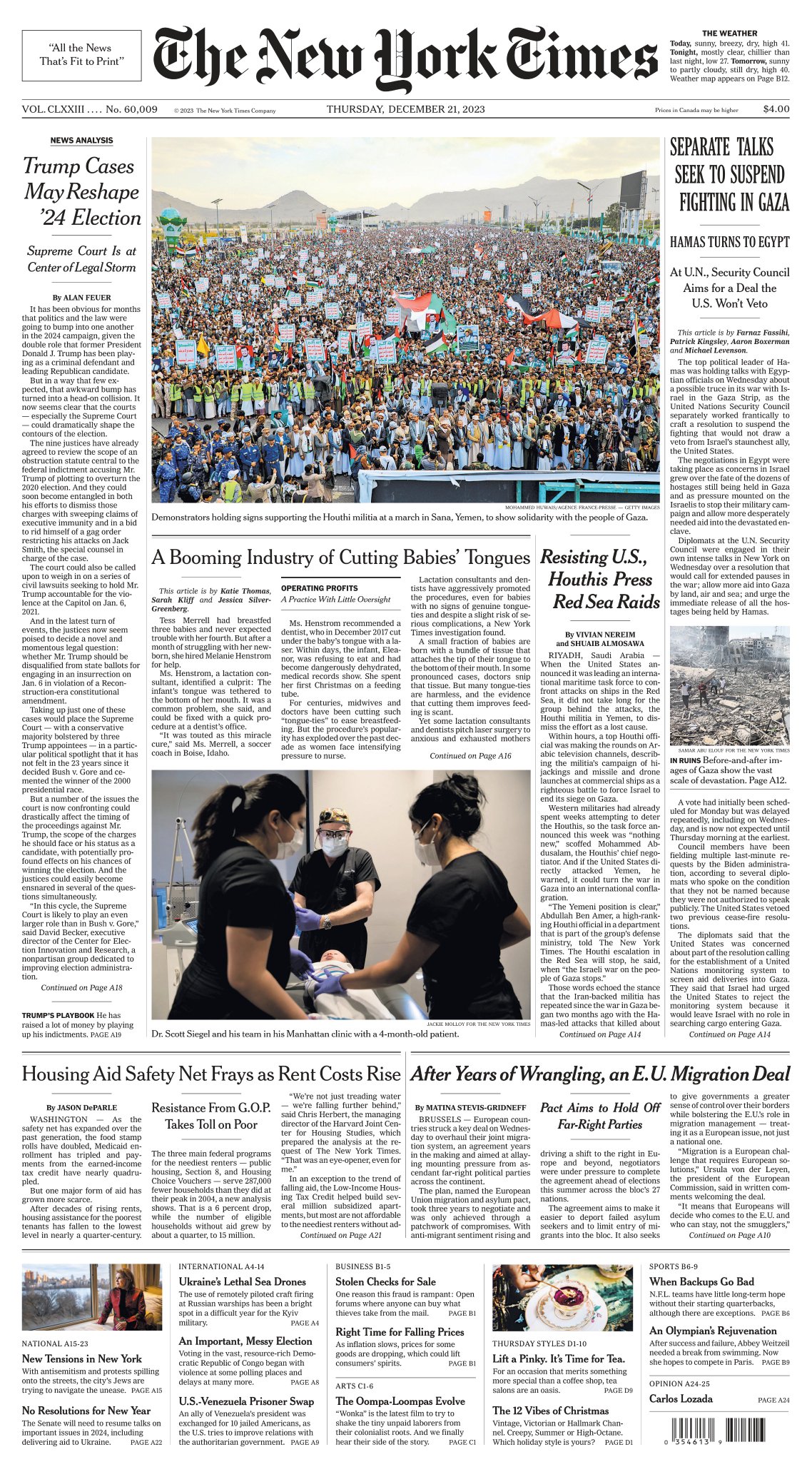
Trump Cases Crashing Into Supreme Court Could Reshape 2024 Election
The ruling that Donald Trump is not eligible for the ballot in Colorado is the latest election-related issue likely to land before the justices. The implications for 2024 could be profound.
Inside the Booming Business of Cutting Babies’ Tongues
Dentists and lactation consultants around the country are pushing “tongue-tie releases” on new mothers struggling to breastfeed.
Houthi attacks on Red Sea shipping threaten global trade
For the world to prosper, ships must reach their ports. They are most vulnerable when passing through narrow passages, such as the Strait of Malacca or the Panama Canal. So a recent surge of attacks on vessels in the Red Sea, the only southern conduit into the Suez Canal, poses a grave threat to global trade. The Houthis, militants in Yemen backed by Iran, have fired over 100 drones and missiles at ships linked to more than 35 countries, ostensibly in support of the Palestinians. Their campaign is an affront to the principle of freedom of navigation, which is already at risk from the Black Sea to the South China Sea. America and its allies must deal firmly with it—without escalating the conflict in the Middle East.
Spare a thought for economists. Last Christmas they were an unusually pessimistic lot: the growth they expected in America over the next calendar year was the fourth-lowest in 55 years of fourth-quarter surveys. Many expected recession; The Economist added to the prognostications of doom and gloom. This year economists must swap figgy pudding for humble pie, because America has probably grown by an above-trend 3%—about the same as in boomy 2005. Adding to the impression of befuddlement, most analysts were caught out on December 13th by a doveish turn by the Federal Reserve, which sent them scrambling to rewrite their outlooks for the new year.
The Globalist Podcast (December 20, 2023) – We have the latest on the Red Sea shipping crisis and the decision of Colorado’s Supreme Court to kick Donald Trump off the ballot.
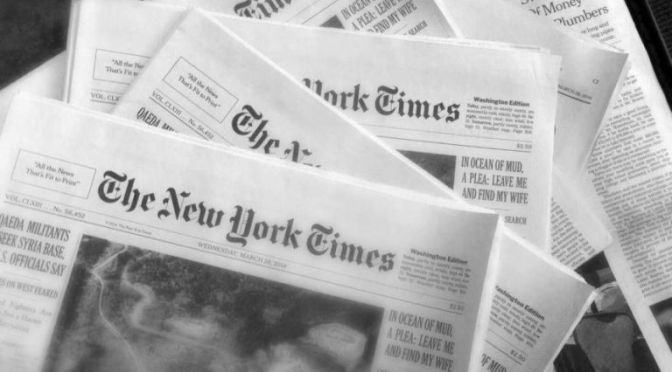
Also, the day’s newspapers, the latest business news and a look at Christmas in Lapland.
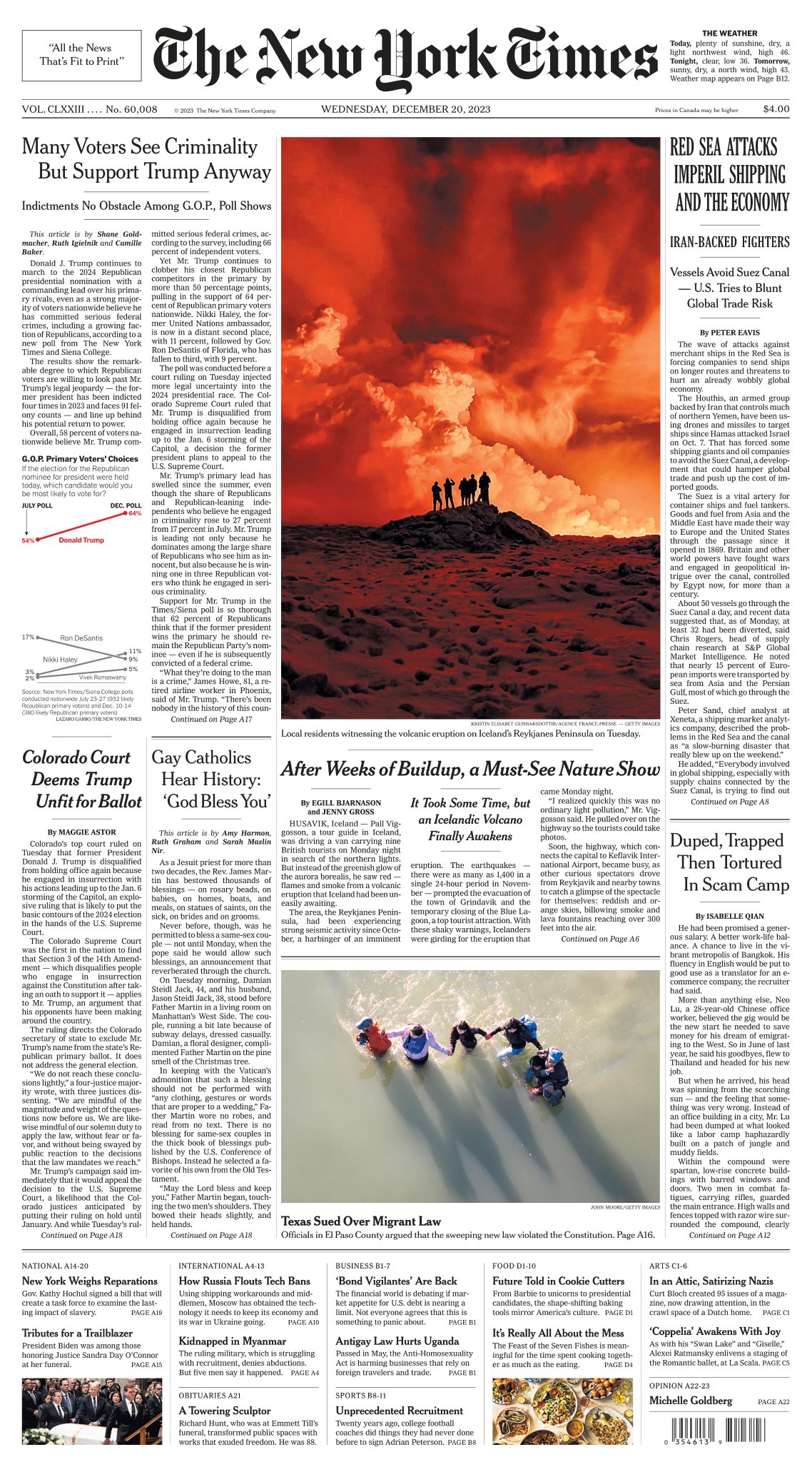
The decision, the first by a court to find that Donald Trump is ineligible to hold office again because he engaged in insurrection, is likely to put a monumental case before the U.S. Supreme Court.
A man was abducted by a Chinese gang and forced to work in a scam operation. He gathered financial information, photos and videos and shared the material with The New York Times.
In Iceland, a Fiery Show of Lava and Smoke
Icelanders had been girding for an eruption. When it happened, they wanted to see it.
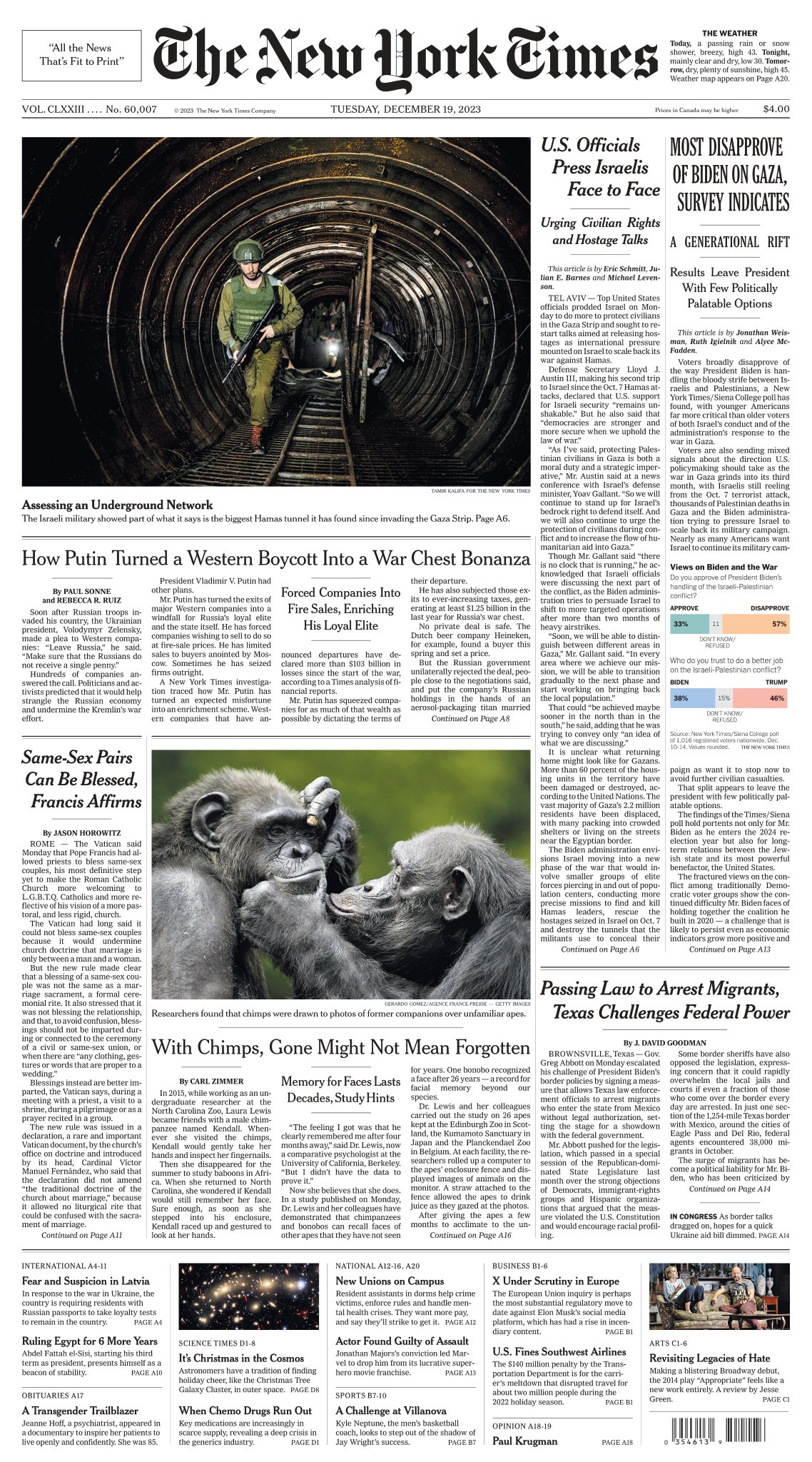
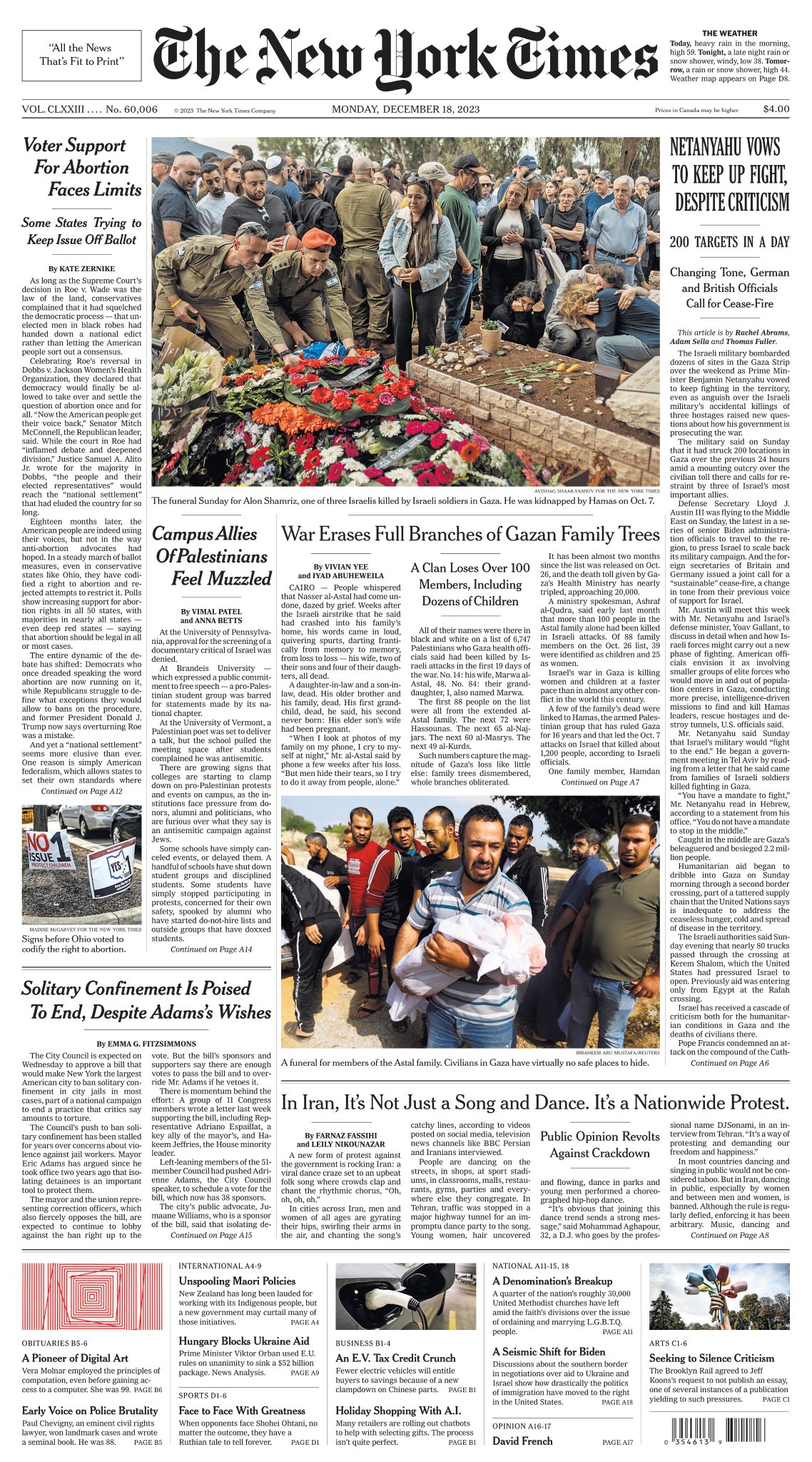
The American defense secretary reiterated “unshakable” support for Israeli security, but said protecting Palestinians was a “moral duty and a strategic imperative.”
If companies want to leave Russia, the president is setting the terms — in ways that benefit his government, his elites and his war.
Pope Francis Allows Priests to Bless Same-Sex Couples
A church official said the blessings amounted to “a real development” that nevertheless did not amend “the traditional doctrine of the church about marriage.”
Chimps Can Still Remember Faces After a Quarter Century
Long-term memories may have been vital to our own evolution, suggests a new study of chimpanzees and bonobos.
The Globalist Podcast (December 18, 2023) – Yossi Mekelberg discusses the weekend developments in the Israel-Hamas conflict.
Plus: the latest on Egypt’s presidential election results, the Wagner group’s gold trade operations in Africa, a flip through the papers with Vincent McAviney and theatre news with Matt Wolf, a critic at ‘The New York Times’.
Agents worried as millions poured in. Hamas bought weapons and plotted an attack. The authorities now say the money helped lay the groundwork for the Oct. 7 assault on Israel.
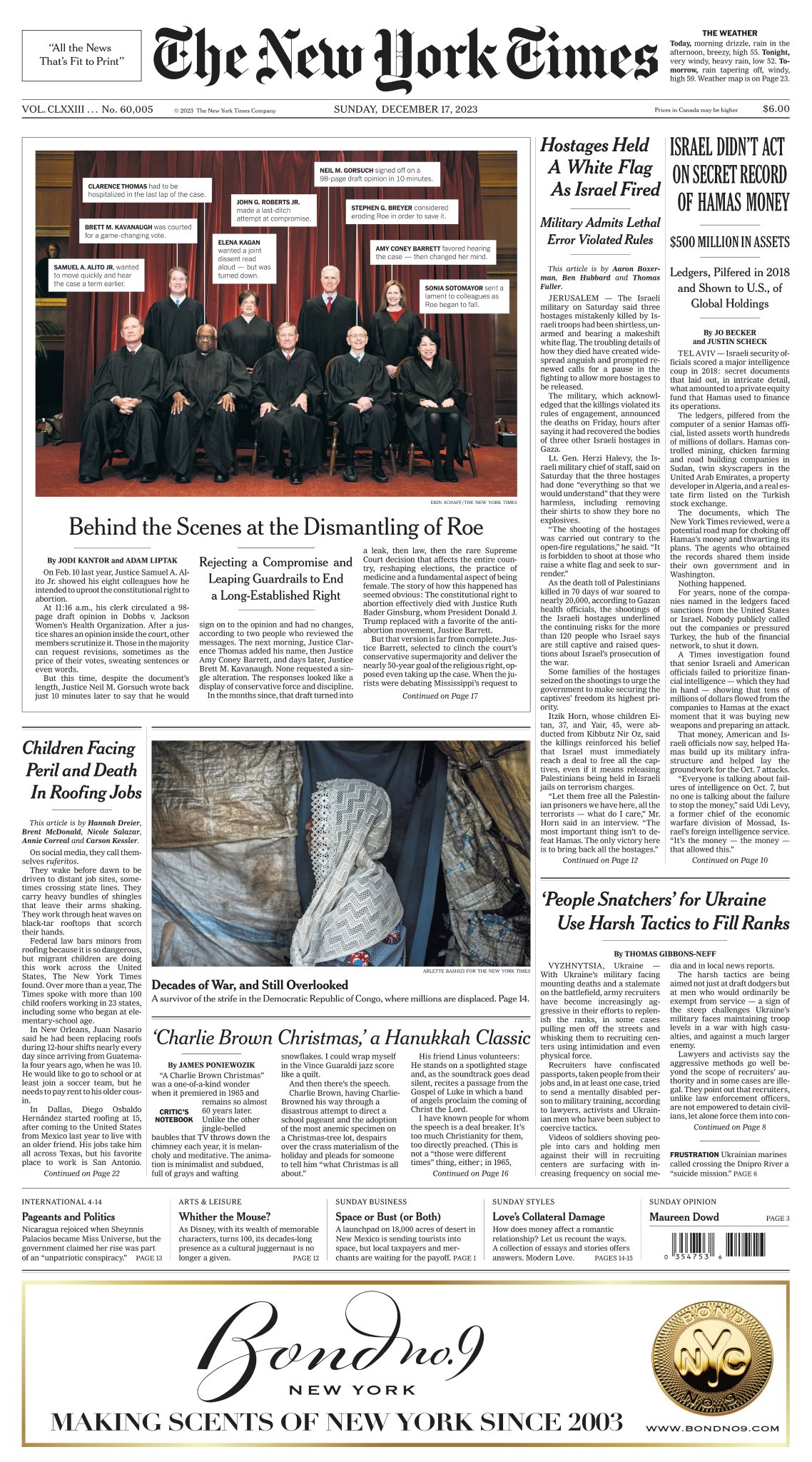
This is the inside story of how the Supreme Court overturned the constitutional right to abortion — shooting down compromise and testing the boundaries of how the law is decided.
Six million have died, and more than six million are displaced after decades of fighting and the ensuing humanitarian crisis in the eastern region of the Democratic Republic of Congo, drawing in neighbors, mercenaries and militias. An upcoming election is inflaming tempers.
The European Union’s willingness to open accession talks will lift morale, but the more immediate prospects for financial support from allies is sobering.
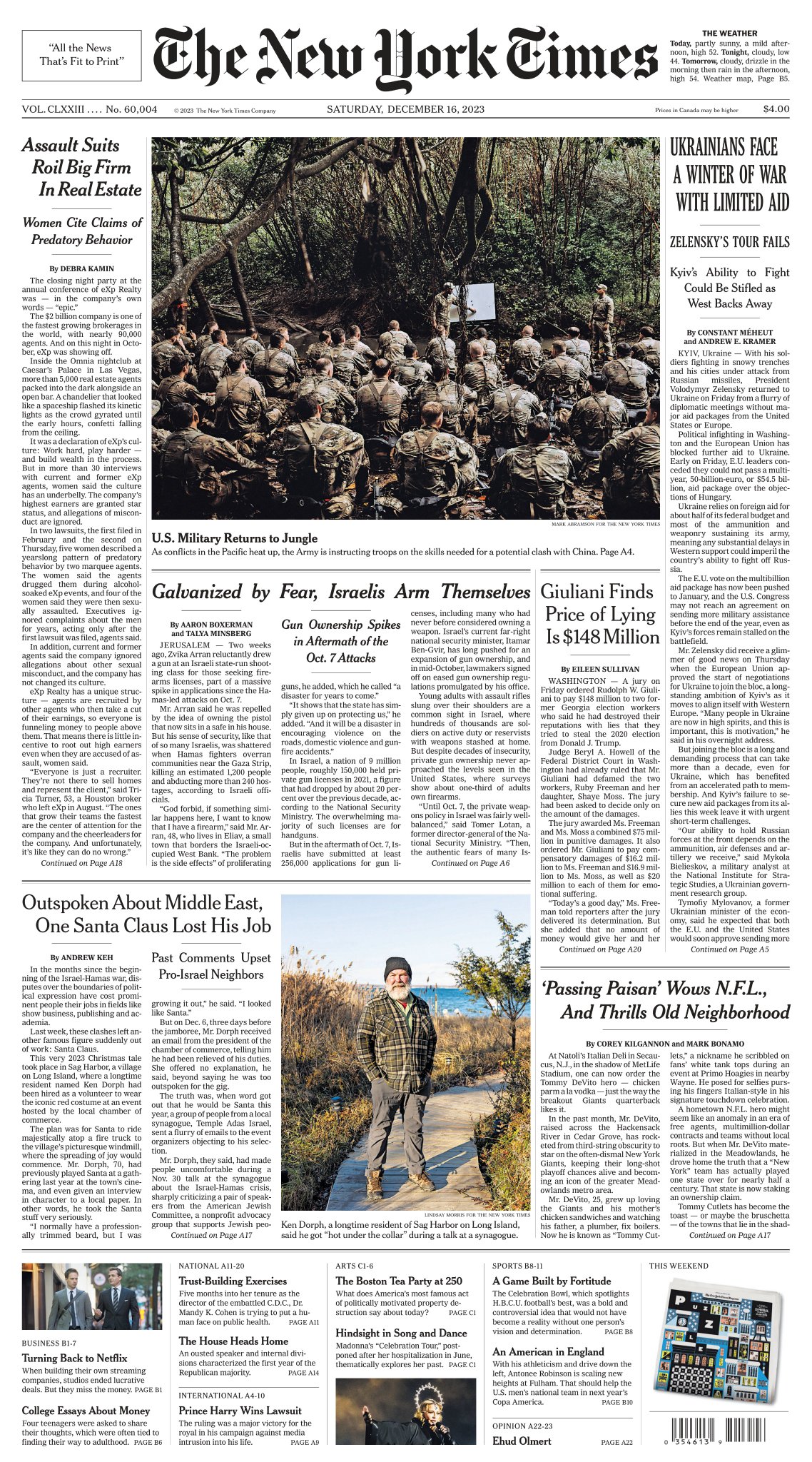
In lawsuits, five women say eXp Realty long ignored complaints that two male agents were preying on their female peers at alcohol-fueled work events.
Private Gun Ownership in Israel Spikes After Hamas Attacks
In a country already bristling with armed soldiers and reservists, a new sense of insecurity is pushing civilians to seek more personal weapons.
Jury Orders Giuliani to Pay $148 Million to Election Workers He Defamed
Ruby Freeman and Shaye Moss, wrongfully accused by Rudolph W. Giuliani of having tried to steal votes from Donald J. Trump in Georgia, were awarded the damages by a federal court in Washington.
The Globalist Podcast (December 15, 2023) –The latest on the battle for the White House as Donald Trump surges in key swing-state polls and Joe Biden grapples with inflation, as well as a looming impeachment investigation.
Then: Moncole’s Tokyo bureau chief, Fiona Wilson, discusses the political fallout from Japan prime minister Fumio Kishida’s latest scandal. Plus: Vladimir Putin’s Year of the Family 2024 agenda, a flip through the papers and Andrew Mueller’s take on the news of the week.
News, Views and Reviews For The Intellectually Curious



















 Boomers Daily