
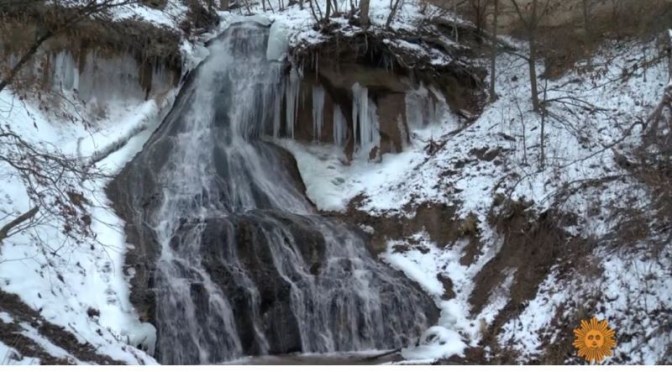
Fort Niobrara National Wildlife Refuge is located in the U.S. state of Nebraska and includes 19,131 acres. The refuge borders the Niobrara National Scenic River on the west and is managed by the U.S. Fish and Wildlife Service.
Tag Archives: Travel

Sunday Walks: Along The Seine River In Paris (Video)
Filmed: February 14, 2021
The river Seine flows right through the heart of Paris bordering 10 of the 20 arrondisements. It was no accident that the city evolved around this gigantic avenue for commerce and transportation, or that the early Parisi tribes on the river’s island were attacked and overthrown by the Romans. This early coup took place on what was later to become some very prime real estate. At that time the river was called by it’s Latin name: Sequana. The river is still the chief commercial waterway and half of the water used in Paris still comes form the Seine. Don’t think about that when you look at the sick green water flowing under the bridge, or when your waiter brings you a glass of tap water.
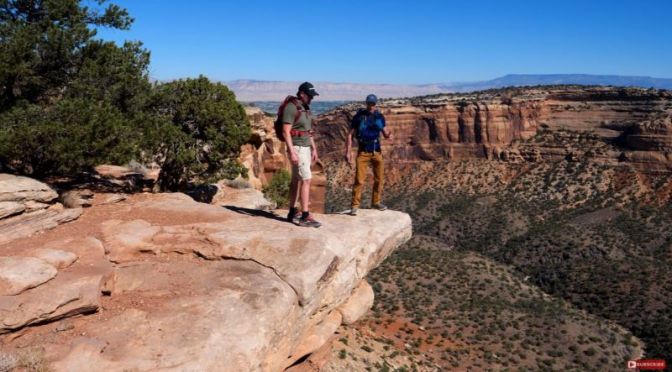
Top Hikes: ‘Colorado National Monument’
Colorado National Monument is home for cool hikes and amazing views. It’s located in western Colorado near the town of Grand Junction. Join a friend and I as we hike to Independence Rock. Afterwards we’ll take in the rim overlooks that give spectacular views into the canyon. Visited on September 30, 2020.
Colorado National Monument is a National Park Service unit near the city of Grand Junction, Colorado. Sheer-walled canyons cut deep into sandstone and granite–gneiss–schist rock formations. This is an area of desert land high on the Colorado Plateau, with pinyon and juniper forests on the plateau.
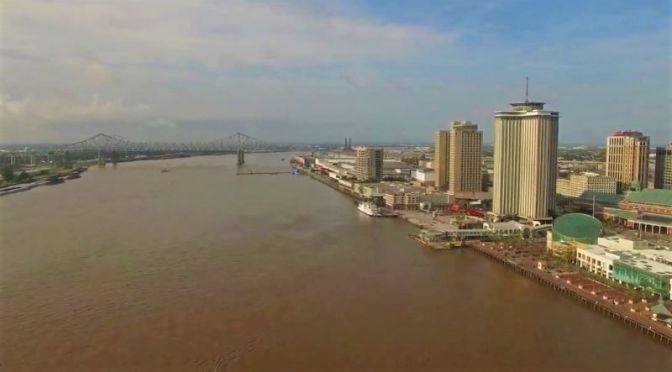
Aerial Views: ‘Mississippi – Cities & Landscape’ (Video)
Mississippi is a southern U.S. state with the Mississippi River to its west, the state of Alabama to its east, and the Gulf of Mexico to the south. Its Mississippi Delta region is considered the birthplace of blues music, honored at the Delta Blues Museum in Clarksdale. Also in the region is the Vicksburg National Military Park, preserving the site of a critical Civil War battle.
Jackson is the capital city of Mississippi. The statewide Mississippi Freedom Trail runs through the city, encompassing a number of historic sites that were significant in the civil rights movement. These include the Medgar Evers Home Museum and the landmark Mississippi State Capitol building. In leafy LeFleur’s Bluff State Park, the Mississippi Museum of Natural Science includes an aquarium and nature trails.
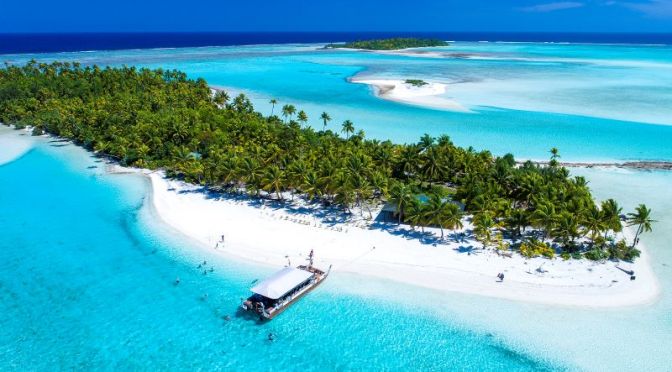
Tropical Views: ‘Aitutaki – Cook Islands’ In The South Pacific (4K UHD Video)
Aitutaki is one of the Cook Islands, which are in the South Pacific. It consists of a main island, a turquoise lagoon and a surrounding barrier reef. The lagoon’s waters teem with marine life, including rays, bonefish and turtles. Near the main town of Arutanga, trails lead to the top of Maunga Pu hill. Boats run to small uninhabited islands called motu, including tiny Tapuaetai, known for its white sand beaches.
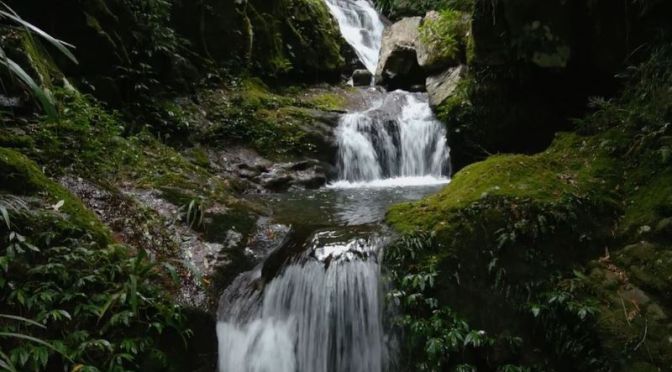
Views: ‘Toolona Creek Waterfalls’, Lamington National Park In Australia
Lamington National Park is in southeast Queensland, Australia. It’s known for its section of the ancient Gondwana Rainforests, home to the rare Albert’s lyrebird. Trails in the park’s 2 areas, Binna Burra and Green Mountains, criss-cross the McPherson Range. The Border Track offers mountain views. The Caves Circuit overlooks the Coomera Valley. The tumbling Moran’s Falls can be seen from the Python Rock lookout.
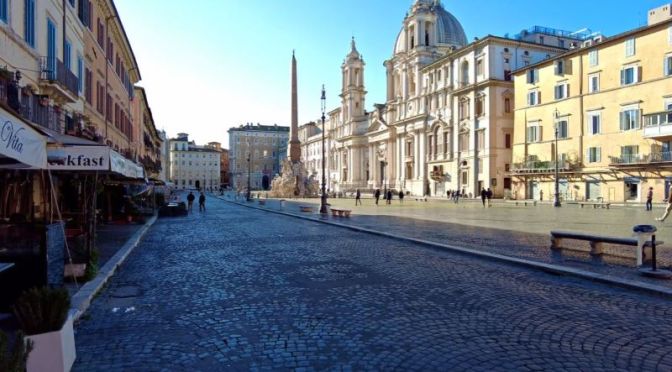
Walks: ‘Piazza Navona’ In Rome, Italy (4K UHD Video)
A walking in a Sunday morning in 𝗥𝗼𝗺𝗲 , Italy, in and around 𝗣𝗶𝗮𝘇𝘇𝗮 𝗡𝗮𝘃𝗼𝗻𝗮. Very quiet weekend day, good weather in this day of winter.
Piazza Navona is a public open space in Rome, Italy. It is built on the site of the Stadium of Domitian, built in the 1st century AD, and follows the form of the open space of the stadium. The ancient Romans went there to watch the agones, and hence it was known as “Circus Agonalis”.
Video timeline: 0:00 – [Brief Intro] 2:05 – [Piazza Navona] 4:36 – [Sant’Agnese in Agone Church *tour inside* – (info on subtitles)] 6:50 – [Piazza Navona] 8:00 – [*Fontain of Moro* – 1654 – (info on subtitles)] 9:32 – [Via della Cuccagna] 10:20 – [Piazza dei Massimi] 11:40 – [Piazza S.Andrea della Valle] 12:36 – [Corso VIttorio Emanuele II] 14:00 – [Piazza di S.Pantaleo] 14:30 – [Via della Cuccagna] 15:30 – [Via di Pasquino] 16:25 – [Via di S.Maria dell’Anima] 19:20 – [Vicolo della Pace] 22:43 – [Piazza del Fico] 23:10 – [Vicolo del Fico] 24:13 – [Via di Monte Giordano] 26:10 – [Via del Corallo] 27:31 – [Via del Governo Vecchio] 29:18 – [Via di Parione] 31:33 – [Via del Teatro Pace] 32:55 – [Vicolo dei Granari] 34:00 – [Via di S.Maria dell’Anima] 35:00 – [Piazza di Pasquino] 36:00 – [Via del Governo Vecchio] 37:30 – [Vicolo Savelli] 38:48 – [Corso Vittorio Emanuele II] 40:10 – [Via dei Leutari] 41:45 – [The *Talking Statue* of Pasquino – (info on subtitles) – it reads **This city, now old, by everyone is cheated, everyone says “great beauty”, but noone caresses you, it’s because they forgot, that in the past you founded them, My Rome, let them see, if you get enraged what can happen!*] 43:00 – [Piazza Navona]
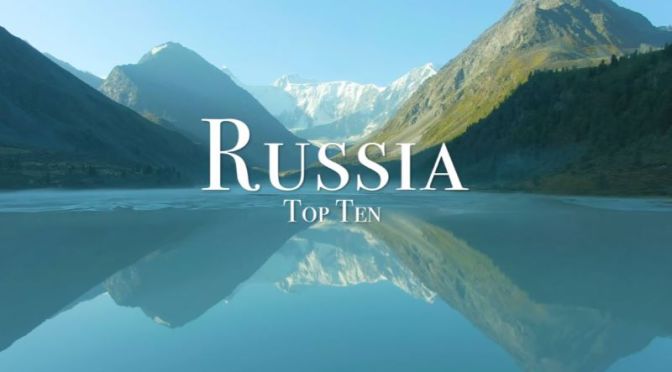
Travel: ‘Top Ten Places To Visit In Russia’ (4K Video)
Russia, or the Russian Federation, is a transcontinental country spanning Eastern Europe and Northern Asia. It covers over 17,125,191 square kilometres, consists of more than one-eighth of the Earth’s inhabited land area, extends to eleven time zones, and has borders with sixteen sovereign nations.

Sailboat Racing: ‘Luna Rossa Italy vs INEOS Team UK’ In 2021 Prada Cup Final
There’s plenty of intrigue as the Italians and British square off for the right to challenge Team New Zealand for the America’s Cup.
The Prada Cup final starts on Saturday with Luna Rossa taking on INEOS Team UK with the first team to get seven wins qualifying to take on the Kiwis.
Have the British sorted out their light-air issues? Can the Italians really handle the sort of pressure that Sir Ben Ainslie is sure to apply, especially if the winds nudge the upper limit of 21 knots? Will the bad blood that is simmering between the two syndicates boil over with the stakes so high?
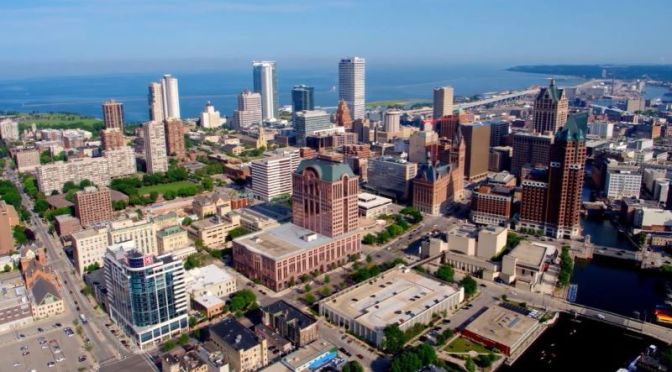
City Views: ‘Milwaukee – Wisconsin’ (4K UHD video)
Milwaukee is a city in the U.S. state of Wisconsin on Lake Michigan’s western shore. It’s known for its breweries, many of which offer tours chronicling its role in the beer industry. Overlooking the Menomonee River, the Harley-Davidson Museum displays classic motorcycles, including one of Elvis Presley’s. Nearby is the Milwaukee Public Museum, with its large-scale European Village and a recreation of old Milwaukee.
 Boomers Daily