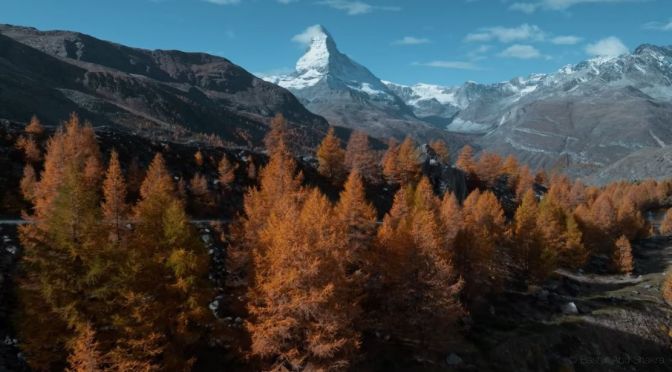
I’ve spent the last 8 days exploring the swiss alps mountains in autumn in Grindelwald, Zermatt, Appenzell, Lauterbrunnen, and Jungfrau area with no breaks, hoping to get as much epic footage as possible, since I was running out of time. Every day there was a hike for at least 5 hours and drive for 2 hours between every spot. I’ve spent 70% of the nights camping in front of these views just to catch the sunset and the sunrise.
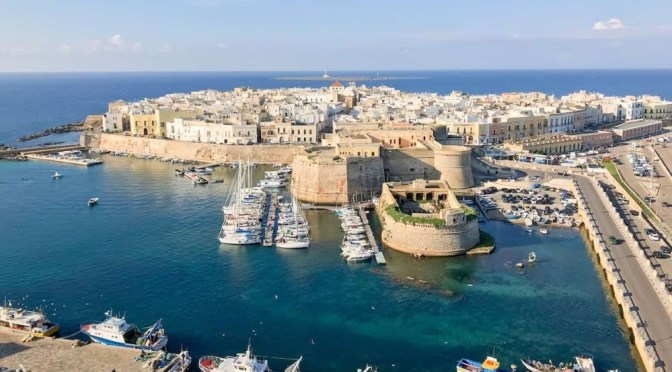
Gallipoli is a coastal town in Apulia, southern Italy. The historic center, on an island off the mainland, shelters churches like St. Agatha’s Cathedral, with its ornate facade. Nearby, the Church of St. Mary of Purity has a maiolica tiled floor. Gallipoli Castle includes the Rivellino tower, standing apart from the main building. Across the bridge, on the mainland, is the Greek Fountain, dating from the Renaissance.
Mount Ngungun, generally known as “Gun Gun”, is located an hours drive north of the city of Brisbane in south east Queensland, Australia. Mount Ngungun is the sixth tallest of the Glass House Mountains at 253 metres. The summit provides spectacular 360 degree views of nearby Mt Tibrogargan, Mt Tibberoowuccum, Mt Coonowrin and Mt Beerwah.
It is a very popular hike due to its relative ease and fantastic views, and has a well maintained walking trail to the summit. The trail from carpark is not as steep as the other higher mountains and is open to beginners. The south face contains steeper, unmarked but well known rock climbing routes.
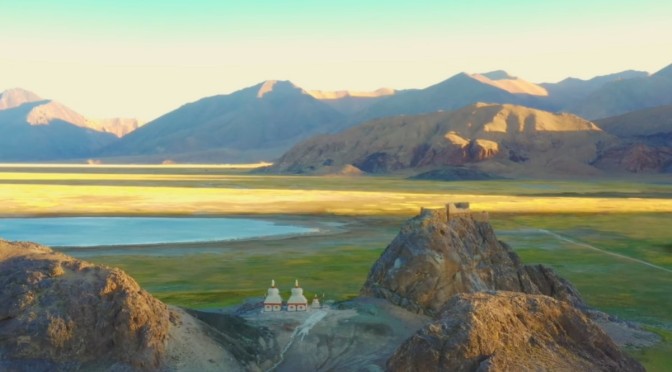
A trip to the most remote area of Tibet, western Tibet, and the small Rutog County that lies on the China National Highway 219 (Xinjiang – Tibet). Located 4300 meters above sea level, Rutog County is 1200 km away from Lhasa. Almost no tourists will come to this place.
However, if you are going to Mount Kailash or plan to have an overland tour from Xinjiang to Tibet (or vice versa), it is a place worth visiting. The highlights of Rutog County include the Pangong Tso Lake, the ancient Rutog Rock Painting, the Rutog Fortress, and the Monastery. You can feel the origin of Tibet here, which is isolated from the outside modern world for a long time.
On the edge of the Himalayas, Rutog County, as well as the whole of western Tibet, is one of the most inhospitable areas on the planet with high altitude, deserted mountains, and a harsh climate. But for many wild animals, it is actually heaven or the Shambala. In uninhabited western Tibet, you could see kinds of wild animals on the way, like the wild yaks, Tibetan wild donkeys, Tibetan antelope, etc.
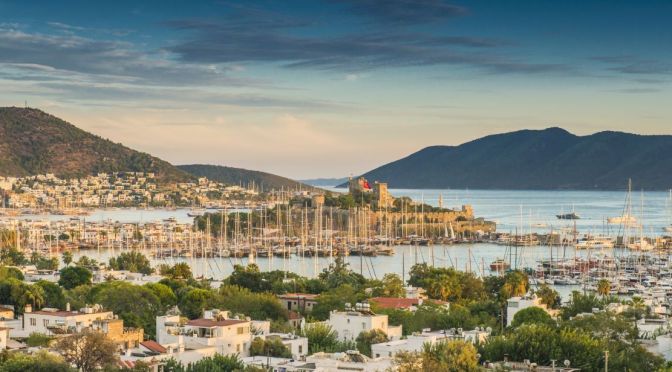
Bodrum is a city on the Bodrum Peninsula, stretching from Turkey’s southwest coast into the Aegean Sea. The city features twin bays with views of Bodrum Castle. This medieval fortress was built partly with stones from the Mausoleum at Halicarnassus, one of the Seven Wonders of the Ancient World, completed in the 4th century B.C. The city is also a gateway for nearby beach towns and resorts.
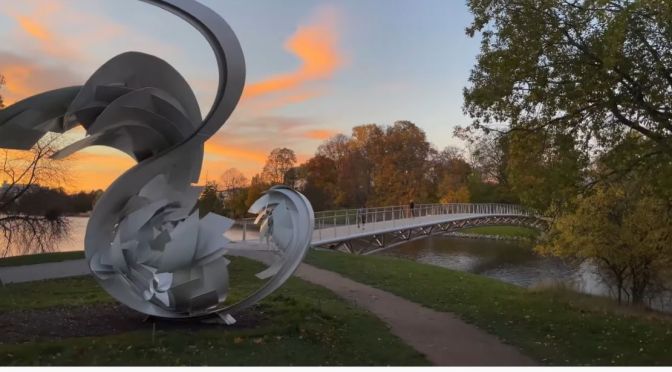
Perhaps the most classic place for a stroll in Stockholm. Sunday brunch at Djurgårdsbrunns värdshus, combined with a stroll along the canal is something I believe most locals appreciate. We’re here at a weekday, near sunset. Just a few joggers, walkers and a horse around.
Djurgårdsbrunnskanalen is a canal in central Stockholm, Sweden, separating the island Djurgården from the northern mainland. The canal stretches one kilometre from Lilla Värtan to Djurgårdsbrunnsviken and allows ships 9.5 metres wide and 2.1 metres deep to pass.
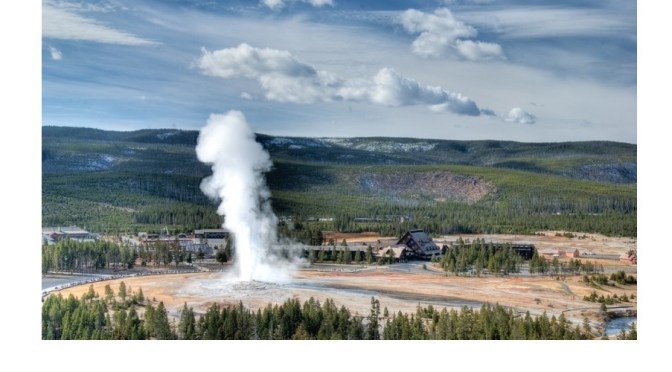
This is a 13 mile hike in the Old Faithful area. I started at the Old Faithful parking lot, and did a clockwise loop around to Mallard Lake and back down to Old Faithful. After the thermal section, most of the hike is through thick forest. I was happy to see fresh bear tracks on the trail. This hike has a very good trail all the way and was an easy hike.
Old Faithful is a cone geyser in Yellowstone National Park in Wyoming, United States. It was named in 1870 during the Washburn–Langford–Doane Expedition and was the first geyser in the park to be named. It is a highly predictable geothermal feature and has erupted every 44 minutes to two hours since 2000.
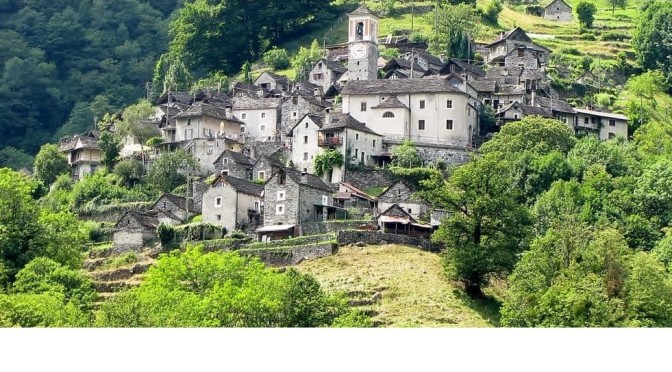
Corippo is a mountain village in the Verzasca valley some 12 kilometers (7.5 mi) from Locarno, at the north end of the artificial Lake Vogorno and 20 km (12 mi) from the border with Italy. The houses are built from the local Ticino granite with slate roofs and have changed little for several hundred years, leading the Italian writer Piero Bianconi to describe Corippo as “Verzasca’s gentlest village”.
Its early 17th century Church of the Blessed Virgin Annunciata (later the Blessed Virgin Carmine) was extended in the late eighteenth century. Corippo’s architectural value has caused the entire village centre to be placed under a conservation order, and in 1975 the European Architectural Heritage Congress named the village as an “exemplary model” for historical preservation. Corippo was originally part of the larger parish and commune of Vogorno (though maintaining a certain degree of autonomy), before becoming a fully independent municipality in 1822. The village first became connected to the wider world in 1883 when a road was built linking it to the Verzasca valley road.
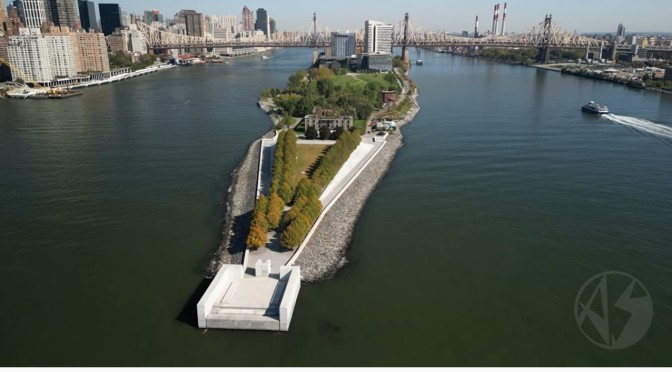
Roosevelt Island, island in the East River, between the boroughs of Manhattan and Queens, New York City. Administratively part of Manhattan, it is 1.5 miles (about 2.5 km) long and 1/8 mile wide, with an area of 139 acres (56 hectares). In 1637 the Dutch governor Wouter van Twiller bought the island from the Indians, who called it Minnahanonck. In 1828 the city acquired it and built a workhouse and penitentiary, which became notorious. Formerly known as Blackwell’s Island, it was renamed Welfare Island in 1921, and in 1973 its name was again changed to honour President Franklin D. Roosevelt. In 1934 the old institutions were replaced by city hospitals. In the 1970s the island was connected to Manhattan by an aerial tramway system, and moderate-income housing and shopping complexes were constructed there. A bridge connects the island to Queens.
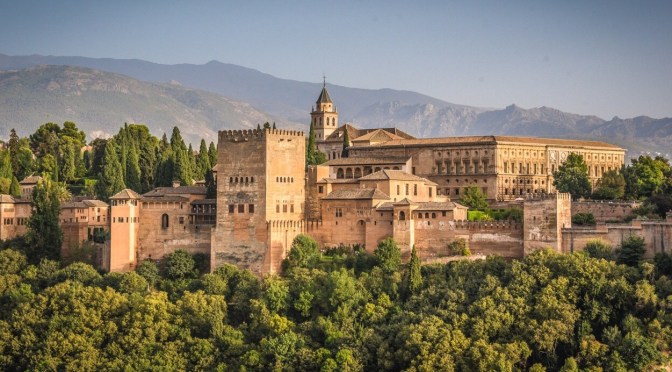
As he travels the Mediterranean, Jaafar Abdul Karim visits Andalusia in Spain. He tries flamenco dancing, tours the Alhambra, and finds his dream house on the Costa del Sol. In Tarifa, photographer José Luis Terrado shows Jaafar his photographs of refugees.
Flamenco music has its roots in the south of Spain. In Las Negras, journalist Jaafar Abdul Karim meets up with flamenco performer Anabel Veloso for a dance. His Mediterranean journey then takes him into the interior of Andalusia. Throughout its history, the region has been a gateway to the Arabic-speaking world. More than 700 years of Islamic rule have left their mark, especially on the architecture.
In Granada, Jaafar visits the famous Alhambra, a world heritage site. Back on the shores of the Mediterranean, the journey continues past beautiful beaches and picturesque bays to the city of Málaga. It’s located on the “Costa del Sol”, where the sun shines more than 300 days per year. The climate attracts millions of tourists, especially from Germany and Britain. Many have bought property here.
In Estepona, Jaafar finds his dream home: the architects José Carlos Moya and Bertrand Coue have built a solar house with floor-to-ceiling windows and 360-degree panoramic views. Its unique design allows it to follow the trajectory of the sun, all day long.
Finally, Jaafar heads to Tarifa, just 14 kilometers across the sea from Morocco. The proximity to the North African side of the Mediterranean has inspired the work of photographer José Luis Terrado. His pictures depict migration and the conditions under which refugees from Africa have to work in order to survive. More than any other destination on his Mediterranean journey, Andalusia shows Jaafar Abdul Karim just how closely linked Europe and Africa are, culturally as well as economically.
News, Views and Reviews For The Intellectually Curious


 Boomers Daily