A walking tour of Mortuary Temple of Hatshepsut (Deir el Bahari) in Luxor, Egypt. Filmed in January 2022.
The Temple of Hatshepsut is a mortuary temple built during the reign of Pharaoh Hatshepsut of the Eighteenth Dynasty of Egypt. Located opposite the city of Luxor, it is considered to be a masterpiece of ancient architecture. Its three massive terraces rise above the desert floor and into the cliffs of Deir el-Bahari.
Brazil, officially the Federative Republic of Brazil, is the largest country in both South America and Latin America. At 8.5 million square kilometers and with over 211 million people, Brazil is the world’s fifth-largest country by area and the sixth most populous.
Kanchanaburi is a town in west Thailand. It’s known for the Death Railway, built during WWII. The line crosses over the River Khwae Yai via the Death Railway Bridge. Displays at the JEATH War Museum honor the prisoners of war who died building the bridge. The Thailand–Burma Railway Centre explores the wider history of the railway. Nearby, thousands of Allied soldiers are buried at the Kanchanaburi War Cemetery.
This is a short compliation with some of the best shots from all Little Big World episodes that were released in 2021. Pandemic-wise there are mostly episodes from Europe except for the Los Angeles film, which was shot pre-pandemic.
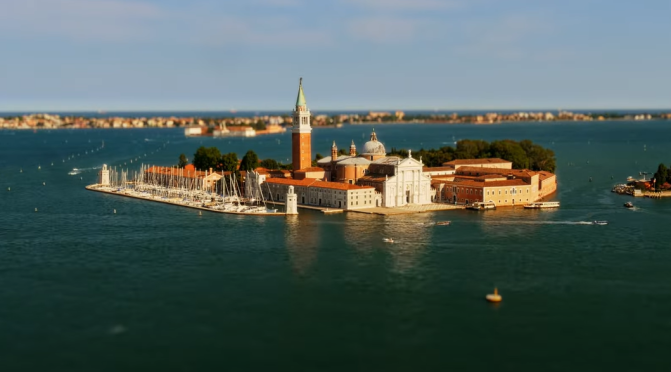
Chapters 00:00 Ore Mountains, Germany 00:21 Hallstatt, Austria 00:31 Moldova 00:47 Venice, Italy 01:02 Danube Delta Romania 01:10 Romania 01:33 Sofia, Bulgaria 01:45 Los Angeles, USA 01:55 Garmisch-Partenkirchen, Germany
The Eiffel Tower is a wrought-iron lattice tower on the Champ de Mars in Paris, France. It is named after the engineer Gustave Eiffel, whose company designed and built the tower.
Dublin, capital of the Republic of Ireland, is on Ireland’s east coast at the mouth of the River Liffey. Its historic buildings include Dublin Castle, dating to the 13th century, and imposing St Patrick’s Cathedral, founded in 1191. City parks include landscaped St Stephen’s Green and huge Phoenix Park, containing Dublin Zoo. The National Museum of Ireland explores Irish heritage and culture
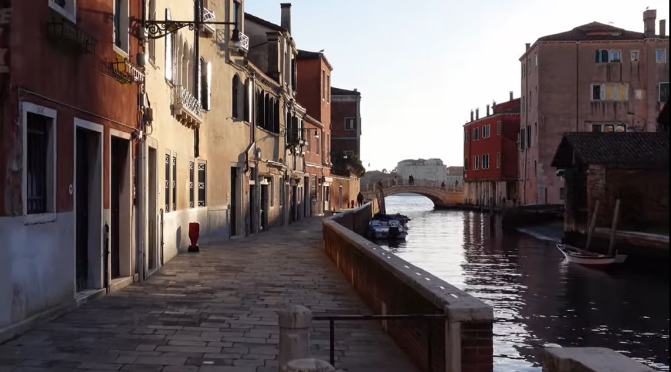
Dorsoduro is Venice’s university district and the streets around the Campo Santa Margherita are filled with unpretentious eateries, indie shops and vintage fashion boutiques. After dark, informal bars draw a young local crowd. Important cultural destinations here include the Gallerie dell’Accademia, for classic Venetian masterpieces, and the waterside Peggy Guggenheim Collection, which houses modern works.
Timeline: 0:00:00 – Intro 0:01:09 – FONDAMENTA ZATTERE AL PONTE LONGO 0:06:58 – SOTOPORTEGO FIORAVANTE 0:07:47 – PONTE DE LA SCOAZZERA 0:08:33 – CAMPO S. TROVASO 0:09:04 – FONDAMENTA BONLINI 0:09:53 – PONTE S. TROVASO 0:10:27 – FONDAMENTA NANI 0:13:26 – FONDAMENTA ZATTERE AI GESUATI 0:18:48 – FONDAMENTA BRAGADIN 0:20:58 – CAMPO SAN VIO 0:21:50 – CALLE NUOVO SANT’AGNESE 0:23:33 – PONTE DELL’ACCADEMIA 0:26:06 – CAMPIELLO S. VIDAL
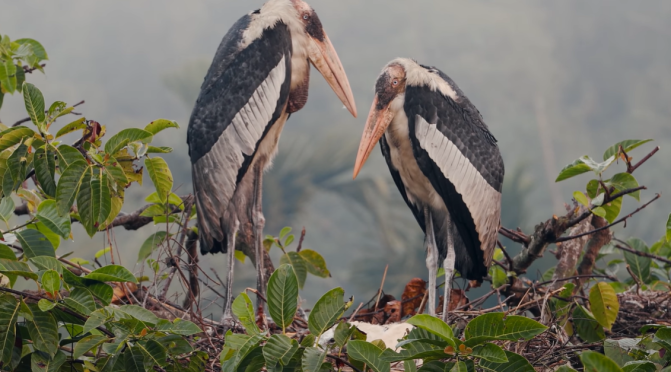
A wildlife photographer travels to India intent on documenting the rarest stork on earth but soon discovers a conservation hero and her inspiring efforts to rally a community to save it.
The Greater Adjutant is a large scavenging stork that was once widely distributed across India and Southeast Asia but is now confined to a last stronghold in Assam, India, with small populations persisting in Cambodia’s northern plains region. The species is classified as Endangered by the IUCN with a rapidly declining population of around 1,200 individuals. The key threats to the species are direct human persecution, particularly at nesting colonies, habitat destruction, including felling of nest-trees, and drainage, conversion, pollution and degradation of wetlands. Historically, adjutants bred during the dry season, taking advantage of abundant prey steadily trapped by receding water levels, and scavenging the remains of now extirpated megafauna. Today, the last adjutants survive alongside humans, congregating at garbage dumps and nesting colonially in rural villages. The majority world’s remain population lives around the city of Guwahati and relies on a single garbage dump for food and nearby villages for nesting. As the adjutant’s nesting colonies occur outside of state protected areas in Assam, community conservation initiatives are the only hope for saving the bird from extinction. Through the efforts of a remarkable conservation leader, Dr. Purnima Devi Barman, and the movement she has inspired, the birds are now protected, celebrated, and increasing their numbers locally. Despite this success and the momentum to conserve the species, the Greater Adjutant’s existence remains precarious.
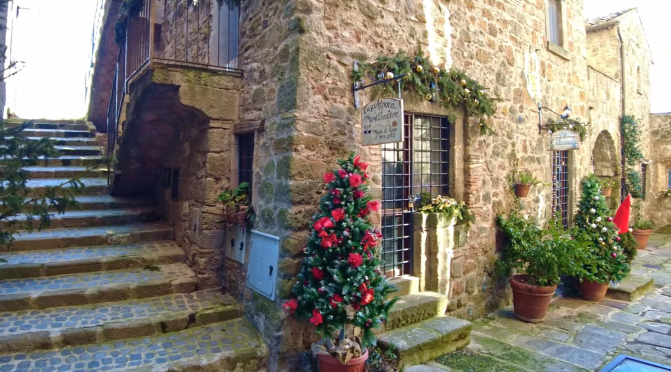
Bassano in Teverina is a comune in the Province of Viterbo in the Italian region Latium. It is inhabited by 1,332 people and is located about 90 kilometres north of Rome and about 20 kilometres northeast of Viterbo.
The origin of the town is extremely uncertain. The ending of the name, derived from the Latin adjectival suffix -anus, takes back to Roman times and, together with the root of the name, seems to remember the family name (Bassus) of a character who owned large estates in the area: Bassus – Bassanus – Bassano.
The town center of Bassano in Teverina arises on a tuff spur set in a slightly rearward position compared to the Tiber Valley, of which it overlooks one part. Downstream from the city center, not far away from the Tiber, lies Lake Vadimo, locally known as the “Pond”, described by Pliny the Younger as “a lying wheel with a regular circumference […] paler, greener and more intense than the sea.”
In Roman times the lake, called Lacus Vladimonis, besides being larger was also considered sacred: near its shores, the Etruscans performed rituals and periodic celebrations, while in its waters the Romans immersed their weapons to make them invincible.
The little center was already inhabited in Etruscan times but was abandoned during the domination of Romans, who conquered the whole surrounding area, taking the territory thanks to two bloody battles: the first in 309 BC, under the leadership of the consul Quintus Fabius Rullianus, and the second in 283 BC, with which they finally defeated Etruscans and Senones.
News, Views and Reviews For The Intellectually Curious







 Boomers Daily