
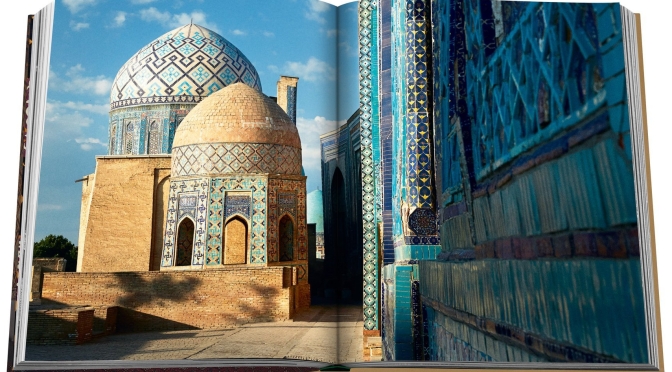
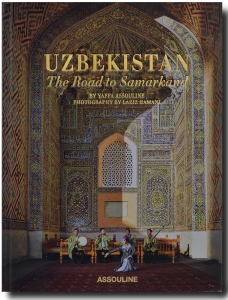
 At the heart of Central Asia lies a land where colossal mountains and sweeping valleys sleep under a blanket of lush greenery. Crowned with golden palaces and wondrous monuments, the architectural landscape of the region is so rich with detail, the structures have been said to mirror the heavens themselves.
One of the few destinations on Earth where imagination aligns with reality, Uzbekistan flourishes with unparalleled scenery and unforgotten traditions. The towns and cities are like ‘open museums’, each edifice offering a unique and intricate aesthetic, each a testament to diverse cultural influences and diverse periods of history. Nature and architecture have a unique relationship, seemingly inspired by each other, as if they were trying to to outdo each other with their beauty. Discover the beautiful colors, textures and flavors of this incredible culture and journey through the cities of the Silk Road and the lands of Alexander The Great with stunning original photography by Laziz Hamani.
ABOUT THE AUTHOR
For over 40 years, Yaffa Assouline has captured the luxury and publishing industry as a journalist, consultant and creative art director. She specializes in innovative and made-to measure publishing. Uzbekistan was inspired by Yaffa’s desire to introduce the world to a country unknown to most: an exotic land filled with immense beauty unseen to most eyes. For more than a year, Yaffa embarked on a journey where she captured the essence of the country, from east to west, north to south, filled with unforgettable encounters along the way. It was a vast undertaking—given a place with such a rich culture, long diverse history and all this beauty to offer—to give a taste of the flavor of the country. The book is an invitation to voyage, to discover more and to see what could only be fully appreciated with one’s own eyes.
Photographer Laziz Hamani, is long-time friend of Yaffa Assouline. With his talent and eye for intimate details, he was the only person who was suited to be Yaffa’s partner – a visual scribe in this adventure. Of Berber origin, he was born and lives in Paris. He is passionate about creating beautiful images, his life defined by a constant search for aesthetics and meaning. He has worked with many prestigious luxury brands, such as Dior, Cartier, Jaeger-LeCoultre and with designer Axel Vervoordt; and he has collaborated with Assouline Publishing on more than twenty titles.
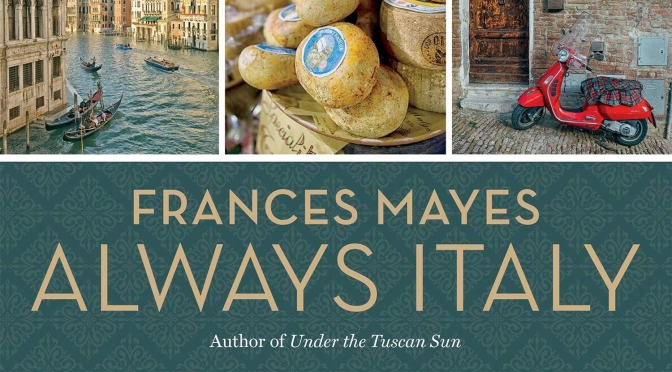
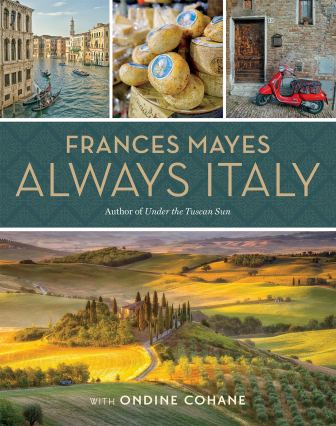 From the colorful coastline of Cinque Terre and the quiet ports of the Aeolian Islands to the Renaissance architecture of Florence and the best pizza in Rome, every section features insider secrets and off-the-beaten-path recommendations (for example, a little restaurant in Piedmont known for its tajarin, a pasta that is the perfect bed for the region’s celebrated truffles).
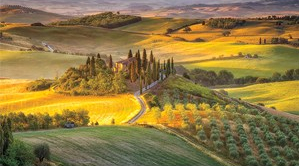 Filled with gently undulating hills, golden stone buildings, pristine vineyards, and glorious art, central Italy epitomizes the joys of this country. Do you love exquisite Renaissance architecture, painting, and sculpture, along with artisanal shopping? Or do you seek medieval winding alleys and formidable fortresses along with adrenaline-filled festivals? Head to Siena, where a central grand piazza hosts the Palio, the bareback horse race that has been a town fixture for centuries. Perhaps you love pasta along with architecture? Head to Rome, where layers upon layers of history unveil themselves as you walk past treasures like the Forum or the Circus Maximus, all within sight of vibrant new cafés and bars and beloved trattorias.
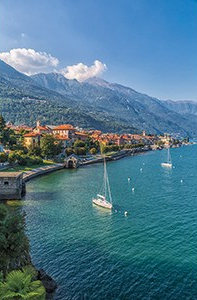 In Piedmont’s Barolo and Barbaresco wine-growing districts, vintners aren’t allowed to plant the sacred nebbiolo grape on north-facing hillsides, so hazelnut trees often fill those slopes. That most nutty of nuts, blended with rich chocolate, is a marriage of true minds, although the wedding was originally one of convenience. In the early 19th century, when trade embargoes and the Napoleanic wars caused chocolate imports to shrink, nuts extended the quantity. Turin, gateway to the castle-topped, hills of Piedmont, is one of the primo food cities in Europe. It’s regal, thanks to the palaces, ballrooms, libraries, and gardens of the Savoy rulers, who also infused the cuisine with French influences. Vintage and new trams run around the centro. The tree-lined streets, shady river walks, and numerous parks keep this the greenest city in Italy.
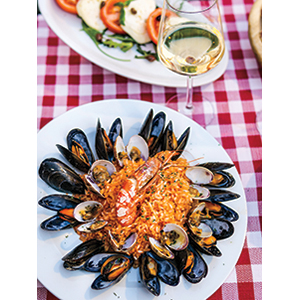 The majority of Lazio’s wines are white. Frascati is ubiquitous. There’s that word: drinkable. And they are. Light and summery, they’re able to heft a bit of gravitas too. From the island of Ponza, Casale del Giglio sends forth the chalky, fruity Biancolella Faro della Guardia. Biancolella is a grape variety grown only on the island. Three vineyards stand out for consistent high quality. Montiano, a merlot, is one of the region’s best wines. Next is the Sergio Mottura winery, known for its grechetto, Poggio della Costa. This pale beauty, with a whiff of citrus blossoms and stone, garners top ratings and the bonus of being well priced. Poggio Le Volpi’s Bacca Rossa, from the nero buono grape, makes an earthy and spicy partner to pasta with sausage and four cheeses. In Rome, wine nuts must feel a magnetic pull to Ristorante Casa Bleve.

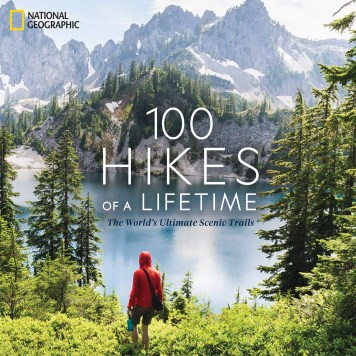 Crossing all continents and climates (from the jungles of Costa Rica to the ice fields in Alaska’s Kenai Fjords National Parks), as well as experiences (a wine route through Switzerland or moose spotting on the Teton Crest Trail in Wyoming,) there is a trail for everyone in these pages. So pack your gear and lace your boots: this comprehensive and innovative guide will lead you to experience the best hikes of your life!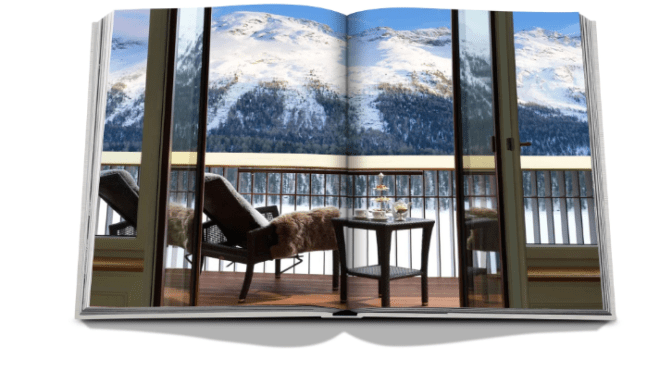
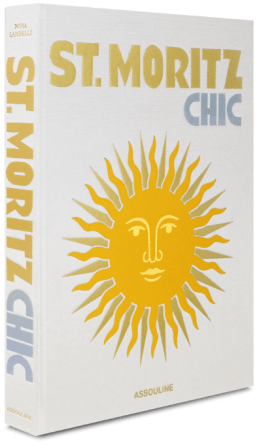 St. Moritz also takes readers on a majestic tour of its special events, from Winter Olympics to the annual Snow Polo World Cup, as well as the summertime Jazz Festival and the British Classic Car Meeting. In St. Moritz creatives and royals share skiwassers slope-side on the sheepskin benches of El Paradiso, pause to sip champagne on long strolls around its frozen, crystalline lake and enjoy coffee and confections at the centuries old Hanselmann. St. Moritz has never lost its inimitable appeal, and will continue to reign as an elegant hideaway for all those who have come to call it a home away from home.
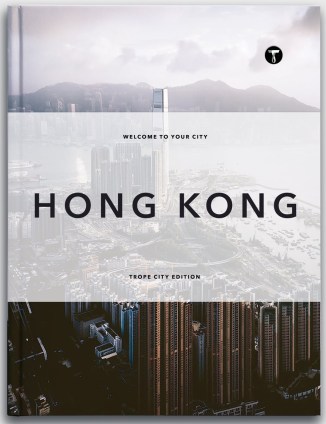 This carefully curated and bound collection offers a unique modern perspective of Hong Kong. Each chapter in Trope Hong Kong is accompanied by a map of the area along with the locations where the photographs were taken. In many cases, there are several photographs of the same location, shot at different times of the day, in different seasons, with different tones.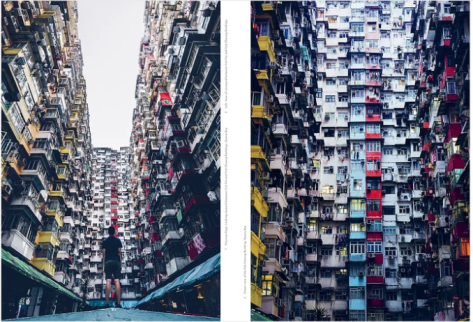

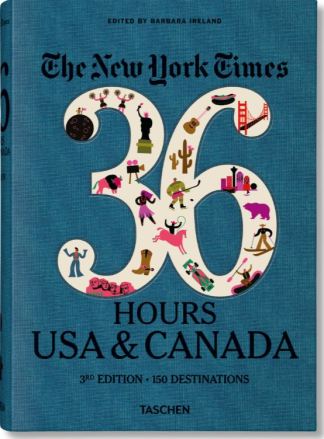 In this fully revised and updated third edition of the best-selling USA & Canada volume, TASCHEN presents the best itineraries from across the continent. You’ll find marquee metropolises like New York, Montreal, and Los Angeles; world-famous natural wonders at Niagara Falls and the Grand Canyon; the hidden charm of Rust Belt cities like Duluth and Detroit, as well as 33 new stories including Anchorage, the Berkshires, Boulder, and many more.
 To travel in North America is to face a delicious quandary: over these vast spaces with so many riches, from glittering cities to eccentric small towns and heart-stoppingly beautiful mountains and plains, how to experience as much as possible in limited time? The New York Times has the answer, offering up dream weekends with practical itineraries in its popular weekly 36 Hours column for nearly two decades.
 The book features eleven curated neighborhood destination walks–guiding the reader through the energetic New York streets, passing restaurants and coffee shops, historical sights, museums and galleries, parks, and the kind of authentic and timeless sites that one hopes to find when imagining the city. Interwoven throughout are insider guides on how to eat like a New Yorker; explore the city’s most beautiful parks and gardens; navigate transit via ferry, subway, and bike; visit some of NYC’s most iconic TV and film locations.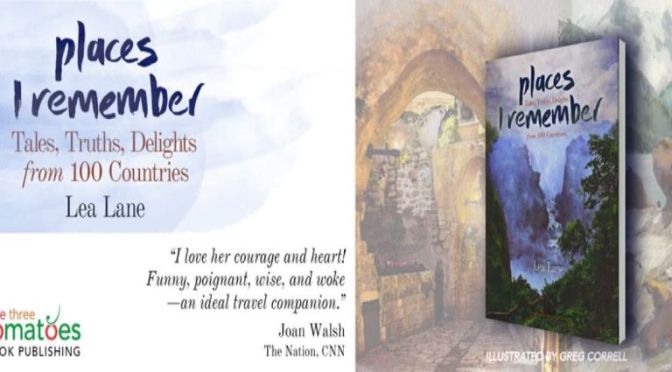
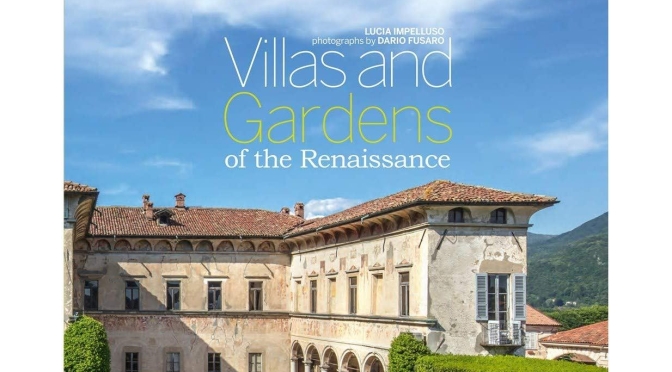
 An historical text introduces each property, giving an overview of its origins. The villas have been specially photographed for this book by Dario Fusaro, with views of both the palace interiors and their grounds, as well as the gardens, glimpses of the halls, details of the furnishings, and a focus on the frescoes, where still preserved. Explanatory text offers insights on the most
 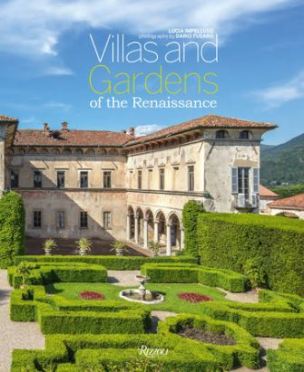 interesting frescoes, such as those of Veronese at Villa Barbaro. For the first time, Fusaro also employs a drone with the purpose of capturing the architectural structure and elements of each Italian Renaissance garden, from above and as a whole.
 Boomers Daily