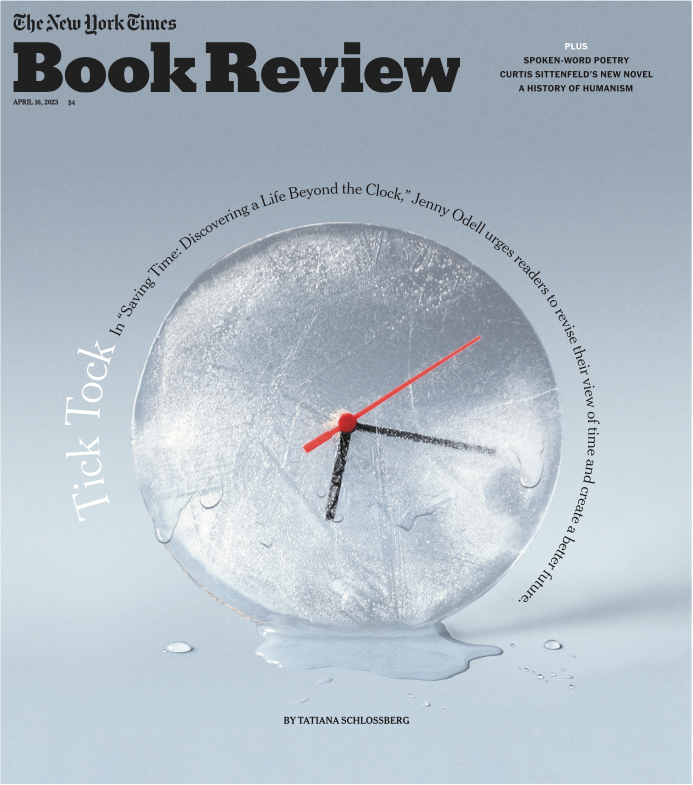
The author’s new book, “Saving Time: Discovering a Life Beyond the Clock,” urges readers to revise their conceptions of time and the world to nurture hope and action for a better future.
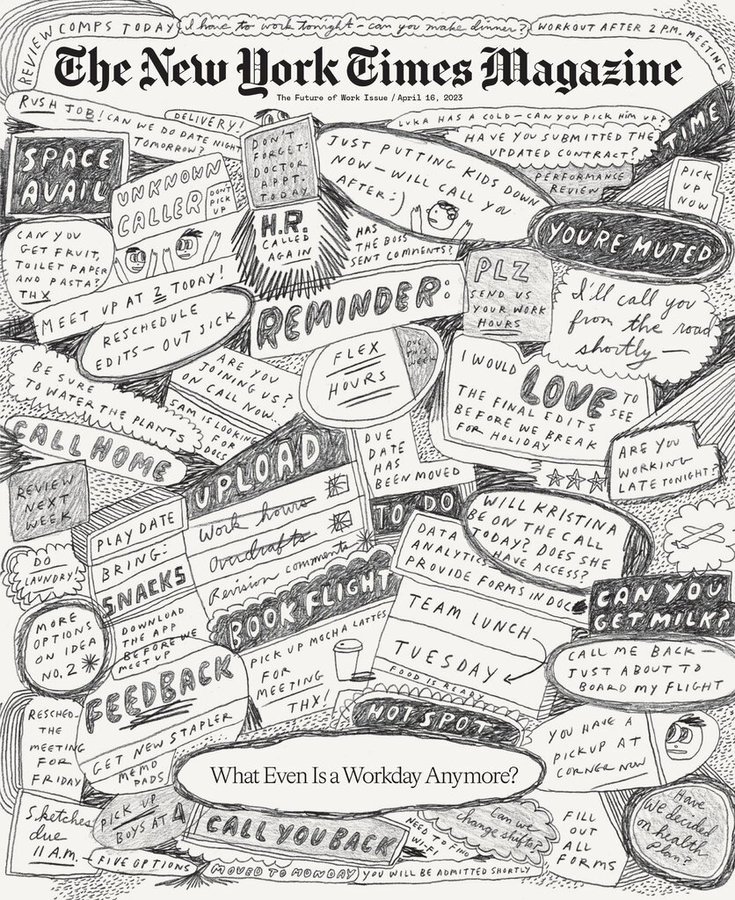
A niche group of consultants is trying to get you back to the office. It’s not going too well.
Being the boss doesn’t mean you get exactly what you wish for. That’s what Craig Knoblock discovered when he tried to get his employees to come back to the office in the fall of 2021.
Gig work has been silently taking over new industries, but not in the way many expected.
For most Americans, the concept of “gig work” has been synonymous with a handful of Silicon Valley giants — companies like Uber and DoorDash, Instacart and TaskRabbit. There was a moment in the 2010s when pundits told us to expect the “Uberization of everything”: a future in which the typical worker would move from job to job or task to task, finding either independence and flexibility in freelancing or, more realistically, the precarity of working for platforms that may be light on benefits and aggressively exploitative of labor.
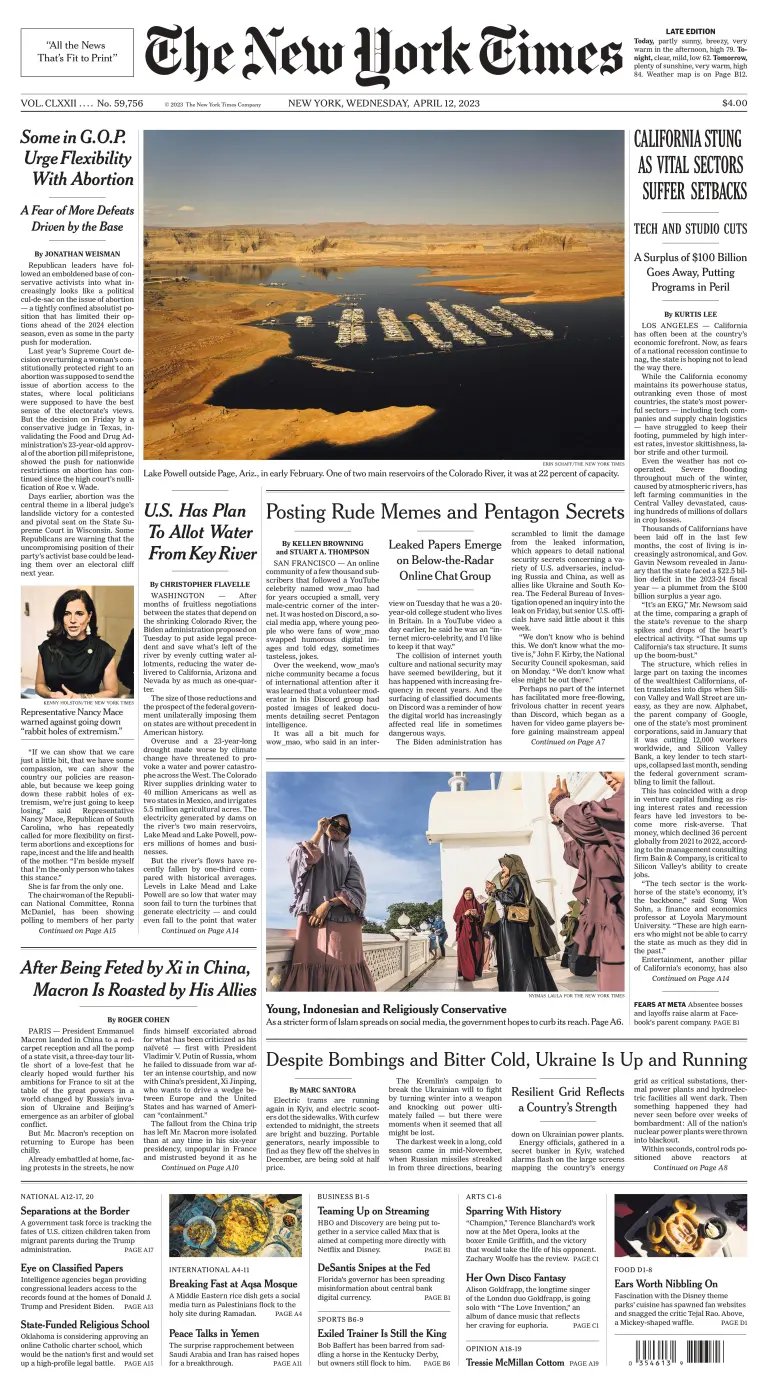
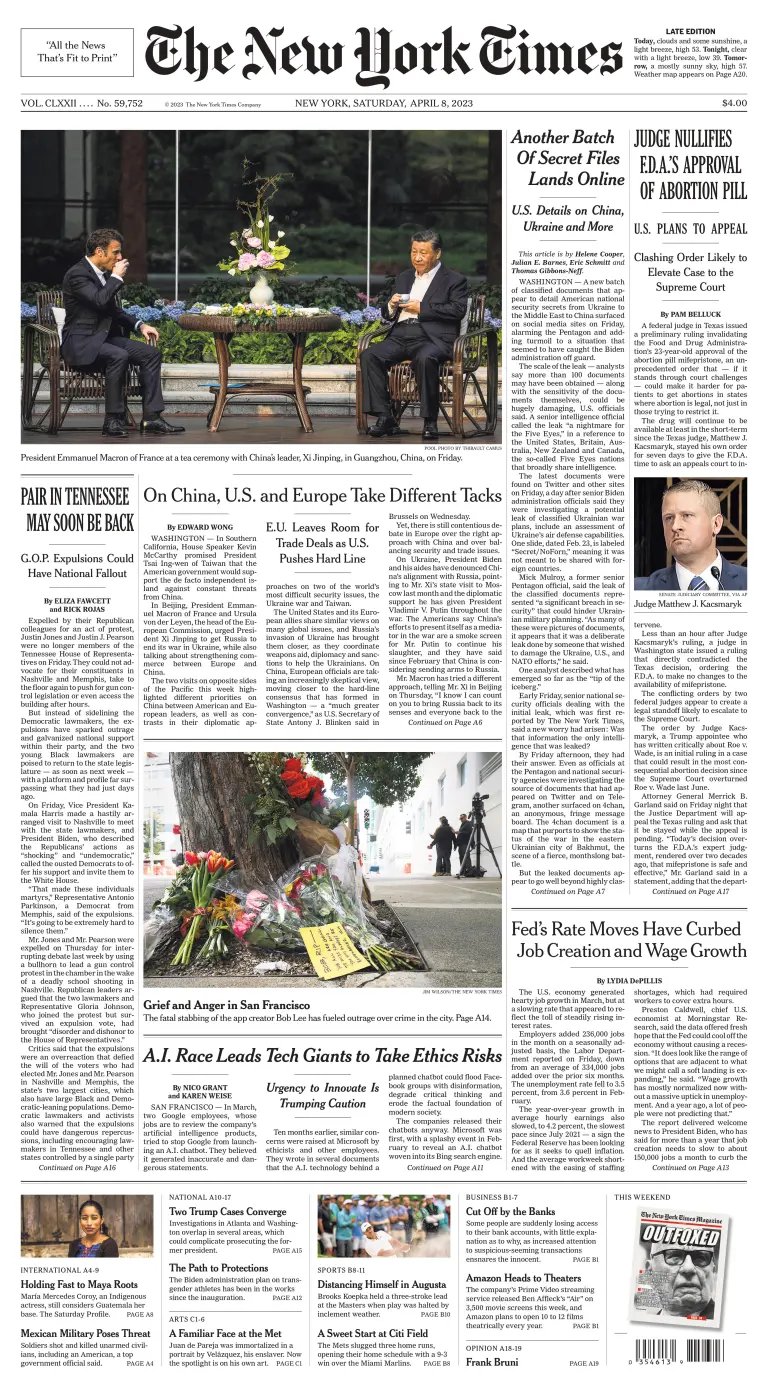
The justices are poised to consider whether the most common method of ending pregnancies can be sharply curtailed in states where abortion remains legal.
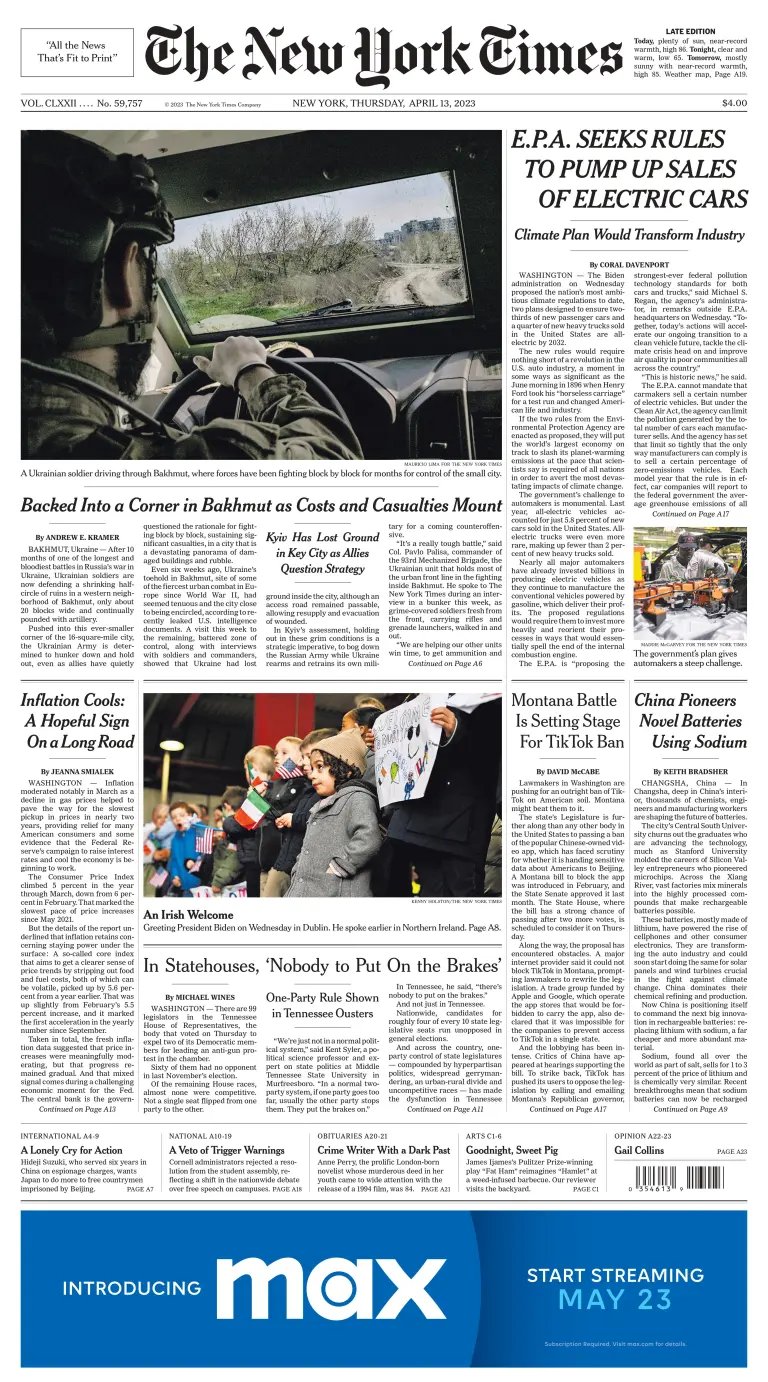
The Biden administration is proposing rules to ensure that two-thirds of new cars and a quarter of new heavy trucks sold in the United States by 2032 are all-electric.
Pushed into a shrinking corner of the devastated city, the Ukrainian military is determined to hold out for strategic reasons, even as allies question the cost.
China is far ahead of the rest of the world in the development of batteries that use sodium, which are starting to compete with ubiquitous lithium power cells.
Some in the party are urging compromise, warning of dire electoral consequences for 2024, while other stances, on guns and gay rights, also risk turning off moderates.
Youth culture and national defense collided in a community known for edgy jokes. The YouTube celebrity it was dedicated to seemed as surprised as anyone.
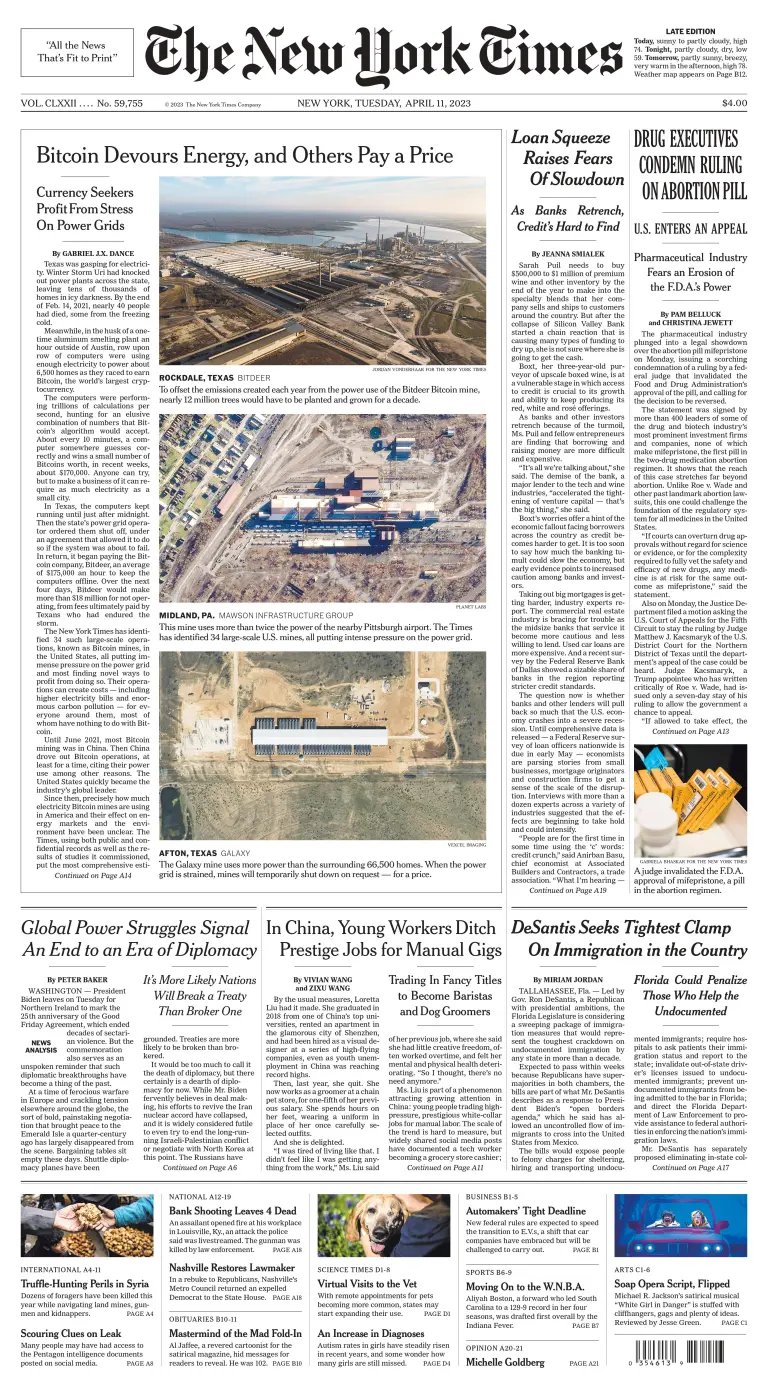
Bitcoin mines cash in on electricity — by devouring it, selling it, even turning it off — and they cause immense pollution. In many cases, the public pays a price.
CREDITSENATE JUDICIARY COMMITTEE, VIA ASSOCIATED PRESS
More than 400 executives said that the decision ignored both scientific and legal precedent and that, if the ruling stood, it would create uncertainty for the pharmaceutical and biotech industries.
The Florida governor is pushing an aggressive proposal to penalize those who aid undocumented immigrants and to track costs for providing them with health care.
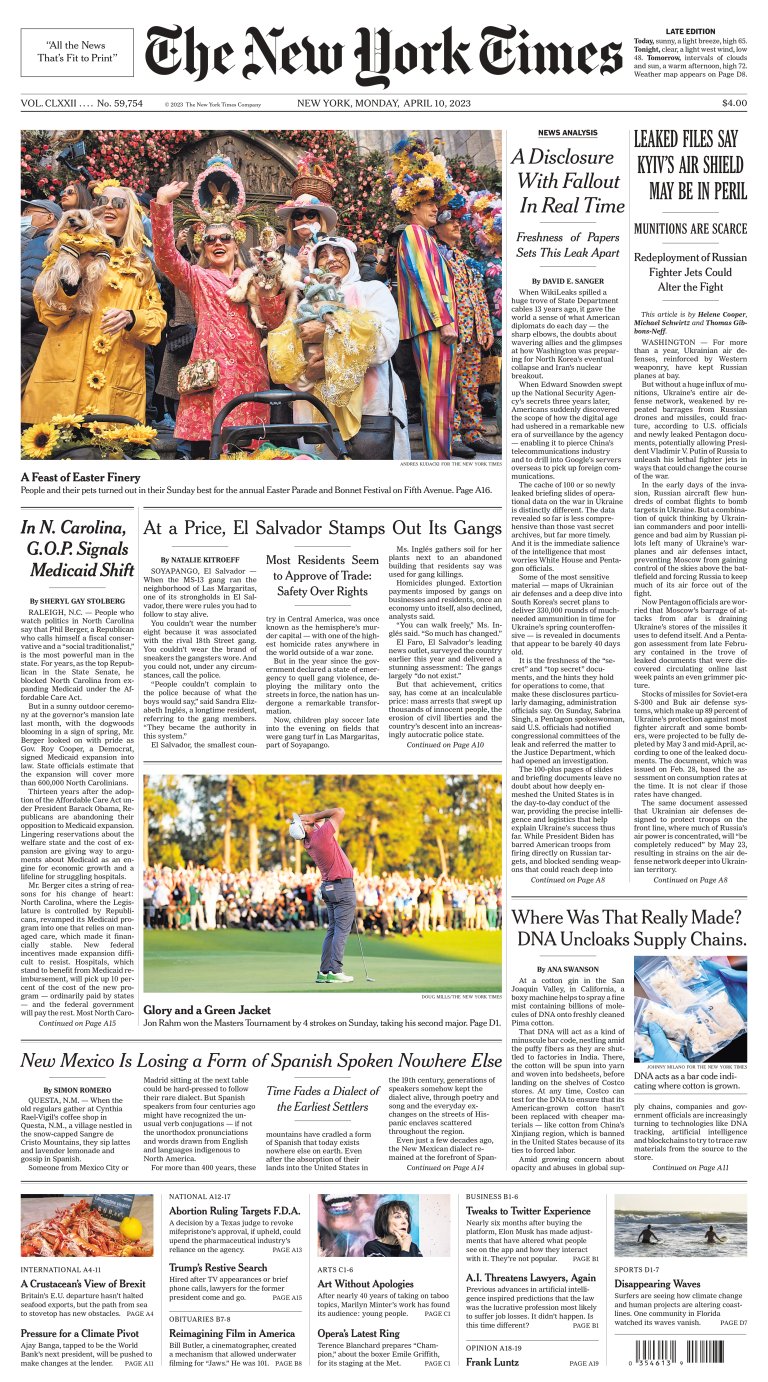
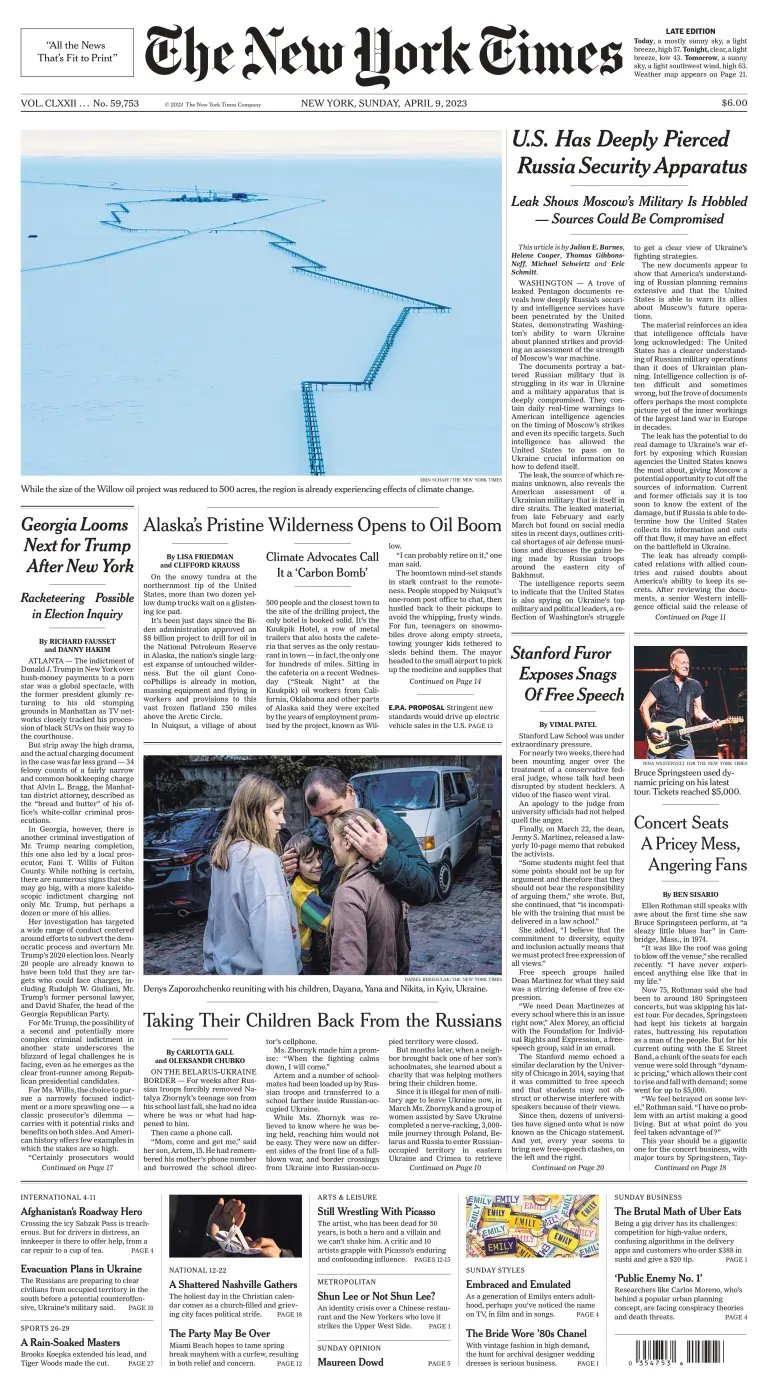
A huge influx of munitions is needed to keep Russia’s air force from changing the course of the war, according to U.S. officials and newly leaked Pentagon documents.
The freshness of the documents — some appear to be barely 40 days old — and the hints they hold for operations to come make them particularly damaging, officials say.
Intense patient advocacy, shifting politics, a determined Democratic governor and a handful of maverick Republicans led the state to join 39 others that have expanded Medicaid.
In the year since El Salvador declared a state of emergency, the government has delivered a stunning blow to the gangs that were once the ultimate authority in much of the country.
Former President Donald J. Trump now faces a very different legal challenge in the culmination of a more than two-year Atlanta investigation into election interference.
Buying concert tickets has become a mess of high prices and surcharges, anxiety-inducing registrations and pervasive scalping as some of pop’s biggest acts hit the road again.
After a student protest, Jenny S. Martinez wrote a much-praised memo defending academic freedom. But that protest shows how complicated protecting free speech can be.
President Emmanuel Macron of France talked with President Xi Jinping of China about strengthening commerce between Europe and China during a visit to Beijing this month.
The Biden administration says there is “convergence.” But trans-Atlantic leaders adopt different strategies on security and trade issues — including on Ukraine and Taiwan.
Employers added 236,000 jobs as the Federal Reserve’s interest-rate increases appeared to take a toll. The unemployment rate fell to 3.5 percent.
The Biden administration says there is “convergence.” But trans-Atlantic leaders adopt different strategies on security and trade issues — including on Ukraine and Taiwan.
Technology companies were once leery of what some artificial intelligence could do. Now the priority is winning control of the industry’s next big thing.
In “Hello Beautiful,” Ann Napolitano puts a fresh spin on the classic story of four sisters.
“It is your God-given right as an American fiction writer,” Ursula K. Le Guin once said, to change point of view. But “you need to know that you’re doing it,” she warned, and “some American fiction writers don’t.”
The enduring appeal of a midcentury Japanese novelist who wrote of alienation and suicide.
The first thing you hear is an eerie synth tone, followed by a portentous, insinuating voice. “Tell me, Dazai,” it says. “Why is it you wish to die?”
“Let’s turn that question around,” someone earnestly replies. “Is there really any value to this thing we call … living?” Then a beat drops, accompanied by distorted shouts.
These hefty books explore the lives of a former poet, a polarizing artist and a Scottish rebel from unexpected angles.
One of the great attractions of historical fiction is its ability to approach the past from unexpected angles, allowing us to consider famous figures in surprising ways. It’s a tactic that pays off brilliantly in Stephen May’s elegantly acerbic SELL US THE ROPE (Bloomsbury, 240 pp., paperback, $18),which features a thuggish former poet who calls himself Koba. The world will later know him as Stalin.
News, Views and Reviews For The Intellectually Curious





















 Boomers Daily