Mining on asteroids sounds like the stuff of science fiction, but it could soon become a reality. Nations and powerful corporations already have plans for such ventures and are hard at work staking their claim to resources from space. How can economic growth continue unfettered once all the earth’s resources have been consumed?
Major companies and governments have long been working on plans to exploit the resources to be found in the vastness of space. How far are humans from achieving this? This documentary examines the technological requirements of space mining. It also assesses how great the desire is to find new sources of raw materials. The film touches on scientific and fundamental societal issues – including humanity’s craving for new territories and our degradation of the Earth as we attempt to exploit all our planet has to offer.
Japanese billionaire Yusaku Maezawa launched a search for eight people to join him as the first private passengers on a trip around the moon with Elon Musk’s SpaceX.
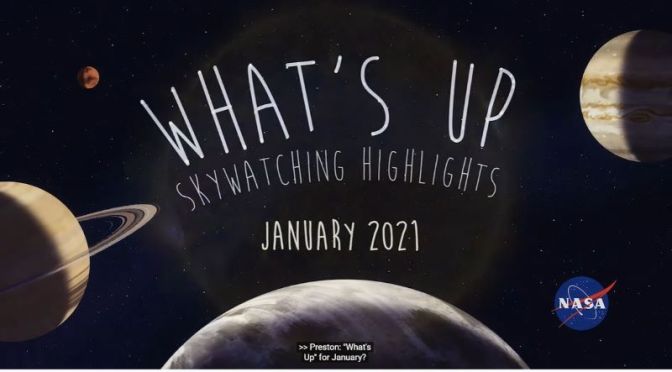
What are some skywatching highlights in January 2021? Mark Earth’s closest approach to the Sun for the year, called perihelion, at the start of the month, then spot a couple of elusive planets: Uranus on Jan. 20th and Mercury throughout the second half of the month. Additional information about topics covered in this episode of What’s Up, along with still images from the video, and the video transcript, are available at https://solarsystem.nasa.gov/whats-up….
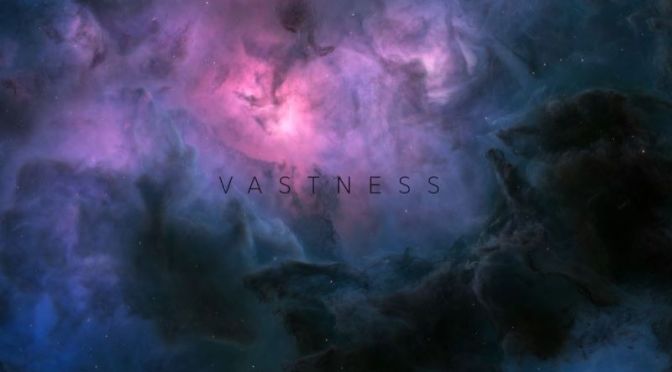
VASTNESS is a short film where we explore new designed nebulas with more detail, scale and color variations.
To achieve this I developed a new process that pushes the hardware memory limit. By using more particles than before, I tried to get more detail, light/color variations and scale still maintaining the overall natural feeling.
As side hustles go, Elon Musk’s rocket company SpaceX is really quite something. Entirely separate from the humdrum day job at Tesla, where his only real challenge is weaning humanity off the internal combustion engine, Musk’s multi-billion dollar SpaceX operation sets itself no less a target than bringing down the cost of space travel and ultimately helping mankind colonise Mars.
Spoiler alert – firing gigantic rockets into space every other week is not a cheap undertaking. And while there’s no question Elon Musk has a few bucks to his name, his pockets aren’t bottomless. Somehow, all those dazzling launches – and landings – need to pay for themselves. So strap in and get ready for ignition sequence, while we investigate today’s burning question – how does SpaceX make money?
In October this year, influential investment bank Morgan Stanley went on record saying it believed SpaceX would very soon be worth a cool 100 billion dollars.
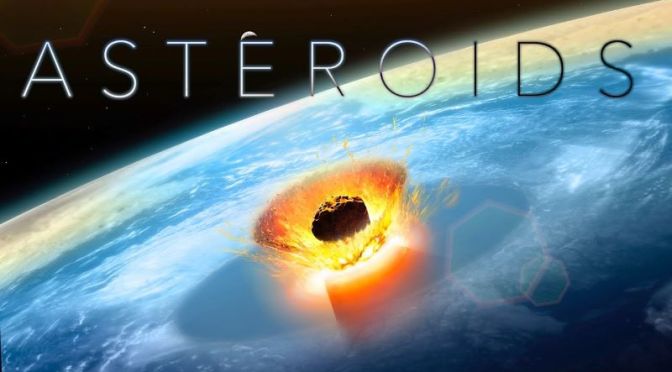
Stephen Hawking thought an asteroid impact posed the greatest threat to life on Earth.
Asteroids are small, rocky objects that orbit the Sun. Although asteroids orbit the Sun like planets, they are much smaller than planets. Asteroids are small, rocky objects that orbit the sun. Although asteroids orbit the sun like planets, they are much smaller than planets.
Every legacy has a compelling origin. The soon-to-be-launched Landsat 9 is the intellectual and technical product of eight generations of Landsat missions, spanning nearly 50 years.
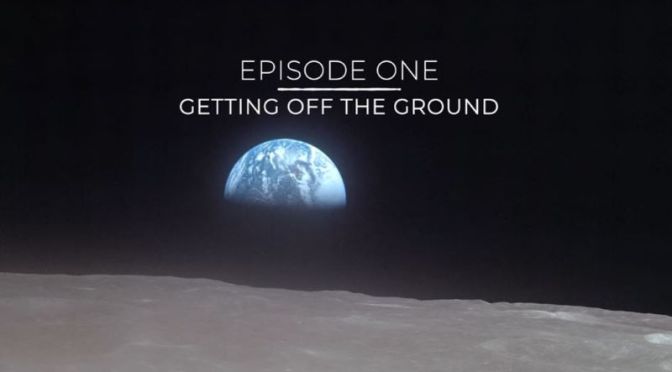
Episode One answers the question “why?” Why did the specific years between 1962 and 1972 call for a such a mission? Why did leadership across agencies commit to its fruition? Why was the knowledge it could reveal important to the advancing study of earth science?
In this episode, we’re introduced to William Pecora and Stewart Udall, two men who propelled the project into reality, as well as Virginia Norwood who breathed life into new technology. Like any worthwhile endeavor, Landsat encountered its fair share of resistance. Episode one explores how those challenges were overcome with the launch of Landsat 1, signifying a bold step into a new paradigm.
Additional footage courtesy of Gordon Wilkinson/Texas Archive of the Moving Image and the US Geological Survey. The Landsat Program is a series of Earth-observing satellite missions jointly managed by NASA and the U.S. Geological Survey (USGS). Landsat satellites have been consistently gathering data about our planet since 1972. They continue to improve and expand this unparalleled record of Earth’s changing landscapes for the benefit of all.
Music: “The Missing Star,” “Brazenly Bashful,” “Light Tense Weight,” “It’s Decision Time,” “Patisserie Pressure,” from Universal Production Music Credit: NASA’s Goddard Space Flight Center Matthew R. Radcliff (USRA): Lead Producer Ryan Fitzgibbons (USRA): Lead Producer Kate Ramsayer (USRA): Lead Producer LK Ward (USRA): Lead Writer Ryan Fitzgibbons (USRA): Lead Editor Jeffrey Masek (NASA/GSFC): Lead Scientist Marc Evan Jackson: Narrator Terry Arvidson (Lockheed Martin): Interviewee Aaron E. Lepsch (ADNET): Technical Support
U.S. COVID-19 cases cross 11 million as pandemic intensifies, 4 astronauts make history as SpaceX’s ‘Resilience’ launches for International Space Station, and Pennsylvania group delivers thousands of cookies to frontline workers during pandemic.
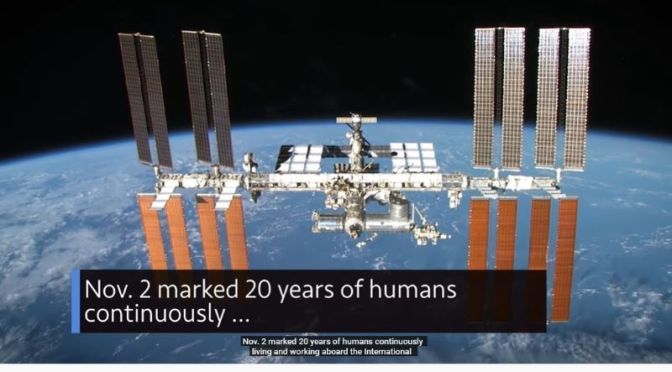
Marking 20 years of humans aboard the space station, getting out the vote from space, and preparations continue for NASA and SpaceX’s next crew launch … a few of the stories to tell you about – This Week at NASA!
Astronomers pin down the likely origins of mysterious fast radio bursts, Covid-19 in schools, octopuses taste with touch and the latest on what the US election means for science.
In this episode:
00:46 The origins of mysterious fast radio bursts
The detection of a brief but enormously-powerful radio burst originating from within the Milky Way could help researchers answer one of astronomy’s biggest mysteries.
At the start of the pandemic, there were fears that schools could become hotspots for infections. We discuss the evidence suggesting that this is unlikely to be the case, and the rates of infection in children of different ages.
Although the winner of this year’s US election is unclear, we discuss the current situation and what it might mean for science.
28:58 Briefing Chat
We discuss some highlights from the Nature Briefing. This time, ancient genomes reveal the migration of man’s best friend, and a new polio vaccine looks set to receive emergency approval.








 Boomers Daily