
The FT’s Peggy Hollinger asks if the next great leap forward in space is a lunar economy?

The FT’s Peggy Hollinger asks if the next great leap forward in space is a lunar economy?

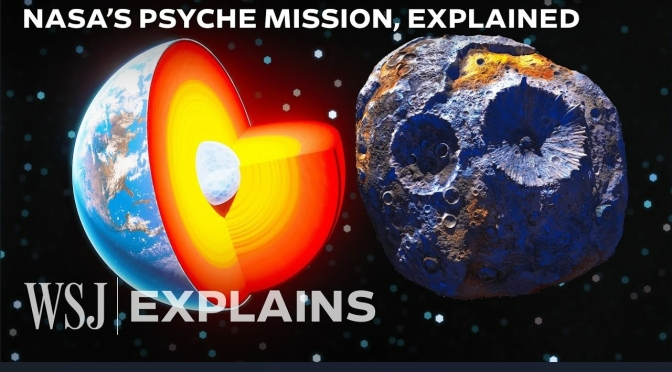
Video timeline: 0:00 NASA’s mission 0:46 The psyche asteroid 1:45 Why metal matters 3:04 What we can learn from the mission
The rocky inner planets of our solar system are thought to have mostly metallic cores. WSJ breaks down why this mission matters and what it could tell us about Earth’s origins.


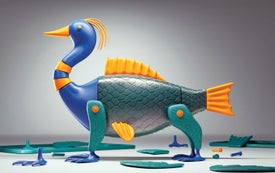
The emerging field of synthetic morphology bends boundaries between natural and artificial life
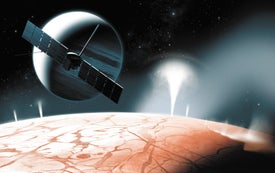
Vast quantities of liquid water may exist on moons of Jupiter, Saturn and Neptune, making life possible there, too
The Archimedes experiment will weigh the void of empty space to help solve a big cosmic puzzle
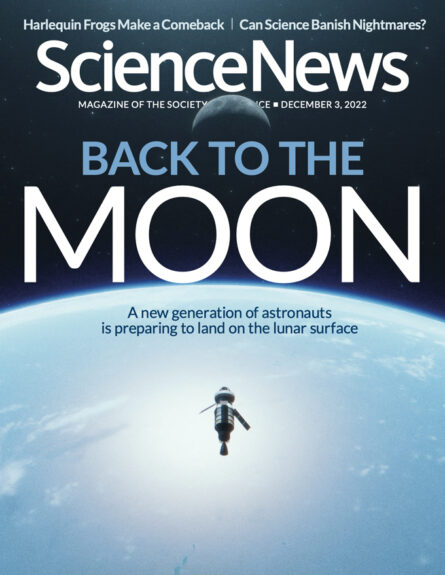

Space agencies are preparing to send the next generation of astronauts to the moon and beyond. Here’s how the next crews will be different from the last ones.
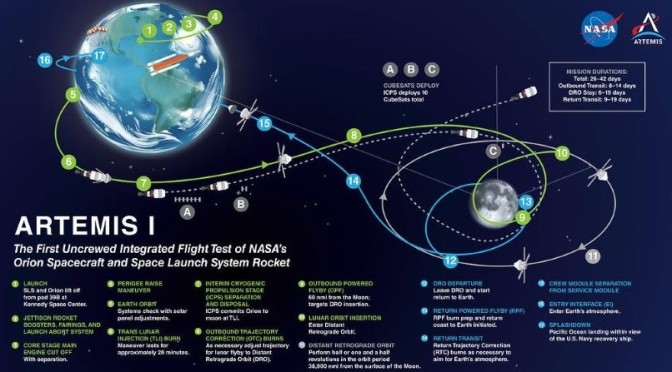
People are about to go back to the moon for the first time in 50 years. It isn’t just a race to get there, but a whole new era of lunar exploration and exploitation.
We will shortly see people walking on the moon again, mining precious resources and setting up lasting bases on the dusty, grey world. As NASA prepares to return to the moon, we take a look back at some of the key milestones in our history with our lunar neighbour.
Learn more ➤ https://www.newscientist.com/article/…
In this episode, Nature reporter Davide Castelvecchi joins us to talk about the big science events to look out for in 2022. We’ll hear about vaccines, multiple Moon missions, the push to save biodiversity, and more.
The James Webb Space Telescope was first conceived in the late 1980s. Now, more than 30 years later, it’s finally set to launch in December.
After such a long a road, anticipation over what the telescope will contribute to astronomy is intense. Daniel Clery, a staff writer for Science, joins host Sarah Crespi to talk about what took so long and what we can expect after launch.
You might have heard that Greenland sharks may live up to 400 years. But did you know that some Pacific rockfish can live to be more than 100? That’s true, even though other rockfish species only live about 10 years. Why such a range in life span? Greg Owens, assistant professor of biology at the University of Victoria, discusses his work looking for genes linked with longer life spans.
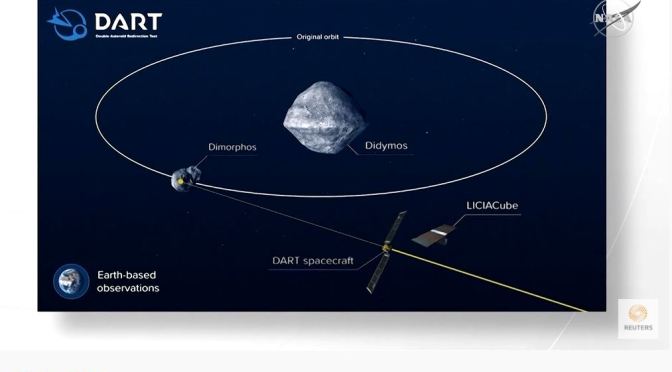
NASA introduced the space agency’s first planetary defense test mission, the Double Asteroid Redirection Test or DART, a spacecraft they plan to launch later this month on a mission to crash into an asteroid.
The surface of Venus is completely inhospitable for life: barren, dry, crushed under an atmosphere about 90 times the pressure of Earth’s and roasted by temperatures two times hotter than an oven. But was it always that way? Could Venus once have been a twin of Earth — a habitable world with liquid water oceans? This is one of the many mysteries associated with our shrouded sister world. 27 years have passed since NASA’s Magellan mission last orbited Venus. That was NASA’s most recent mission to Earth’s sister planet, and while we have gained significant knowledge of Venus since then, there are still numerous mysteries about the planet that remain unsolved. NASA’s DAVINCI (Deep Atmosphere Venus Investigation of Noble gases, Chemistry, and Imaging) mission hopes to change that. Video credit: NASA’s Goddard Space Flight Center
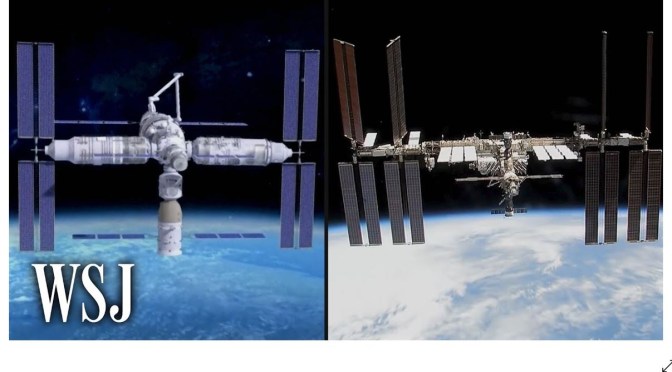
China says its spacecraft has more advanced technology. While the future of the nearly 23-year-old International Space Station remains uncertain after 2024, China says its newly equipped Tiangong station will be up and running by next year. WSJ unpacks the design and technology of both space stations. Photo: CCTV; NASA


 Boomers Daily