


 This week, the spaceborne lab that allows investigation of quantum states, and the debate surrounding how mountain height is maintained.
In this episode:
01:18 Space lab
Scientists have built a lab on the international space station, allowing them to remotely investigate quantum phenomena in microgravity. Research Article: Aveline et al.; News and Views: Quantum matter orbits Earth
08:37 Research Highlights
Trackable ‘barcode’ bacteria, and physicists simulate near light speed cycling. Research Highlight: ‘Barcode’ microbes could help to trace goods — from lettuce to loafers; Research Highlight: What Einstein’s theory means for a cyclist moving at almost light speed
10:48 Maintaining mountain height
For a long time many researchers have thought that mainly erosion controls the height of mountains, but new research suggests that tectonic forces play a bigger role. Research Article: Dielforder et al.; News and Views: Mountain height might be controlled by tectonic force, rather than erosion
16:12 Pick of the Briefing
We pick our highlights from the Nature Briefing, including how sleep deprivation kills, and a monumental Maya structure hidden in plain sight. Quanta Magazine: Why Sleep Deprivation Kills; National…

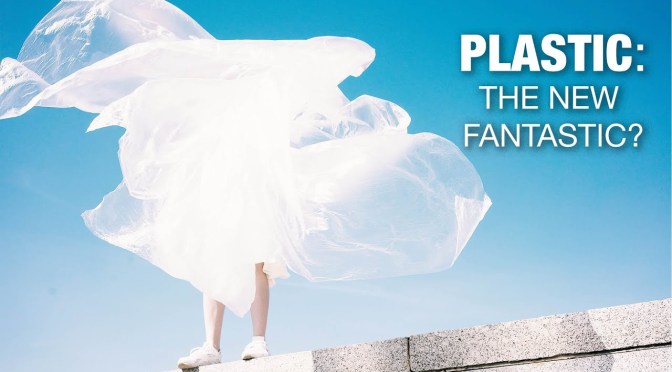
Plastic has become a malevolent symbol of our wasteful society. It’s also one of the most successful materials ever invented: it’s cheap, durable, flexible, waterproof, versatile, lightweight, protective and hygienic.
During the coronavirus pandemic, plastic visors, goggles, gloves and aprons have been fundamental for protecting healthcare workers from the virus. But what about the effects on the environment of throwing away huge numbers of single-use medical protection equipment? How are we to balance our need for plastic with protecting the environment?
Delayed as a result of the pandemic, the film is being released now because it considers how society might ‘reset the clock’ when it comes to living better with a vital material.
We hear how Cambridge University’s Cambridge Creative Circular Plastics Centre (CirPlas) aims to eliminate plastic waste by combining blue-sky thinking with practical measures – from turning waste plastic into hydrogen fuel, to manufacturing more sustainable materials, to driving innovations in plastic recycling in a circular economy.
“As a chemist I look at plastic and I see an extremely useful material that is rich in chemicals and energy – a material that shouldn’t end up in landfills and pollute the environment,” says Professor Erwin Reisner, who leads CirPlas, funded by UK Research and Innovation.
“Plastic is an example of how we must find ways to use resources without irreversibly changing the planet for future generations.”
Explore more: CirPlas: https://www.energy.cam.ac.uk/Plastic_…
 First up this week, Staff Writer Meredith Wadman talks with host Sarah Crespi about how male sex hormones may play a role in higher levels of severe coronavirus infections in men. New support for this idea comes from a study showing high levels of male pattern baldness in hospitalized COVID-19 patients.
Next, Jason Qian, a Ph.D. student in the systems biology department at Harvard Medical School, joins Sarah to talk about an object-tracking system that uses bacterial spores engineered with unique DNA barcodes. The inactivated spores can be sprayed on anything from lettuce, to wood, to sand and later be scraped off and read out using a CRISPR-based detection system. Spraying these DNA-based identifiers on such things as vegetables could help trace foodborne illnesses back to their source. Read a related commentary piece.
 In this month’s episode, we learn that human brains differentiate musical pitch a way that macaque monkeys do not. In fact, speech and music shaped the human brain’s hearing circuits. Researchers are studying these circuits with an eye on developing treatments for neurological disorders.
First up this week, Staff Writer Jennifer Couzin-Frankel talks with host Sarah Crespi about a rare inflammatory response in children that has appeared in a number of COVID-19 hot spots. Next, Julian Dowdeswell, director of the Scott Polar Research Institute and professor of physical geography at the University of Cambridge, talks with producer Meagan Cantwell about tracing the retreat of Antarctica’s glaciers by examining the ocean floor. Finally, Kiki Sanford interviews author Danny Dorling about his new book, Slowdown: The End of the Great Acceleration―and Why It’s Good for the Planet, the Economy, and Our Lives.
 This week, perfecting catalysts that split water using light, the mystery of missing matter in the Universe and how working memory ‘works’ in children.
In this episode:
00:44 Water splitting
After decades of research scientists have managed to achieve near perfect efficiency using a light-activated catalyst to separate hydrogen from water for fuel. Research Article: Takata et al.; News and Views: An almost perfectly efficient light-activated catalyst for producing hydrogen from water
05:37 Research Highlights
The hidden water inside the earth’s core, and how working memory ‘works’ in children. Research Highlight: Our planet’s heart is watery; Research Highlight: A child’s memory prowess is revealed by brain patterns
07:53 Measuring matter
Estimations of baryonic matter in the Universe have conflicted with observations, but now researchers have reconciled these differences. Research Article: Macquart et al.
13:42 Pick of the Briefing
We pick our highlights from the Nature Briefing, including the possibility of a black hole in our solar system, and the biting bees that force plants to bloom. Physics World: If ‘Planet Nine’ is a primordial black hole, could we detect it with a fleet of tiny spacecraft?; Scientific American: Bumblebees Bite Plants to Force Them to Flower (Seriously)

 Boomers Daily