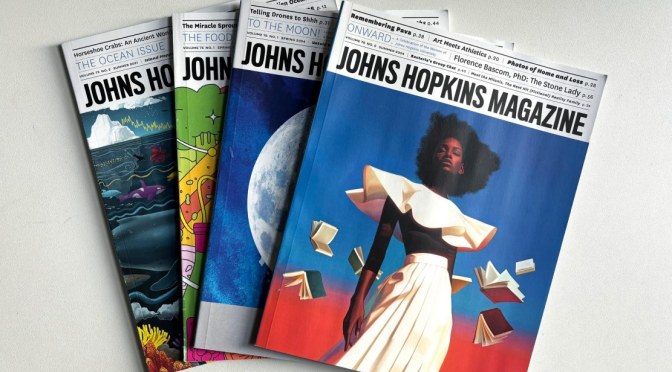
Johns Hopkins Magazine (December 6, 2024): Microplastics are among and in us; meet opera composer and hitmaker Kevin Puts; the science of seeing faces in nature; addressing the epidemic of eatings disorders in America, and more…
Next to opioid use disorder, anorexia is the most deadly mental health illness. In all, 5% of patients will die within the first four years of diagnosis as a result of heart failure, organ shutdown, low blood sugar, or suicide. The Eating Disorders Coalition reports that every 52 minutes, at least one person loses their life as a direct result of an eating disorder.
Maya Dizack, BSPH ’24 (ScM), set out years ago on a journey down the Mississippi River to see how widespread microplastics were in this major body of water. Her findings were more alarming than expected. But just how concerned
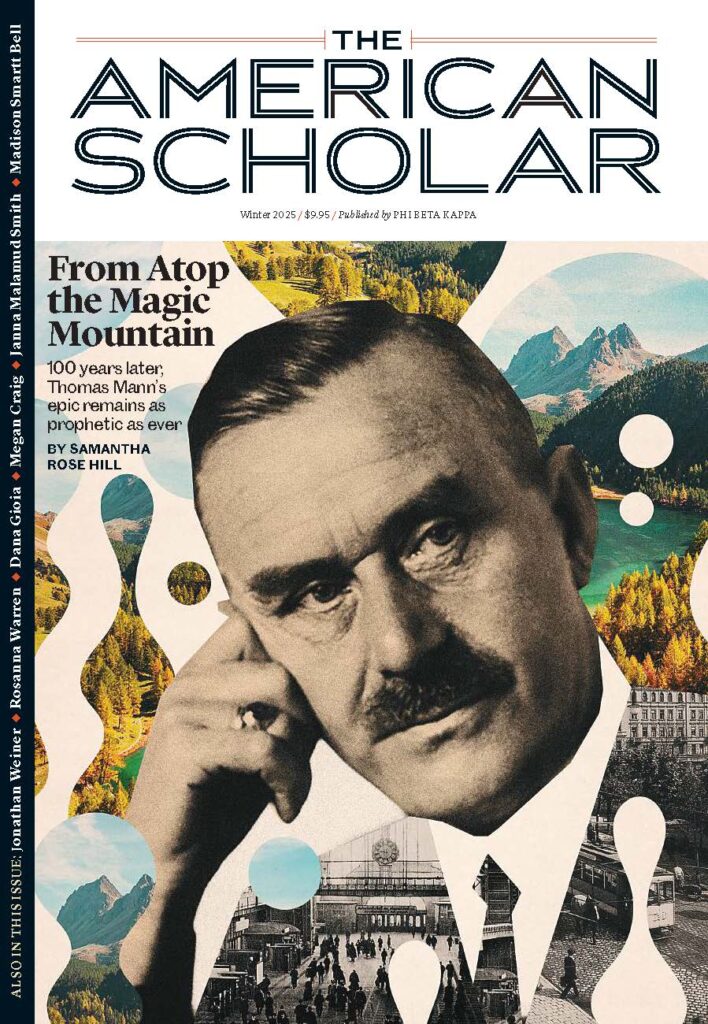
THE AMERICAN SCHOLAR (December 2, 2024): The latest issue features ‘From Atop The Magic Mountain’ – One-Hundred years later, Thomas Mann’s epic remains as prophetic as ever.
Only rarely did the outside world intrude on an idyllic Connecticut childhood, but in the tumultuous 1960s, that intrusion included an encounter with evil
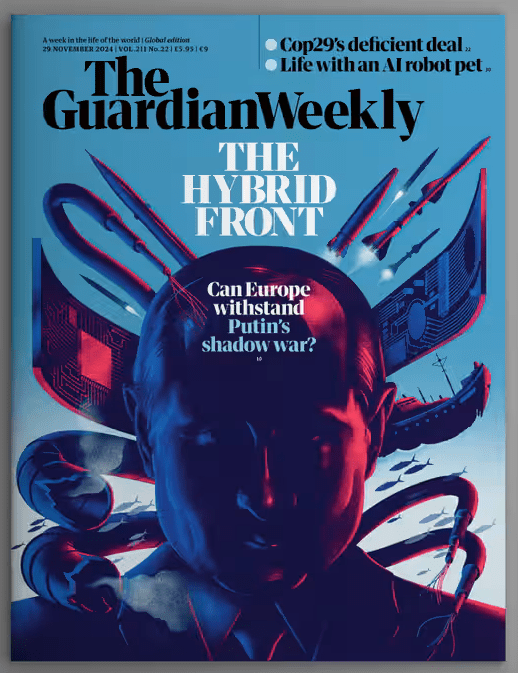
The Guardian Weekly (November 28, 2024): The new issue features last week’s escalation of Nato ballistic missile activity, in which UK and US-made missiles were launched into Russia for the first time, brought a predictably cold response from Vladimir Putin – who loosened Moscow’s nuclear doctrines and promised more attacks with a new, experimental ballistic missile.
1
Spotlight | Does lame duck Biden have time to Trump-proof democracy? The outgoing US president may only have weeks left in the White House, but activists say he can secure civil liberties, accelerate spending on climate and healthcare, and spare death row prisoners. David Smith reports
2
Science | My weird, emotional week with an AI pet Casio says Moflin can develop its own personality and build a rapport with its owner – and it doesn’t need food, exercise or a litter tray. But is it essentially comforting or alienating? Justin McCurry finds out
3
Feature | Are we right to strive to save the world’s tiniest babies? Doctors are pushing the limits of science and human biology to save more extremely premature babies than ever before. But when so few survive, are we putting them through needless suffering? By Sophie McBain
4
Opinion | A social media ban is in everyone’s interests – not just kids under 16 Van Badham on why she resents being excluded from protection against monetised fear, anger and toxicity
5
Culture | A road trip like no other: an epic drive on the Autobahn Fifty years after electronic pioneers Kraftwerk released a 23-minute song about a road – and changed pop music for ever – Tim Jonze hits the highways of Düsseldorf and Hamburg in search of its futuristic brilliance
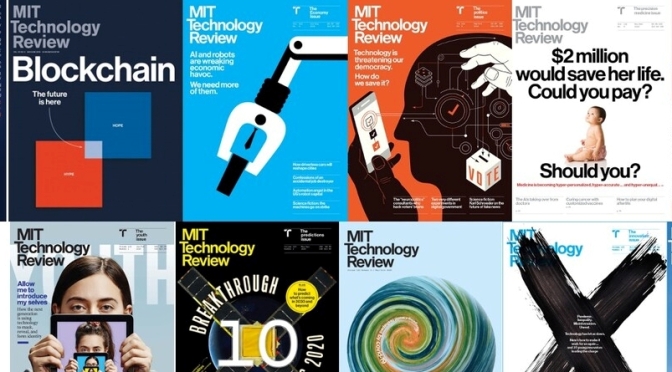
MIT Technology Review (Novemer 24, 2024): This week’s round up includes Google DeepMind has a new way to look inside an AI’s “mind”. Inside Clear’s ambitions to manage your identity beyond the airport. Who’s to blame for climate change? And more.
How this grassroots effort could make AI voices more diverse A massive volunteer-led effort to collect training data in more languages, from people of more ages and genders, could help make the next generation of voice AI more inclusive and less exploitative.
The rise of Bluesky, and the splintering of social You may have read that it was a big week for Bluesky. If you’re not familiar, Bluesky is, essentially, a Twitter clone that publishes short-form status updates.













 Boomers Daily