
Tag Archives: Science Magazine

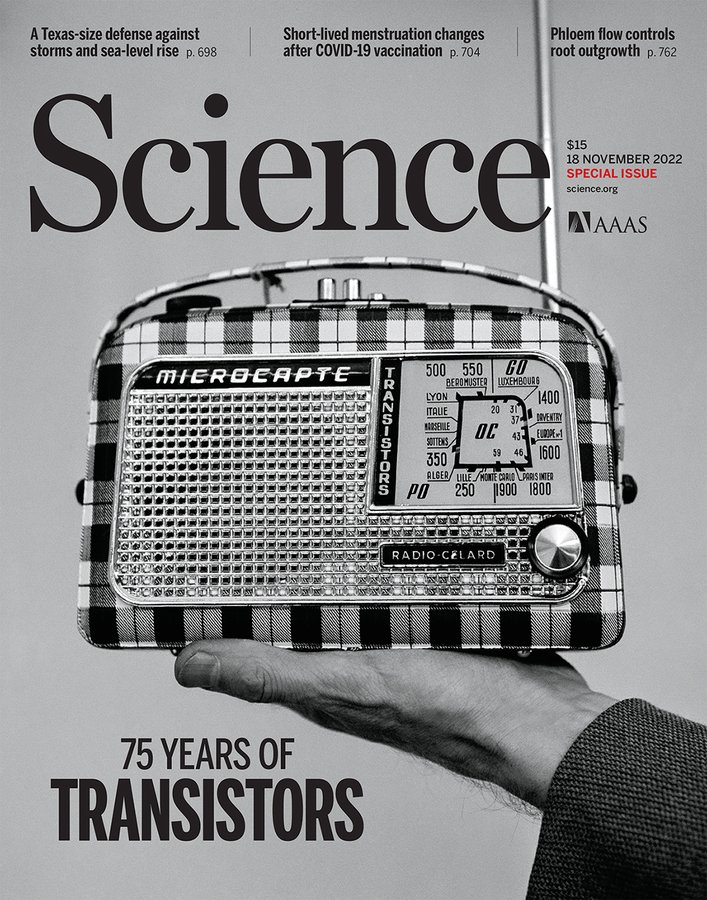
Research Preview: Science Magazine – Nov 18, 2022

Image

Science Magazine – November 18, 2022 issue:

Moore’s law: The journey ahead

High-performance electronics will focus on increasing the rate of computation

Tumors can teem with microbes. But what are they doing there?

New study suggests microbiomes can promote cancer by suppressing immune response and seeding metastase

Booming trade in mammoth ivory may be bad news for elephants

Paleontologists are urged to take a stand against a market that may provide cover for continued poaching

Defining the onset of the Anthropocene

Twelve sites are considered for defining the Anthropocene geological epoch

Science: Kurt Vonnegut’s Ethical Vision, Tuna And Shark Extinction Risks

On this week’s show: How sci-fi writer Kurt Vonnegut foresaw many of today’s ethical dilemmas, and 70 years of tunas, billfishes, and sharks as sentinels of global ocean health

First up this week on the podcast, we revisit the works of science fiction author Kurt Vonneugt on what would have been his 100th birthday. News Intern Zack Savitsky and host Sarah Crespi discuss the work of ethicists, philosophers, and Vonnegut scholars on his influence on the ethics and practice of science. Researchers featured in this segment:

Peter-Paul Verbeek, a philosopher of science and technology at the University of Amsterdam and chair of the World Commission on the Ethics of Scientific Knowledge and Technology David Koepsell, a philosopher of science and technology at Texas A&M University, College Station Christina Jarvis, a Vonnegut scholar at the State University of New York, Fredonia, and author of the new book Lucky Mud & Other Foma: A Field Guide to Kurt Vonnegut’s Environmentalism and Planetary Citizenship Sheila Jasanoff, a science studies scholar at Harvard University

Next, producer Kevin McLean discusses the connection between fishing pressure and extinction risk for large predatory fish such as tunas and sharks. He’s joined by Maria José Juan Jordá, a postdoc at the Spanish Institute for Oceanography, to learn what a new continuous Red List Index using the past 70 years of fisheries data can tell us about the effectiveness and limits of fishing regulations. Finally, in a sponsored segment from the Science/AAAS Custom Publishing Office, Sean Sanders, director and senior editor for custom publishing, interviews Joseph Hyser, assistant professor in the Department of Molecular Virology and Microbiology at Baylor College of Medicine about his use of wide-field fluorescence live cell microscopy to track intercellular calcium waves created following rotavirus infection. 

Research Preview: Science Magazine – Nov 11, 2022

Science Magazine – November 11, 2022 Issue:

Invasive mosquito adds to Africa’s malaria toll

Anopheles stephensi may dramatically increase the number of people at risk

As Musk reshapes Twitter, academics ponder taking flight

Many researchers are setting up profiles on another social media service known as Mastodon

Scientists on trial after speaking out on harassment

Astrophysicist Christian Ott filed a criminal complaint after job offer withdrawn

Perennial rice could be a ‘game changer’

Long-term study in China shows yields hold up and farmers save money and time

Research Preview: Science Magazine – Nov 4, 2022

Image

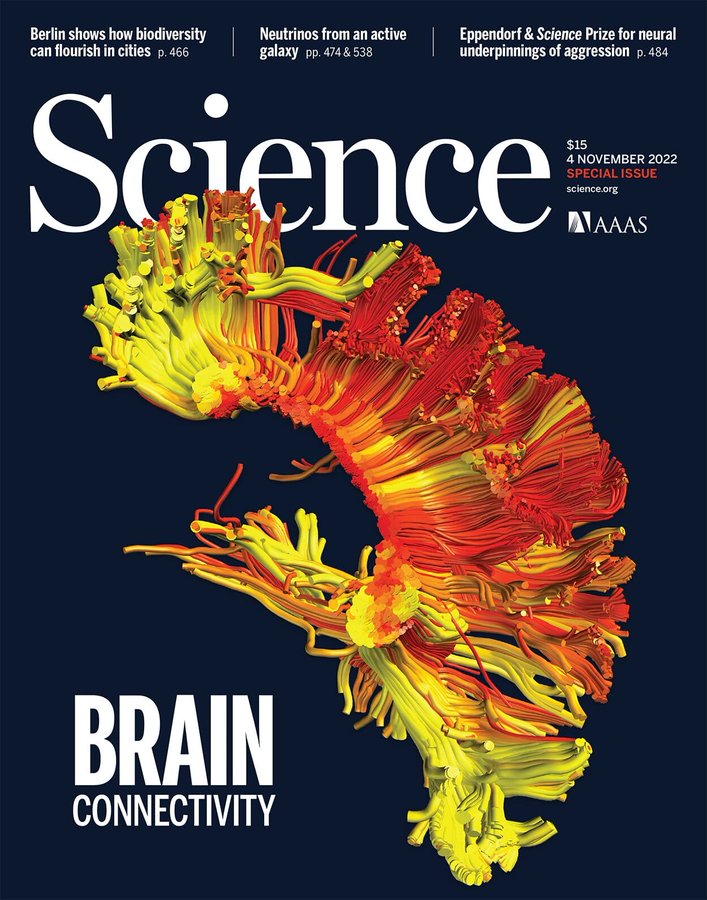
Science Magazine – Brain connectivity

No neuron is an island

The brain is so much more than its constituent cells. Each neuron in the brain connects with thousands of other neurons—but instead of a cacophony of connections, we have a synchronized symphony.

Atlas-based data integration for mapping the connections and architecture of the brain

Detailed knowledge about the neural connections among regions of the brain is key for advancing our understanding of normal brain function and changes that occur with aging and disease.

Solving brain circuit function and dysfunction with computational modeling and optogenetic fMRI

Can we construct a model of brain function that enables an understanding of whole-brain circuit mechanisms underlying neurological disease and use it to predict the outcome of therapeutic interventions?

Scale matters: The nested human connectome

The emergent properties of the connected brain

Research Preview: Science Magazine – Oct 28, 2022

Image

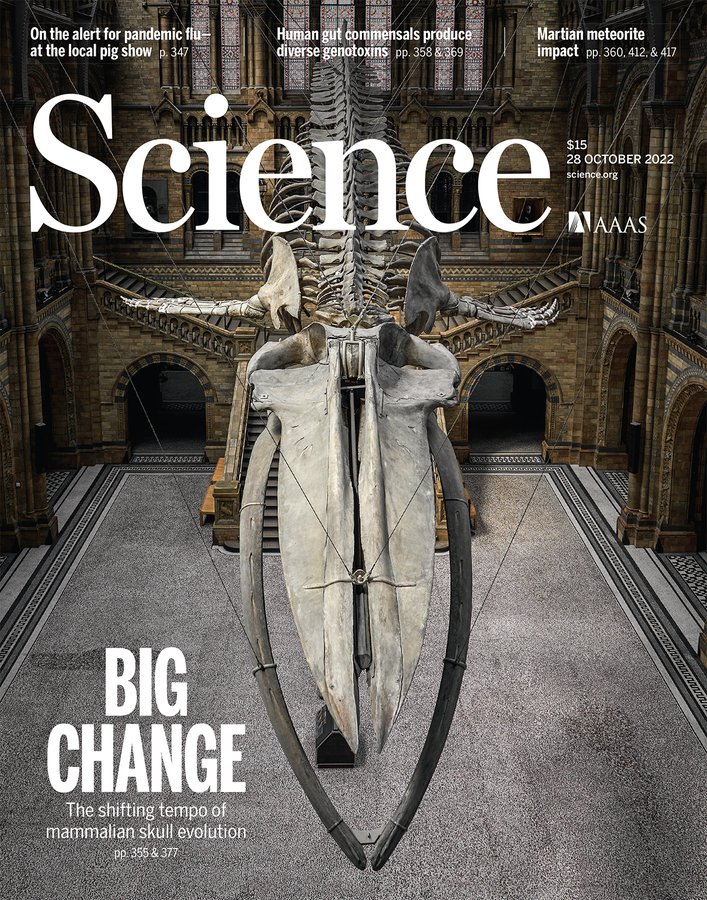
Science Magazine – The skeleton of Hope, a young female blue whale that beached in Ireland in 1891, is suspended from the ceiling of London’s Natural History Museum, pictured here empty of visitors while the museum was closed during the COVID-19 pandemic.

Bursts in skull evolution weakened with time

The skull shapes of mammals diversified more rapidly early in their history

Forgotten Ebola vaccine could help in outbreak

Merck unearths a frozen batch of an experimental vaccine it made years ago

Harvard studies on infant monkeys draw fire

Experiments involving eyelid suturing and maternal separation divide scientists

Monkeypox outbreak is ebbing—but why exactly?

Models suggest rising immunity in a small group of people, not vaccination, is key

Research Preview: Science Magazine – Oct 21, 2022

Image

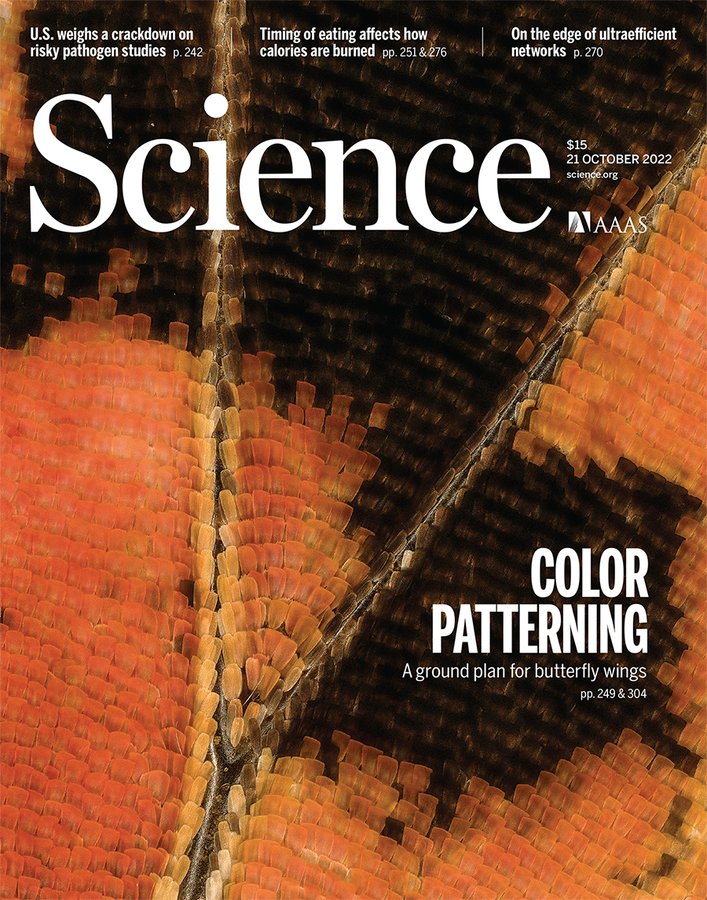
Science Magazine – Butterfly wing patterns are mosaics of colored scales. According to new research, ancient and deeply conserved multifunctional gene regulatory elements play a crucial role in creating these diverse patterns.

Heart risks fuel debate over COVID-19 boosters

With benefits unclear, some scientists question new round of shots for young people

Brazil’s election is a cliffhanger for scientists

Second Bolsonaro term could be “final nail” for science and environment

How the Black Death left its mark on immune system genes

Study of DNA from medieval victims and survivors finds gene that helped protect people from deadly pathogen

Has a new dawn arrived for space-based solar power?

Better technology and falling launch costs revive interest in a science-fiction technology

Research Preview: Science Magazine – Oct 14, 2022

Image

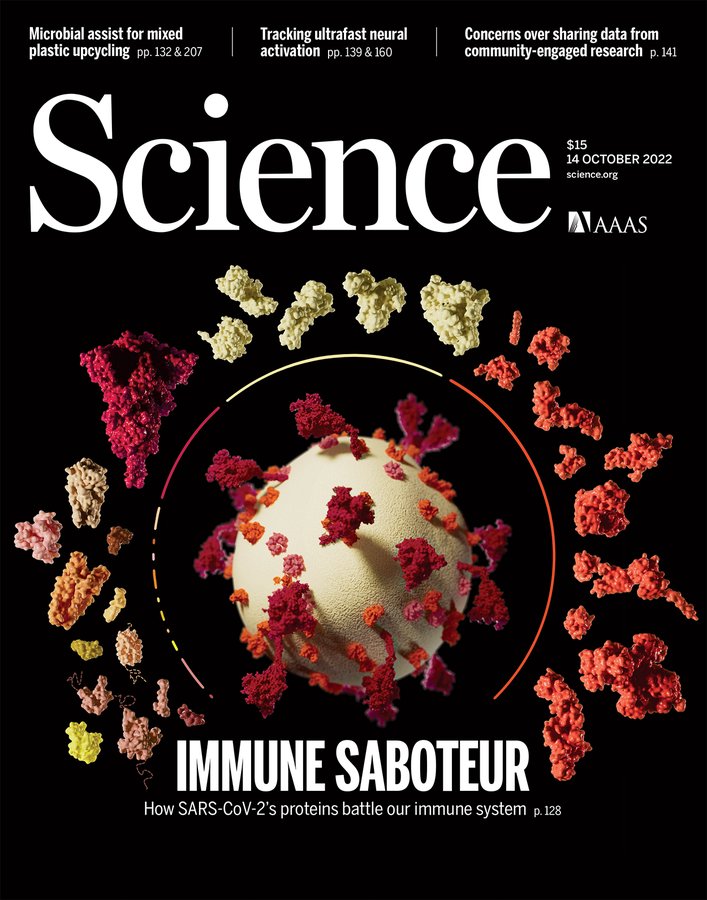
How SARS-CoV-2 battles our immune system

Meet the protein arsenal wielded by the pandemic virus

Evidence backs natural origin for pandemic, report asserts

Authors were dropped from broader Lancet review

A viral arsenal

SARS-CoV-2 wields versatile proteins to foil our immune system’s counterattack

Hydrogen power gets a boost

A fuel cell gains more power from ion-conducting, porous covalent organic frameworks

Research Preview: Science Magazine – Oct 7, 2022

Image

Entanglement snares prize

Trio helped launch new quantum revolution

Ancient DNA pioneer Svante Pääbo wins Nobel

By sequencing ancient hominins’ DNA, Pääbo explored “what makes us uniquely human”

NASA asteroid test strikes a blow for planetary defense

Observers study debris from DART’s crash into a space rock and wait to see how much the asteroid was deflected

Website

Research Preview: Science Magazine – Sept 30, 2022

Image

The genetics of a long life

Genetically diverse mice and cross-species comparison uncover links to longevity

New Omicron strains may portend big COVID-19 waves

Emerging subvariants are more immune evasive than ever

Room-temperature superconductor claim retracted

After doubts grew, blockbuster Nature paper is withdrawn over objections of study team

University pandemic policies raise equity worries

Tenure delays and pandemic impact statements could backfire, some fear

Signs of state meddling seen in Russian academy election

Leader of Russia’s largest chipmaker elected president after incumbent’s sudden withdrawal

Fraud charges crumble in China Initiative cases

Judges reject claims that defendants defrauded agencies by not disclosing China ties

Books: ‘The Biggest Ideas in the Universe – Space, Time, And Motion’ (2022)

The Biggest Ideas in the Universe

Vol. 1: SPACE, TIME, AND MOTION

The Biggest Ideas in the Universe

Vol. 1: SPACE, TIME, AND MOTION

Book cover for Sean Carroll's "The Biggest Ideas in the Universe"

Dutton Books, 20 September 2022

The goal of The Biggest Ideas in the Universe is to bridge the gap between popular-science treatments of modern physics and true expert knowledge. This is the real stuff — equations and all — presented in a way that presumes no prior knowledge other than high-school algebra. Readers will come up to speed about exactly what professional physicists are talking about, with an emphasis on established knowledge rather than speculation.

Volume One, Space, Time, and Motion, covers the domain of classical physics, from Newton to Einstein. We get introduced to Spherical Cow Philosophy, in which complications are stripped away to reveal the essence of a system, and the Laplacian Paradigm, in which the laws of physics take us from initial conditions into the future by marching through time. We learn the basic ideas of calculus, where we can calculate rates of change and how much of a quantity has accumulated. We think about the nature of space and time, separately and together. Finally we are introduced to the mysteries of non-Riemannian geometry and Einstein’s theory of curved spacetime, culminating into a dive into black holes.

Read more