Tag Archives: Science Books

Nature Reviews: Top New Science Books – June 2023

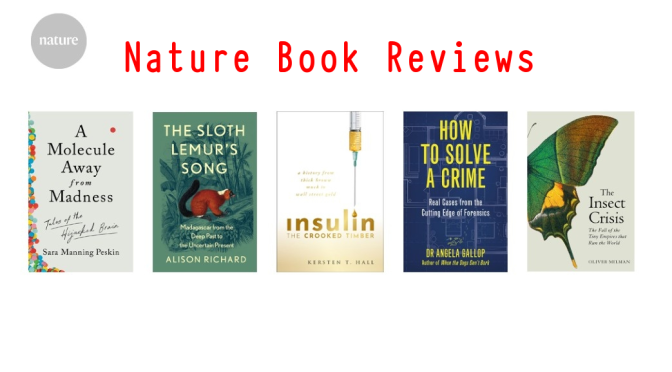
nature Magazine Science Book Reviews – June 2, 2023: The mortality revolution, and the myth of the market. Andrew Robinson reviews five of the best science picks.

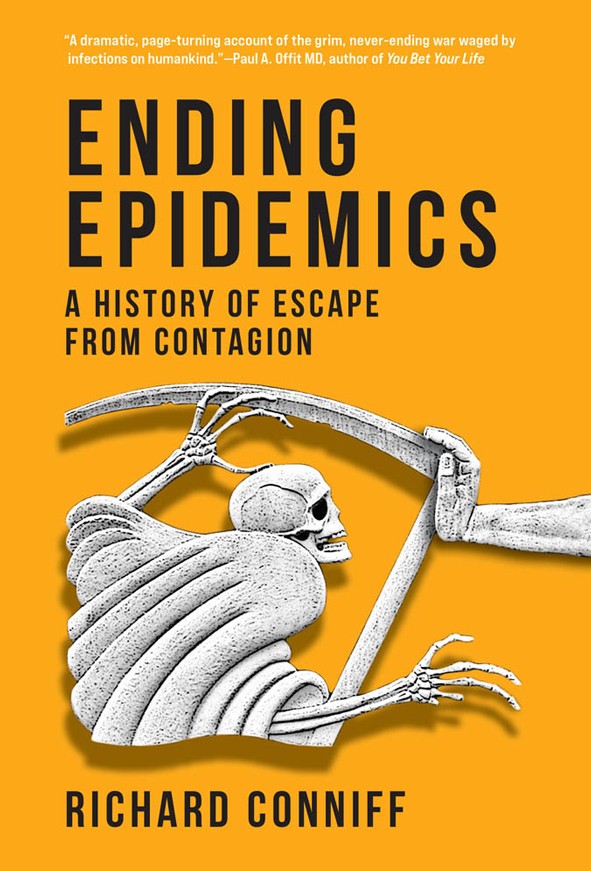
Ending Epidemics

Richard Conniff MIT Press (2023)

In 1900, one in three people died before the age of five. By 2000, this death rate was down to one in 27, and one in 100 in wealthy countries. This astonishing revolution has attracted surprisingly little attention, notes Richard Conniff. Instead, there is a “stubborn, stupid sense that we have somehow become invulnerable” — epitomized by opposition to vaccines. Conniff’s highly readable history of epidemic diseases and vaccinologists, from the first description of bacteria in 1676 to the eradication of smallpox in 1978, combats this worrying vulnerability.

The Big Myth
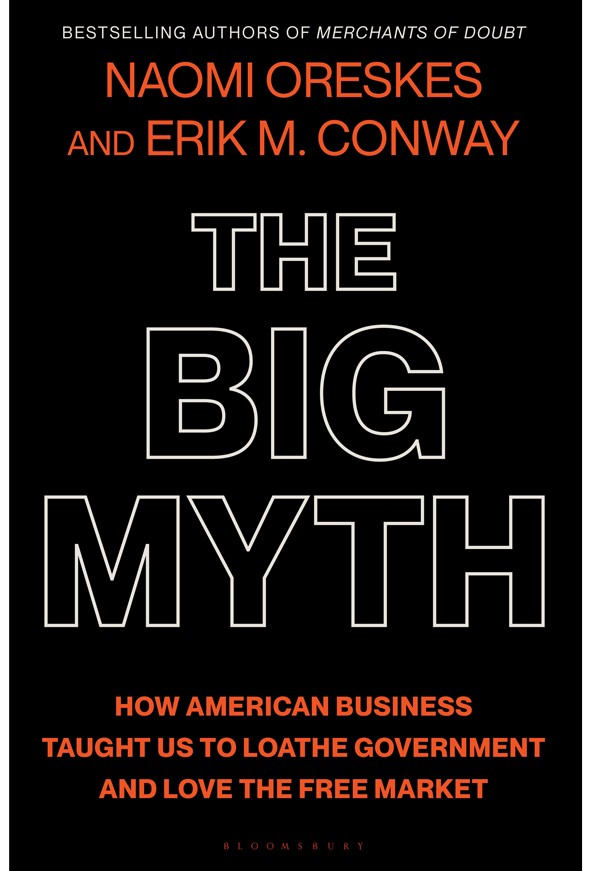
Naomi Oreskes & Erik M. Conway  Bloomsbury  (2023)

Free enterprise is not in the US Constitution. The government was deeply involved in the US economy in the nineteenth century; its success led many to be suspicious of ‘big business’ and support government intervention. But commerce later came to dominate, as advocated by Ronald Reagan, through manipulation by businesses and some economists and scientists. In this hard-hitting, persuasive book, historians of science Naomi Oreskes and Erik Conway tell “the true history of a false idea” — that of “the magic of the marketplace”.

Moving Crops and the Scales of History
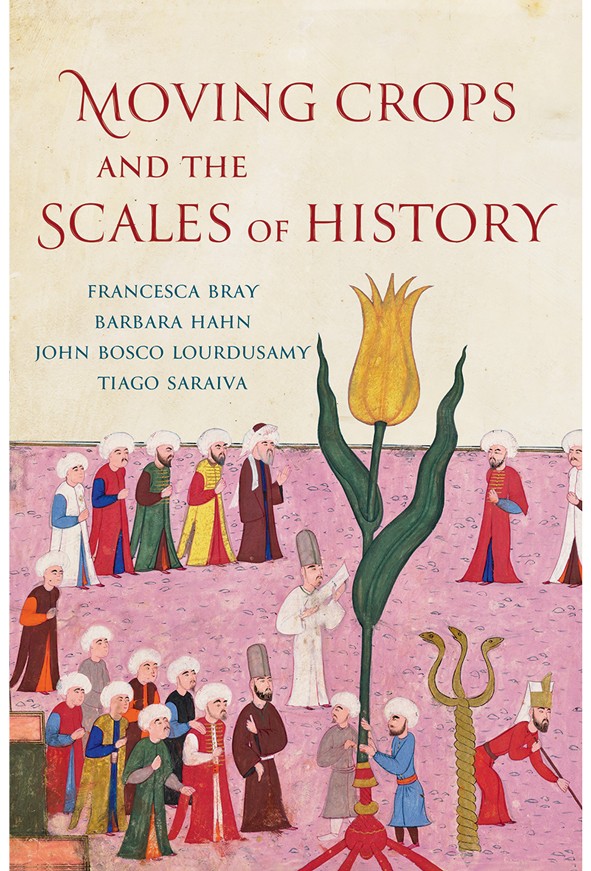
Francesca Bray et alYale Univ. Press  (2023)

Movement of crops by humans is “a key driving force in history”, notes this global academic study by an anthropologist and three historians in Europe, India and the United States. In the 1830s, British merchants smuggled tea plants from China to set up plantations in India — but then replaced them in the 1870s with indigenous bushes. Indian competition prompted the Chinese industry to reorient to other markets. The book therefore focuses on “cropscapes”: the people, creatures, technologies, ideas and places surrounding a crop.

Ghost Particle
Alan Chodos & James Riordan MIT Press (2023)

Proposed by Wolfgang Pauli in 1930, detected by Clyde Cowan and Frederick Reines in 1956 and dubbed the “nothing-particle” by Isaac Asimov in 1966, neutrinos — first created in the Big Bang — are still highly mysterious, despite endless experimental investigation. Hence their current nickname of ‘ghost particle’ — the title of physicist Alan Chodos and journalist James Riordan’s enjoyable, non-mathematical portrait. “You have over 300 Big Bang neutrinos in the tip of your pinky at this moment,” they write.

Corpus of Indus Seals and Inscriptions 3.3
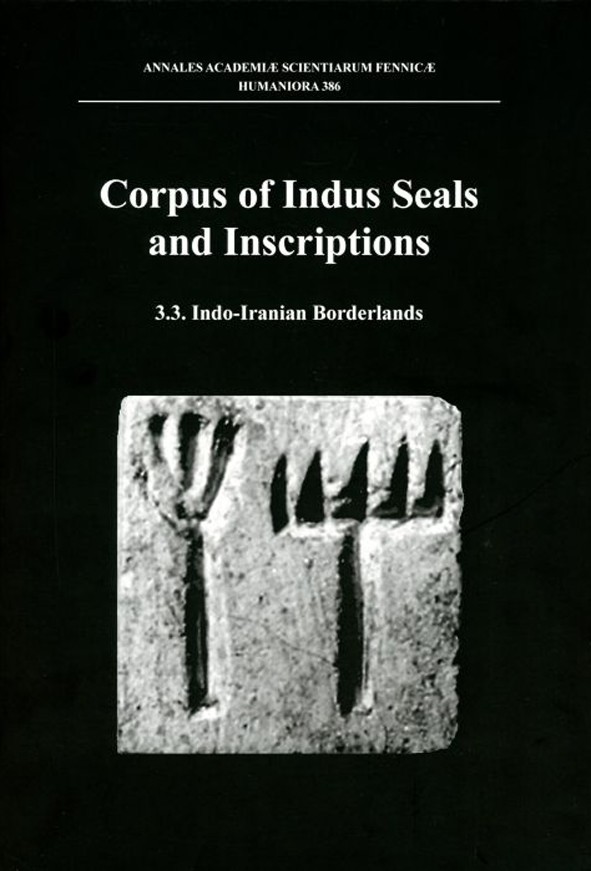
Eds Asko Parpola & Petteri Koskikallio  Suomalainen Tiedeakatemia  (2022)

The Indus civilization of around 2500–1900 BC was huge, with sophisticated cities, long-distance trade and no known internal warfare. But perhaps most remarkable is its exquisite system of writing on stone and terracotta, undeciphered by modern scholars despite more than a century of effort. In 1987, Indologist Asko Parpola launched a fascinating series of catalogues of Indus seals and inscriptions. The latest shows discoveries in the “Indo-Iranian Borderlands”: western Pakistan, Afghanistan, Uzbekistan, Tajikistan and China.
Reviews: Top New Science Books For Summer 2023

First page of PDF

SCIENCE MAGAZINE – JUNE 1, 2023:
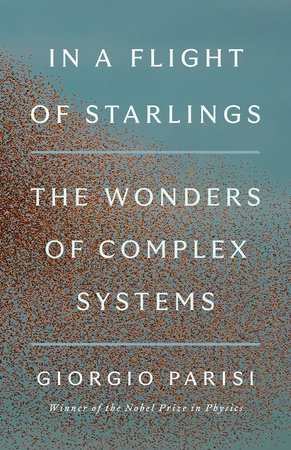
In a Flight of Starlings by Giorgio Parisi

In a Flight of Starlings: The Wonders of Complex Systems by Giorgio Parisi

From the 2021 Nobel Prize winner in Physics, an enlightening and personal journey into the practice of groundbreaking science

With In a Flight of Starlings, celebrated physicist Giorgio Parisi guides us through his unorthodox yet exhilarating work, starting with investigating the principles of physics by observing the flight of flocks of birds. Studying the movements of these communities, he has realized, proves an illuminating way into understanding complex systems of all kinds—collections of everything from atoms and planets to other animals, such as ourselves.

product image

I Feel Love: MDMA and the Quest for Connection in a Fractured World by Rachel Nuwer

 In I Feel Love, science journalist Rachel Nuwer separates fact from fantasy, hope from hype, in the drug’s contested history and still-evolving future. Evidence from scientific trials suggests MDMA, properly administered, can be startlingly effective at relieving the effects of trauma. Results from other studies point to its usefulness for individual and couples therapy, for treating depression, alcohol addiction, and eating disorders, and for cultivating personal growth. Yet scientists are still racing to discover how MDMA achieves these outcomes, a mystery that is taking them into the inner recesses of the brain and the deep history of evolution.

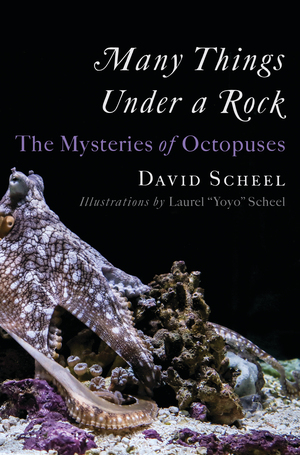
Many Things Under a Rock: The Mysteries of Octopuses by David Scheel

A behavioral ecologist’s riveting account of his decades-long obsession with octopuses: his discoveries, adventures, and new scientific understanding of their behaviors.

Of all the creatures of the deep blue, none is as captivating as the octopus. In Many Things Under a Rock, marine biologist David Scheel investigates four major mysteries about these elusive beings. How can we study an animal with perfect camouflage and secretive habitats? How does a soft and boneless creature defeat sharks and eels, while thriving as a predator of the most heavily armored animals in the sea? How do octopus bodies work? And how does a solitary animal form friendships, entice mates, and outwit rivals?

The Hidden History of Code-Breaking

The Hidden History of Code-Breaking: The Secret World of Cyphers, Uncrackable Codes, and Elusive Encryptions  by Sinclair McKay

A fascinating exploration of the uncrackable codes and secret cyphers that helped win wars, spark revolutions and change the faces of nations.

There have been secret codes since before the Old Testament, and there were secret codes in the Old Testament, too. Almost as soon as writing was invented, so too were the devious means to hide messages and keep them under the wraps of secrecy

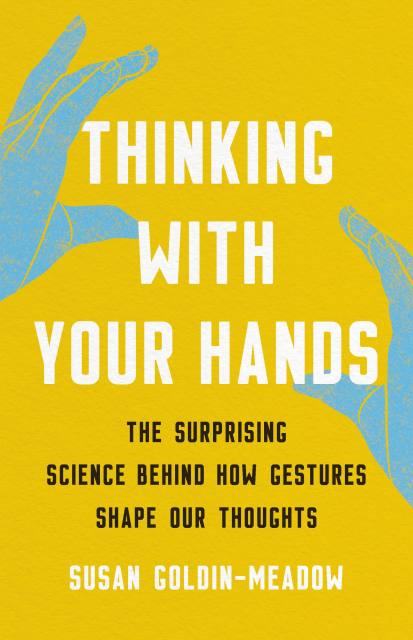
Thinking with Your Hands

Thinking with Your Hands: The Surprising Science Behind How Gestures Shape Our Thoughts by Susan Goldin

An astounding account of how gesture, long overlooked, is essential to how we learn and interact, which “changes the way you think about yourself and the people around you.” (Ethan Kross, bestselling author of Chatter)

In Thinking with Your Hands, esteemed cognitive psychologist Susan Goldin-Meadow argues that gesture is vital to how we think, learn, and communicate. She shows us, for instance, how the height of our gestures can reveal unconscious bias, or how the shape of a student’s gestures can track their mastery of a new concept—even when they’re still giving wrong answers. She compels us to rethink everything from how we set child development milestones, to what’s admissible in a court of law, to whether Zoom is an adequate substitute for in-person conversation.   

READ MORE ONLINE

Nature Reviews: Top New Science Books – May 2023

nature Magazine Science Book Reviews – May 15, 2023: Prejudice in technology, and the necessity of time. Andrew Robinson reviews five of the best science picks.

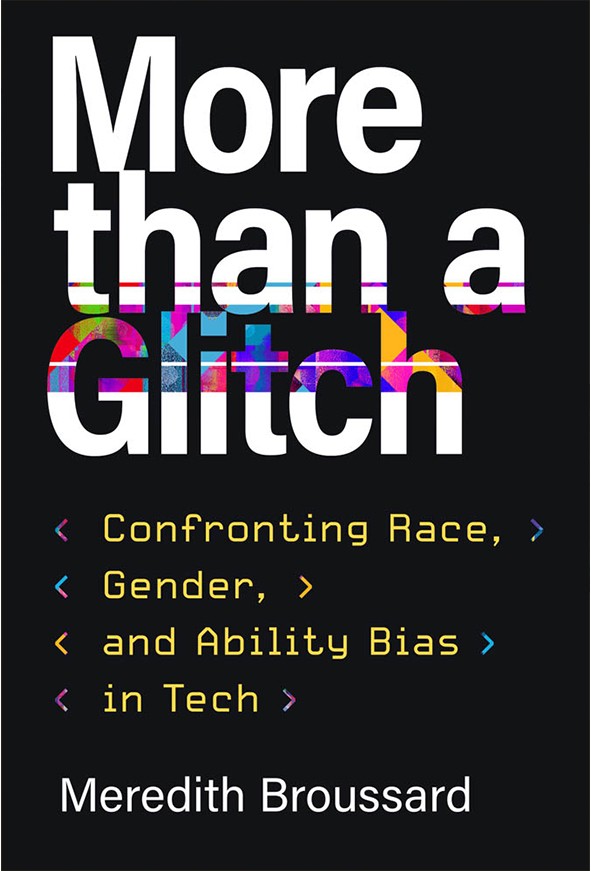
More Than a Glitch

Meredith Broussard – MIT Press (2023)

An artificial-intelligence (AI) ‘glitch’ is a problem neither expected nor consequential. Bias, by contrast, is baked in and disastrous, argues data scientist Meredith Broussard, one of very few Black women in this field, who focuses on AI and journalism. “Tech is racist and sexist and ableist because the world is so,” she says. Vivid examples in her disturbing book include that of a man arrested by US police using facial-recognition technology — purely because both he and the suspect in a blurry surveillance photo were Black.

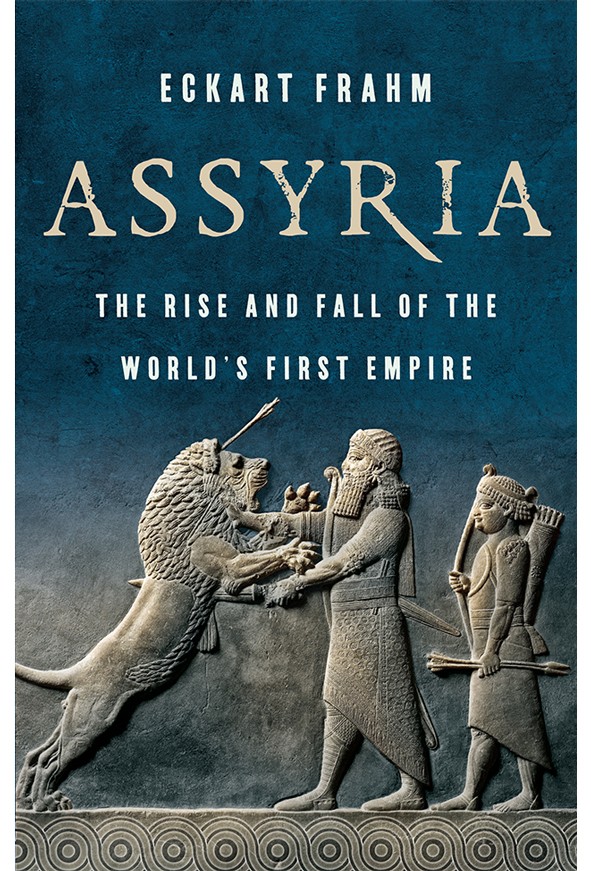
Assyria

Eckart Frahm – Basic (2023)

The world’s first empire flourished in Assyria in the eighth and seventh centuries bc, and has long been seen as the epitome of barbarism. But, as Assyriologist Eckart Frahm reveals in his deeply informed, challenging history, Assyria produced many features of the modern world. Its innovations included long-distance trade, sophisticated communications networks, mass deportations and widespread political surveillance. Unlike most later empires, he writes, it was at least honest in its “open celebration of plunder, torture, and murder”.

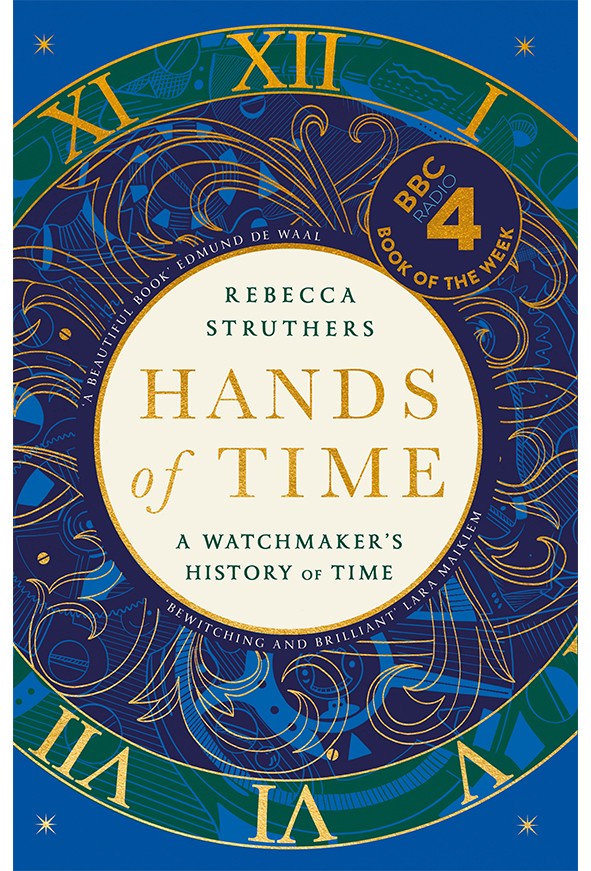
Hands of Time

Rebecca Struthers –  Hodder & Stoughton (2023)

‘Time’ is “the most commonly used noun” in English, according to Rebecca Struthers, the first professional watchmaker in the United Kingdom to earn a PhD in horology. Each chapter of her exquisitely crafted history explores a pivotal moment in watchmaking from the past 500 years. Mechanical timekeepers, she argues, have influenced human culture as much as the printing press. Imagine trying to catch a train by depending on the Sun’s position, or to perform an organ transplant without measuring the patient’s heart rate precisely.

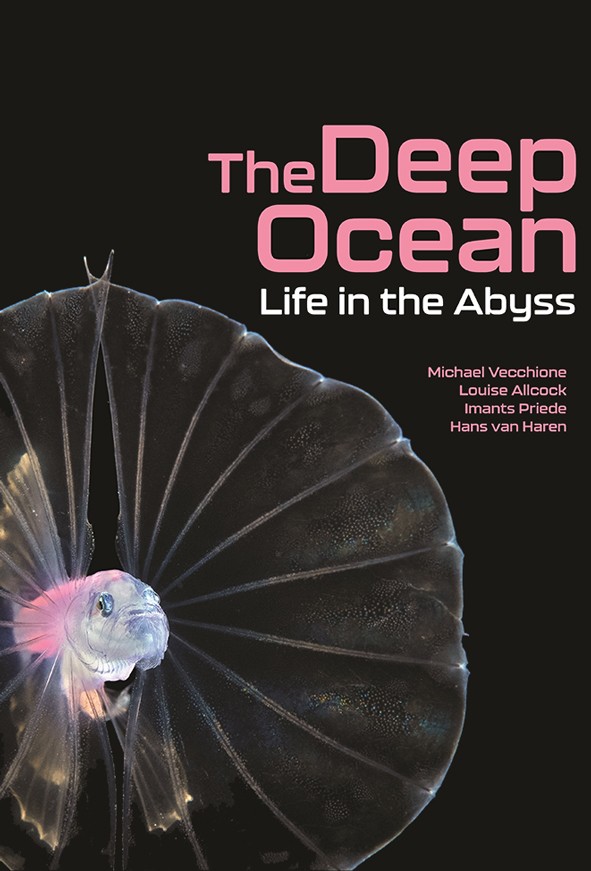
The Deep Ocean

Michael Vecchione et al. Princeton Univ. Press (2023)

“For most people, the deep ocean is out of sight and out of mind,” write three zoologists and an oceanographer. The zone starts where penetration of sunlight can no longer support photosynthesis, about 200 metres down. This guidebook dissipates ignorance with superb colour photographs of astonishing organisms, accompanied by detailed captions and brief essays. For example, the vampire squid (Vampyroteuthis infernalis) is neither vampire nor squid, but was so named because its black ‘cloak’ reminded scientists of Dracula.

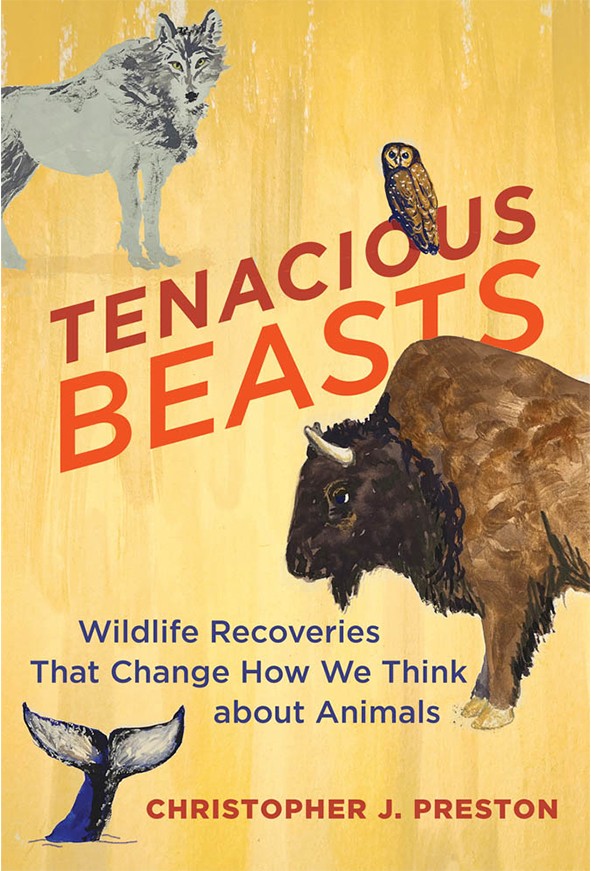
Tenacious Beasts

Christopher J. Preston –  MIT Press (2023)

Humans and domestic animals make up 96% of the mass of the world’s mammals. The outlook for wildlife “remains dire”, writes philosopher Christopher Preston. But he describes signs of hope in his well-travelled, thoughtful study of recoveries. Populations of humpback whales in the western Indian Ocean have surged since the mid-twentieth century; those of Californian black bears have quadrupled in a few decades. He visits farmland, prairie, river, forest and ocean, exploring why only certain species are recovering.

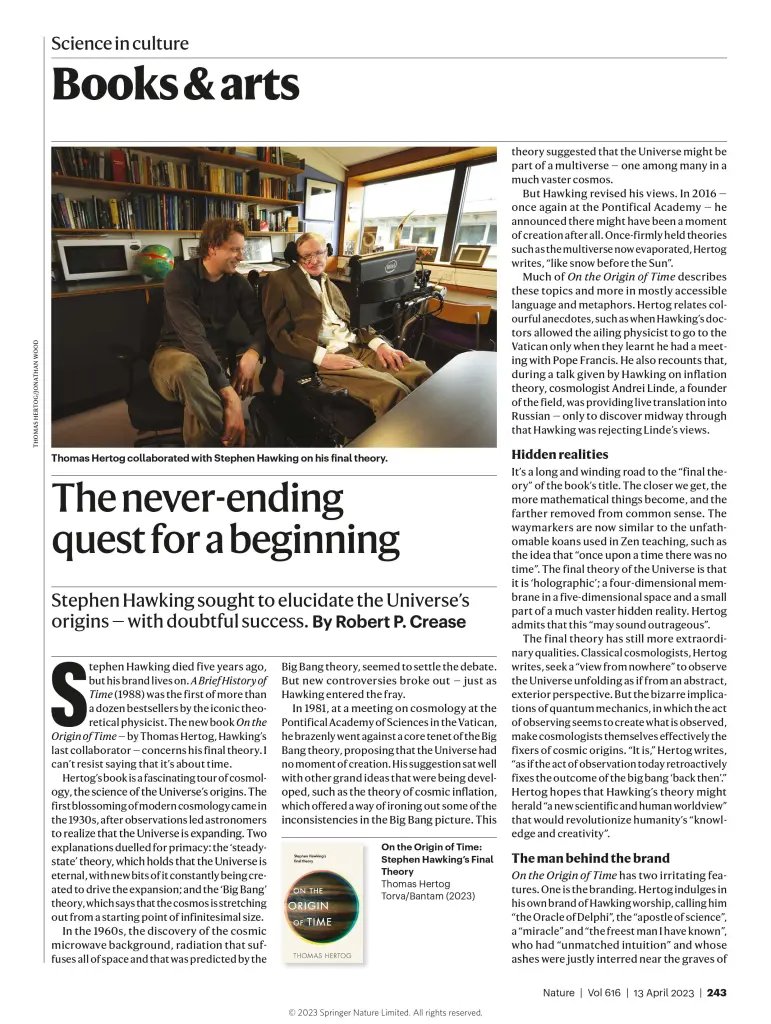
Book Reviews: ‘On The Origin Of Time – Stephen Hawking’s Final Theory’

nature Magazine Science Book Reviews – April 2023

Image

On the Origin of Time

Like his mentor and colleague Stephen Hawking, Thomas Hertog has never shied away from being ambitious in theorizing about the universe. This sweeping book provides an accessible overview of both what we know about cosmology, and some audacious ideas for moving into the unknown. It is an introduction to Hawking’s final theory, but also a glimpse into even grander theories yet to come.

Professor Sean Carroll, author of The Biggest Ideas in the Universe

Reviews: The Best New Science Books (Mar 2023)

nature Magazine Science Book Reviews – March 2023

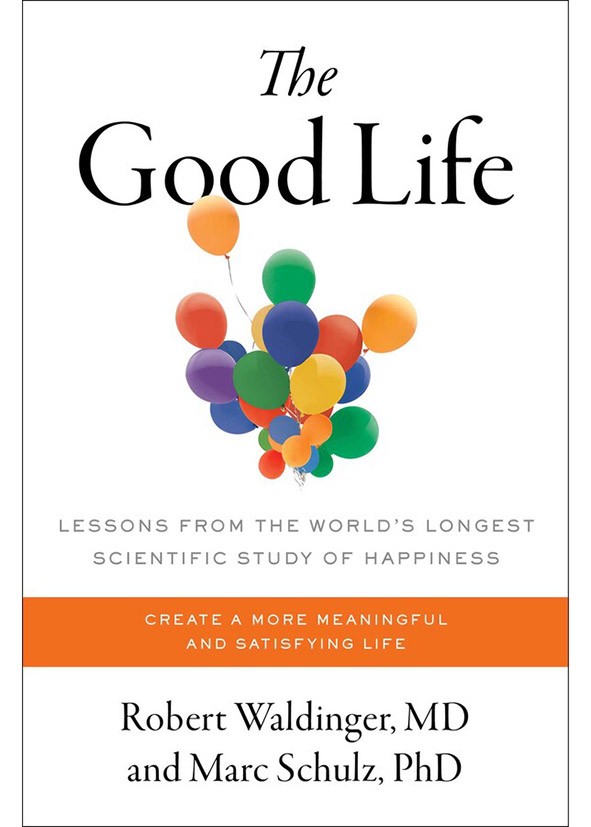
The Good Life

Robert Waldinger & Marc Schulz Simon & Schuster (2023)

Isolation during the COVID-19 pandemic highlighted the link between happiness and good relationships. Scientific evidence for the importance of relationships motivates this always engrossing, sometimes moving, study of happiness, grounded in the Harvard Study of Adult Development. Beginning in 1938, the project has followed two generations of the same families. Current director Robert Waldinger and associate director Marc Schulz show in detail how “the good life is a complicated life. For everybody.”

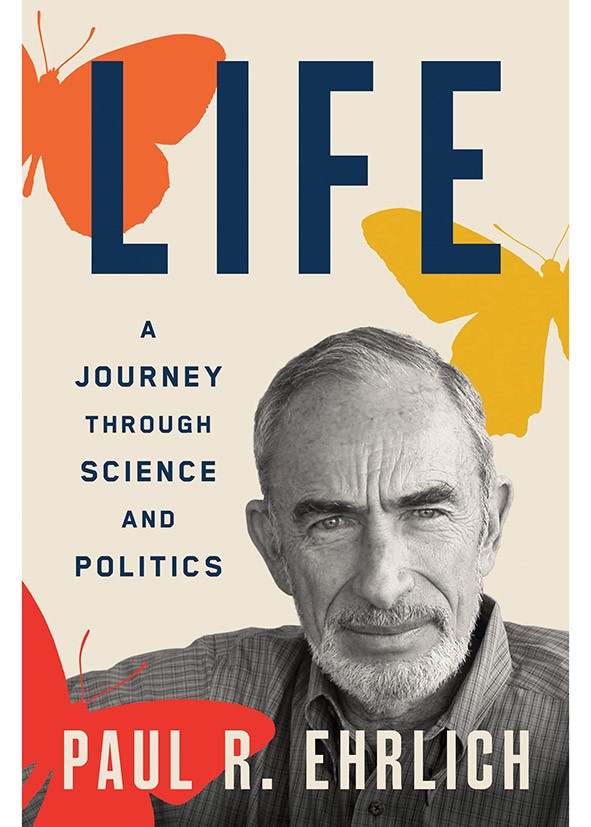
Life

Paul R. Ehrlich Yale Univ. Press (2023)

Biologist Paul Ehrlich is best known for writing — with his wife, conservation biologist Anne Ehrlich — the 1968 book The Population Bomb, which sold two million copies and was widely translated. Its controversial warning of a crisis of overpopulation gave him global exposure. He became a public scholar working with people from many disciplines: economics, political science, history, law, aviation, military intelligence and dentistry “to name a few”, he remarks in his frank, polyphonic autobiography, dedicated “For Anne: Sine Qua Non”.

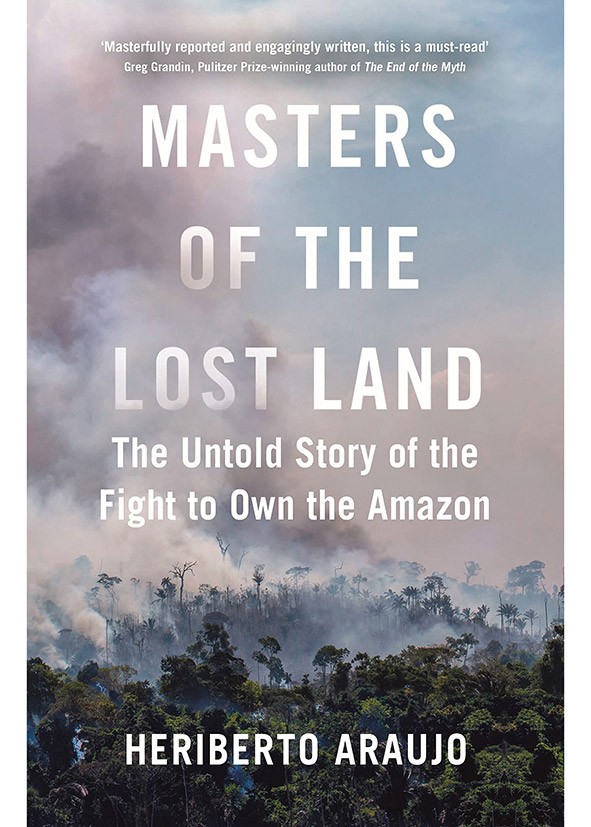
Masters of the Lost Land

Heriberto Araujo Atlantic (2023)

Since 2000, more than 2,000 people worldwide have been murdered for defending their lands or the environment. About one-third were Brazilian, mostly from the Amazon rainforest, notes investigative journalist Heriberto Araujo. He tells the story of the courageous Maria Joel, widow of Dezinho, the leader of a small Amazonian farmworkers’ union. Joel has fought to bring to justice the land baron who ordered her husband’s death. Based on four years of research in Brazil, the book is original, detailed and persuasive.

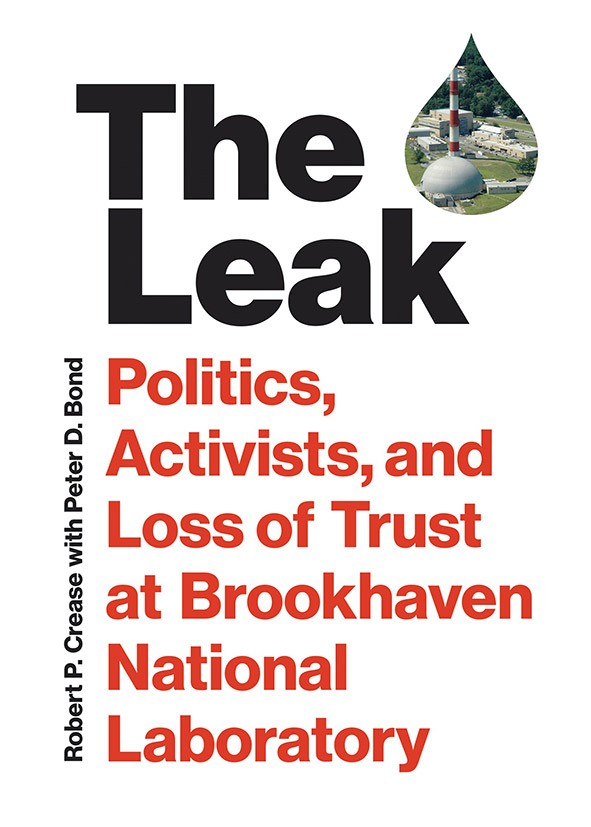
The Leak

Robert P. Crease & Peter D. Bond MIT Press (2022)

Seven Nobel prizes have been awarded for work at Brookhaven National Laboratory in Upton, New York. Yet a leak of radioactive water from the facility turned its 50th anniversary in 1997 into a year of “chaos rather than celebration”, write philosopher of science Robert Crease — author of a history of the lab — and former Brookhaven physicist Peter Bond. Although the incident posed no health hazard, according to federal, state and local officials, it sparked a “firestorm” of activism and politics, captured in this vivid first-hand account.

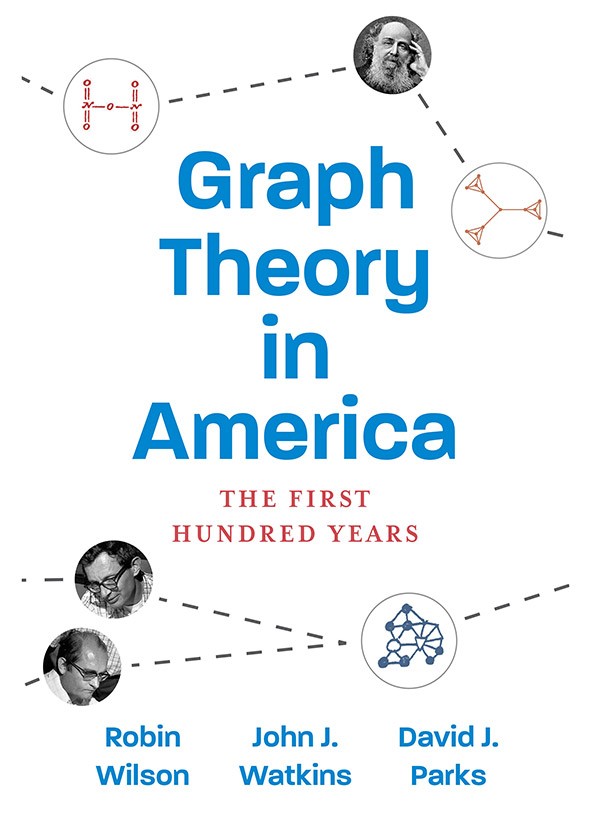
Graph Theory in America

Robin Wilson et alPrinceton Univ. Press (2023)

The modern development of graph theory — which models relationships between pairs of objects in groups — began in 1876 with James Joseph Sylvester, a British mathematician then in the United States. His work was first published in Nature. In 1976, US mathematicians Kenneth Appel and Wolfgang Haken solved a long-standing conundrum in the field, the four-colour problem. The intervening century is described in this graphically illustrated historical treatise by three British and US mathematicians.

doi: https://doi.org/10.1038/d41586-023-00673-2

Top New Science Books: ‘Oceans Under Glass’ By Samantha Muka (Dec ’22)

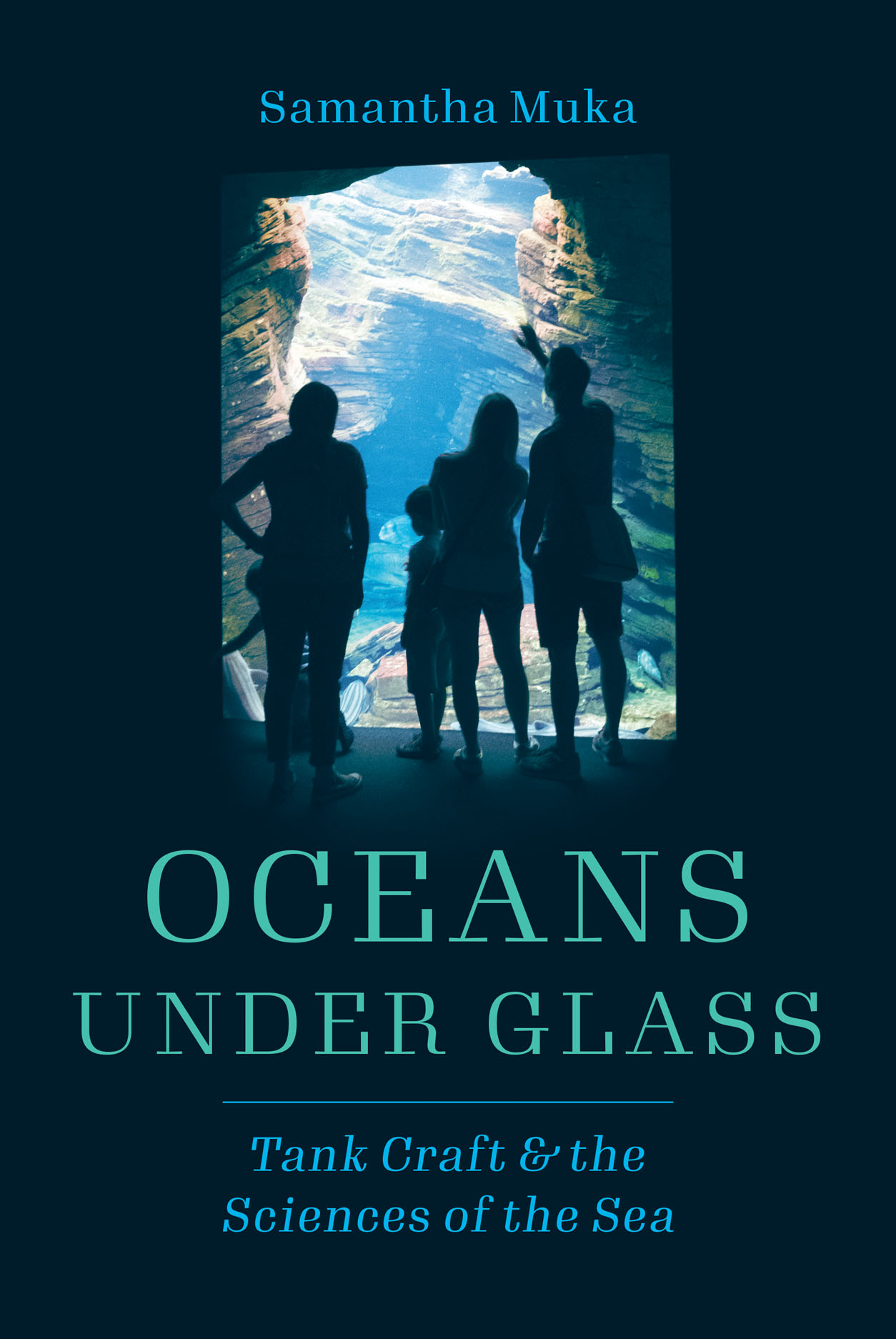
Oceans under Glass

Oceans under Glass – Tank Craft and the Sciences of the Sea

By Samantha Muka

Aquarist knowledge is an often overlooked but vital part of marine research

A welcome dive into the world of aquarium craft that offers much-needed knowledge about undersea environments.

The art of aquarium science

Atlantic coral is rapidly disappearing in the wild. To save the species, they will have to be reproduced quickly in captivity, and so for the last decade conservationists have been at work trying to preserve their lingering numbers and figure out how to rebuild once-thriving coral reefs from a few survivors. Captive environments, built in dedicated aquariums, offer some hope for these corals. This book examines these specialized tanks, charting the development of tank craft throughout the twentieth century to better understand how aquarium modeling has enhanced our knowledge of the marine environment.

Science Magazine – December 22, 2022
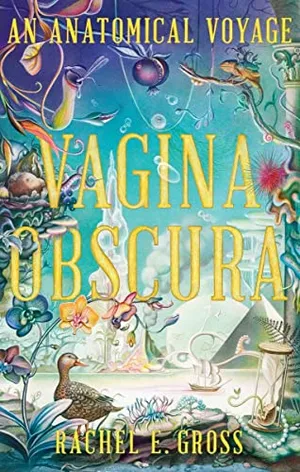
Image showing first page of PDF


Reviews: The Ten Best Science Books Of 2022

Smithsonian Magazine – Ten Best Science Books of 2022 – December 7, 2022: From a detective story on the origins of Covid-19 to a narrative that imagines a fateful day for dinosaurs, these works affected us the most this year

An Immense World: How Animal Senses Reveal the Hidden Realms Around Us by Ed Yong

Preview thumbnail for 'An Immense World: How Animal Senses Reveal the Hidden Realms Around Us

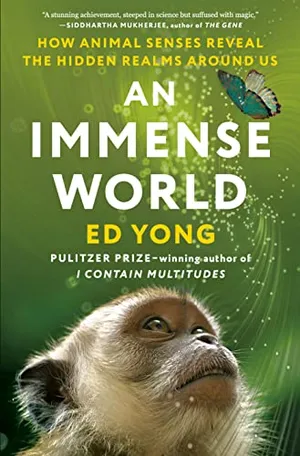
In An Immense World, science journalist Ed Yong dives into the vast variety of animal senses with a seemingly endless supply of awe-inspiring facts. As humans, we move through the world within our Umwelt—a term for subjective sensory experience Yong borrows from the Baltic German biologist Jakob von Uexküll. But every creature on Earth has its own Umwelt that we can scarcely imagine. Through interviews with scientists around the globe, Yong teases out the astonishing details of other animals’ perceptions, introducing us to their fantastic Umwelten. Scallops, for example, have up to 200 eyes with impressive resolution, but their brains are likely not complex enough to receive and process such crisp images. Some butterflies can perceive ultraviolet color patterns on their wings that distinguish them from other species. And hammerhead sharks have receptors that scan the seafloor for the electric fields emitted by hidden prey, “as one might use metal detectors,” Yong writes. But many creatures’ senses have been thrown off by human activity, he notes. For example, our visually centered society has erected artificial lights that disorient migrating birds and hatchling sea turtles.

Vagina Obscura: An Anatomical Voyage by Rachel E. Gross

Preview thumbnail for 'Vagina Obscura: An Anatomical Voyage

Perhaps no aspect of our anatomy is both more fascinating and misunderstood than the vagina—down to the very common usage of what that word means. A vagina isn’t the whole of a woman’s reproductive anatomy. Instead, the vagina is a muscular canal that’s part of many people’s reproductive systems, of varying genders, whether they were born with it or had it surgically constructed. Nuance exists in this territory that is so often overwhelmed by a tangle of science, myth and cultural perceptions, and journalist Rachel E. Gross has composed an enthralling, sensitive book that’s relevant to everyone no matter what your personal topography looks like.

The pages of Vagina Obscura contain plenty of cutting-edge popular science and historic reflection on everything from how ovaries were once miscategorized as female testicles to how operations for individuals injured in war paved the way for gender-affirming surgeries. The book is arranged by anatomical part, and Gross details the function each part carries out. Gross’ work stands out because the unfolding story is couched in what we’ve been wrong about, how our ideas have changed, and how every person—no matter their sex—shares far more in common than we often recognize. Everyone’s reproductive anatomy, as Gross notes, is made up of the same parts in different arrangements, a quirk of human development that underscores commonality. Gross’ exploration is far more than a natural history of human anatomy, but a narrative that busts myths and celebrates all that we’ve come to know about vaginas and their associated parts during a time when such clarity on sex, gender and bodily autonomy is more needed than ever. Where the popular understanding of human anatomy is sometimes shallow, Vagina Obscura brings depth. (Riley Black)

Breathless: The Scientific Race to Defeat a Deadly Virus by David Quammen

Preview thumbnail for 'Breathless: The Scientific Race to Defeat a Deadly Virus

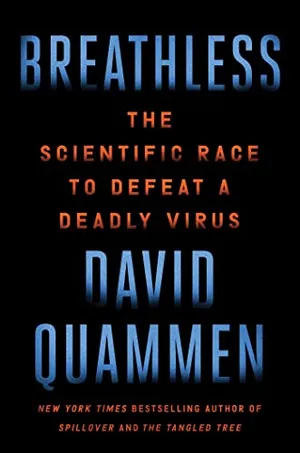
In Breathless, David Quammen has constructed a masterful book about scientists’ efforts to understand SARS-CoV-2, the virus that causes Covid-19. Make no mistake, the book is not about healthcare and our response to Covid-19. The main character in this tale is the virus, and Quammen crafts a detective tale about the coronavirus SARS-CoV-2 by chronicling the efforts of scientists around the world to identify it, search for its origins, understand how it mutates and respond to it. He interviewed 95 scientists and allows readers to look over the shoulders of many of them as they use their specialized expertise to study the virus. To show how the scientific process works on a global scale, he details the work of a genomic epidemiologist here, an evolutionary virologist there and a computational biologist somewhere else. Each expert adds or refutes some important detail about the rapidly evolving virus that has created a pandemic. Each discovery builds on those that came before.

Quammen has said he wrote the book with no outline, instead allowing each addition to naturally form on the next, in the way a crystal forms. He has the skills and knowledge to do this thanks to decades spent writing captivating science books, on everything including evolution and the spillover of disease from animals into humans. What results from his immense effort is a solid, reliable and entertaining scientific thriller about a shifty and prolific virus that is still very much evolving. (Joe Spring)

READ MORE

Reviews: Top New Science Books – November 2022

Book cover of California Burning

California Burning

Katherine Blunt Portfolio/Penguin (2022)

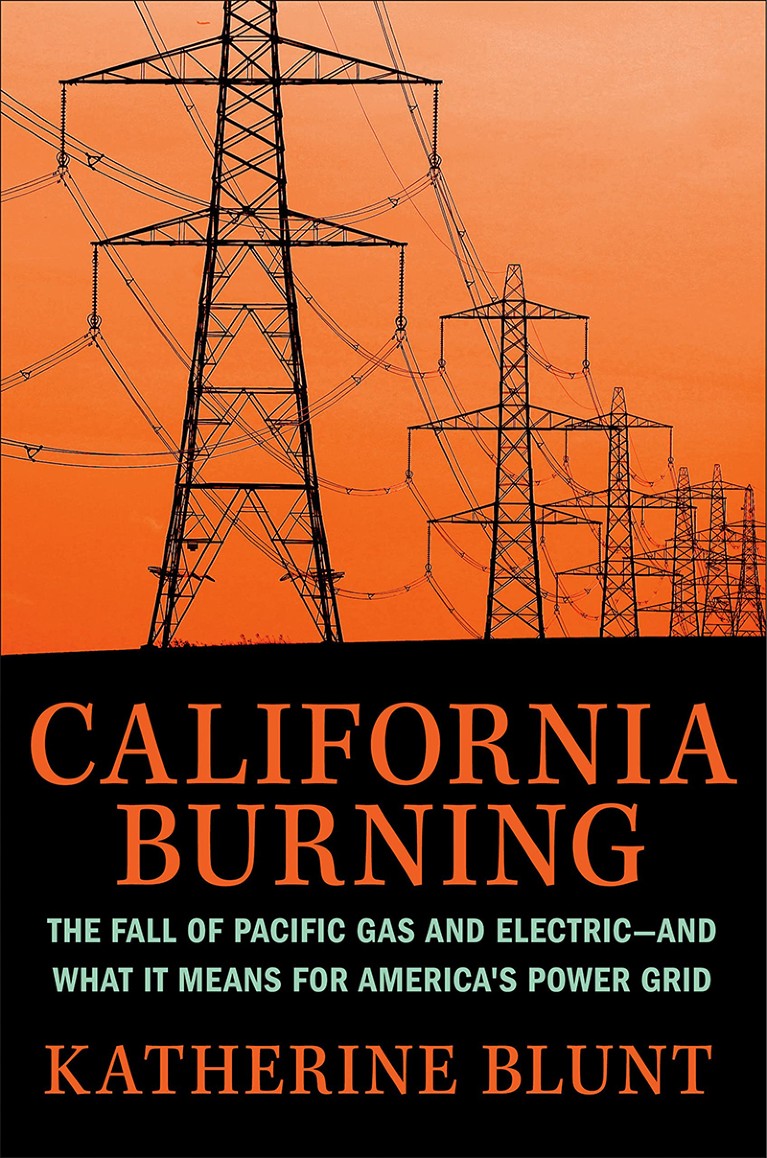
California is having more and more wildfires because of climate change, poor tree management creating fire hazards, and antiquated power lines. In 2018, the failure of a 100-year-old rusted electrical hook sparked the Camp Fire, the world’s most expensive natural disaster that year. The blaze forced Pacific Gas and Electric into temporary bankruptcy. Journalist Katherine Blunt’s disturbing history of California’s environmental calamity ends in 2021, with the company’s new chief executive announcing costly underground power lines.

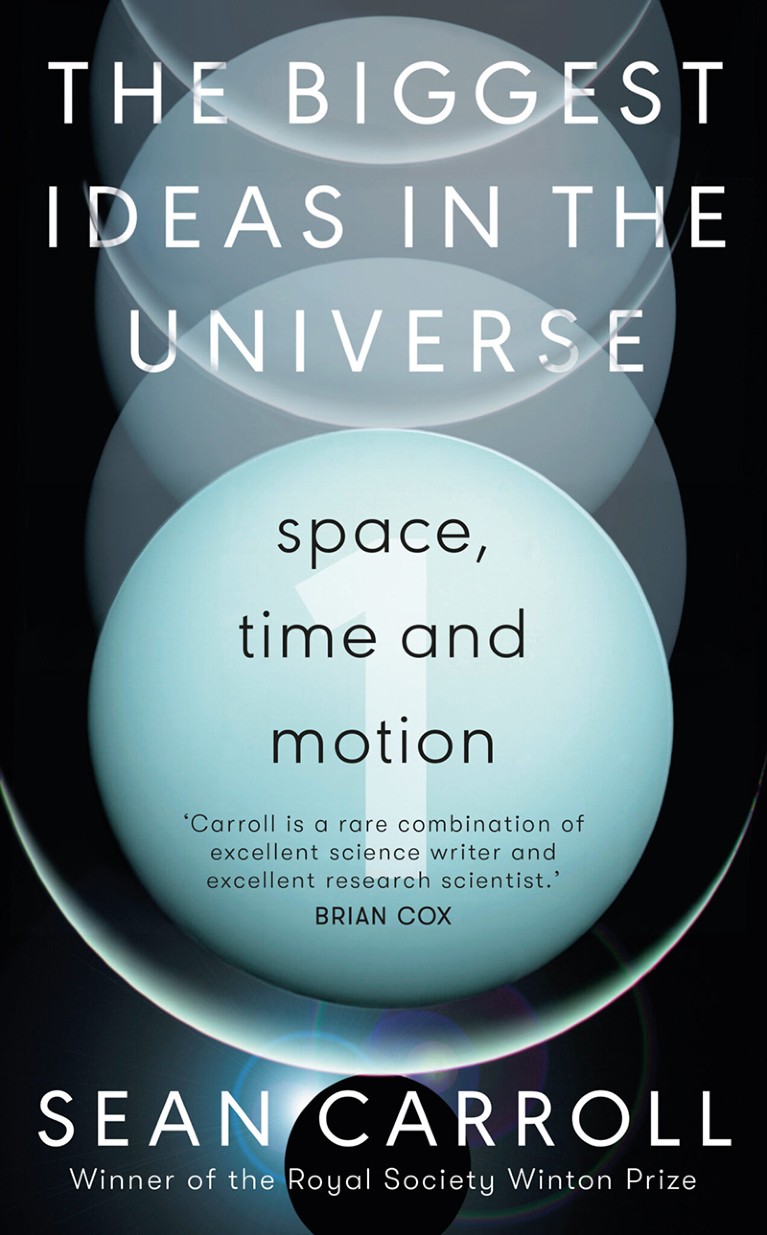
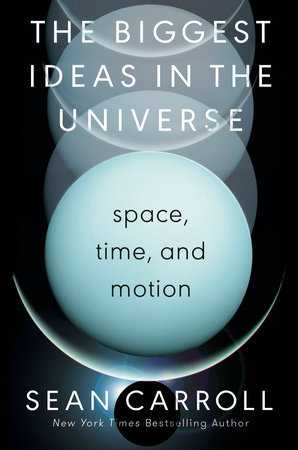
Book cover of The Biggest Ideas in the Universe

The Biggest Ideas in the Universe

Sean Carroll Oneworld (2022)

Theoretical physicist and philosopher Sean Carroll specializes in quantum mechanics, gravity and cosmology. He aims to create a world in which “most people have informed views and passionate opinions” about modern physics. His skilful book, the first of a planned trilogy, covers space, time and motion. Unlike most introductory physics books for the interested amateur, it includes mathematical equations, cogently explained but not solved, as well as the expected metaphorical language.

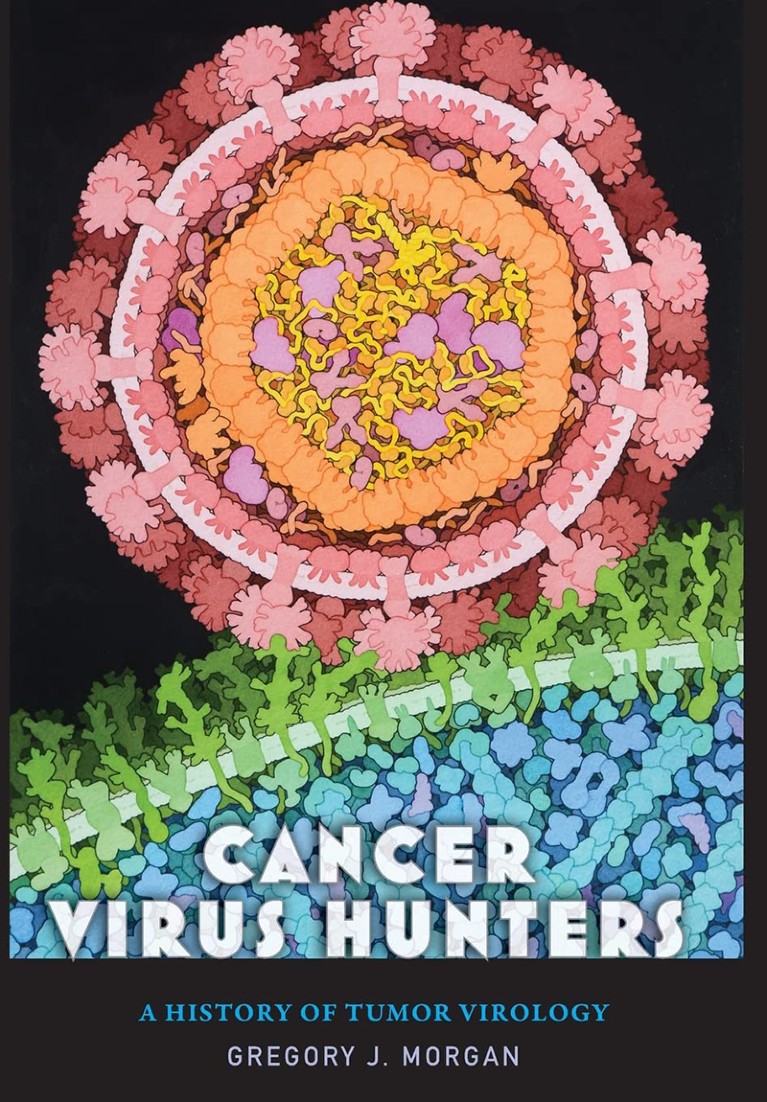
Book cover of Cancer Virus Hunters

Cancer Virus Hunters

Gregory J. Morgan Johns Hopkins Univ. Press (2022)

One-fifth of cancers in people worldwide are caused by tumour viruses such as hepatitis B. Work stemming from these pathogens won seven Nobel prizes between 1966 and 2020, notes historian Gregory Morgan in his authoritative but accessible chronicle. Yet tumour virology is rarely mentioned in discussions of how molecular biology opened our understanding of cancer. As Morgan observes in his path-breaking history, this inhibits a complete understanding of this field as a technoscientific force.

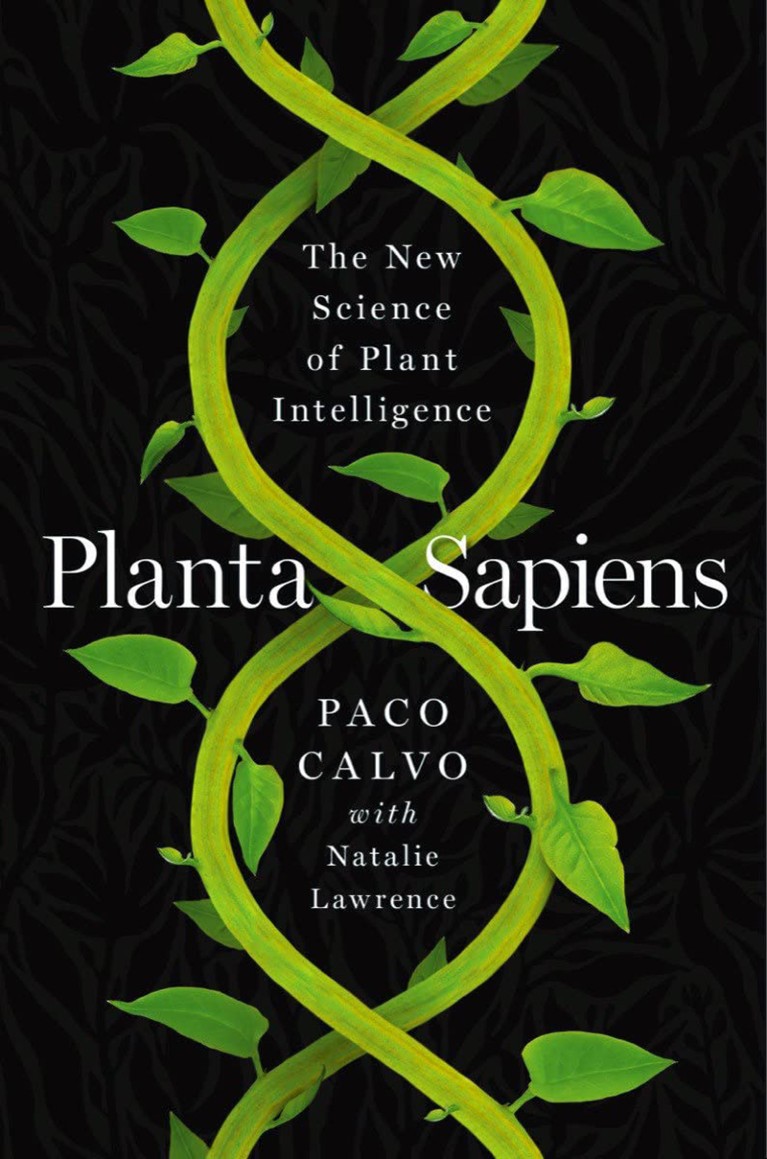
Book cover of Planta Sapiens

Planta Sapiens

Paco Calvo with Natalie Lawrence Bridge Street (2022)

Humans are so focused on “brain-centric consciousness”, says philosopher of science Paco Calvo, “that we find it difficult to imagine other kinds of internal experience”. Might plants be intelligent (‘sapiens’)? His challenging book is aimed at both believers in this possibility and non-believers. His experiments, such as putting the touch-sensitive plant Mimosa pudica to ‘sleep’ with anaesthetic, provoke thought, as does his note that Charles Darwin requested burial under an ancient village yew, rather than in Westminster Abbey.

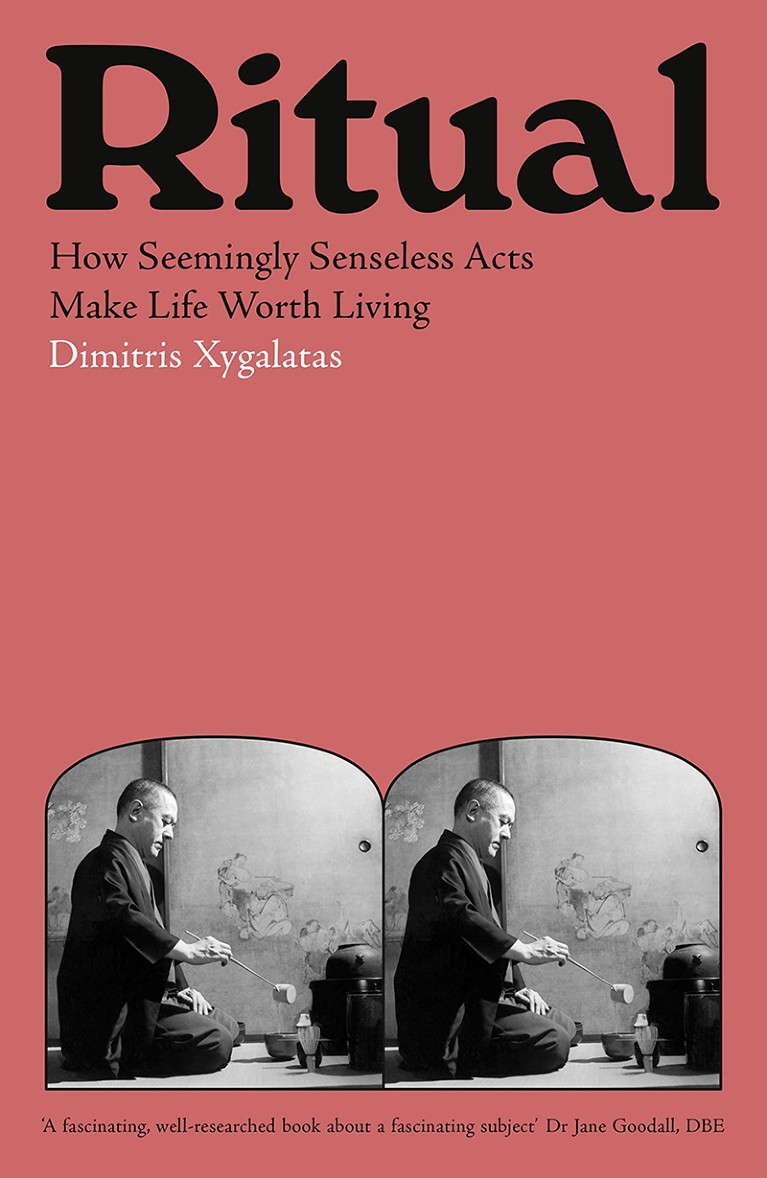
Book cover of Ritual

Ritual

Dimitris Xygalatas Profile (2022)

Just before anthropologist Dimitris Xygalatas’s university went into COVID-19 lockdown, his students had one main concern: would there be a graduation ceremony? We care deeply about rituals, he notes in his wide-ranging and well-written survey, because they help us to “cope with many of life’s challenges”, even if we do not understand how — the “ritual paradox”. Scientific investigation has been tricky, because rituals do not flourish in a laboratory, but wearable sensors and brain-imaging technology help.

Books: ‘The Biggest Ideas in the Universe – Space, Time, And Motion’ (2022)

The Biggest Ideas in the Universe

Vol. 1: SPACE, TIME, AND MOTION

The Biggest Ideas in the Universe

Vol. 1: SPACE, TIME, AND MOTION

Book cover for Sean Carroll's "The Biggest Ideas in the Universe"

Dutton Books, 20 September 2022

The goal of The Biggest Ideas in the Universe is to bridge the gap between popular-science treatments of modern physics and true expert knowledge. This is the real stuff — equations and all — presented in a way that presumes no prior knowledge other than high-school algebra. Readers will come up to speed about exactly what professional physicists are talking about, with an emphasis on established knowledge rather than speculation.

Volume One, Space, Time, and Motion, covers the domain of classical physics, from Newton to Einstein. We get introduced to Spherical Cow Philosophy, in which complications are stripped away to reveal the essence of a system, and the Laplacian Paradigm, in which the laws of physics take us from initial conditions into the future by marching through time. We learn the basic ideas of calculus, where we can calculate rates of change and how much of a quantity has accumulated. We think about the nature of space and time, separately and together. Finally we are introduced to the mysteries of non-Riemannian geometry and Einstein’s theory of curved spacetime, culminating into a dive into black holes.

Read more

Summer 2022: New Books

5 New Books Adam Grant Thinks You Should Read This August

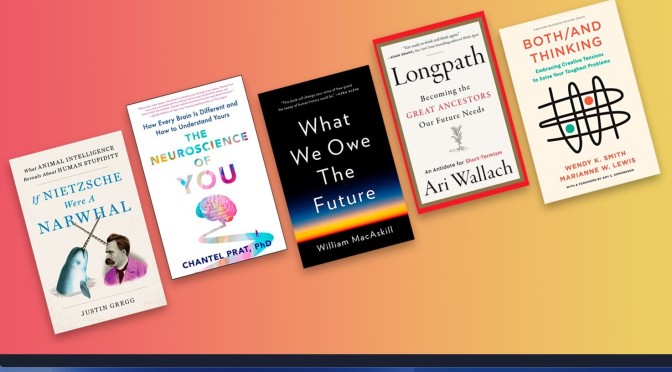
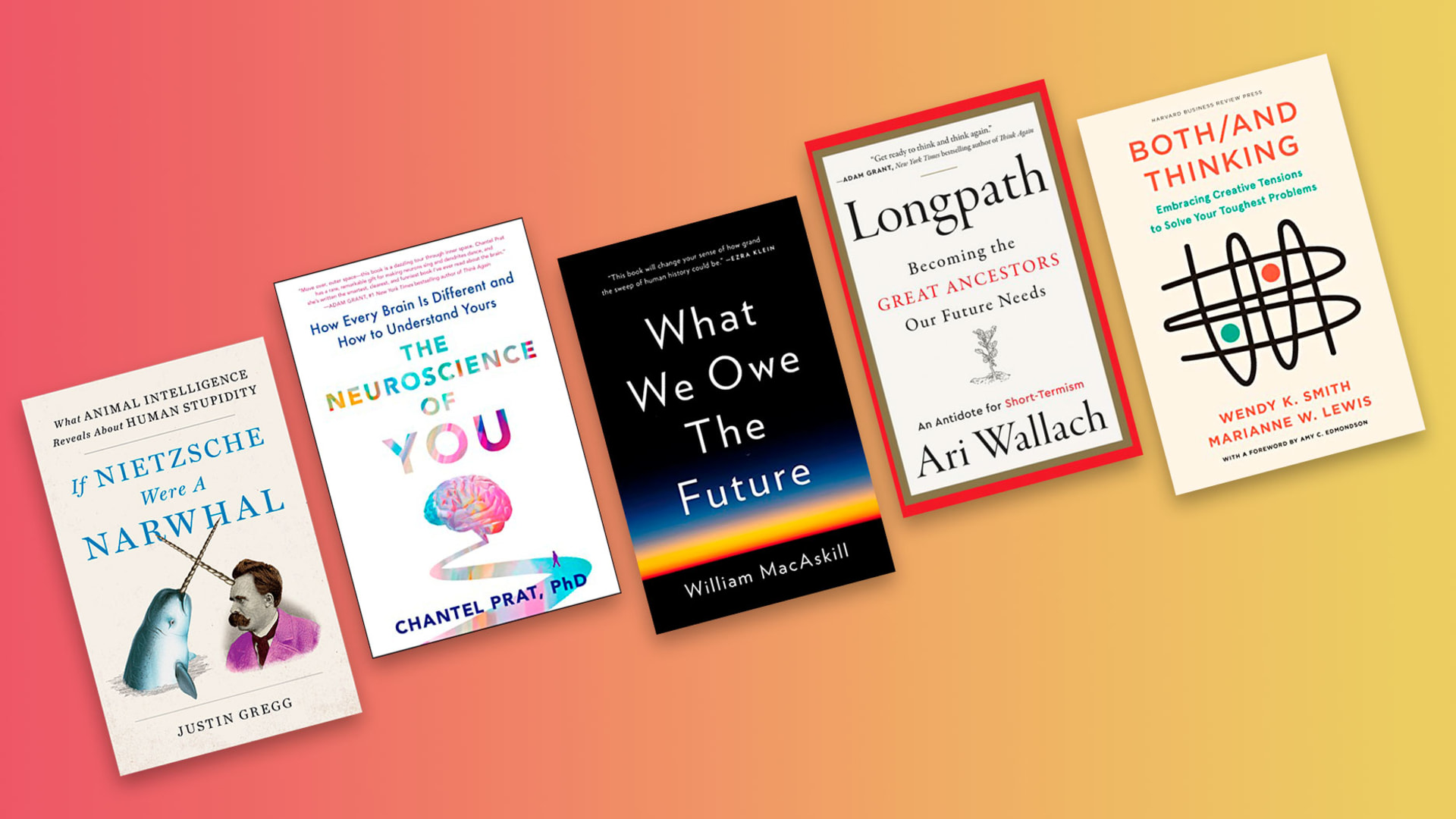
1. If Nietzsche Were a Narwhal by Justin Gregg 

Rarely have I heard of a book with a weirder title, but Grant explains this book about how animals think is actually as useful as it is interesting. “A dazzling, delightful read on what animal cognition can teach us about our own mental shortcomings,” he writes. “I tore through his book in one sitting. I dare you to read it without rethinking some of your basic ideas about intelligence.” (It’s out August 9th.)  

2. The Neuroscience of You by Chantel Prat 

“Move over, outer space–this book is a stunning tour through inner space. This neuroscientist has a rare, remarkable gift for making neurons sing and dendrites dance. She’s written the smartest, clearest, and funniest book I’ve ever read about the brain,” Grant enthuses about The Neuroscience of You. (Out August 2nd.) 

3. What We Owe the Future by Will MacAskill 

Grant isn’t the only public thinker raving about this book by an Oxford philosopher about our “moral responsibility to do right by our grandchildren’s grandchildren.” “This book will change your sense of how grand the sweep of human history could be, where you fit into it, and how much you could do to change it for the better. It’s as simple, and as ambitious, as that,” says Ezra Klein. (Out August 16th.) 

4. Longpath by Ari Wallach 

Next on the list is another book about long-term thinking (apparently a preoccupation of Grant’s at the moment). He explains his second pick on the topic this way: “This book is an antidote to nearsightedness. A futurist offers an actionable guide for planning multiple generations in the future.” (Also out August 16th.) 

5. Both/And Thinking by Wendy Smith and Marianne Lewis 

This book by a pair of business school professors is specifically aimed at leaders trying to navigate uncertain times. “Life is full of paradoxes, and too often we ignore them or try to erase them when we should be learning how to manage them. Two top scholars of paradox examine how to embrace tensions and overcome tradeoffs,” says Grant. Fellow business writer Tom Peters is more succinct: “This book is, pure and simple, a masterpiece.” (Out August 9th) 

Read more at Inc. Magazine