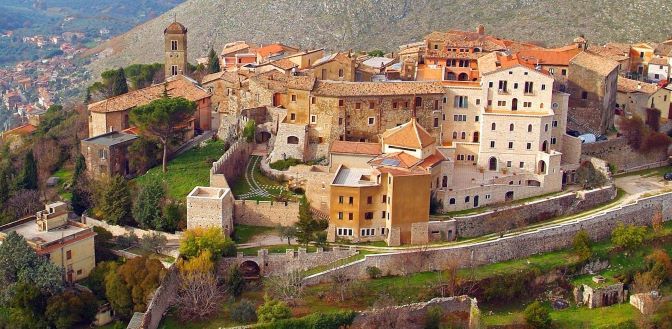
A walking tour in 𝗙𝗮𝗿𝗮 𝗶𝗻 𝗦𝗮𝗯𝗶𝗻𝗮, region 𝗟𝗮𝘇𝗶𝗼, center Italy, a small town of about 14.000 inhabitants. The virtual walk starts just in the souhtern gate of this very cute town, in a saturday evening. Very few people around unfortunately, in full Coronavirus period.
Fara in Sabina, also spelled Fara Sabina, is a comune in the Province of Rieti in the Italian region Lazio, located about 40 kilometres northeast of Rome and about 25 kilometres southwest of Rieti.
Spinario (Boy with Thorn), c. 1st century B.C.E., bronze, 73 cm high (Capitoline Museums, Rome), a conversation with Dr. Steven Zucker and Dr. Beth Harris
The Spanish Steps are a set of steps in Rome, Italy, climbing a steep slope between the Piazza di Spagna at the base and Piazza Trinità dei Monti, dominated by the Trinità dei Monti church at the top.
𝗧𝗶𝗺𝗲𝗹𝗶𝗻𝗲 0:00 – Brief Intro 1:35 – Spanish Steps / Piazza di Spagna 4:20 – Via dei Condotti 8:00 – Largo Goldoni 8:50 – Via del Corso 12:40 – Via Vittoria 14:46 – Via Mario de Fiori 17:18 – Piazza di Spagna / Spanish Steps “ascension” of Scalata dei Trinità dei Monti 21:21 – Panorama from above 23:31 – Via Gregoriana 27:36 – Via dei due macelli 29:40 – Via Frattina 30:53 – Via Bocca di leone 35:00 – Via della Croce 36:52 – Via Borgognona 39:30 – Via del Corso
Vatican City, a city-state surrounded by Rome, Italy, is the headquarters of the Roman Catholic Church. It’s home to the Pope and a trove of iconic art and architecture. Its Vatican Museums house ancient Roman sculptures such as the famed “Laocoön and His Sons” as well as Renaissance frescoes in the Raphael Rooms and the Sistine Chapel, famous for Michelangelo’s ceiling.
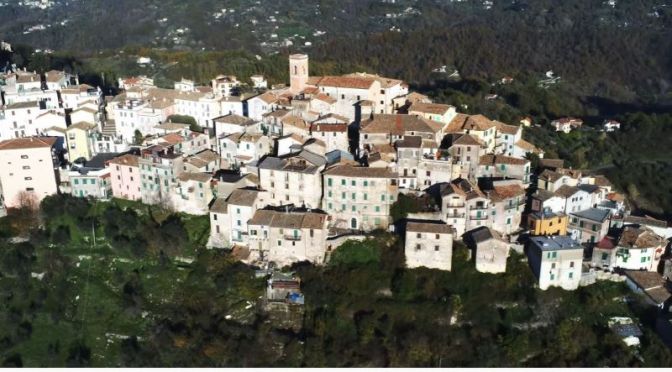
A walking tour in 𝗖𝗮𝗻𝘁𝗲𝗿𝗮𝗻𝗼, 𝗟𝗮𝘇𝗶𝗼 region, center Italy, a small town of about 325 inhabitants. The virtual walk starts just in the souhtern part of this very cute town, on a sunday morning walk. Very few people around unfortunately, in full Coronavirus period.
Canterano is a comune in the Metropolitan City of Rome in the Italian region Latium, located about 45 kilometres east of Rome. Canterano borders the following municipalities: Agosta, Gerano, Rocca Canterano, Rocca Santo Stefano, Subiaco.
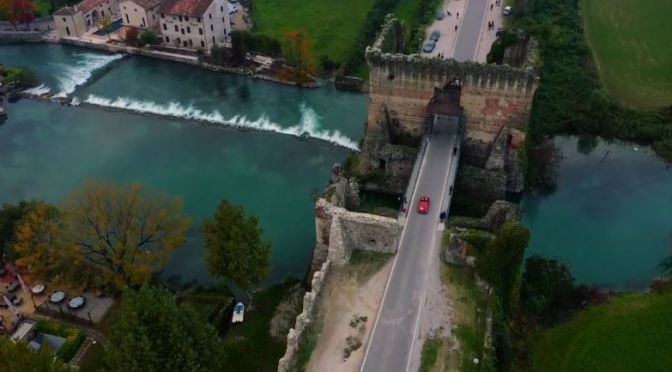
This year, the race had its own challenges, as the pandemic ripped across the world. The Mille Miglia usually takes place in May, but was postponed until October this time round — and many had feared it might be cancelled altogether. But the show must go on — and the sight of more than 400 stunning classic cars glinting in the autumn sun is one I will remember for a very long time.
The first Miglia Mille took place in 1927, founded by a group of car enthusiasts in the town of Brescia, Northern Italy — the race was their response to the region’s loss of the Italian Grand Prix to Monza, seven years earlier. A 1,000 mile loop around Northern Italy (hence the name), the race took place every year for three decades, save for a break during the Second World War. But the perilous, do-or-die nature of the contest led to many crashes and more than ten fatalities, and the final chequered flag fell in 1957. In the 1970s, the Mille Miglia was reborn as we know it today — more of a grand tour than a hotly-contested, breakneck race (although some drivers, even now, forget this from time to time.)
This bike ride starts at the Porta Portese in the Trastevere district in Rome and takes you on a 10 mile (16km) ride along the Tiber River. The ride was filmed on June 6th, 2020 starting at 11:00am.
Video Timeline Links▼▼ 0:00 – Map of the bike ride 0:27 – Porta Portese 3:25 – Ponte Palatino 3:47 – Ponte Cestio 4:28 – Ponte Garibaldi 5:25 – Ponte Sisto 7:18 – Ponte Giuseppe Mazzini 8:40 – Ponte Principe Amedeo Savoia Aosta 9:20 – Ponte Vittorio Emanuele II 10:07 – Ponte Sant’Angelo 11:12 – Ponte Umberto I 12:22 – Ponte Cavour 13:56 – Ponte Regina Margherita 14:59 – Ponte Pietro Nenni 15:44 – Ponte Giacomo Matteotti 17:20 – Ponte del Risorginmento 17:30 – Ramp up to upper path 18:19 – Ramp up to Lungotevere della Vittoria 21:18 – Via Capoprati (return to upper bike path) 25:26 – Ramp to lower bike path 25:50 – Ponte Milvio (TURN AROUND)
Venice – It’s hard not to fall in love with the romantic set up of Venice. Everywhere you look is a picture opportunity worthy of a postcard. The best way to see the city is to explore it by gondola on its gorgeous canals. Be sure to check out the bustling city hub at the Piazza San Marco and the Basilica of St. Mark.
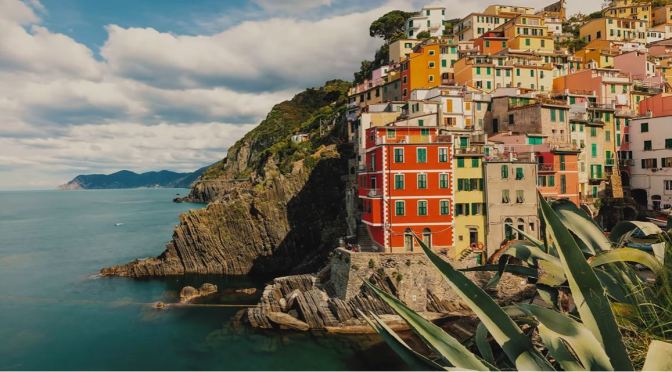
Amalfi Coast – Want to sip your favorite drink as you enjoy the vibrant blue hues of the Mediterranean? If so, the Amalfi Coast is the ideal destination for you. This paradise is adorned with towering cliffs, sunbathers, and charming multicolored fishing villages. It’s definitely the perfect place to live by the Italian philosophy, La Dolce Vita (‘the sweet life’).
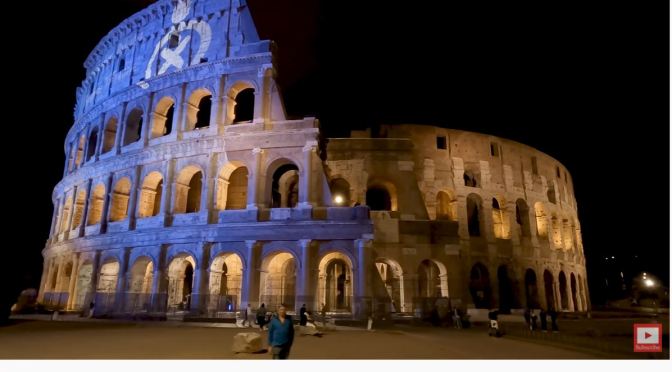
Rome – You will surely not run out of things to do in Italy’s biggest city. A top pick among many backpackers despite its steep prices, Rome is undeniably one of the most gorgeous cities in the world. You will be missing out if you do not make time to see the fantastic Colosseum, the biggest amphitheater of the ancient Roman Empire. As you look at its vastness, you can almost hear the loud roar of the audience as they watch the greatest gladiators fight. Additionally, Rome is also filled with tons of attractions such as churches, fountains, and museums. It is truly a place you should immerse yourself in at least once in your life.
Verona – If you’re a fan of Romeo and Juliet, you’ve probably heard about the town of Verona. Aside from being the setting to arguably the most popular love story of all time, Verona has a variety of medieval structures. Don’t forget to see Casa di Giulietta or Juliet’s House and leave a love note on its courtyard walls. Siena Unlike other major cities in Italy, this charismatic city is not packed with thousands of tourists. Siena boasts some of the most beautiful old structures in the country and is popular for its bareback horse races. If you’re feeling adventurous, you can climb up the civic palace to see the view of the entire town.
Milan – No visit to Italy is complete without walking along the streets of Milan. If you love to shop, this fashion center is the place to be. Here, you can live like royalty as you shop till you drop and immerse yourself in its vibrant art and culinary scene.
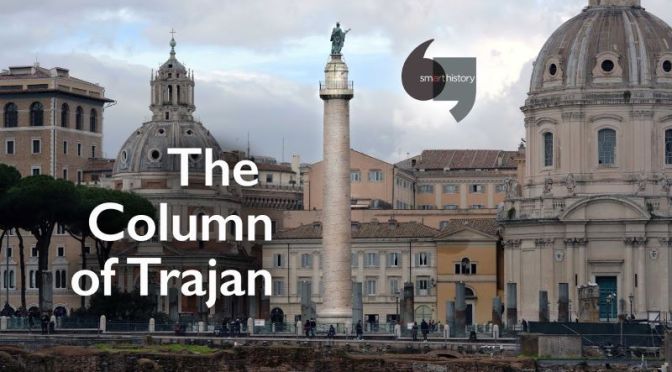
Trajan’s Column is a Roman triumphal column in Rome, Italy, that commemorates Roman emperor Trajan’s victory in the Dacian Wars. It was probably constructed under the supervision of the architect Apollodorus of Damascus at the order of the Roman Senate. It is located in Trajan’s Forum, built near the Quirinal Hill, north of the Roman Forum. Completed in AD 113, the freestanding column is most famous for its spiral bas relief, which artistically represents the wars between the Romans and Dacians (101–102 and 105–106). Its design has inspired numerous victory columns, both ancient and modern.
See the most iconic sites in Rome including the Pantheon, Spanish Steps, Piazza Navona and the Colosseum during this 9.31km (5.8 mile) evening walk that starts at 6:32pm on the Ponte Sant Angelo. The walk was filmed on October 10th, 2020.
Video Timeline Links0:00 – Map of the Walk Intro 1:20 – Ponte Sant’Angelo 6:53 – Via dei Coronari 16:00 – PIAZZA NAVONA 24:15 – Pasquino (Talking Statue) 25:20 – Street of Outdoor Restaurants 1 32:50 – Via degli Orsini 33:30 – Via di Monte Giordano 36:03 – Street of Outdoor Restaurants 2 40:26 – Piazza Navona 45:40 – THE PANTHEON 58:35 – Walk from Pantheon to Trevi Fountain 1:00:57 – Bartolucci Toy Store 1:03:15 – Piazza di Pietra (Tempio di Adriano) 1:04:38 – Via di Pietra 1:06:16 – Via delle Muratte 1:09:43 – TREVI FOUNTAIN 1:15:50 – Walk from Trevi Fountain to Spanish Steps 1:22:07 – Piazza di Spagna 1:23:55 – SPANISH STEPS 1:32:16 – Walk from Spanish Steps to Piazza del Popolo 1:39:50 – Piazza del Popolo 1:43:37 – Via del Corso 2:01:18 – ALTAR OF THE FATHERLAND (Altare della Patria) 2:06:51 – CAMPIDOLGIO (Capitoline Hill) 2:10:37 – Roman Forum Viewpoint 1 2:13:30 – Lupa Capitolina 2:14:07 – Roman Forum Viewpoint 2 2:18:03 – Walk to the Colosseum (Via dei Fori Imperiali) 2:24:40 – COLOSSEUM
Rome is the capital city and a special comune of Italy, as well as the capital of the Lazio region. The city has been a major human settlement for almost three millennia. With 2,860,009 residents in 1,285 km², it is also the country’s most populated comune.
News, Views and Reviews For The Intellectually Curious





 Boomers Daily