Tag Archives: Robert Schumann

Classical Music: Tiffany Poon Plays Schumann

DW Classical Music (February 4, 2024): Robert Schumann’s “Kinderszenen” (“Scenes from Childhood”) is one of the most popular piano works of the Romantic period. The highlight of the 13-part piano cycle is the “Träumerei” (Dreaming). The work is considered the epitome of romantic piano compositions.

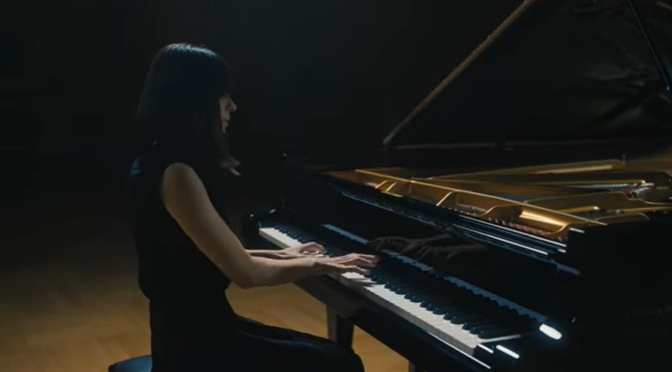
New York pianist, Tiffany Poon, played Robert Schumann’s “Kinderszenen”, Op. 15 at the Dresden Music Festival 2023. The concert took place on June 17, 2023, at the Palais im Großen Garten.

Video timeline: (00:00) Coming on stage (00:21) 1. Von fremden Ländern und Menschen (Of Foreign Lands and Peoples) (02:02) 2. Kuriose Geschichte (A Curious Story) (03:07) 3. Hasche-Mann (Blind Man’s Buff) (03:39) 4. Bittendes Kind (Pleading Child) (04:39) 5. Glückes genug (Happy Enough) (05:17) 6. Wichtige Begebenheit (An Important Event) (06:09) 7. Träumerei (Dreaming) (08:51) 8. Am Kamin (At the Fireside) (09:47) 9. Schumann Ritter vom Steckenpferd (Knight of the Hobbyhorse) (10:32) 10. Fast zu ernst (Almost Too Serious) (12:40) 11. Fürchtenmachen (Frightening) (14:13) 12. Kind im Einschlummern (Child Falling Asleep) (16:16) 13. Der Dichter spricht (The Poet Speaks)

Robert Schumann’s “Kinderszenen” was composed in 1838 and published the following year without a dedication and with the misleading subtitle “Easy Pieces for the Pianoforte.” Unlike the “Album for the Young,” which Schumann had composed for “younger children” in his own words, he did not write the “Kinderszenen” for children, but for adults reflecting on their own childhood.

At first, the cycle was to be titled “Children’s Stories” and preceded or appended to the “Novelettes,” Op. 21. However, Schumann later refrained from doing so. He wanted to have the “Kinderszenen” published as a separate opus. Although the work was not very successful during the composer’s lifetime, it eventually evolved independently and was highly regarded. It had a significant influence on the Romantic program miniature for piano.

Classical: Pianist Tiffany Poon Plays Schumann

DW Classical Music (January 7, 2024) – A furious piano piece of the Romantic period. Tiffany Poon plays Robert Schumann’s Davidsbündlertänze, Op. 6 at the Dresden Music Festival 2023. The concert took place in the Palais im Grossen Garten.

Video timeline: (00:00) Coming on stage (00:27) 1. Lebhaft (02:03) 2. Innig (03:36) 3. Etwas hahnbüchen (05:10) 4. Ungeduldig (06:30) 5. Einfach (08:21) 6. Sehr rasch und in sich hinein (10:05) 7. Nicht schnell mit äußerst starker Empfindung (14:07) 8. Frisch (15:14) 9. No tempo indication (16:46) 10. Balladenmäßig sehr rasch (18:15) 11. Einfach (19:51) 12. Mit Humor (20:36) 13. Wild und lustig (23:44) 14. Zart und singend (25:50) 15. Frisch (27:58) 16. Mit gutem Humor (29:22) 17. Wie aus der Ferne (32:56) 18. Nicht schnell

The Davidsbündlertänze, Op. 6, are a two-part piano cycle by Robert Schumann, each consisting of nine character pieces. Schumann wrote 19 pieces, the last of which remains incomplete. The work was composed in the two months following his engagement to Clara Wieck on August 14, 1837. In the first piece, he quotes a motif from the Mazurka No. 5 from her Soirées musicales Op. 6 in the Motto of C. W. He speaks to her of wedding thoughts, which he has incorporated into the pieces. To his friend Carl Montag, however, he spoke of “death dances, St. Vitus’ dances, dances of graces and goblins”.

Schumann’s pseudonyms Florestan and Eusebius also play an important role here. The two characters symbolize his dual role in the fictitious Davidsbund, which also gives this cycle its name. Florestan is the “roaring, exuberant stormtrooper”. Eusebius represents the opposite pole as “the gentle youth who always remains modestly in the background”. In the first edition, the plays are either titled “Florestan and Eusebius” or just one of the two names.

Classical: Pianist Hélène Grimaud Plays Schumann

Deutsche Grammophon – DG – French Pianist Hélène Grimaud plays Kreisleriana, Op. 16, a composition in eight movements by Robert Schumann for solo piano, subtitled Phantasien für das Pianoforte.

It was written in only four days in April 1838 and a revised version appeared in 1850. In 1839, soon after publishing it, Schumann called it in a letter my favorite work, remarking that The title conveys nothing to any but Germans. The work’s title was inspired by the character of Johannes Kreisler from works of E. T. A. Hoffmann.

Road Trips: Car Museums & Design In Saxony, Germany

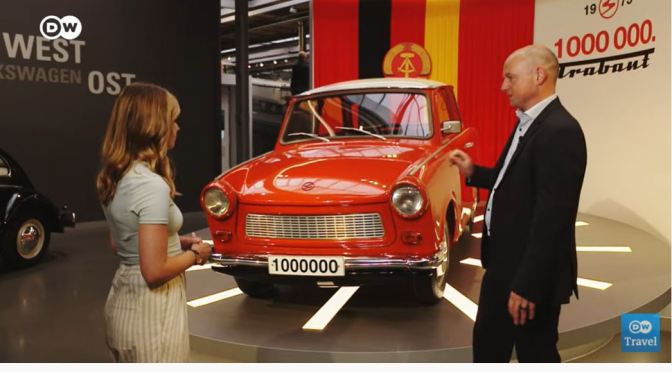
The city of Zwickau in eastern Germany has a long and varied history of car production and industrial design. Its story is told in the August Horch Museum – beginning with the production of Horch cars, to Audis, to the East German car, the Trabant.

On her trip to Zwickau, Hannah Hummel discovers the city’s car history, as well as its art and cultural history. Both the composer Robert Schumann and the expressionist painter and printmaker Max Pechstein were born in Zwickau. This episode of Destination Culture also takes viewers to Schneeberg – a creative hub in Saxony, where students from around the world study fashion and textile design.

Video timeline: 00:00 Intro 01:00 Car museum Zwickau 02:47 Recreating the Horch 14-17 04:49 Trabant – the GDR cult car 06:41 Hannah driving a Trabant 10:53 Composer Robert Schumann’s birthplace 11:49 Max Pechstein Museum 13:13 Werdau, meeting photographer Philipp Gladsome 16:18 Schneeberg, University of Applied Arts 18:46 Fashion design student Ridhima Wadhwa from Gujarat, India 22:05 Miner’s parade 23:45 Fashion designer Franziska Heinze