

From an InsideEVS.com article:
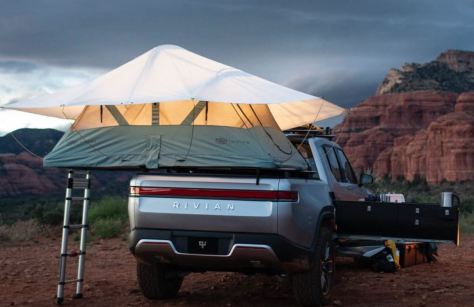
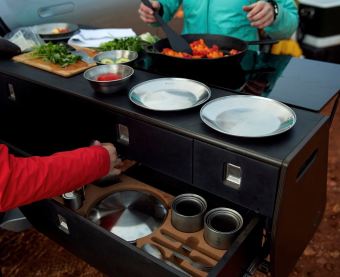 Rivian has demonstrated a fully functional, pull-out kitchen that fits into the tunnel and will be a fantastic asset to people who enjoy camping. At first, we thought this might just be a gimmick, but the automaker has clarified that the optional add-on will be available for purchase. To top it off, a tent fits right in the electric truck’s bed.
Rivian refers to its upcoming vehicle lineup as “Electric Adventure Vehicles.” Its first two offerings will be the R1T electric pickup truck and the R1S electric three-row SUV. Since the company has fully revealed itself, there has been a regular influx of information supporting the “adventure’ theme.
To read more click on the following link: https://insideevs.com/news/366546/video-rivian-truck-cooking-wild/



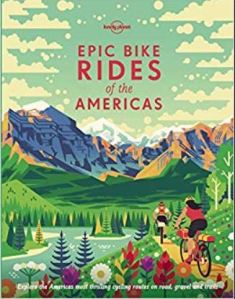 This definitive companion for cycling enthusiasts showcases 200 of North, Central and South America’s best and most celebrated routes, from epic adventures off the beaten path to shorter urban rides. Go bikepacking in Baja, road riding in Colombia, mountain biking in Canada and gravel riding in Pennsylvania.
 There is no official definition of what constitutes a dry wine in the U.S. The amount of sugar left in the wine after fermentation or added afterward is, however, sometimes noted on a wine’s label, in grams per liter. According to Mr. Ramey, a wine generally considered dry would have less than 1 gram per liter RS (residual sugar), or 0.1%. Beyond that, a wine with 1% RS (10 grams per liter) is off-dry, and a wine at 3% RS (30 grams per liter) or above is sweet.
 No Time to Die, as Bond 25 is called, will be out on April 8, 2020 in the U.S. and April 3 in the UK.
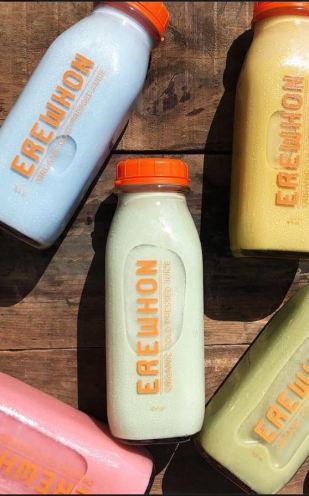 “In the beginning, the company was so in rapture with health and wellness, that they’d get cashews from some exotic place and you’d end up spending 20-some dollars for a bag of nuts,” Widener says. “But I’d still buy a bag because I wanted to learn about it, and I felt better when I ate ‘em.” The supermarket-as-classroom ethos even influences Erewhon’s physical layout: the grocer builds shelves that are
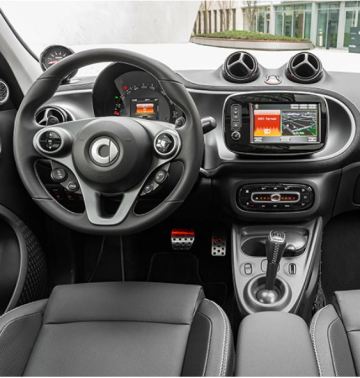 the result of its energetic design, both on the exterior and interior, ensures the smart ‘fortwo cabrio electric drive’ is fun-filled and quirky yet stylishly typical of the brand. at a size of 2.69 meters in length, 1.66m in width and 1.55m in height, the model delivers agile functionality for city mobility, even turning circles in less than 7 meters. however this time, smart has provided all this whilst offering electric economy with accelerating power and a fresh, open-air driving experience.
 Although the boomers may not have contributed much to the social and cultural changes of the nineteen-sixties, many certainly consumed them, embraced them, and identified with them. Still, the peak year of the boom was 1957, when 4.3 million people were born, and those folks did not go to Woodstock. They were twelve years old. Neither did the rest of the 33.5 million people born between 1957 and 1964. They didn’t start even going to high school until 1971. When the youngest boomer graduated from high school, Ronald Reagan was President and the Vietnam War had been over for seven years.
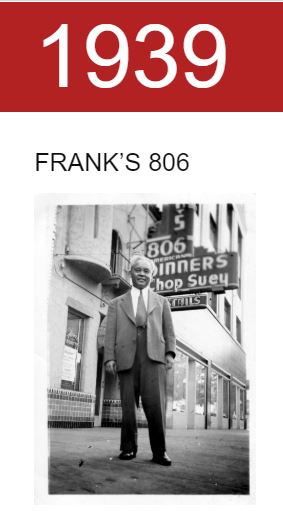 Walk into Frank Fat’s and you’ll find people today of all political stripes, with a love for authentic Chinese food — cuisine that attracted politicians like former Gov. Jerry Brown. As a bachelor governor in the 1970s, he loved to hang out in the kitchen at closing time, where he might find a free meal, according to California State Librarian Greg Lucas.

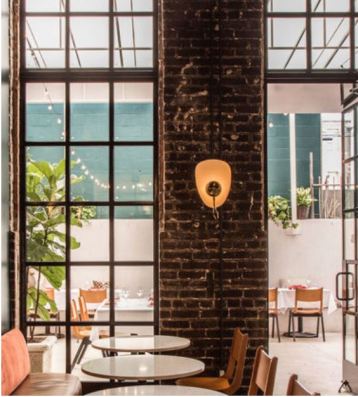 The nine suites at Arts District Firehouse Hotel are intended to capture a “dreamy mix of the elegant and bizarre”. Each is individually designed in layout and colour theme and named accordingly: Red, Orange, Yellow, Green, Blue, Indigo, Violet, White and Black.
 Boomers Daily