By Renee Dellar, Founder, The Learning Studio, Newport Beach, CA
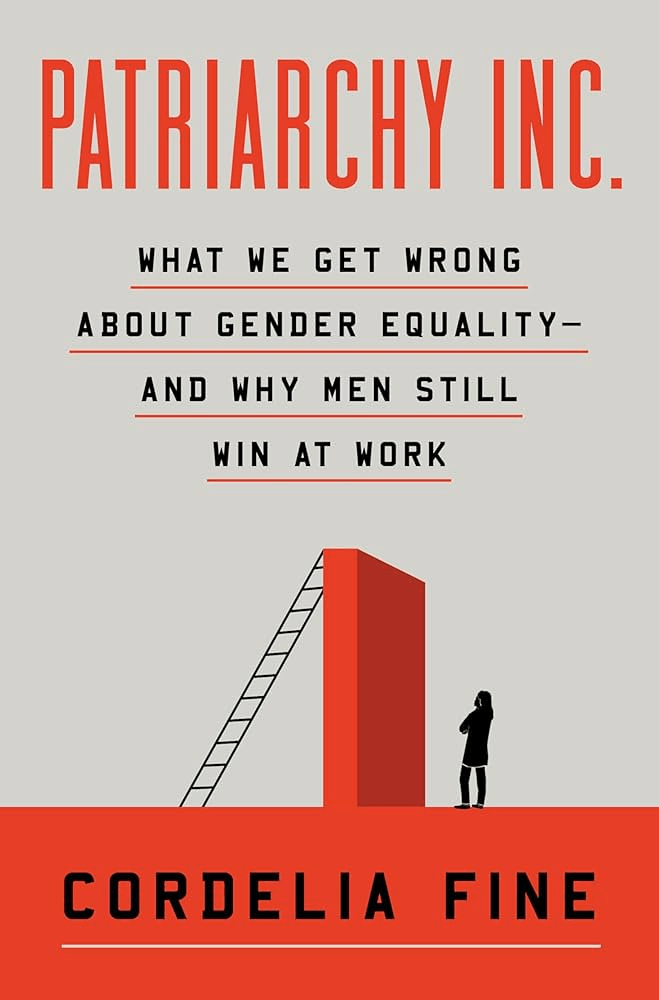
We often imagine patriarchy as a relic—obvious, archaic, and easily challenged. But as generations of feminist thinkers have long argued, and as Cordelia Fine’s Patriarchy Inc. incisively confirms, its enduring power lies not in its bluntness, but in its ability to mutate. Today, patriarchy doesn’t need to roar; it whispers in algorithms, smiles from performance reviews, and thrives in wellness language. This essay argues that Fine’s emphasis on workplace inequality, while essential, is incomplete without a parallel reckoning with patriarchy’s grip on domestic life—and more profoundly, without a reimagining of gender itself. What we need is a psychological evolution: a balanced embodiment of both feminine and masculine energies in all people, if we are to unbuild a system that survives by design.
In 1949, Simone de Beauvoir wrote in The Second Sex, “One is not born, but rather becomes, a woman.” With that sentence, she shattered the myth of biological destiny. Womanhood, she claimed, was not innate but culturally scripted—a second sex constructed through tradition, religion, and expectation. Patriarchy, in her analysis, was no divine order but a human invention: an architecture of dominance designed to reproduce itself through social roles. Fine’s forthcoming Patriarchy Inc. (August 2025) echoes and updates this insight with sharp empirical rigor. In the workplace, she shows, patriarchy has not disappeared—it has evolved. It now markets fairness, monetizes empowerment, and offloads systemic change onto individuals via coaching, productivity hacks, and “confidence workshops” that sell resilience as a substitute for reform.
What makes Fine’s critique vital is not merely that patriarchy persists—it’s how it thrives beneath the very banner of equality. It now cloaks itself in metrics, missions, and diversity gloss. Corporate offices tout inclusion while continuing to reward masculine-coded behaviors and promote male leadership: 85% of Fortune 500 CEOs remain men. Patriarchy, we learn, is not a crumbling wall—it is a self-repairing system. To dismantle it, we must go deeper than metrics. We must examine the energies it suppresses and rewards.
Masculine and Feminine Traits: A New Grammar of Justice
To understand the psychological mechanics of patriarchy, we must revisit the traits society has long coded as masculine or feminine—traits that are neither biological imperatives nor moral absolutes, but social energies shaped over centuries.
- Masculine traits are typically associated with competition, independence, assertiveness, strength, and linear action. Taken too far, they veer into domination.
- Feminine traits, by contrast, are linked to empathy, care, intuition, collaboration, and receptivity—qualities that bind rather than divide.
These traits exist in all people. Yet patriarchy has historically overvalued the former and devalued the latter, punishing men for softness and women for strength. A just society must not erase these differences but balance them—within institutions, relationships, and most importantly, within the self.
Simone de Beauvoir: The Architecture of Otherness
De Beauvoir’s diagnosis of woman as “Other”—the deviation from the male norm—remains uncannily relevant. Today’s workplaces replicate that Othering in subtler ways: through dress codes, tone policing, and leadership norms that penalize feminine expression. As Fine notes, women must be confident, but not cold; nurturing, but not weak; assertive, but not abrasive. In other words: perfect. The corporate woman who succeeds by male standards is often punished for violating feminine ideals. The double bind remains—only now it wears a blazer and carries a badge that says “inclusive.”
Friedan, Domesticity, and the New Containment
In 1963, Betty Friedan exposed what she called “the problem that has no name”: the stifling despair of suburban domesticity. Today, that problem has been rebranded. The girlboss, the multitasking mother, the curated freelancer—each is sold as empowered, even as she shoulders the same disproportionate domestic load. Women continue to dominate sectors like education and healthcare, often underpaid and undervalued despite being deemed “essential.” These roles, Fine shows, are praised symbolically while marginalized materially. Even progressive policies like flexible hours and parental leave frequently assume women are the default caregivers, reinforcing the burden Friedan tried to name.
Millett’s Sexual Politics: The Myth of Neutrality
Kate Millett’s Sexual Politics reframed patriarchy as institutional, not interpersonal. Literature, law, and culture all naturalized male dominance. Fine brings that lens to the boardroom. Modern hiring algorithms and promotion pathways may appear neutral, but they are encoded with values that reward masculine norms. Women are urged to “lean in,” but warned not to lean too far. Diversity initiatives often succeed at optics, but fail to shift power: the faces at the table change, yet the hands on the levers remain the same. As Fine argues, equity requires more than visibility—it demands structural rebalancing.
Lorde and the Failure of Inclusion Without Power
Audre Lorde warned that “the master’s tools will never dismantle the master’s house.” Too often, DEI programs use those very tools. Difference is celebrated, but only within safe boundaries. Women of color may be promoted, but without adequate mentorship, institutional backing, or decision-making power, the gesture risks becoming symbolic. Fine channels Lorde’s insight: inclusion without transformation is corporate theater. Real justice requires not just a change in personnel, but a change in priorities, metrics, and values.
Gerda Lerner and the Machine That Adapts
In The Creation of Patriarchy, Gerda Lerner traced patriarchy’s roots to law, religion, and economy, showing it as a machine designed for self-preservation. Fine updates this metaphor: the machine now runs on data, flexibility, and illusion. Today’s labor markets reward 24/7 availability, mobility, and presenteeism—conditions often impossible for caregivers. When women enter male-dominated fields, prestige and pay often decline. The system adapts by downgrading the value of women’s gains. Patriarchy doesn’t just resist change—it mutates in response to it.
The Invisible Burnout: When Women Do Both
As women are pushed to succeed professionally, they’re also expected to maintain responsibility for domestic life. This dual burden—emotional labor, mental load, caregiving—is not equally shared. While women have been pressured to adopt masculine-coded traits to succeed, men have faced little reciprocal cultural push to develop their feminine sides. As a result, many women are performing two identities—professional and maternal—while men remain tethered to one. This imbalance is not just unfair—it is unsustainable.
Men Must Evolve Too: The Will to Change
Cordelia Fine joins American author, theorist, educator, and social critic bell hooks in arguing that men must be part of the liberation project—not as allies, but as participants in their own healing. In The Will to Change, hooks argued that patriarchy damages men by severing them from their emotions, from intimacy, and from ethical wholeness. Fine builds on this, showing how men are rewarded with status but robbed of connection.
What does transformation look like for men? Not emasculation, but evolution:
- Self-awareness: recognizing one’s emotions, triggers, and limitations.
- Self-regulation: managing impulses with maturity and intention.
- Self-compassion: replacing shame with acceptance and care.
These are not feminine traits—they are human ones. And leaders who embody both emotional intelligence and strategic clarity are not only more ethical—they are more effective. Institutions must reward this integration, not punish it.
From Balance to Redesign: What Fine Urges
Fine’s prescriptions are bold:
- Assume all workers have caregiving roles—not just mothers.
- Redesign success metrics to value care, collaboration, and emotional labor.
- Teach gender equity not as tolerance, but as a foundational moral principle.
- Foster this evolution early—at home, in classrooms, in culture.
This is not incremental reform. It is a new architecture: one that recognizes care as central, emotional labor as valuable, and balance as a mark of strength.
Conclusion: The System That Learns, and the Refusal That Liberates
Patriarchy has endured not because it hides, but because it learns. As Simone de Beauvoir revealed its ontological design, and Gerda Lerner its historical scaffolding, Cordelia Fine now reveals its polished upgrade. Patriarchy today sells resistance as a brand, equity as a product. It launders its image with the very language that once opposed it.
We no longer suffer from a lack of critique. We suffer from a failure to redesign. And so, as Audre Lorde warned, our task is not to decorate the master’s house—it is to refuse it. Not through token representation, but through radical revaluation. Not through balance sheets, but through balanced selves.
To dismantle patriarchy is not to flip the power dynamic. It is to end the game altogether. It is to build something entirely different—where human worth is not ranked, but recognized. Where power is not hoarded, but shared. Where every child, regardless of sex, is raised to lead with empathy and to love with courage.
That future begins not with a program, but with a decision. To evolve. To balance. To refuse the illusion of progress and demand its substance.
RENEE DELLAR WROTE AND EDITED THIS ESSAY UTILIZING AI















 Boomers Daily