Tag Archives: Politics

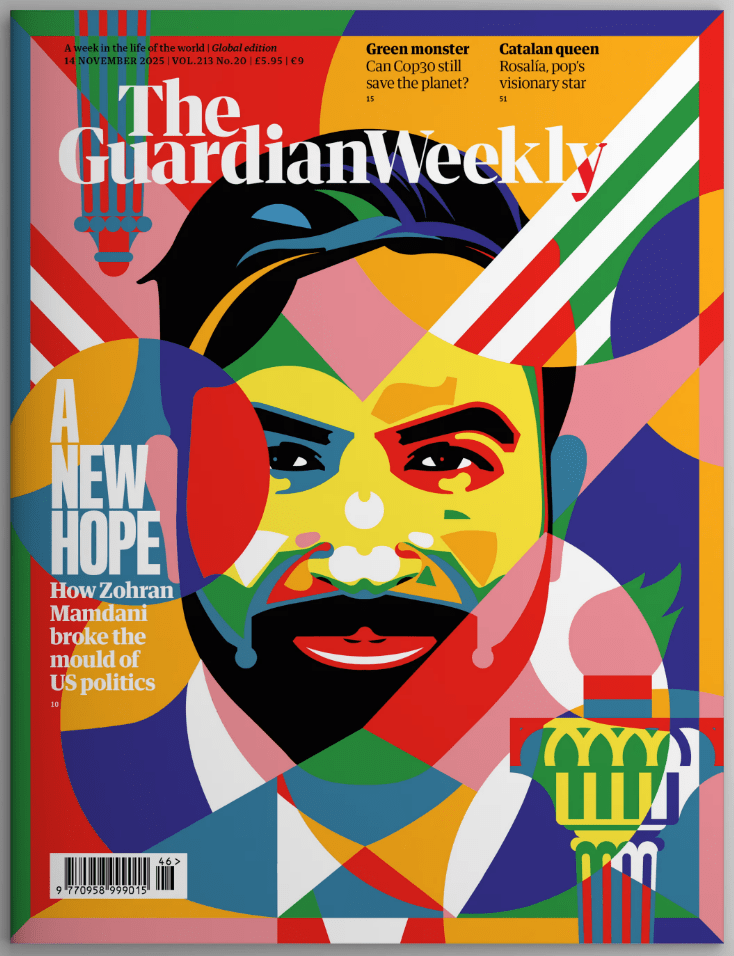
THE GUARDIAN WEEKLY – AUGUST 1, 2025 PREVIEW

THE GUARDIAN WEEKLY: The latest issue features ‘The Peace Broker’ – How Qatar Became the Capital of Diplomacy’

As this week’s issue of the Guardian Weekly went to press, a UN-backed monitor said famine was now unfolding in Gaza. That statement came less than 24 hours after Donald Trump acknowledged for the first time that there was “real starvation” and told Israel to allow “every ounce of food” into Gaza. This week’s big story, led by on-the-ground reporting by Gaza-based journalist Malak A Tantash, focuses on the limited pause in fighting by Israel to allow aid deliveries.

Spotlight | Russia’s kamikaze attacks
Luke Harding reports from the frontline in Dnipropetrovsk as once-safe Ukrainian villages are abandoned and the last inhabitants leave their animals and vegetable gardens behind

Environment | Nature fakes
Photographer and author of The Anthropocene Illusion, Zed Nelson reflects on the how humans seek to recreate versions of the environments and creatures they have destroyed to satisfy their cravings to be in nature

Science | Life of plastics
The journey of a single thread is traced by Phoebe Weston and Tess McClure, from garment to field and onwards, to illustrate how ubiquitous microplastic pollution has become

Opinion | Queens of England
As we celebrate the Lionesses’ historic win, isn’t it time English football fans stopped chasing glory through their men’s teams when the women are the ones delivering, asks Ava Vidal

Culture | In the cradle of country music
As the Grand Ole Opry turns 100, Jewly Hight visits the Nashville institution to find out how it has kept reinventing itself while honouring tradition over the decades

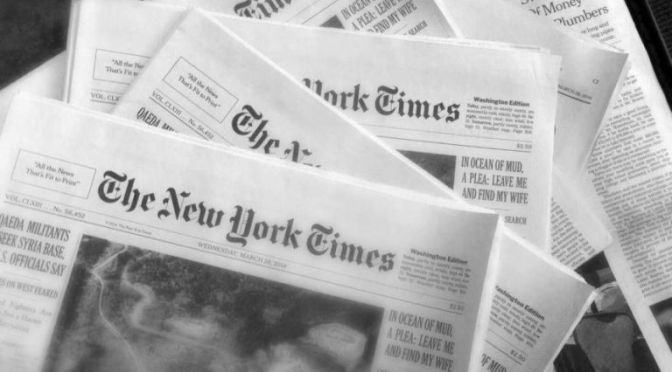
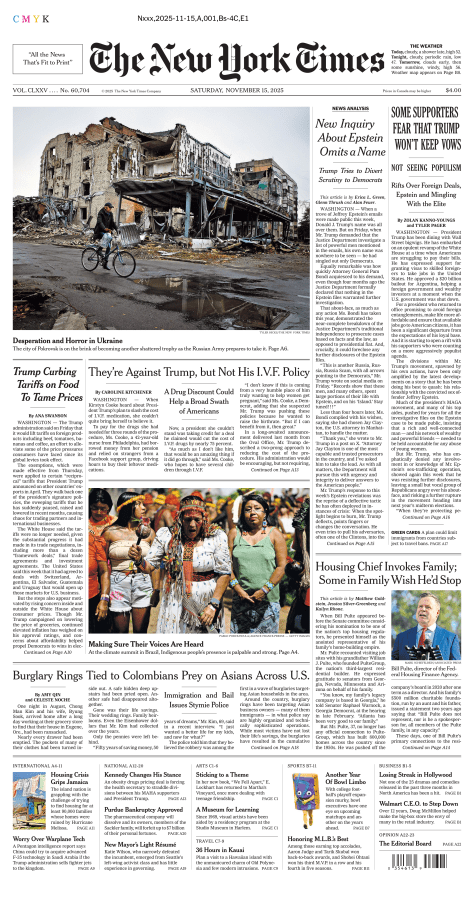
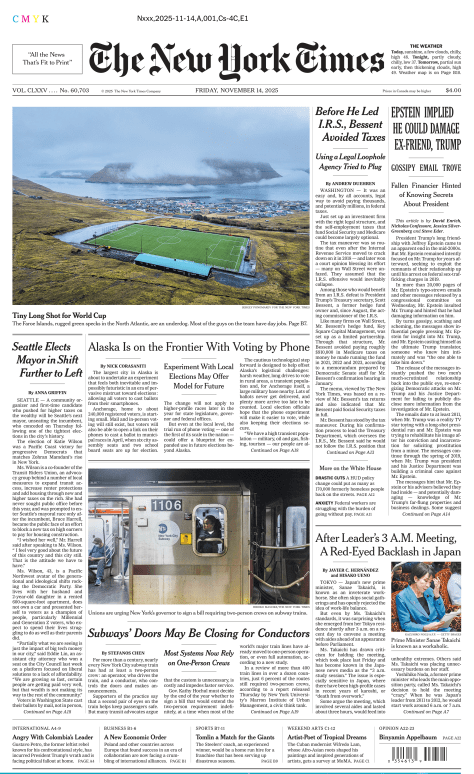
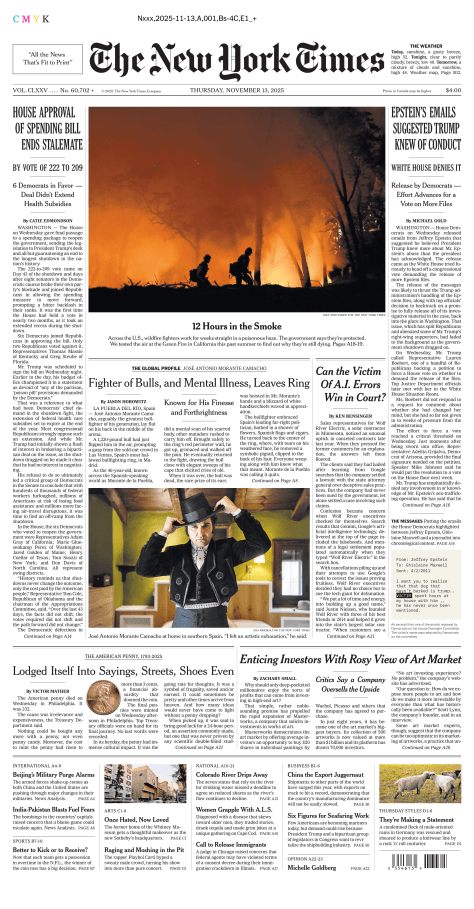
THE NEW YORK TIMES – THURSDAY, JULY 31, 2025

Anger Over Starvation in Gaza Leaves Israel Increasingly Isolated

Outrage at the Netanyahu government’s actions has grown since the war began, and the suffering of children in the enclave has accelerated the disdain.

Trump Criticizes Key Trade Partners as Tariff Deadline Looms

On the eve of his Friday deadline for countries to agree to trade deals with the U.S., President Trump has issued threats against a number of allies.

Countries Promise Trump to Buy U.S. Gas, and Leave the Details for Later

Treasury Secretary Says Trump Accounts Could Pave Way to Privatizing Social Security

Scott Bessent’s comments about the safety net program broached one of the most fraught topics in American politics.

The Ethics of Defiance in Theology and Society

This essay was written and edited by Intellicurean utilizing AI:

Before Satan became the personification of evil, he was something far more unsettling: a dissenter with conviction. In the hands of Joost van den Vondel and John Milton, rebellion is not born from malice, but from moral protest—a rebellion that echoes through every courtroom, newsroom, and protest line today.

Seventeenth-century Europe, still reeling from the Protestant Reformation, was a world in flux. Authority—both sacred and secular—was under siege. Amid this upheaval, a new literary preoccupation emerged: rebellion not as blasphemy or chaos, but as a solemn confrontation with power. At the heart of this reimagining stood the devil—not as a grotesque villain, but as a tragic figure struggling between duty and conscience.

“As old certainties fractured, a new literary fascination emerged with rebellion, not merely as sin, but as moral drama.”

In Vondel’s Lucifer (1654) and Milton’s Paradise Lost (1667), Satan is no longer merely the adversary of God; he becomes a symbol of conscience in collision with authority. These works do not justify evil—they dramatize the terrifying complexity of moral defiance. Their protagonists, shaped by dignity and doubt, speak to an enduring question: when must we obey, and when must we resist?

Vondel’s Lucifer: Dignity, Doubt, and Divine Disobedience

In Vondel’s hands, Lucifer is not a grotesque demon but a noble figure, deeply shaken by God’s decree that angels must serve humankind. This new order, in Lucifer’s eyes, violates the harmony of divine justice. His poignant declaration, “To be the first prince in some lower court” (Act I, Line 291), is less a lust for domination than a refusal to surrender his sense of dignity.

Vondel crafts Lucifer in the tradition of Greek tragedy. The choral interludes frame Lucifer’s turmoil not as hubris, but as solemn introspection. He is a being torn by conscience, not corrupted by pride. The result is a rebellion driven by perceived injustice rather than innate evil.

The playwright’s own religious journey deepens the text. Raised a Mennonite, Vondel converted to Catholicism in a fiercely Calvinist Amsterdam. Lucifer becomes a veiled critique of predestination and theological rigidity. His angels ask: if obedience is compelled, where is moral agency? If one cannot dissent, can one truly be free?

Authorities saw the danger. The play was banned after two performances. In a city ruled by Reformed orthodoxy, the idea that angels could question God threatened more than doctrine—it threatened social order. And yet, Lucifer endured, carving out a space where rebellion could be dignified, tragic, even righteous.

The tragedy’s impact would echo beyond the stage. Vondel’s portrayal of divine disobedience challenged audiences to reconsider the theological justification for absolute obedience—whether to church, monarch, or moral dogma. In doing so, he planted seeds of spiritual and political skepticism that would continue to grow.

Milton’s Satan: Pride, Conscience, and the Fall from Grace

Milton’s Paradise Lost offers a cosmic canvas, but his Satan is deeply human. Once Heaven’s brightest, he falls not from chaos but conviction. His famed credo—“Better to reign in Hell than serve in Heaven” (Book I, Line 263)—isn’t evil incarnate. It is a cry of autonomy, however misguided.

Early in the epic, Satan is a revolutionary: eloquent, commanding, even admirable. Milton allows us to feel his magnetism. But this is not the end of the arc—it is the beginning of a descent. As the story unfolds, Satan’s rhetoric calcifies into self-justification. His pride distorts his cause. The rebel becomes the tyrant he once defied.

This descent mirrors Milton’s own disillusionment. A Puritan and supporter of the English Commonwealth, he witnessed Cromwell’s republic devolve into authoritarianism and the Restoration of the monarchy. As Orlando Reade writes in Paradise Lost: Mourned, A Revolution Betrayed (2024), Satan becomes Milton’s warning: even noble rebellion, untethered from humility, can collapse into tyranny.

“He speaks the language of liberty while sowing the seeds of despotism.”

Milton’s Satan reminds us that rebellion, while necessary, is fraught. Without self-awareness, the conscience that fuels it becomes its first casualty. The epic thus dramatizes the peril not only of blind obedience, but of unchecked moral certainty.

What begins as protest transforms into obsession. Satan’s journey reflects not merely theological defiance but psychological unraveling—a descent into solipsism where he can no longer distinguish principle from pride. In this, Milton reveals rebellion as both ethically urgent and personally perilous.

Earthly Echoes: Milgram, Nuremberg, and the Cost of Obedience

Centuries later, the drama of obedience and conscience reemerged in psychological experiments and legal tribunals.

In 1961, psychologist Stanley Milgram explored why ordinary people committed atrocities under Nazi regimes. Participants were asked to deliver what they believed were painful electric shocks to others, under the instruction of an authority figure. Disturbingly, 65% of subjects administered the maximum voltage.

Milgram’s chilling conclusion: cruelty isn’t always driven by hatred. Often, it requires only obedience.

“The most fundamental lesson of the Milgram experiment is that ordinary people… can become agents in a terrible destructive process.” — Stanley Milgram, Obedience to Authority (1974)

At Nuremberg, after World War II, Nazi defendants echoed the same plea: we were just following orders. But the tribunal rejected this. The Nuremberg Principles declared that moral responsibility is inalienable.

As the Leuven Transitional Justice Blog notes, the court affirmed: “Crimes are committed by individuals and not by abstract entities.” It was a modern echo of Vondel and Milton: blind obedience, even in lawful structures, cannot absolve the conscience.

The legal implications were far-reaching. Nuremberg reshaped international norms by asserting that conscience can override command, that legality must answer to morality. The echoes of this principle still resonate in debates over drone warfare, police brutality, and institutional accountability.

The Vietnam War: Protest as Moral Conscience

The 1960s anti-war movement was not simply a reaction to policy—it was a moral rebellion. As the U.S. escalated involvement in Vietnam, activists invoked not just pacifism, but ethical duty.

Martin Luther King Jr., in his 1967 speech “Beyond Vietnam: A Time to Break Silence,” denounced the war as a betrayal of justice:

“A time comes when silence is betrayal.”

Draft resistance intensified. Muhammad Ali, who refused military service, famously declared:

“I ain’t got no quarrel with them Viet Cong.”

His resistance cost him his title, nearly his freedom. But it transformed him into a global symbol of conscience. Groups like Vietnam Veterans Against the War made defiance visceral: returning soldiers hurled medals onto Capitol steps. Their message: moral clarity sometimes demands civil disobedience.

The protests revealed a generational rift in moral interpretation: patriotism was no longer obedience to state policy, but fidelity to justice. And in this redefinition, conscience took center stage.

Feminism and the Rebellion Against Patriarchy

While bombs fell abroad, another rebellion reshaped the domestic sphere: feminism. The second wave of the movement exposed the quiet tyranny of patriarchy—not imposed by decree, but by expectation.

In The Feminine Mystique (1963), Betty Friedan named the “problem that has no name”—the malaise of women trapped in suburban domesticity. Feminists challenged laws, institutions, and social norms that demanded obedience without voice.

“The first problem for all of us, men and women, is not to learn, but to unlearn.” — Gloria Steinem, Revolution from Within (1992)

The 1968 protest at the Miss America pageant symbolized this revolt. Women discarded bras, girdles, and false eyelashes into a “freedom trash can.” It was not just performance, but a declaration: dignity begins with defiance.

Feminism insisted that the personal was political. Like Vondel’s angels or Milton’s Satan, women rebelled against a hierarchy they did not choose. Their cause was not vengeance, but liberation—for all.

Their defiance inspired legal changes—Title IX, Roe v. Wade, the Equal Pay Act—but its deeper legacy was ethical: asserting that justice begins in the private sphere. In this sense, feminism was not merely a social movement; it was a philosophical revolution.

Digital Conscience: Whistleblowers and the Age of Exposure

Today, rebellion occurs not just in literature or streets, but in data streams. Whistleblowers like Edward Snowden, Chelsea Manning, and Frances Haugen exposed hidden harms—from surveillance to algorithmic manipulation.

Their revelations cost them jobs, homes, and freedom. But they insisted on a higher allegiance: to truth.

“When governments or corporations violate rights, there is a moral imperative to speak out.” — Paraphrased from Snowden

These figures are not villains. They are modern Lucifers—flawed, exiled, but driven by conscience. They remind us: the battle between obedience and dissent now unfolds in code, policy, and metadata.

The stakes are high. In an era of artificial intelligence and digital surveillance, ethical responsibility has shifted from hierarchical commands to decentralized platforms. The architecture of control is invisible—yet rebellion remains deeply human.

Public Health and the Politics of Autonomy

The COVID-19 pandemic reframed the question anew: what does moral responsibility look like when authority demands compliance for the common good?

Mask mandates, vaccines, and quarantines triggered fierce debates. For some, compliance was compassion. For others, it was capitulation. The virus became a mirror, reflecting our deepest fears about trust, power, and autonomy.

What the pandemic exposed is not simply political fracture, but ethical ambiguity. It reminded us that even when science guides policy, conscience remains a personal crucible. To obey is not always to submit; to question is not always to defy.

The challenge is not rebellion versus obedience—but how to discern the line between solidarity and submission, between reasoned skepticism and reckless defiance.

Conclusion: The Sacred Threshold of Conscience

Lucifer and Paradise Lost are not relics of theological imagination. They are maps of the moral terrain we walk daily.

Lucifer falls not from wickedness, but from protest. Satan descends through pride, not evil. Both embody our longing to resist what feels unjust—and our peril when conscience becomes corrupted.

“Authority demands compliance, but conscience insists on discernment.”

From Milgram to Nuremberg, from Vietnam to feminism, from whistleblowers to lockdowns, the line between duty and defiance defines who we are.

To rebel wisely is harder than to obey blindly. But it is also nobler, more human. In an age of mutating power—divine, digital, political—conscience must not retreat. It must adapt, speak, endure.

The final lesson of Vondel and Milton may be this: that conscience, flawed and fallible though it may be, remains the last and most sacred threshold of freedom. To guard it is not to glorify rebellion for its own sake, but to defend the fragile, luminous space where justice and humanity endure.

THE NEW YORK TIMES – WEDNESDAY, JULY 30, 2025

Tsunami Waves Reach California as Hawaii Eases Advisory

The first waves hit the U.S. West Coast after an 8.8-magnitude quake off Russia’s coast. There were no immediate reports of major damage or casualties.

Russia’s Far East Suffers Some Damage From Earthquake and Tsunami

Trump’s Tax Bill Expands Farm Subsidies. Not All Farmers Will Benefit.

A $60 billion boost to farm subsidies under President Trump will be a lifeline to some, but the way the funding will be distributed could worsen disparities.

‘Anybody but Mamdani’: 5 Groups Emerge to Raise Millions in Attack Funds

Real estate titans and financiers are forming super PACs to try to defeat Zohran Mamdani. But they are still searching for a unified plan that could work.

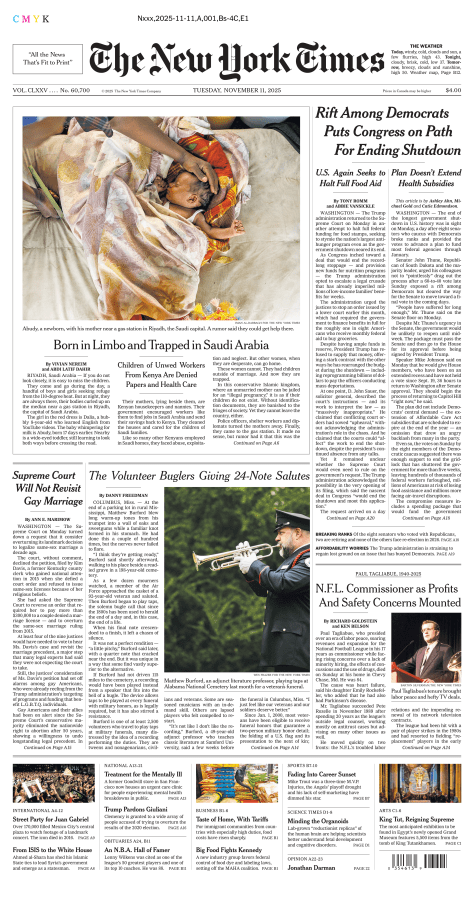
THE NEW YORK TIMES – TUESDAY, JULY 29, 2025

France Criticizes E.U.’s Trade Deal With Trump

Some French cabinet members have aired their sharp disapproval of the agreement with the United States. The prime minister called it “a dark day.”

Manhattan Gunman’s Note Referred to N.F.L. and Brain Trauma, Police Say

The shooting occurred in a Midtown tower that has offices of the National Football League. Mayor Eric Adams said that a note found on the gunman mentioned the N.F.L.

At Slain Officer’s Home, His Bangladeshi Community Mourns

Trump Is Winning His Trade War. What Will That Mean for the Economy?

President Trump’s vision for reshaping global trade is falling into place, an experiment that economists say could still produce damaging results.

I.M.F. Raises Global Growth Outlook as U.S. Looks to Avert Trade Wars

The International Monetary Fund warned that trade tension continued to be a risk for the global economy.

THE NEW YORKER MAGAZINE – AUGUST 4, 2025 PREVIEW

People sit in the shade on the steps of the Metropolitan Museum of Art.

THE NEW YORKER MAGAZINE: The latest cover features Victoria Tentler-Krylov’s “Chiaroscuro at the Met” – The art of shade.

What to Do When the Supreme Court Rules the Wrong Way

The blows have been coming weekly, as Trump tries to ransack the Constitution. Yet recent Court history shows that what feels like the end can be a beginning. By Amy Davidson Sorkin

“No Tax on Tips” Is an Industry Plant

Trump’s “populist” policy is backed by the National Restaurant Association—probably because it won’t stop establishments from paying servers below the minimum wage. By Eyal Press

Israel’s Zones of Denial

Amid national euphoria over the bombing of Iran—and the largely ignored devastation in Gaza—a question lurks: What is the country becoming? By David Remnick

THE NEW YORK TIMES – MONDAY, JULY 28, 2025

Trump Cites Hunger in Gaza as He Meets With Starmer

President Trump said that children in Gaza “look very hungry,” indicating disagreement with Israeli officials. He was holding talks with Prime Minister Keir Starmer of Britain.

‘Revenge Is Not a Policy’: Israelis Voice Dissent Against the War in Gaza

After a long silence, prominent Israelis and activists are increasingly raising alarms about potential war crimes being carried out by the government.

Europe Accepts a Trump Trade Deal With Other Worries in Mind

The framework agreement with President Trump will likely not do much for economic growth on either side. But it avoids fissures on foreign policy issues.

Thailand and Cambodia Agree to Halt Fighting That Has Killed Dozens

The ceasefire will start at midnight on Monday after U.S.-backed talks in Malaysia. The border war killed dozens of people and displaced hundreds of thousands.

THE NEW YORK TIMES – SUNDAY, JULY 27, 2025

No Meals, Fainting Nurses, Dwindling Formula: Starvation Haunts Gaza Hospitals

Amid Israeli restrictions on food, hunger is spreading across Gaza. Doctors and nurses lack the resources to stem the surge.

Israel Says It Has Paused Some Military Activity in Gaza as Anger Grows Over Hunger

Trump to Meet With Top E.U. Official as Threat of Trade War Looms

Right-Wing Influencers Say Ghislaine Maxwell Is Key to Unlocking Epstein Case

THE NEW YORK TIMES – SATURDAY, JULY 26, 2025

No Proof Hamas Routinely Stole U.N. Aid, Israeli Military Officials Say

Israel has long restricted or completely blocked aid to Gaza on the argument that Hamas steals it to use as a weapon of control over the population.

The DailyAudioHow Seeking Food Has Become Deadly in Gaza

Competing Conspiracy Theories Consume Trump’s Washington

President Trump is trying to divert attention from the Jeffrey Epstein conspiracy theory with one about Barack Obama and treason.

A Clash Over a Promotion Puts Hegseth at Odds With His Generals

Suspicions about leaks and a mistrust of senior military officers have defined much of Defense Secretary Pete Hegseth’s first six months on the job.

In Russia, Corruption Cases Following Battlefield Failures

Officials in three of the five Russian regions bordering Ukraine have been accused of embezzling funds for border defenses.

Patriarchy, Feminism and the Illusion of Progress

By Renee Dellar, Founder, The Learning Studio, Newport Beach, CA

We often imagine patriarchy as a relic—obvious, archaic, and easily challenged. But as generations of feminist thinkers have long argued, and as Cordelia Fine’s Patriarchy Inc. incisively confirms, its enduring power lies not in its bluntness, but in its ability to mutate. Today, patriarchy doesn’t need to roar; it whispers in algorithms, smiles from performance reviews, and thrives in wellness language. This essay argues that Fine’s emphasis on workplace inequality, while essential, is incomplete without a parallel reckoning with patriarchy’s grip on domestic life—and more profoundly, without a reimagining of gender itself. What we need is a psychological evolution: a balanced embodiment of both feminine and masculine energies in all people, if we are to unbuild a system that survives by design.

In 1949, Simone de Beauvoir wrote in The Second Sex, “One is not born, but rather becomes, a woman.” With that sentence, she shattered the myth of biological destiny. Womanhood, she claimed, was not innate but culturally scripted—a second sex constructed through tradition, religion, and expectation. Patriarchy, in her analysis, was no divine order but a human invention: an architecture of dominance designed to reproduce itself through social roles. Fine’s forthcoming Patriarchy Inc. (August 2025) echoes and updates this insight with sharp empirical rigor. In the workplace, she shows, patriarchy has not disappeared—it has evolved. It now markets fairness, monetizes empowerment, and offloads systemic change onto individuals via coaching, productivity hacks, and “confidence workshops” that sell resilience as a substitute for reform.

What makes Fine’s critique vital is not merely that patriarchy persists—it’s how it thrives beneath the very banner of equality. It now cloaks itself in metrics, missions, and diversity gloss. Corporate offices tout inclusion while continuing to reward masculine-coded behaviors and promote male leadership: 85% of Fortune 500 CEOs remain men. Patriarchy, we learn, is not a crumbling wall—it is a self-repairing system. To dismantle it, we must go deeper than metrics. We must examine the energies it suppresses and rewards.

Masculine and Feminine Traits: A New Grammar of Justice

To understand the psychological mechanics of patriarchy, we must revisit the traits society has long coded as masculine or feminine—traits that are neither biological imperatives nor moral absolutes, but social energies shaped over centuries.

  • Masculine traits are typically associated with competition, independence, assertiveness, strength, and linear action. Taken too far, they veer into domination.
  • Feminine traits, by contrast, are linked to empathy, care, intuition, collaboration, and receptivity—qualities that bind rather than divide.

These traits exist in all people. Yet patriarchy has historically overvalued the former and devalued the latter, punishing men for softness and women for strength. A just society must not erase these differences but balance them—within institutions, relationships, and most importantly, within the self.

Simone de Beauvoir: The Architecture of Otherness

De Beauvoir’s diagnosis of woman as “Other”—the deviation from the male norm—remains uncannily relevant. Today’s workplaces replicate that Othering in subtler ways: through dress codes, tone policing, and leadership norms that penalize feminine expression. As Fine notes, women must be confident, but not cold; nurturing, but not weak; assertive, but not abrasive. In other words: perfect. The corporate woman who succeeds by male standards is often punished for violating feminine ideals. The double bind remains—only now it wears a blazer and carries a badge that says “inclusive.”

Friedan, Domesticity, and the New Containment

In 1963, Betty Friedan exposed what she called “the problem that has no name”: the stifling despair of suburban domesticity. Today, that problem has been rebranded. The girlboss, the multitasking mother, the curated freelancer—each is sold as empowered, even as she shoulders the same disproportionate domestic load. Women continue to dominate sectors like education and healthcare, often underpaid and undervalued despite being deemed “essential.” These roles, Fine shows, are praised symbolically while marginalized materially. Even progressive policies like flexible hours and parental leave frequently assume women are the default caregivers, reinforcing the burden Friedan tried to name.

Millett’s Sexual Politics: The Myth of Neutrality

Kate Millett’s Sexual Politics reframed patriarchy as institutional, not interpersonal. Literature, law, and culture all naturalized male dominance. Fine brings that lens to the boardroom. Modern hiring algorithms and promotion pathways may appear neutral, but they are encoded with values that reward masculine norms. Women are urged to “lean in,” but warned not to lean too far. Diversity initiatives often succeed at optics, but fail to shift power: the faces at the table change, yet the hands on the levers remain the same. As Fine argues, equity requires more than visibility—it demands structural rebalancing.

Lorde and the Failure of Inclusion Without Power

Audre Lorde warned that “the master’s tools will never dismantle the master’s house.” Too often, DEI programs use those very tools. Difference is celebrated, but only within safe boundaries. Women of color may be promoted, but without adequate mentorship, institutional backing, or decision-making power, the gesture risks becoming symbolic. Fine channels Lorde’s insight: inclusion without transformation is corporate theater. Real justice requires not just a change in personnel, but a change in priorities, metrics, and values.

Gerda Lerner and the Machine That Adapts

In The Creation of Patriarchy, Gerda Lerner traced patriarchy’s roots to law, religion, and economy, showing it as a machine designed for self-preservation. Fine updates this metaphor: the machine now runs on data, flexibility, and illusion. Today’s labor markets reward 24/7 availability, mobility, and presenteeism—conditions often impossible for caregivers. When women enter male-dominated fields, prestige and pay often decline. The system adapts by downgrading the value of women’s gains. Patriarchy doesn’t just resist change—it mutates in response to it.

The Invisible Burnout: When Women Do Both

As women are pushed to succeed professionally, they’re also expected to maintain responsibility for domestic life. This dual burden—emotional labor, mental load, caregiving—is not equally shared. While women have been pressured to adopt masculine-coded traits to succeed, men have faced little reciprocal cultural push to develop their feminine sides. As a result, many women are performing two identities—professional and maternal—while men remain tethered to one. This imbalance is not just unfair—it is unsustainable.

Men Must Evolve Too: The Will to Change

Cordelia Fine joins American author, theorist, educator, and social critic bell hooks in arguing that men must be part of the liberation project—not as allies, but as participants in their own healing. In The Will to Change, hooks argued that patriarchy damages men by severing them from their emotions, from intimacy, and from ethical wholeness. Fine builds on this, showing how men are rewarded with status but robbed of connection.

What does transformation look like for men? Not emasculation, but evolution:

  • Self-awareness: recognizing one’s emotions, triggers, and limitations.
  • Self-regulation: managing impulses with maturity and intention.
  • Self-compassion: replacing shame with acceptance and care.

These are not feminine traits—they are human ones. And leaders who embody both emotional intelligence and strategic clarity are not only more ethical—they are more effective. Institutions must reward this integration, not punish it.

From Balance to Redesign: What Fine Urges

Fine’s prescriptions are bold:

  • Assume all workers have caregiving roles—not just mothers.
  • Redesign success metrics to value care, collaboration, and emotional labor.
  • Teach gender equity not as tolerance, but as a foundational moral principle.
  • Foster this evolution early—at home, in classrooms, in culture.

This is not incremental reform. It is a new architecture: one that recognizes care as central, emotional labor as valuable, and balance as a mark of strength.

Conclusion: The System That Learns, and the Refusal That Liberates

Patriarchy has endured not because it hides, but because it learns. As Simone de Beauvoir revealed its ontological design, and Gerda Lerner its historical scaffolding, Cordelia Fine now reveals its polished upgrade. Patriarchy today sells resistance as a brand, equity as a product. It launders its image with the very language that once opposed it.

We no longer suffer from a lack of critique. We suffer from a failure to redesign. And so, as Audre Lorde warned, our task is not to decorate the master’s house—it is to refuse it. Not through token representation, but through radical revaluation. Not through balance sheets, but through balanced selves.

To dismantle patriarchy is not to flip the power dynamic. It is to end the game altogether. It is to build something entirely different—where human worth is not ranked, but recognized. Where power is not hoarded, but shared. Where every child, regardless of sex, is raised to lead with empathy and to love with courage.

That future begins not with a program, but with a decision. To evolve. To balance. To refuse the illusion of progress and demand its substance.

RENEE DELLAR WROTE AND EDITED THIS ESSAY UTILIZING AI