Tag Archives: New York Times

Health Care Costs: $250+ Per Visit “Facility Fees” Increasingly Charged By Medical Practices

From a New York Times online article:

Facility FeeFor new patients, whose visits entail more work than those of established patients, facility fees typically range from $131 to $322 per visit; for established patients, they are slightly lower. In surgical centers and free-standing emergency rooms, the facility fee can be thousands of dollars.

A facility fee is an additional charge that some medical practices can add to the cost of each doctor visit. The additional charge usually comes as a surprise because, unlike an exam or a test or treatment, the facility fee is not tied directly to hands-on care.

The purpose of the facility fee is to compensate hospitals for the expense of maintaining the physical premises. Hospital-owned, off-campus medical practices are also allowed to charge the facility fee to cover specific regulatory requirements, such as building codes, disaster preparedness, equipment redundancy and other items that are largely invisible to patients.

To read more: https://www.nytimes.com/2019/11/01/well/live/why-was-my-doctor-visit-suddenly-so-expensive.html

Museum Exhibitions: “Beyond Midnight – Paul Revere” At The New York Historical Society

From an New York Times online review:

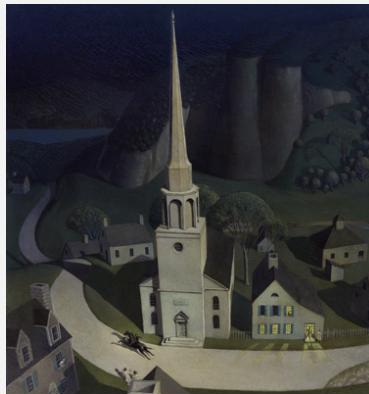
Grant Wood (1892−1942), Midnight Ride of Paul Revere, 1931. Oil on Masonite. Metropolitan Museum of ArtRevere’s place in history was cemented by the Longfellow poem, published in 1861, more than 40 years after Revere’s death. Longfellow “was flexible about the historical details,” said Debra Schmidt Bach, who coordinated the exhibition for the New-York Historical Society. “I mean, it was a fictionalized poem,” she said. “It was not intended as a detailed examination of the ride.”

NY Historical Society.JPGThe exhibition was organized by the American Antiquarian Society, of which Ms. Hewes is the curator of graphic arts. Nan Wolverton, the show’s other curator, is the director of fellowships at the antiquarian society, and of its Center for Historic American Visual Culture. The display includes more than 140 objects from the antiquarian society’s extensive Revere holdings; the New-York Historical Society’s own collection; the Museum of Fine Arts, Boston; and the Massachusetts Historical Society, among others.

To read more: https://www.nytimes.com/2019/09/11/arts/design/paul-revere-beyond-midnight.html

Documentary Photography: Robert Frank Chronicled Post World War II America

From a New York Times online article:

Mr. and Mrs. Feiertag, Late Afternoon, 1951.CreditRobert Frank; National Gallery of Art, WashingtonRigorously unsentimental in his attitude to the world around him, Mr. Frank deviated from form in 1950, taking what was arguably his most romantic picture. He had his reasons. He was in love. The year before he had met artist Mary Lockspeiser, who became his first wife. In “Tulip/Paris,” he photographed a young man who is holding behind his back a tulip — presumably intended for the woman standing in the background. An old man, at the other end of life’s arc, approaches the viewer. It is a classic romantic Paris street photograph.


Robert Frank kicked documentary photography into the present with a loud clang. In place of the detached formalism of Walker Evans and the poetic lyricism of Henri Cartier-Bresson and Andre Kertesz, he brought a moody, cool intensity that stamped his pictures with a readily identifiable hallmark. Using a 35-millimeter Leica, he could compose images as elegantly framed as if he’d set up a tripod, or as blurry and off-center as an amateur snapshot. He took whatever means he needed to express a vision that was alternately empathetic and obstreperous, as contradictory as the man himself.

To read more: https://www.nytimes.com/2019/09/11/arts/design/robert-frank-photographs.html?module=inline

Outdoor Exhibitions: British Artist Bruce Munro’s “Field Of Light At Sensorio”, Paso Robles, CA

From a New York Times online article:

Jennifer Young and Ron Genauer at the installation.CreditJim McAuley for The New York TimesBut there is nothing quite like the mind-bending spectacle now on display at dusk in the hills of Paso Robles here, a popular wine destination. That is the witching hour when thousands of solar-powered glass orbs on stems, created by the artist Bruce Munro, enfold visitors in an earthbound aurora borealis of shifting hues.

Since it opened in May, “Field of Light at Sensorio” — the 60-year-old British artist’s largest such installation to date — has drawn thousands of tourists and become an Instagram phenomenon. The subtly changing patterns of this light safari, activated by a nebula of fiber-optic cables attached to hidden projectors, seem to inspire a cathedral-like awe among ticket-holders, who pay $19 to $30 for an evening stroll along 15 acres of illuminated walkways.

https://www.sensoriopaso.com/

To read more: https://www.nytimes.com/2019/09/15/arts/design/field-of-light-sensorio.html

Top Hotel Bars: “Everdene” At The Virgin Hotels San Francisco Has “Standout” Rooftop City Views

From a New York Times online article:

Everdene Bar San Francisco rooftop barA more recent addition to San Francisco’s rooftop bar scene is Everdene, a standout which opened this April atop the new Virgin Hotels San Francisco. Besides taking its name from the heroine of Thomas Hardy’s “Far from the Madding Crowd,” Everdene has a lush, garden party vibe that feels far removed from the crowds below in SoMa. The drinks program consists of brightly colored, flora-heavy sippers (tequila-based “Her Majesty’s Pleasure,” with cucumbers and sugar snap peas, is an early favorite), courtesy of the lead bartender Tommy Quimby, another Trick Dog alum. 

To read more: https://www.nytimes.com/2019/06/14/travel/san-francisco-hotel-bar-cocktails.html

Long-Term Care: A Highly Contagious, Drug-Resistant “Fatal Fungus” Spreads In Nursing Homes

From a New York Times online article:

Nursing Homes article in New York Times Sept 2019Scientific research on nursing homes and drug resistance is sparse, but some recent studies offer evidence of the problem. A study published in June in the Journal of Clinical Infectious Diseases found that patients and residents in long-term care settings have alarmingly high rates of drug-resistant colonization, which means they carry the germs on their skin or in their bodies, usually without knowing it, and can pass them invisibly to staff members, relatives or other patients. Elderly or severely ill people with weakened immune systems who carry the germ are at high risk of becoming infected. 

Maria Davila lay mute in a nursing home bed, an anguished expression fixed to her face, as her husband stroked her withered hand. Ms. Davila, 65, suffers from a long list of ailments — respiratory failure, kidney disease, high blood pressure, an irregular heartbeat — and is kept alive by a gently beeping ventilator and a feeding tube.

Doctors recently added another diagnosis to her medical chart: Candida auris, a highly contagious, drug-resistant fungus that has infected nearly 800 people since it arrived in the United States four years ago, with half of patients dying within 90 days.

To read more: www.nytimes.com/2019/09/11/health/nursing-homes-fungus.html?action=click&module=News&pgtype=Homepage

Top European Cities: Cadiz, Spain Features “Delicious Andalusian Cuisine”, Ancient History

From a New York Times online article:

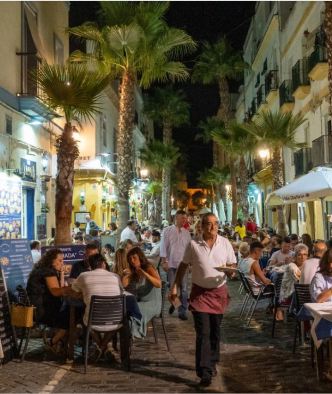
The neighborhood of La Viña is packed with open-air restaurants.CreditSebastian Modak The New York TimesOne of the reasons the province of Cádiz is on this year’s 52 Places list is food, as chefs in the area are innovating with pork and fish, the base ingredients here. I tried out a few of the white-tablecloth joints, but came away remembering the noisy, cheap tapas bars that have been around forever.

What makes Andalusian cuisine so delicious are the ingredients, and sometimes less is more. Why go crazy with reductions and infusions when freshly caught sardines sprinkled with olive oil are enough to elicit moans?

Cádiz, the province and city on Spain’s southwestern edge, is an underdog — and I’m among the many travelers who have spent years overlooking it. I know Andalusia, the southern region it is part of, well. For years, it’s been a meeting point for my family who has just as much wanderlust as I do and is spread across the world.

To read more: https://www.nytimes.com/2019/09/03/travel/cadiz-an-underrated-corner-of-spain.html

Health Issues: Middle-Aged Man With Rapid Heart Beat Diagnosed With Sarcoidosis

From a New York Times article by Lisa Sanders, M.D.:

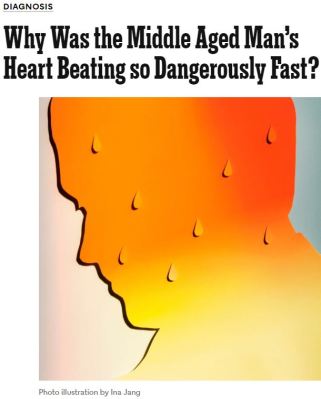
Diagnosis from New York Times by Lisa Sanders, MD Photo Illustration by Ina JangIn sarcoidosis, abnormal collections of cells called granulomas invade the organ, interfering with its normal activity and often destroying the surrounding tissue. What is left is a scar, known as fibrosis, dotted with these abnormal granulomas.


When caught early, sarcoidosis can be treated and the destruction slowed or even stopped. But it was too late for that in this man’s case. He was started on immune-suppressing medications to prevent additional damage, but he needed a new heart.

The man had been active and healthy, until five years earlier when he started to feel tired. His doctor sent him to a cardiologist, who took one look at his EKG and said he needed a pacemaker, right away. He got one the next day. He was fine for a year, and then, on a business trip to Atlanta, he suddenly felt lightheaded, and his heart fluttered wildly in his chest. In the E.R. they told him his heart was beating 220 beats a minute. You should be dead, one doctor said.

To read more click on the following link: https://www.nytimes.com/2019/08/22/magazine/why-was-the-middle-aged-mans-heart-beating-so-dangerously-fast.html

Remote Travel: Northern California’s “Lost Coast” Attracts Visitors Who “Hike, Fish & Beachcomb”

From a New York Times article by Elaine Glusac

A view of the ocean from the Lost Coast Trail in northern California. Depending on the tides, some sections of the trail are periodically impassable.CreditCreditAlexandra Hootnick for The New York TimesNow, visitors come to the Lost Coast to hike, fish, beachcomb, bird-watch and scan the ocean for migrating whales in the offshore marine preserve (Ms. Kaai recommended visiting on a weekend, when Shelter Cove’s few restaurants are open). Others come to backpack along the famous Lost Coast Trail-North, a nearly 25-mile beach trek that generally takes three days, requires a permit (free, with a $6 reservation fee) and is subject to tides that periodically make portions impassable.California Lost Coast map by The New York Times

On a deserted beach in Northern California, I mistook a sea lion for driftwood. The Lost Coast is deceiving that way. Wild things appear tame and tame things, like the paved road my family and I took to get here, wild.

In June, seeking immersion in nature, we visited the Lost Coast, the largely roadless shore between the indiscernibly tiny town of Rockport and the Victorian charmer Ferndale, about 100 miles apart by inland roads. Here in Humboldt County, California reaches its westernmost point near a junction of three seismically active tectonic plates. The King Range mountains plunge into the sea, deterring road-builders from continuing State Route 1 along the ocean.

To read more  click on the following link: https://www.nytimes.com/2019/08/26/travel/northern-california-lost-coast.html