Texas Prof Banned from Teaching Plato • Chatbots Have Favourite Philosophers • Singer Fears AI Doesn’t ‘Get’ Animal Rights — News reports by Anja Steinbauer
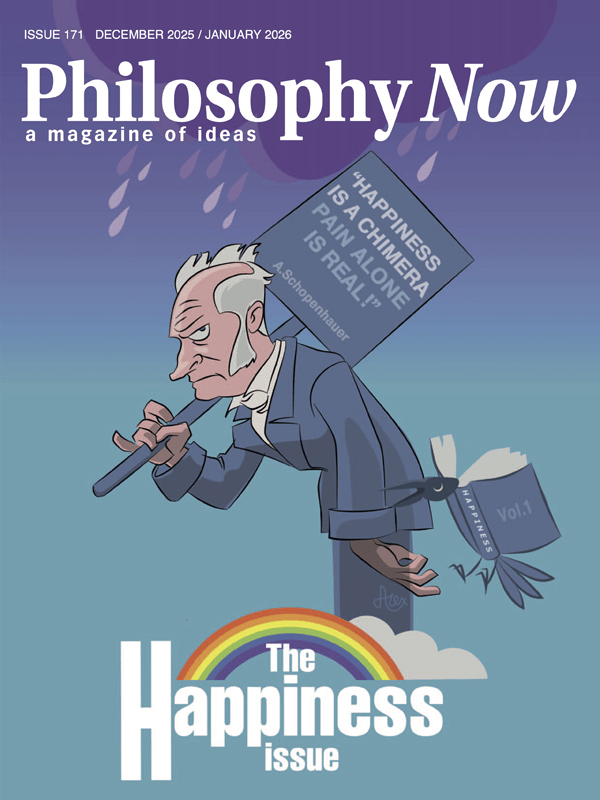
Arthur Schopenhauer (1788-1860), the author of The World as Will and Representation, was a profound metaphysician who also advocated basing ethics upon compassion. He was a great philosopher, but notoriously pessimistic, as the following quotations might suggest.
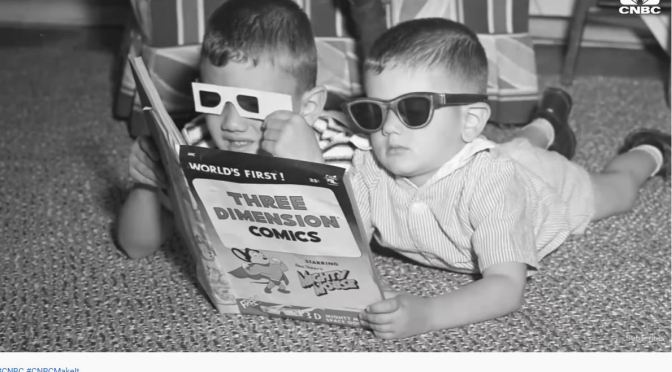
Comic books have been a staple of American pop culture for the better part of 90 years. The origin story of comics as we know them, however, is much more complicated. In the 1950s, a moral panic swept across the country — one in which parents and children burned comic books by the bushel in public gatherings — and led to the near destruction of the comic book industry. Comics were big business even by the 1940s. They reached millions of readers each week. And the superheroes created then have now become billion-dollar franchises, showcased in blockbuster films and massive conventions such as Comic-Con. Events in 1954, however, almost changed that. Laws were passed. Careers were ruined. And comics fell under a strict censorship regime that lasted for decades to come.
As one of the leading figures in the field of international relations, Joseph S. Nye, Jr., Harvard University Distinguished Service Professor Emeritus, has had a major influence on the way that policymakers think American foreign policy.
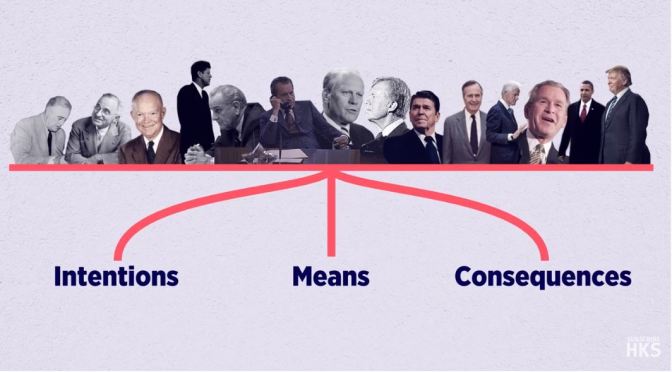
In his new book, “Do Morals Matter: Presidents and Foreign Policy from FDR to Trump,” Professor Nye explores the question of how heavily moral questions weigh on the decisions of U.S. presidents since the end of World War II. On this episode of Behind The Book, produced by Library and Knowledge Services at Harvard Kennedy School, we take a look at Professor Nye’s new book and how he assesses the legacy of past presidents based on the morality of their foreign policy.
“Do Morals Matter: Presidents and Foreign Policy from FDR to Trump” is published by Oxford University Press.
Joseph S. Nye Jr., is the University Distinguished Service Professor, Emeritus and former Dean of the Harvard’s Kennedy School of Government. He has served as Assistant Secretary of Defense for International Security Affairs, Chair of the National Intelligence Council, and Deputy Under Secretary of State for Security Assistance, Science and Technology.
His most recent books include The Power to Lead; The Future of Power; Presidential Leadership and the Creation of the American Era; and Is the American Century Over. He is a fellow of the American Academy of Arts and Sciences, the British Academy, and the American Academy of Diplomacy.
In a recent survey of international relations scholars, he was ranked as the most influential scholar on American foreign policy, and in 2011, Foreign Policy named him one of the top 100 Global Thinkers.
News, Views and Reviews For The Intellectually Curious

 Boomers Daily