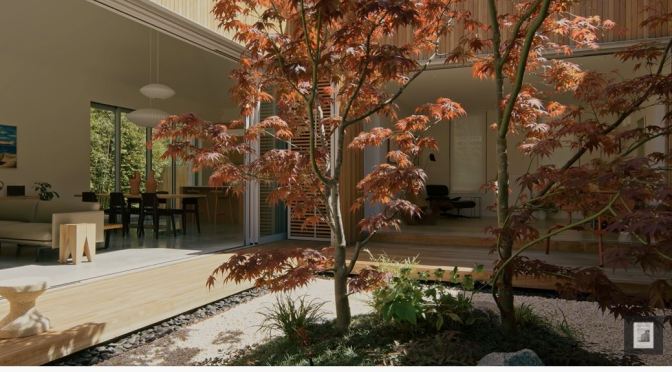
Courtyard House by Ha Architecture is a Japanese inspired home, presented as a merging of heritage and contemporary design. The home’s streetscape heritage overlay allowed the existing home façade to be maintained; it was restored and repaired to its original condition, including the original windows. Internally, a meeting of contemporary and traditional principles imbues the space with a tranquil charm – a quiet space of reflection and rest. Inside the Japanese inspired home, Courtyard House is centred around its internal courtyard.
The brief required an adaption of contemporary Japanese architecture and lifestyle ideologies, with a focus on outdoor spaces and passive design principles. The entryway is intimate, instilled with ambient light and an immediate saturation of timber. This sensory experience allows Courtyard House to emerge as a Japanese inspired home, propelled by an inherent sustainability that underpins the very fabric of the project. Windows frame backdrops of bamboo and showcase selected stone features, creating a constant discourse between the internal and external spaces. The landscape orientation, as well as vantage points, play a considered role in the architecture.
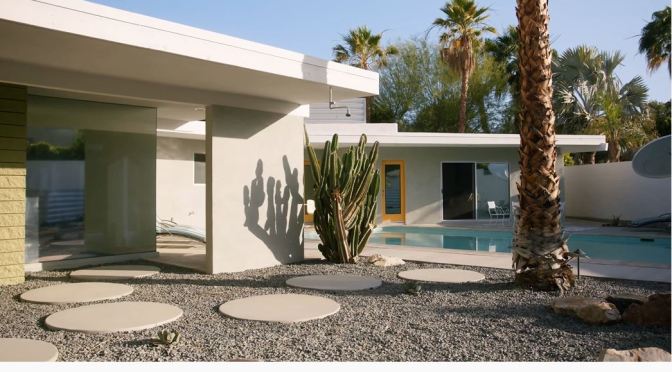
Architect Richard Leitch from the USC School of Architecture isn’t spoken about too often however his work speaks volume. From The Hillsides of Altadena to the dry landscapes of the desert you can find some of Richard’s work throughout Southern California. Avid Car lover Joe Tseng found himself entrenched in a year-long restoration/Remodel of his current home ‘ The Desert Sun House’, a project which he wanted to share with his son Tyler. They’ve saved and transformed the home into what you see today, A classic home filled with rich History and thoroughly enjoyed by its new owners.
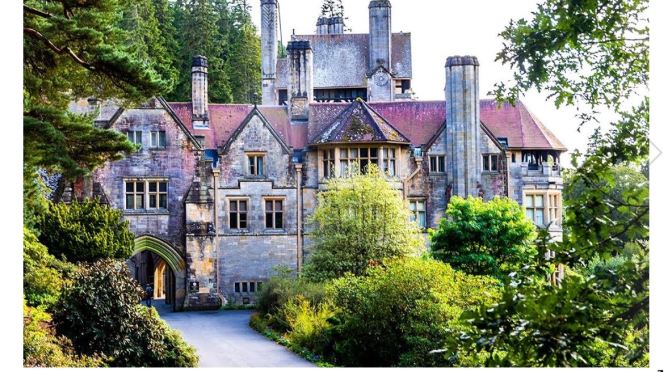
The first house in the world to be lit by hydroelectricity and full of Victorian gadgets and innovations, Cragside in Northumberland has always been at the forefront of modern living.
But now, climate change has started to catch up with this pioneering place. More frequent and intense rainfall is overwhelming the house’s drainage system and beginning to find its way inside of the Arts and Crafts mansion. Most affected is the drawing room with its immense, two-story high, ornately carved marble fireplace.
Rainwater is pushing salts that are in the stonework of the house through to the decorative marble and plasterwork of fireplace inside, causing its surface to deteriorate, meaning urgent work is needed to save this irreplaceable piece of architecture from crumbling away.
A two-stage project is currently underway to stabilise and future-proof the fireplace against climate-change, conserving it for future generations. As conservation work continues, Cragside is once again looking to the future – this time by looking to its past. Originally built by architect Lord Armstrong and his wife Lady Margaret, this pair of innovators created Britain’s original smart home when Cragside became the first house in the world to be illuminated by hydroelectricity, generated by its man-made lakes.
A project in 2014 gave the estate the ability to yield enough energy from water to light the whole house by installing an Archimedes Screw, which works at an angle and allows water to pass between the Tumbleton Lake and the burn below. This converts the power of the water flowing through it into electricity, a never-ending source that now illuminates the whole house and sends excess power back to the National Grid. Watch this video to discover more.
In the heart of Umbria, on the hills surrounding the Etruscan city of Perugia, this wonderful 650 sqm villa with 9 bedrooms and Renaissance tower is perfect for anyone looking for a luxury property to use as a private residence or as a base for a hosting business. The icing on this beautiful cake is the beautiful garden designed by the landscape architect Pietro Porcinai and made up of a park and a winter garden with swimming pool. The property is then completed by a tennis court.
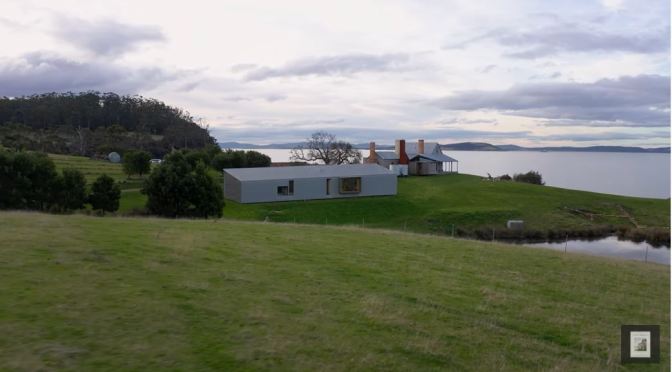
Captain Kelly’s Cottage is the story of restoring a historical home on the edge of the world. The house was finished in 2016 by John Wardle Architects for John and his wife Susan.
Having bought Waterview without knowing its history, John and Susan quickly researched the landscape and its colonial settlement. After asking neighbours and previous owners, John found out that Captain Kelly was a first-generation European Australian with convict parents. Before John and Susan intervened, the cottage had weathered multiple additions and alterations and, along the way, lost a sense of its own history.
As one of two large structures perched along the edge of the vast maritime landscape, looking out over the ocean of Storm Bay, Captain Kelly’s Cottage is steeped in architectural history. Throughout the story of restoring a historical home on the edge of the world, John Wardle Architects achieved a contemporary reading of the existing structure whilst featuring important elements of its past.
For a small and condensed project, John found the restoration challenging – to give the interior design and the architecture a present-day reinterpretation, whilst staying true to its heritage and understanding the environmental impacts and climatic conditions of being on the edge of a cliff. John also took the time to understand the responsibility of owning the Tasmanian land.
More recently, research into the pre-colonial history of the First Nation’s stewardship of the property is being undertaken, an important task John is intent on doing. As the story of restoring a historical home on the edge of the world comes to a close, John views his interventions as a curatorial restoration. The home is primarily made from timber and brick, which has been locally sourced.
Additionally, a lot of the interior design is fuelled by locally sourced elements – materials, furniture and pieces. Fabrics and objects within the interior have also been sourced by John and Susan from their international travels, evoking the essence of a maritime home on the edge of a cliff, looking out to the world beyond. Stated to have been built by carpenters from Kelly’s ship, the architecture and interior design of the home today speaks to its original identity and tells the story of restoring a historical home on the edge of the world.
Internally, a strip of paint has been removed to reveal the home’s original paint colours, exploring both the original and subsequent eras of the cottage’s existence at once. Located on Bruny Island in Southern Tasmania, Captain Kelly’s Cottage by John Wardle Architects is a significant intersection of historical eras. The cottage is the story of restoring a historical home on the edge of the world; there is an appreciation felt throughout – of its past and a celebration for its future.
Architect Barbara Weiss likes to do things a little differently. Indeed, the last time we caught up with her was at her upside-down house: a converted pub in Westminster, central London, where she lives on the secluded top floors and sleeps on the lower floors (yes, it’s as brilliant as it sounds). This time, she’s giving us a tour of her latest self-designed home, which she’s aptly titled the inside-out house.
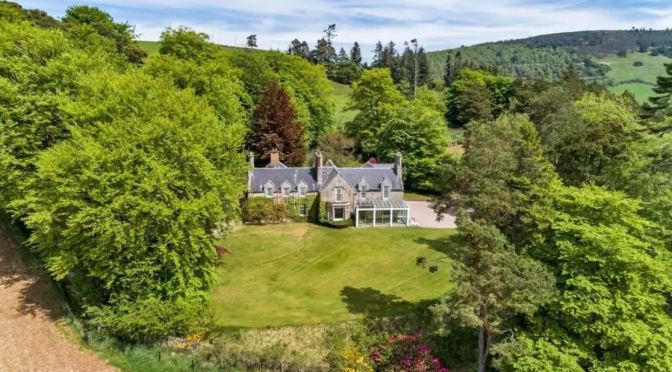
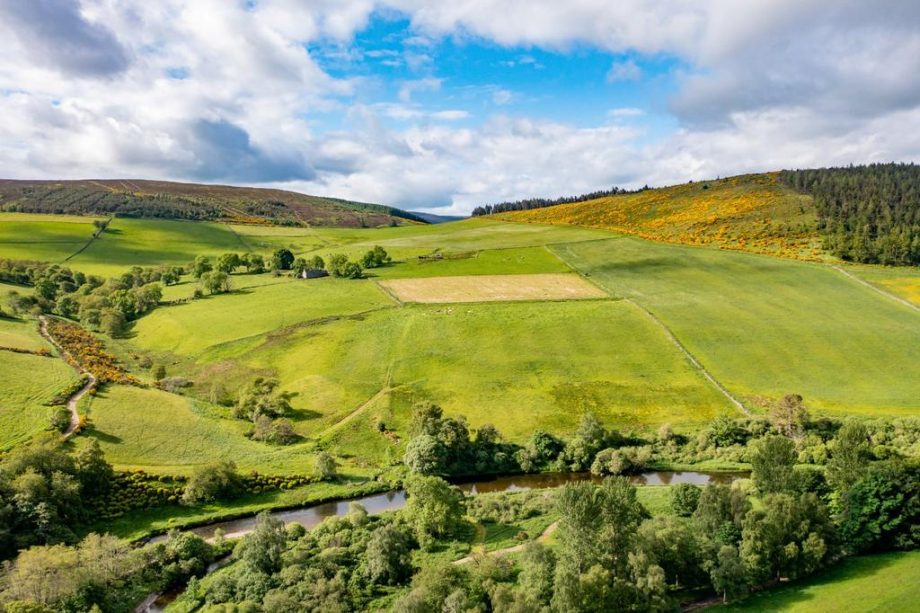
Ardhuncart Estate has been owned since 1952 by Col Harold Phillips, who bought the estate that straddles the River Don in the foothills of the Grampians as a summer retreat for his wife, Georgina (later Lady Kennard), and their five children.
For the Phillips family, Ardhuncart was a much-loved holiday home, where they fished for salmon and sea trout, shot grouse on the Ardhuncart moor, played tennis and hosted parties at Ardhuncart Lodge, a manageable, 5,400sq ft, nine-bedroom country house built in the Arts-and-Crafts style in 1901.
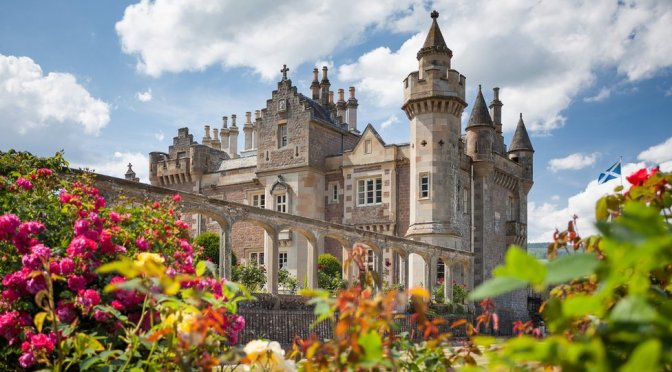
Damian Barr explores Sir Walter Scott’s impressive home, Abbotsford, which is full of a fascinating mix of items owned by the famed Scottish novelist, poet, playwright, and historian.
Abbotsford House was built by Sir Walter Scott as his grand home in the Scottish Borders. The property, set on the banks of the River Tweed, was bought in 1811 and then modified to the tastes of Sir Walter Scott. The writer died here in 1832, and the house was opened to the public just five months after his death.
The rooms that you visit today have been left virtually untouched since his death and a visit to Abbotsford House gives you an intimate insight into the personality and interests of this great man. Some of the most interesting aspects of the house are the personal collections of Sir Walter Scott which include unusual items such as the weapons of Rob Roy, the case book of Napoleon, and even a bullet and piece of oatcake taken from the site of Culloden Battlefield.
Visitors can see Sir Walter Scott’s Study, Library, Drawing Room, Entrance Hall, small Armoury, and the Dining Room where he died on 21st September 1832. The dining room contains paintings of several generations of the Scott family. Unfortunately, the last of his bloodline died in 2004 and the care of the house has now been taken over by the Abbotsford Trust.
News, Views and Reviews For The Intellectually Curious







 Boomers Daily