

Tag Archives: History Magazines

Previews: History Today Magazine-September 2023

September 2023

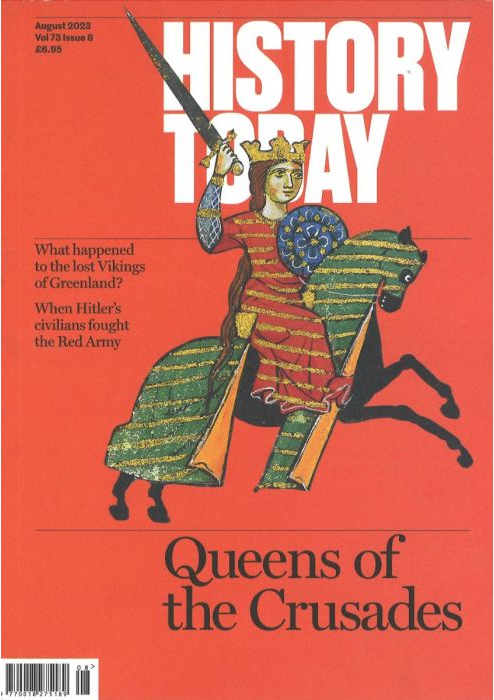
HISTORY TODAY MAGAZINE (SEPTEMBER 2023) – This issue features Lee Kuan Yew’s Singapore story, conquistador Hernán Cortés’ on trial, the fascist plot to kill the king, the fascinating fusion of Old English names, and sharpshooter Marjorie Foster’s battle with the War Office. Plus: reviews, opinion, crossword and much more!

‘Homer and His Iliad’ by Robin Lane Fox review
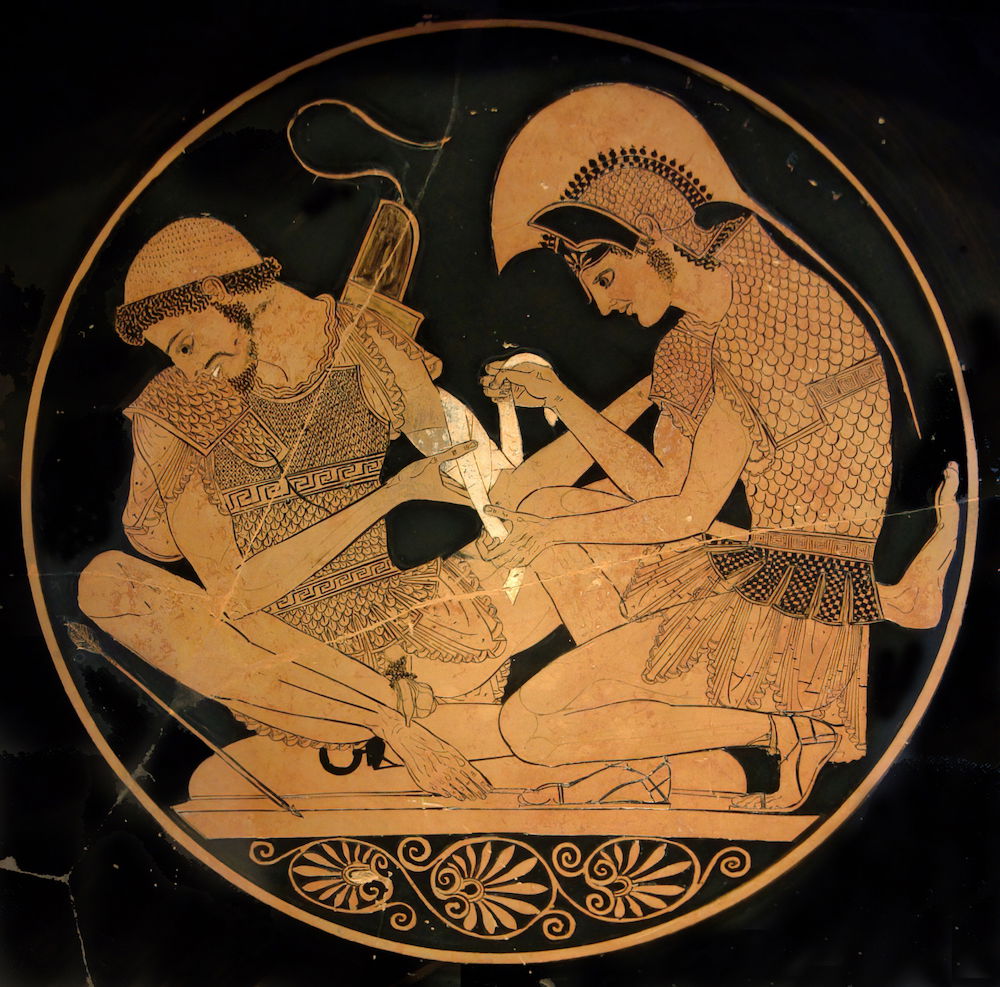
Achilles tending Patroclus wounded by an arrow, identified by inscriptions on the upper part of the vase.

Homer and His Iliad by Robin Lane Fox is a masterly survey of the Iliad, its majesty, its pathos and its unparalleled progression from wrath to pity.

By David Stuttard 

Faced with a jumble of bewildering ruins, modern visitors to Hisarlik in northwest Turkey, the site of ancient Troy, may find themselves perplexed and sometimes disappointed. The wide bay where the Greeks so famously beached 1,000 ships is gone, buried in silt from a local river, while beyond the fine sloping walls, a palimpsest of settlements spanning 4,000 years lies scarred and disfigured by the deep trench gouged by Heinrich Schliemann, its first archaeologist, during two decades of digging in the 19th century. Schliemann had been drawn to Hisarlik, and also to mainland Greece, by his passion for the Homeric poems, the Iliad and Odyssey, and his conviction that they described or reflected real societies and events, not least the decade-long Trojan War. 

Nationalism in Nepal: On the Right Side of History

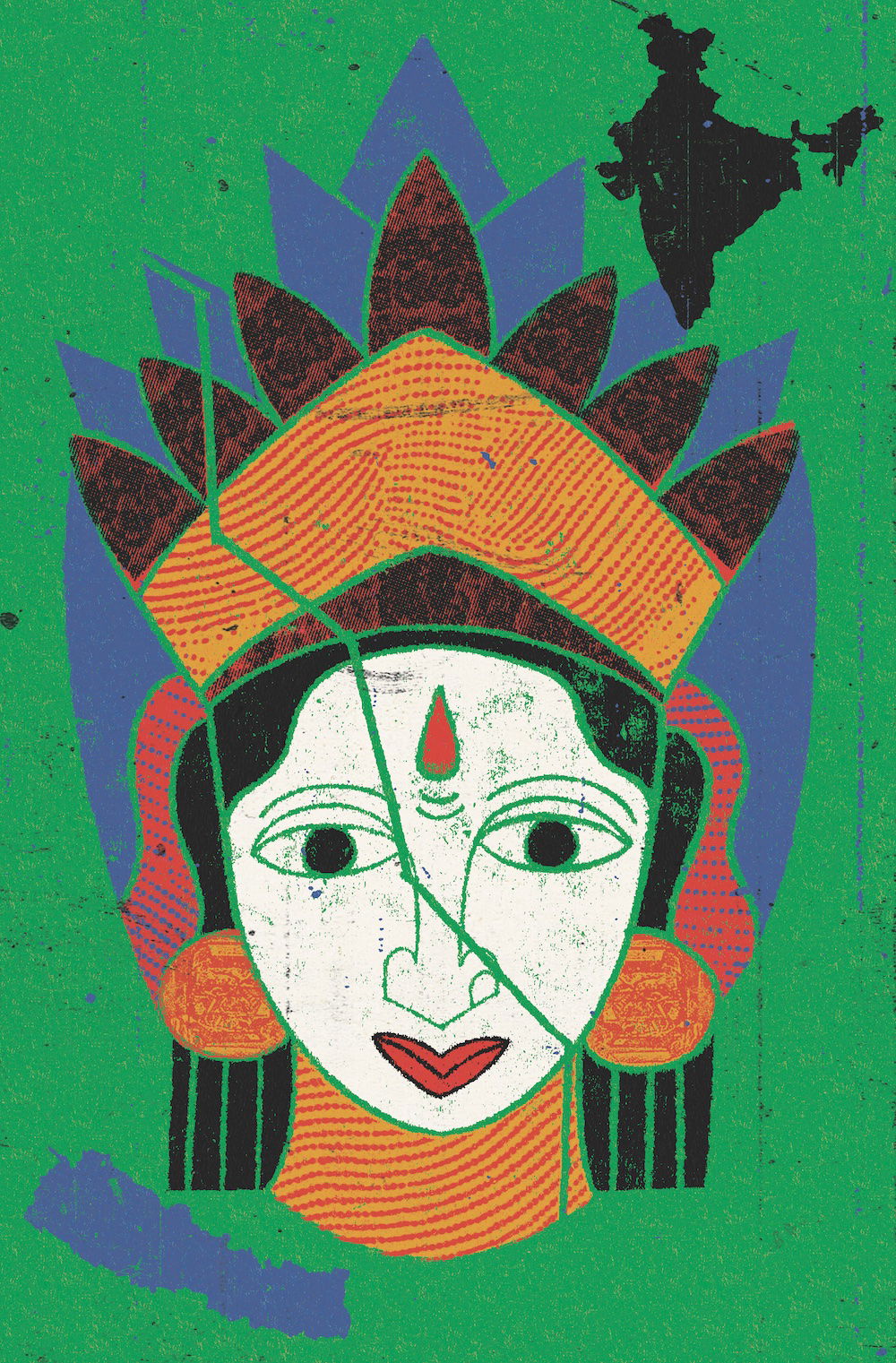
Adipurush, a controversial Bollywood film, has sparked anger in Nepal. For small states with big neighbours, details matter.
By Amish Raj Mulmi

An illustration showing the Hindu mythological figure Sita.

Balen Shah, the 33-year-old rapper and mayor of Kathmandu, is a man on various missions. Since his unlikely victory in 2022, he has waged war on government ministries, landlords, Nepal’s civil aviation authority, roadside hawkers and landless slum dwellers. Now he is taking on Bollywood because of a supposed historical slight.

Lee Kuan Yew’s Singapore Story

Lee Kuan Yew speaks in Fullerton Square, Singapore, 18 December 1984.

One man more than any other is associated with Singapore’s remarkable success. On his centenary: who was Lee Kuan Yew and how did he do it?

Arts/History: Smithsonian Magazine – Sep/Oct 2023

Image

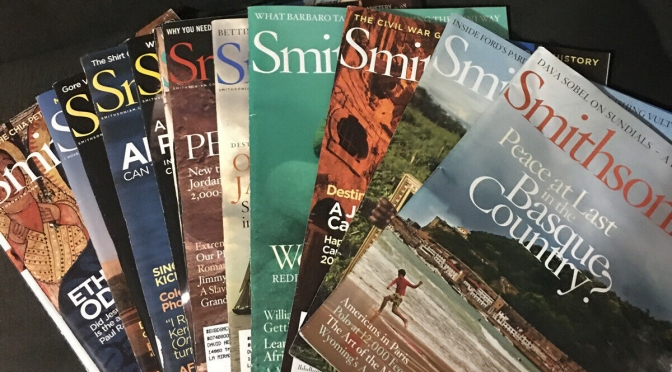
Smithsonian Magazine (September/October Issue) – Journey to Spain’s last Moorish Kingdom – From the magical Alhambra to desert backcountry and hidden coastal glories…welcome to Andalusia; Saving the world’s most coveted Chocolate; Mead – it’s not just for Vikings, and more…

Famed 5,300-Year-Old Alps Iceman Was a Balding Middle-Aged Man With Dark Skin and Eyes

Otzi the Iceman

Genetic analysis shows that Ötzi was descended from farmers who migrated from an area that is now part of Turkey

By Brian Handwerk


Ötzi, the 5,300-year-old mummy found murdered high in the Alps with an arrow in his back, is a prehistoric celebrity who attracts 300,000 visitors a year to his custom cooling chamber in the South Tyrol Museum of Archaeology in Bolzano, Italy. Years of studies have revealed much about the Iceman, from his last meal—dried ibex and deer meat with einkorn wheat—to the distant Tuscan origins of his copper ax. But while the wizened mummy is extraordinarily well preserved for its age, it gives little impression of how Ötzi would have appeared in life. Now, a detailed genetic study has revealed much more about what the Iceman looked like—and traces the Copper Age corpse’s ancestral lineage back to Anatolia, an area that is now the Asian portion of Turkey.

Scientists have newly sequenced Ötzi’s genome a decade after an earlier effort, using modern techniques and comparative data to produce a much higher-quality result than ever before. The study published Wednesday in Cell Genomics reveals that Ötzi had dark eyes and skin pigmentation darker than that commonly seen among modern inhabitants of Greece or Sicily, though he’s previously been depicted with lighter skin more akin to that of Europeans living in the Alps today. And contrary to most artists’ interpretations, it also appears that he suffered from an age-old affliction still troublesome today—he was going bald.

Arts/Culture: Humanities Magazine – Summer 2023

Image

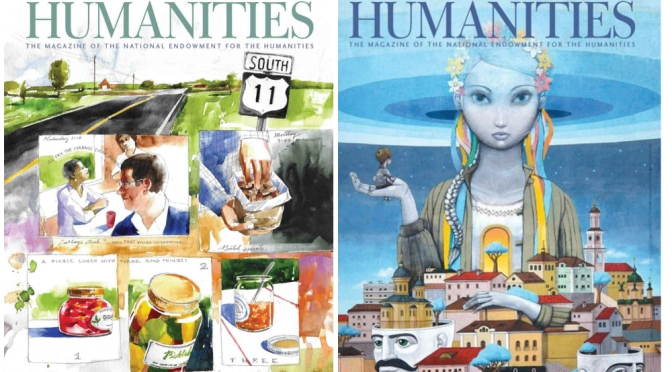
Humanities Magazine – Summer 2023 Issue

Red Map, Blue Map

Red and blue political map of the U.S.

In the 1970s and ’80s, geographer Ken Martis mapped every congressional district and color-coded them by political party, going all the way back to the first Congress. 

Where Johnny Cash Came From

The Man in Black grew up in Dyess, Arkansas, in a community of poor farmers working government land.

Hell’s Searing Gaze

A traveling exhibition explores the underworld

In the captivating survey “Comparative Hell: Arts of Asian Underworlds,” the damned are boiled alive. Writhing in pain, they are skewered, mauled by dogs, and devoured by ink-black birds. But the show is dotted throughout by charming reprieves: a lush jade-green garden, creamy-white blossoms, and whirling clouds. This is a hell that delights as much as it punishes. 

Previews: History Today Magazine – July 2023

Image

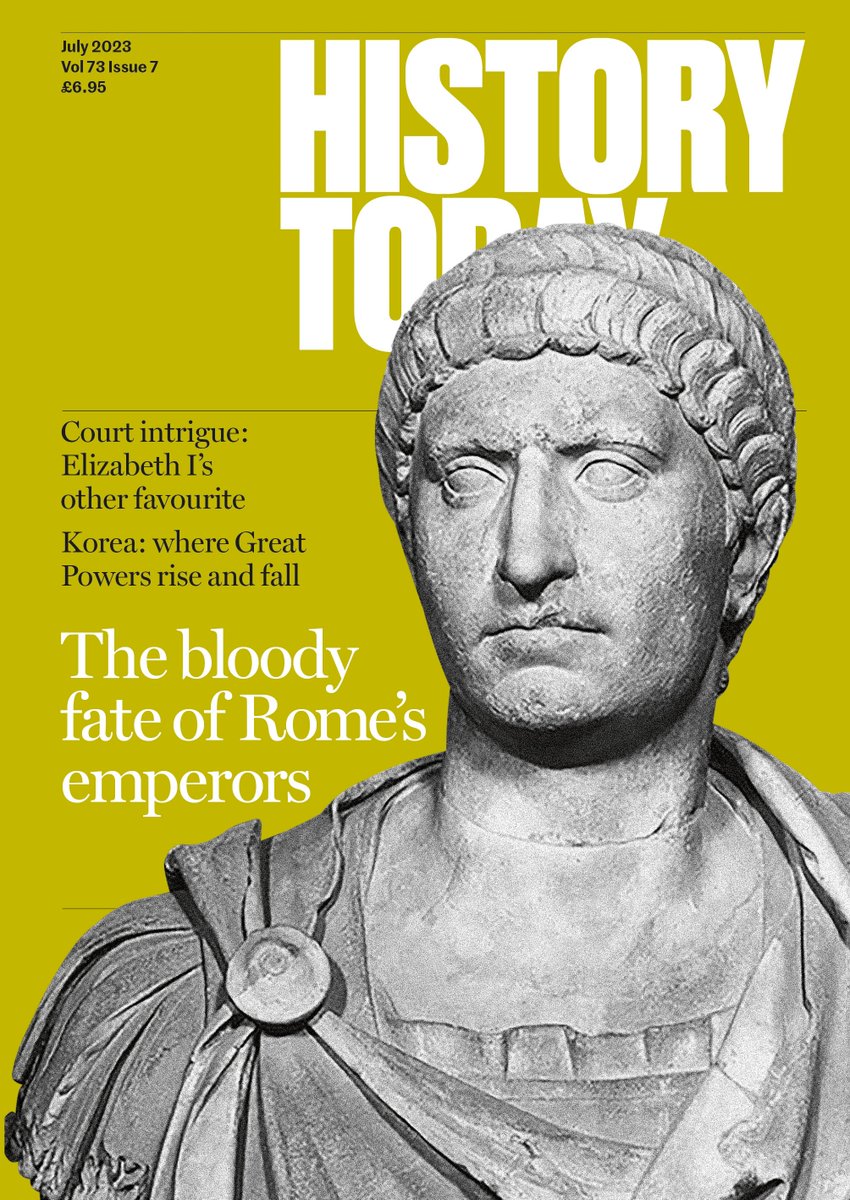
HISTORY TODAY MAGAZINE (JULY 2023) – Civil war in Ancient Rome, England’s most useless charities, agents of anarchy in the fin de siècle, the battle for the Korean peninsula, a Catholic sympathiser at Elizabeth I’s court, Bardolatry, Hong Kong’s floating population.

The Year of the Four, Five, Six Emperors

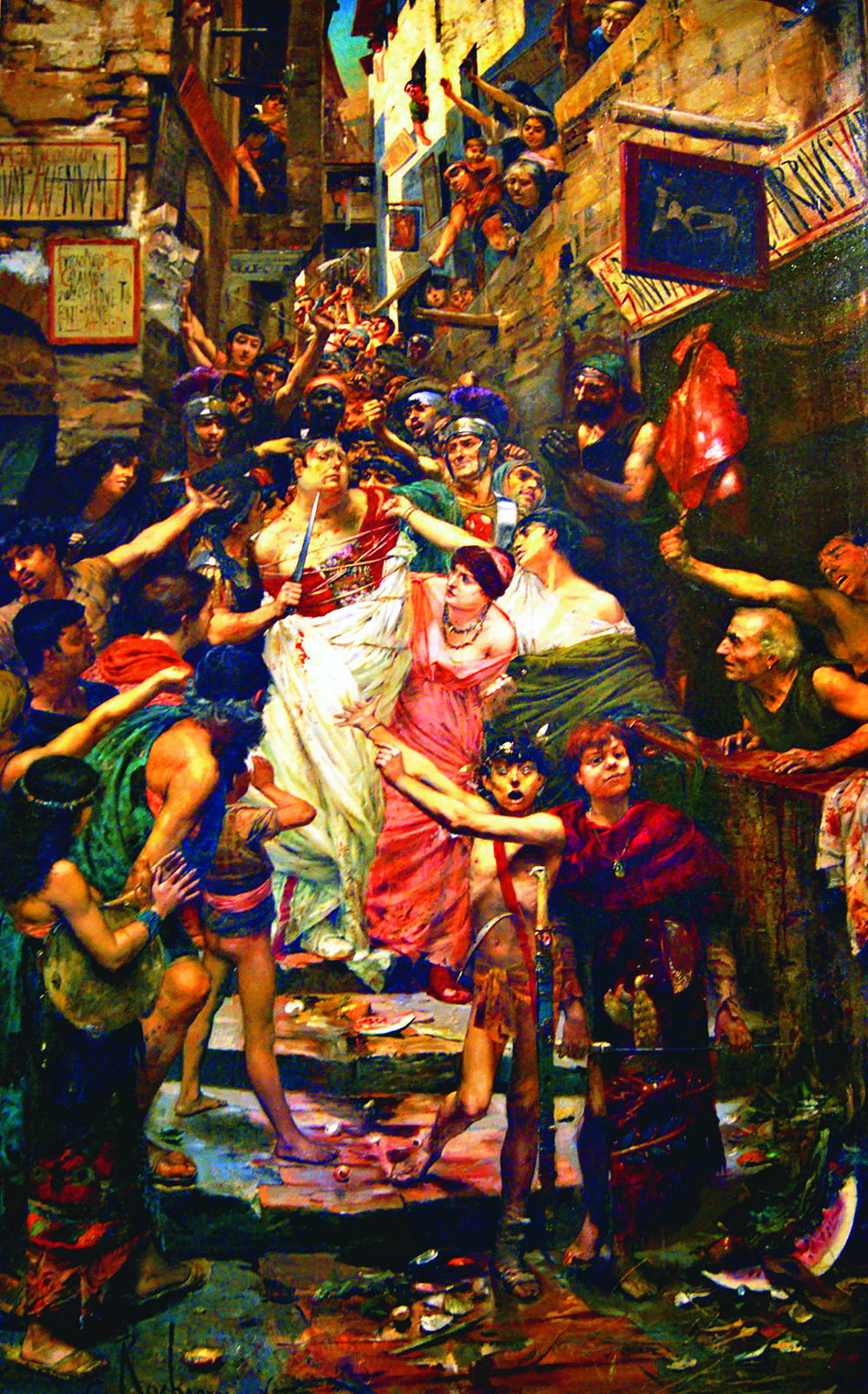
Vitellius led through the streets of Rome by the people, by Georges Rochegrosse, 1883
Vitellius led through the streets of Rome by the people, by Georges Rochegrosse, 1883.

For citizens of Ancient Rome, the recurrence of brutal civil war was par for the course. For writers, it was an opportunity. 

During the Roman Empire, outbreaks of civil war (and the assassinations which often preceded them) were generally intended to change the emperor, not the imperial system. Even though there was a brief moment after the emperor Caligula’s assassination in AD 41 when a change in the political system might have been triggered, the rudderless and leaderless soldiers quickly reverted to the reassuring default mode of imperial rule after conveniently finding Claudius hiding behind a curtain and making him emperor. 

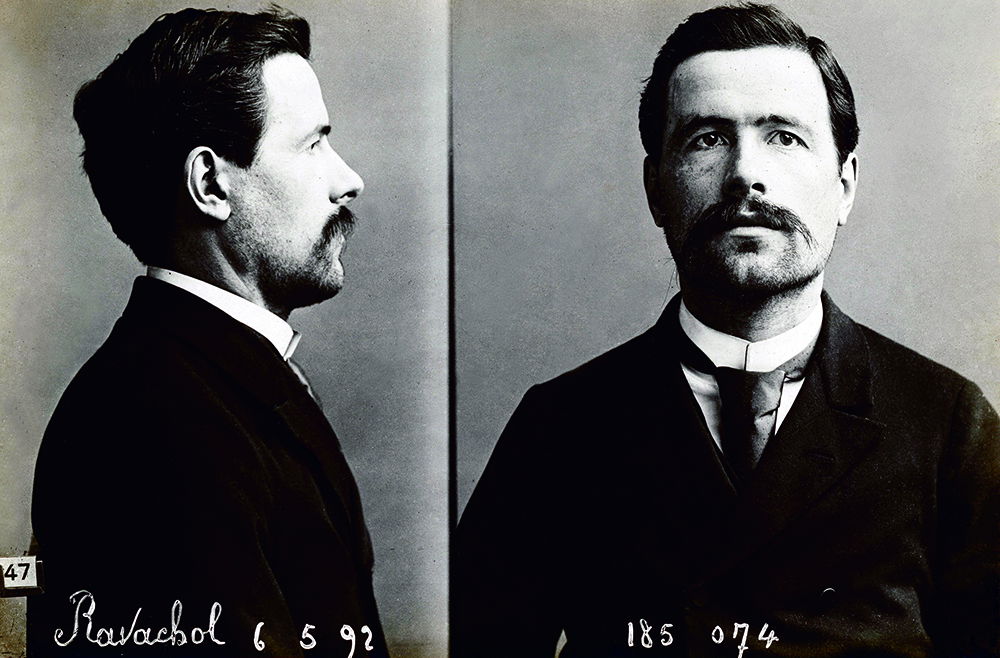
How to Make a Devil

Image from Ravachol’s anthropometric file, 1892

The legend of Ravachol, the terrorist ‘mastermind’ of the fin de siècle. 

Arts/History: Smithsonian Magazine – July/Aug 2023

Smithsonian Magazine - July/August 2023 - SoftArchive

Smithsonian Magazine – July/August Issue: American Tapestries- Three artists creating bold new versions of a cherished art form; In search of Willa Cather; Archaeology of the world’s oldest village, and more…

A Massive Archive Tells the Story of Early African American Photographers

Arresting portraits, now a part of the Smithsonian collections, illuminate the little-known role these artists played in chronicling 19th-century life

“Before daguerreotypes, if you wanted a portrait made, you commissioned a painter,” says John Jacob, SAAM’s director of photography, as we study Rhoda’s portrait. “Photography democratized portraiture because it was significantly cheaper. But until we acquired these images, we weren’t able to show in our collection that African Americans were part of this process, as photographers and subjects, and also as entrepreneurs and innovators, experimenting with the latest technology and investing in it.”

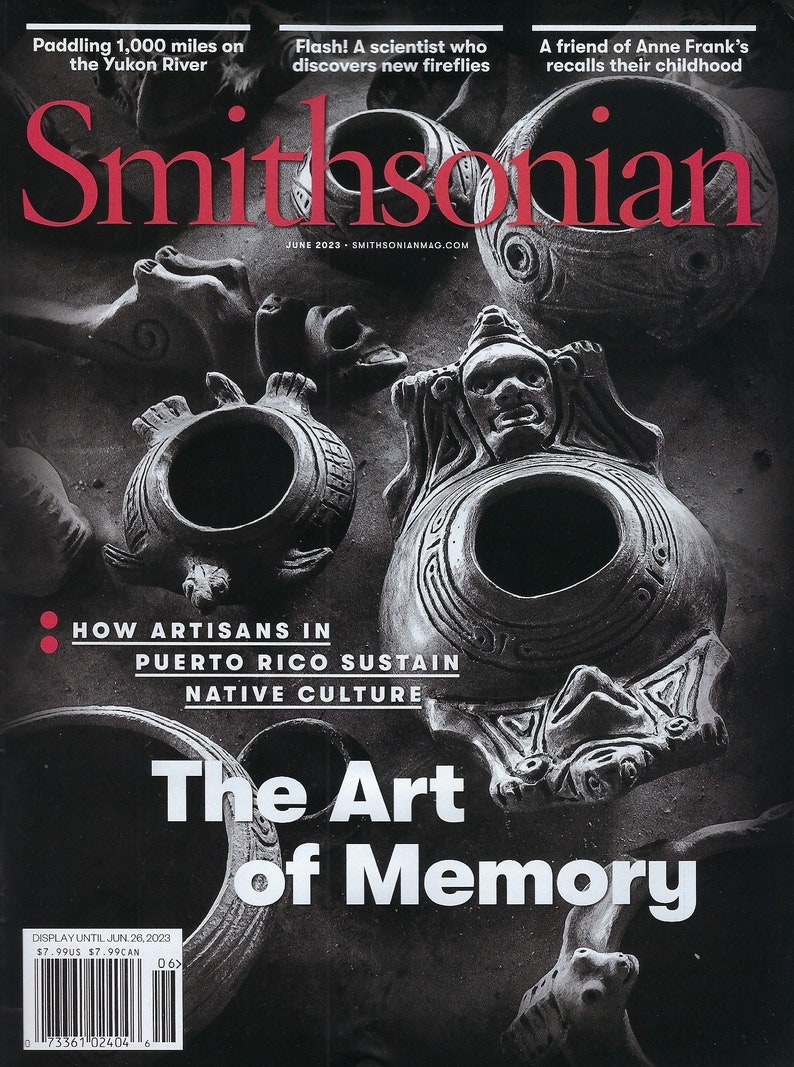
Arts/History: Smithsonian Magazine – June 2023

Smithsonian Magazine    The Art of Memory   June 2023 image 1

Smithsonian Magazine – June Issue

Artist Joseph Stella Painted Nature in Vibrant Color

Opener - Flowers

Cities weren’t the only subject that fascinated this acclaimed Futurist

By Amy Crawford

He famously captured industrial America—the Brooklyn Bridge, Pittsburgh’s steel mills—with his monumental canvases. But the painter Joseph Stella (1877-1946) looked to nature for respite, escaping his Manhattan studio to visit the New York Botanical Garden and to paint in southern Italy, where he grew up. “My devout wish,” the artist wrote, “[is] that my every working day might begin and end—as a good omen—with the light, gay painting of a flower.”

Anne Frank’s Childhood Friend Recalls Their Years Before the Holocaust

After fleeing her native Germany, a young Jew found companionship and community as the Nazis approached

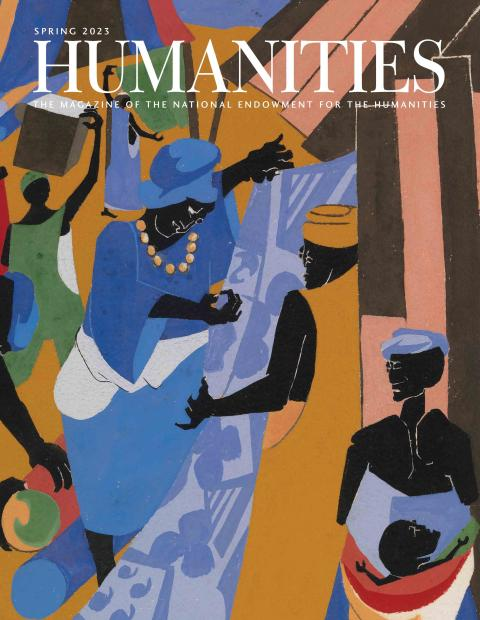
Arts/Culture: Humanities Magazine – Spring 2023

Image

Humanities Magazine – Spring 2023 Issue

Audubon in This Day and Age

The artist and his birds continue to challenge us

John James Audubon, dead for 172 years, has been in the news again. Disturbing facts known to his biographers—that, for example, when he kept a store in Henderson, Kentucky, he enslaved people—have gained new currency, although the National Audubon Society has, for now, held on to its name. For many, Audubon has become synonymous with an activity—call it science, ornithology, natural history, birding, love of the outdoors—that has, for the longest time, excluded people of color.  

A Lot of What Is Known about Pirates Is Not True, and a Lot of What Is True Is Not Known.

In 1701, in Middletown, New Jersey, Moses Butterworth languished in a jail, accused of piracy. Like many young men based in England or her colonies, he had joined a crew that sailed the Indian Ocean intent on plundering ships of the Muslim Mughal Empire. Throughout the 1690s, these pirates marauded vessels laden with gold, jewels, silk, and calico on pilgrimage toward Mecca. After achieving great success, many of these men sailed back into the Atlantic via Madagascar to the North American seaboard, where they quietly disembarked in Charleston, Philadelphia, New Jersey, New York City, Newport, and Boston, and made themselves at home.

Preview: History Today Magazine – April 2023

Image

HISTORY TODAY MAGAZINE – APRIL 2023 ISSUE

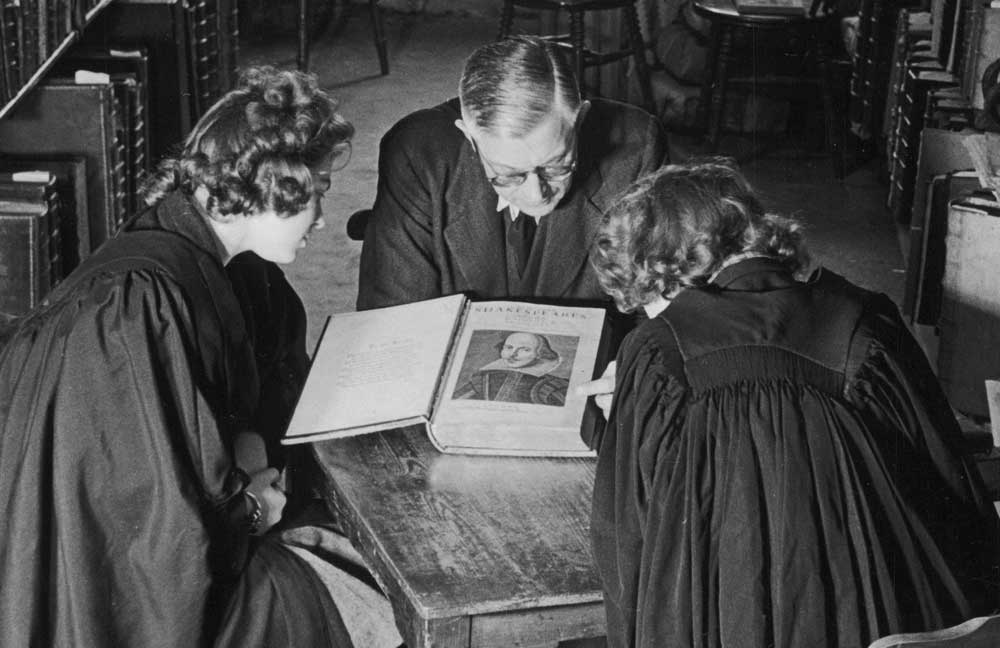
The First Folio

Shakespeare’s First Folio in the library of Durham University, 1950s.

The stage has a short memory, print a long one: 400 years since its first publication, Shakespeare’s First Folio is the reason we remember him.

American Moppets

 Teleradiola "Belarus-5" in an ordinary Soviet house.
 ‘The ‘Belarus-5’ in an ordinary Soviet house,’ photographed in the 1960s. 

Americanised globalisation and the new world of Russian business in the 1990s.

In the 1990s, a version of the satirical puppet show Spitting Image arrived on Russian television. A Muscovite once told the story of his father, who took great care to record every episode on VHS.

Previews: BBC History Magazine – April 2023

HIS_293_April Cover rgb

BBC HISTORY MAGAZINE – APRIL 2023:

The kingdom is dead: what causes monarchies to fail?

King Alfonso XIII of Spain, Charles I of England, Puyi of China and Lydia Liliuokalani of Hawaii

From the Romans to the Russians, monarchies that at one time seemed all powerful have come crashing down as a result of violence, political manoeuvring or the will of the people. Danny Bird charts the downfall of 10 kingdoms and empires throughout history

How much do you know about the Crimean War?

Soldiers in the Crimean War

How much do you know about the Crimean War? Test your knowledge with this quiz on the Victorian conflict…