
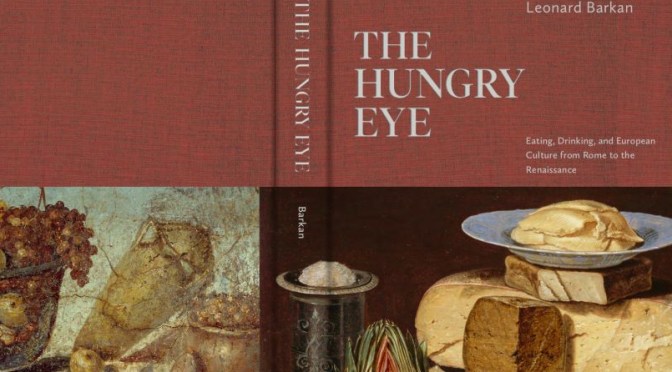
Eating and drinking can be aesthetic experiences as well as sensory ones. The Hungry Eye takes readers from antiquity to the Renaissance to explore the central role of food and drink in literature, art, philosophy, religion, and statecraft.
In this beautifully illustrated book, Leonard Barkan provides an illuminating meditation on how culture finds expression in what we eat and drink. Plato’s Symposium is a timeless philosophical text, one that also describes a drinking party. Salome performed her dance at a banquet where the head of John the Baptist was presented on a platter. Barkan looks at ancient mosaics, Dutch still life, and Venetian Last Suppers. He describes how ancient Rome was a paradise of culinary obsessives, and explains what it meant for the Israelites to dine on manna. He discusses the surprising relationship between Renaissance perspective and dinner parties, and sheds new light on the moment when the risen Christ appears to his disciples hungry for a piece of broiled fish. Readers will browse the pages of the Deipnosophistae—an ancient Greek work in sixteen volumes about a single meal, complete with menus—and gain epicurean insights into such figures as Rabelais and Shakespeare, Leonardo and Vermeer.



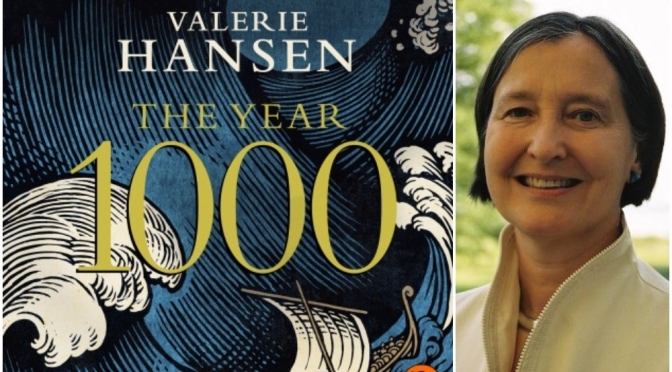
 Valerie Hansen explores these early economic and cultural exchanges and their long-term impact in her new book “The Year 1000: When Explorers Connected the World―and Globalization Began”, which originated as a college course co-taught with Mary Miller, director of the Getty Research Institute. In this episode, Hansen and Miller discuss the state of the world around the year 1000.
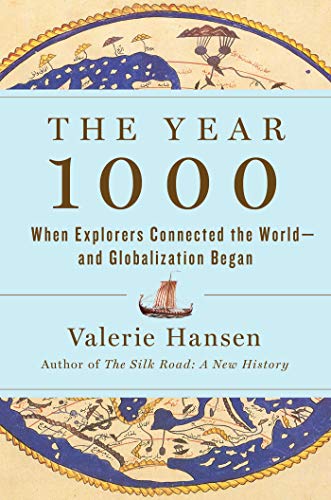 From celebrated Yale professor Valerie Hansen, a groundbreaking work of history showing that bold explorations and daring trade missions connected all of the world’s great societies for the first time at the end of the first millennium.
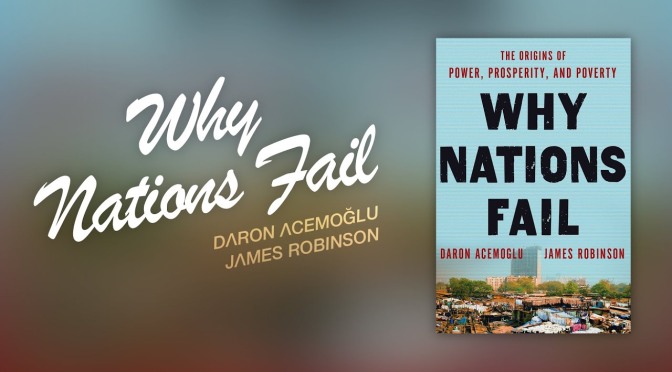
 It’s a simple question to ask, but seems impossible to answer: What causes one nation to succeed and another to fail? What exactly are the origins of global inequality?
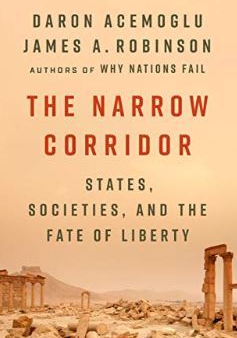 There are few people who have spent more time trying to answer this question than Prof. James Robinson. Robinson’ first book, Why Nations Fail, was an international best-seller. It laid out in clear and stark terms what the origins of prosperity and poverty really are. Now, he’s written a sequel, The Narrow Corridor, which further explains what ingredients you need to create a prosperous nation.
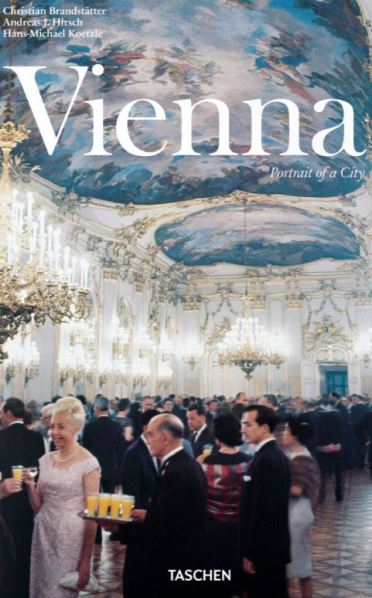 This volume is a treasure trove of photography from the last 175 years, following the evolution of Vienna from imperial capital to modern metropolis. Like a visual walk through time and cityscape, hundreds of carefully curated pictures trace the developments in Vienna’s built environment and the cultural and historical trends they reflect, whether the urban Gesamtkunstwerk of the 19th-century Ringstrasse or the experiments of “Red Vienna” in the 1920s, when the city had a social democrat government for the first time.
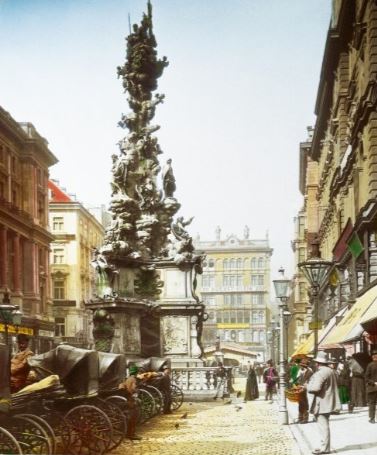 Vienna combines drama and elegance like no other. For centuries the heart of the Austro-Hungarian Empire, the stately city on the Danube, has been defined by vast palaces and imperial grandeur—but behind the Baroque opulence, Vienna is also a place of genteel coffee house culture, epicurean tradition, and a heritage of both delicate and daring music, art, and design, from Johann Strauss to
 Sciolino’s keen eye and vivid prose bring the river to life as she discovers its origins on a remote plateau of Burgundy, where a pagan goddess healed pilgrims at an ancient temple. She follows the Seine to Le Havre, where it meets the sea. Braiding memoir, travelogue, and history through the Seine’s winding route, Sciolino offers a love letter to Paris and the river at its heart and invites readers to explore its magic.
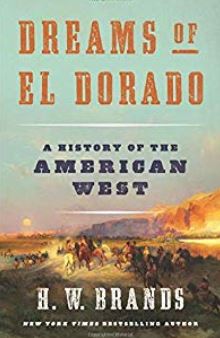 The so-called winning of the West is one of the fundamental dramas in American history, and Mr. Brands makes the most of his subject by quoting extensively from the participants’ own accounts. In his chapters on Lewis and Clark, he cites the explorers’ descriptions of the daunting cataracts on the Missouri and Columbia rivers and their reaction on reaching their goal.
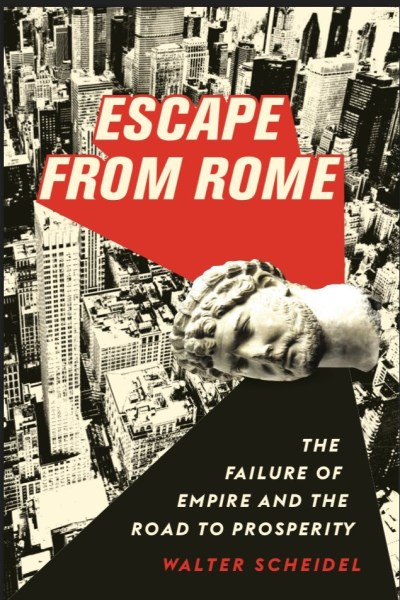 The fall of the Roman Empire has long been considered one of the greatest disasters in history. But in this groundbreaking book, Walter Scheidel argues that Rome’s dramatic collapse was actually the best thing that ever happened, clearing the path for Europe’s economic rise and the creation of the modern age. Ranging across the entire premodern world, Escape from Rome offers new answers to some of the biggest questions in history: Why did the Roman Empire appear? Why did nothing like it ever return to Europe? And, above all, why did Europeans come to dominate the world?
 Boomers Daily