Tag Archives: Historical Fiction

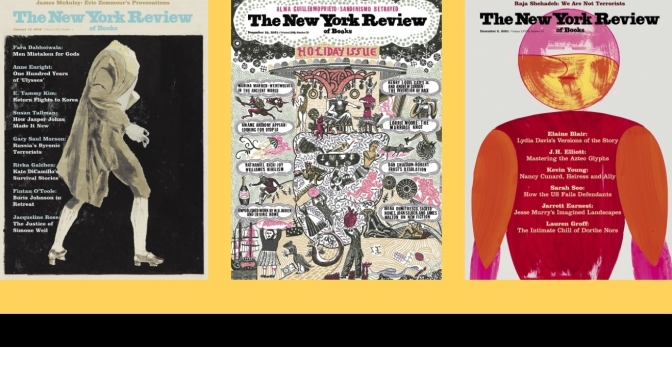
The New York Review Of Books – February 27, 2025

THE NEW YORK REVIEW OF BOOKS (February 7, 2025): The latest issue features The Prophet Business…

The Prophet Business

A Century of Tomorrows: How Imagining the Future Shapes the Present by Glenn Adamson

There have always been oracles, prophets, soothsayers, utopians, seers, or futurologists to make predictions about what will pass, and no matter how often they are wrong or discredited, humanity’s need remains.

A Daring Departure

Paris in Ruins: Love, War, and the Birth of Impressionism by Sebastian Smee

Paris 1874: The Impressionist Moment – an exhibition at the Musée d’Orsay, Paris, March 26–July 14, 2024, and the National Gallery of Art, Washington, D.C., September 8, 2024–January 19, 2025

One hundred and fifty years after Impressionist paintings were first exhibited, it takes a certain effort to recover their original radicalism.

Rebooting the Pentagon

Unit X: How the Pentagon and Silicon Valley Are Transforming the Future of War by Raj M. Shah and Christopher Kirchhoff

Bringing Silicon Valley’s drive for innovation to defense contracting has been a slow process, but the war in Ukraine has led tech firms to plunge into the war business.

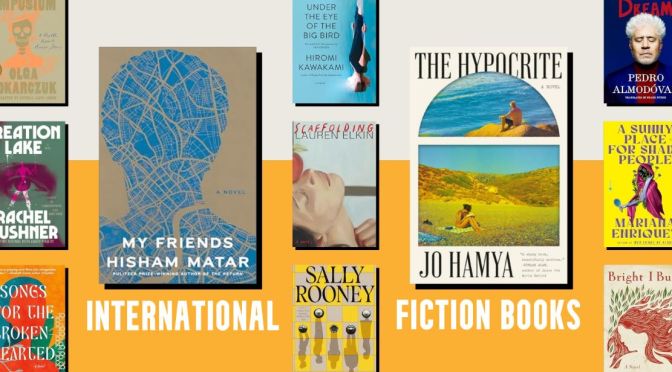
Book Reviews: Best Of International Fiction

Foreign Policy (September 20, 2024): The Mediterranean was the backdrop for much of FP’s summer reading. For the first installment of our new column about international fiction, we travel to two very different settings along this vast sea: Muammar al-Qaddafi’s Libya and modern Sicily. Plus, we highlight the buzziest releases in international fiction this month.


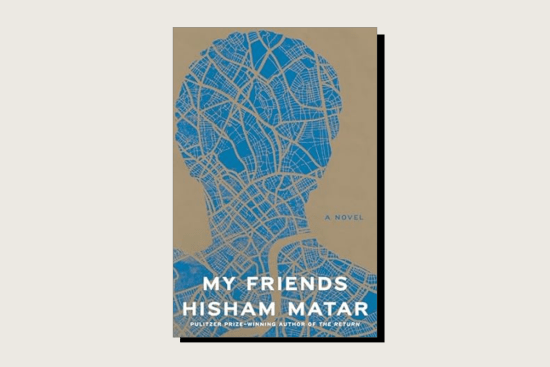
My Friends: A Novel

Hisham Matar (Random House, 416 pp., $28.99, January 2024)

Hisham Matar’s latest novel, recently longlisted for the 2024 Booker Prize, is about friendship and exile. Matar, a Libyan American writer based in London, was raised in a family of anti-Qaddafi dissidents and has made the tyrant’s maniacal rule the subject of most of his work.

In My Friends, Matar follows protagonist and narrator Khaled from his school days in Benghazi to the period following Qaddafi’s overthrow in 2011. After attending a 1984 anti-Qaddafi demonstration in London and landing on the dictator’s hit list, Khaled is forced to upend his quiet life as a university student in Edinburgh and start over in the British capital. (The real-life protest, where officials at the Libyan Embassy shot several protesters and killed a police officer, led Libya and Britain to sever ties.)

Khaled develops strong friendships with two fellow Libyans in London, Hosam and Mustafa. Unlike Khaled, both are unwavering in their political convictions. Although Khaled is opposed to Qaddafi’s regime, he is also aware of the costs—and futility—of speaking out. That Khaled’s criticism of Qaddafi’s Libya never leaves the private, rhetorical sphere is a point of contention between him and his friends. Ultimately, Hosam and Mustafa return to Libya in 2011 to join the militias fighting Qaddafi; Khaled remains in Britain, deeply insecure about his inaction.

Khaled’s decision to attend the 1984 protest was one he made hesitantly, so it is all the more shocking that his first brush with activism fundamentally altered the course of his life. Khaled’s father, an academic who resigned himself to a mid-level career under Qaddafi to avoid repression, had taught his son that it is “almost always best to leave things be.”

At its core, My Friends is a debate over whether, in the face of repression, such silence is a form of self-preservation or cowardice. This tension exists between the book’s main characters—the friends—as well as within Khaled’s own head. While Khaled’s exile led him to make great friends, his time in London is equally a painful experience of solitude. With Libyan phone lines tapped and mail pilfered by the regime, he has had to uphold a decades-long lie to his family about why he can no longer return home—all because he attended a single protest.

An author with an agenda might have sought to portray Hosam and Mustafa as valiant fighters whose sacrifices are rewarded, opposite Khaled, who prefers comfort to confrontation. But Libyan history does not follow a morally righteous narrative arc. At the end of the book, Libya becomes enveloped in a new crisis, and each friend seeks to find his place within it.—Allison Meakem


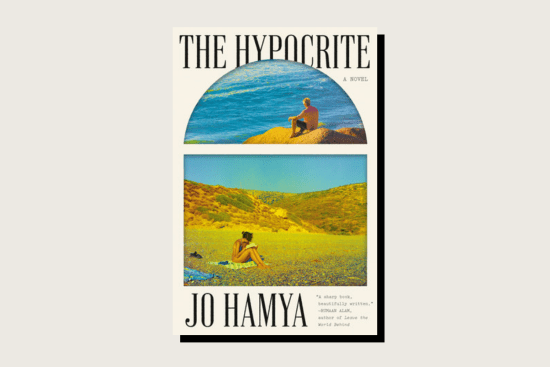
The Hypocrite: A Novel

Jo Hamya (Pantheon, 240 pp., $26, August 2024)

The Mediterranean is a time-honored stage for the psychosocial dramas of the elite. From British novelist John Fowles’s 1965 masterpiece, The Magus, to the entire Mamma Mia! franchise, fictional foreigners have long flocked to Greek and Italian isles to escape from—and, more often, confront—their heartbreaks and pathologies and familial squabbles. Often left out of these tales are the locals.

The Hypocrite by British author Jo Hamya at first seems like more of the same. It takes place over the course of one staging of a play about a summer that Sophia, the young playwright, once spent in Sicily’s Aeolian Islands with her father, a famous novelist whose work has aged poorly. It’s a smooth and often witty portrait of the upper-middle-class London art scene, written in the streamlined Rachel Cusk-esque register that defines much contemporary literary fiction.

Yet The Hypocrite also attempts to do something more. Although Sophia’s family dramas make up the bulk of the narrative, Hamya eventually shifts her focus to the family’s housekeeper in Sicily. She recalls that Sophia “was demanding in the worst way an English tourist could be.” Sophia didn’t try to learn even a little Italian. She and her father, the housekeeper thinks, were “lazy, messy people” who never bothered “to make her job easier with the simplest of acts.”

Hamya’s novel is part of the recent trend of examining who, historically, has been omitted in traditional narratives, especially ones set in locales that are under-resourced, exoticized, and deeply reliant on tourism. (Sicilians are European, yes, but they also live in one of Italy’s poorest regions.) In this regard, the novel is closer in spirit to HBO’s The White Lotus, the much-lauded send-up of the rich at a luxury resort chain (first in Hawaii, then in Sicily, and soon in Thailand), than many of its other predecessors.

Hamya does not dwell, however, on this upstairs-downstairs dynamic. Rather than skewering the careless interlopers, she aims for a bit more nuance, attending—if only fleetingly—to both the narrower interests of her protagonists and the invisible hands that helped set the stage for them that summer.—Chloe Hadavas

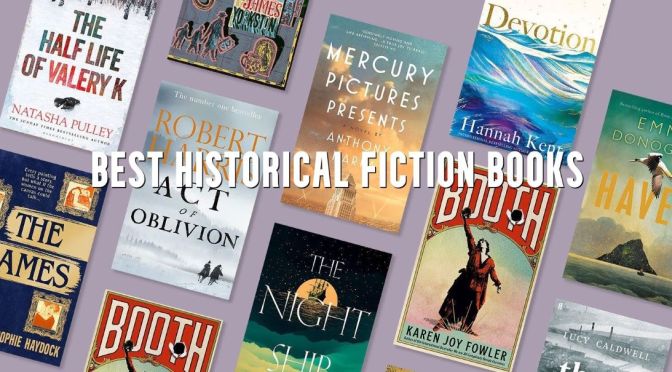
Reviews: Top Historical Fiction Books Of 2023

The New York Times Book Review (November 21, 2023): Each year, we pore over thousands of new books, seeking out the best novels, memoirs, biographies, poetry collections, stories and more. Here are the standouts, selected by the staff of The New York Times Book Review.

Top Historical Fiction Books of 2023

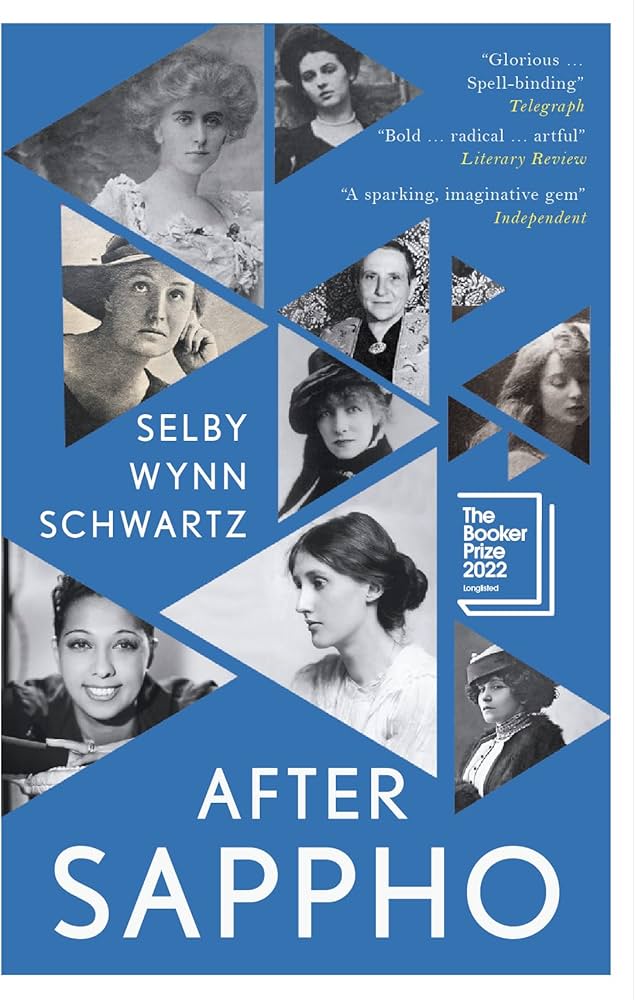
AFTER SAPPHO by Selby Wynn Schwartz

AFTER SAPPHO by Pan

Inspired by Sappho’s work, Schwartz’s debut novel offers an alternate history of creativity at the turn of the 20th century, one that centers queer women artists, writers and intellectuals who refused to accept society’s boundaries.

THE COVENANT OF WATER by Abraham Verghese

Verghese’s first novel since “Cutting for Stone” follows generations of a family across 77 years in southwestern India as they contend with political strife and other troubles — capped by a shocking discovery made by the matriarch’s granddaughter, a doctor.

FORBIDDEN NOTEBOOK by Alba de Céspedes

A best-selling novelist and prominent anti-Fascist in her native Italy, de Céspedes has lately fallen into unjust obscurity. Translated by Ann Goldstein, this elegant novel from the 1950s tells the story of a married mother, Valeria, whose life is transformed when she begins keeping a secret diary.

THE FRAUD by Zadie Smith

Based on a celebrated 19th-century trial in which the defendant was accused of impersonating a nobleman, Smith’s novel offers a vast panoply of London and the English countryside, and successfully locates the social controversies of an era in a handful of characters.

A HISTORY OF BURNING by Janika Oza

This remarkable debut novel tells the story of an extended Indo-Ugandan family that is displaced, settled and displaced again.

KAIROS by Jenny Erpenbeck

This tale of a torrid, yearslong relationship between a young woman and a much older married man — translated from the German by Michael Hofmann — is both profound and moving.

KANTIKA by Elizabeth Graver

Inspired by the life of Graver’s maternal grandmother, this exquisitely imagined family saga spans cultures and continents as it traces the migrations of a Sephardic Jewish girl from turn-of-the-20th-century Constantinople to Barcelona, Havana and, finally, Queens, N.Y.

LONE WOMEN by Victor LaValle

The year is 1915, and the narrator of LaValle’s horror-tinged western has arrived in Montana to cultivate an unforgiving homestead. She’s looking for a fresh start as a single Black woman in a sparsely populated state, but the locked trunk she has in stow holds a terrifying secret.

NORTH WOODS by Daniel Mason

Mason’s novel looks at the occupants of a single house in Massachusetts over several centuries, from colonial times to present day. An apple farmer, an abolitionist, a wealthy manufacturer: The book follows these lives and many others, with detours into natural history and crime reportage.

NOT EVEN THE DEAD by Juan Gómez Bárcena

An ex-conquistador in Spanish-ruled, 16th-century Mexico is asked to hunt down an Indigenous prophet in this novel by a leading writer in Spain, splendidly translated by Katie Whittemore. The epic search stretches across much of the continent and, as the author bends time and history, lasts centuries.

THIS OTHER EDEN by Paul Harding

In his latest novel, inspired by the true story of a devastating 1912 eviction in Maine that displaced an entire mixed-race fishing community, Harding turns that history into a lyrical tale about the fictional Apple Island on the cusp of destruction.

THE UNSETTLED by Ayana Mathis

This novel follows three generations across time and place: a young mother trying to create a home for herself and her son in 1980s Philadelphia, and her mother, who is trying to save their Alabama hometown from white supremacists seeking to displace her from her land.

Books: Best Historical Crime Fiction Of 2023


Literary Hub (August 9, 2023) – MOLLY ODINTZ reviews 20 essential new historical crime novels in an amazing year for historical fiction.
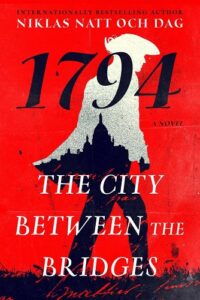
The City Between the Bridges: 1794

Niklas Natt och Dag
Setting: Stockholm, 1794

I adored Niklas Natt och Dag’s brilliantly cynical debut, The Wolf and the Watchman, and The City Between the Bridges is just full of filth and cynicism, the perfect combination for depicting the late 18th century and its terrible iniquities. The watchman of The Wolf and the Watchman returns to solve a new crime, this one the brutal murder of a tenant’s daughter on the eve of her wedding to a seemingly sensitive nobleman. Natt och Dag is particularly adept at savagely ripping the notion of a “civilized age” apart and showing the raw suffering underneath. As a side note, I’ve long believed that historical fiction is only to be trusted when the author is willing to describe bad smells to set the scene, and this book is full of truly disgusting odors.

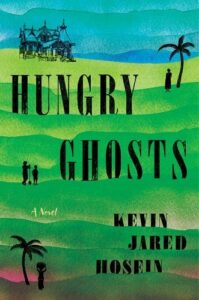
 Hungry Ghosts

Kevin Jared Hosein
Setting: Trinidad, 1940s

Set in the dying colonial era, Kevin Jared Hosein’s searing debut examines race, class, and decolonization through the lens of two families, one white and wealthy, the other Black and disenfranchised, as their lives become ever more entwined after the disappearance of the white family’s patriarch. Like the best historical fiction, Hungry Ghosts is immersed in the ideas and complexities of its’ shifting time period, for a triumph of well-researched storytelling.

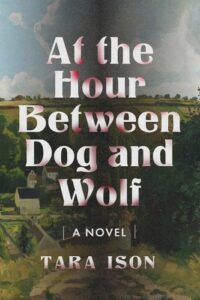
At the Hour Between Dog and Wolf

Tara Ison
Setting: WWII France

In one of those amazing life twists that feels as bizarre as it is inspiring, Tara Ison, the writer of the cult hit Don’t Tell Mom The Babysitter’s Dead has crafted one of the best tales of collaboration ever written. In Between the Hour of Dog and Wolf, Tara Ison takes us into the mind of an adolescent Jewish girl being hidden with a French family during WWII. She spends so much time pretending to align with the ideals of the occupiers that she finds herself beginning to agree with them, in what reads as a Jewish version of Lacombe, Lucien. Perhaps it’s not such a twist—both book and film are about the ways we assume new roles when necessary to survival, whether that’s taking a job as a fashion consultant to feed siblings and putting on a batshit fashion show (a la Babysitter) or pretending to be a fascist to to protect from others knowing that you are Jewish. Okay, maybe that last comparison is a bit of a stretch, but still, everyone should read this book and also everyone should should rewatch that movie.

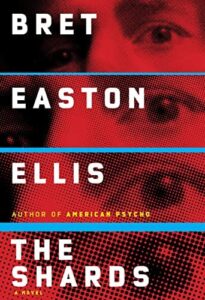
The Shards

Bret Easton Ellis
Setting: Los Angeles, 1981

Bret Easton Ellis is back, this time with a new serial killer novel that brings together all the best aspects of Less Than Zero and American Psycho. It’s 1981, Missing Persons is playing on the stereo, and future writer Bret is doing bumps with his prep-school friends by the poolside, dressed sharply in Ralph Lauren, as a killer makes his way closer and closer to their wealthy enclave. Ellis’ teenage emotional truths collide with violent fictional set-pieces for an epic tale of Southern Californian sins.

READ MORE

Reviews: Best Historical Fiction Books – June 2023

The best historical fiction books of 2023

Killingly: 9781641294379: Beutner, Katharine: Books - Amazon.com

Killingly by Katharine Beutner
In 1897 Bertha Mellish, a student at Mount Holyoke College in Massachusetts, disappeared. She was never found. Katharine Beutner uses this real-life mystery as the foundation for her second novel, Killingly (Corvus £14.99). Her focus is on those who were left behind, making what sense they can of Bertha’s exit from their lives. Agnes, her closest friend on campus, harbours knowledge she has vowed not to reveal; Florence, Bertha’s much older sister, is also keeping secrets from the past that have shaped her life; Henry Hammond, an arrogant medical man who believes he was destined to marry Bertha, uncovers truths for which he is unprepared. Beutner creates an impressive, multistranded story of pain, loss, and women’s struggle to escape the restrictions that are imposed on them.

Radical Love - Kindle edition by Blackmore, Neil. Literature & Fiction  Kindle eBooks @ Amazon.com.

Radical Love by Neil Blackmore
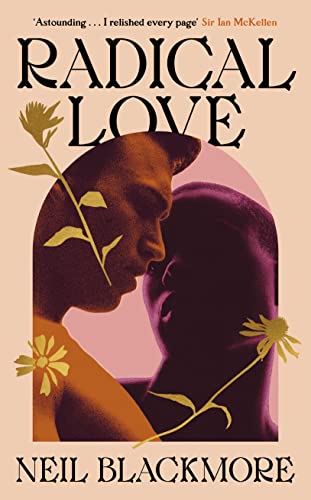
Neil Blackmore’s Radical Love (Hutchinson £16.99) also takes a historical event — the Vere Street Coterie of 1810, which resulted in the hanging and pillorying of gay men — as the basis for its story. The narrator, John Church, is a minister who believes that love of all kinds should be religion’s motivating force. He takes this message to a molly house in Vere Street, where he offers same-sex marriages to the drag queens and rent boys who gather there. At the same time, he is driven by his own passion for Ned, a young former slave. Both a celebration of the erotic lives of long-dead gay Londoners and a lament for past persecutions, Radical Love is a powerful story of desire flourishing amid danger.

The Fascination: Fox, Essie: 9781914585524: Amazon.com: Books

The Fascination by Essie Fox
The Fascination 
(Orenda £16.99) is the fifth novel by Essie Fox, in which she once again makes skilful use of the tropes of Victorian gothic fiction. Keziah Lovell, 15, is an unwilling accomplice in her father’s schemes to sell his quack elixir to gullible punters. She is assisted by her twin sister, Tilly, a petite beauty who stopped growing at the age of five. Then their father sells them to an enigmatic Italian man known only as “Captain”. Surrounded by the “freaks” of his tribe, they face unexpected threats in a story of society’s outsiders seeking acceptance and redemption.

Morgan Is My Name: 9781039006492: Keetch, Sophie: Books - Amazon.com

Morgan Is My Name by Sophie Keetch
There has been no shortage recently of feminist retellings of Greek myths. New versions of the Arthurian stories have been less common, but Sophie Keetch’s Morgan Is My Name (Magpie £16.99) is the first volume of a promised trilogy that has Morgan Le Fay as its narrator. Usually cast as the villain in the Arthurian tradition, here she is a fiery, intelligent woman who refuses to play the roles expected of her and determines to take control of her life. Turning the legends on their heads, Keetch finds new potential in them.

RA Summer Exhibition Polite And Figurative - Sue Hubbard

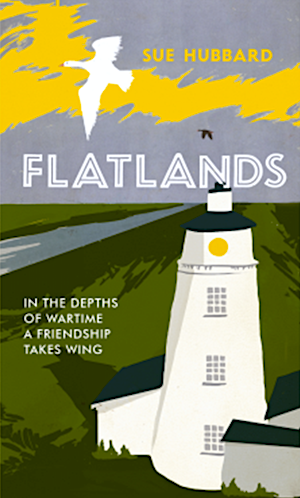
Flatlands by Sue Hubbard
Taking its inspiration from Paul Gallico’s novella The Snow Goose, Sue Hubbard’s Flatlands (Pushkin £16.99) explores the wartime relationship that develops between Freda, a 12-year-old evacuee from the East End of London, and Philip Rhayader, a troubled conscientious objector, who are both exiled to the East Anglian fenlands. Precise in its historical detail and admirable in its evocation of the large skies and isolation of its setting, this is a moving study of an unlikely friendship and the healing power of the natural world.

The New York Times Book Review – April 9, 2023

Image

The New York Times Book Review – April 9, 2023:

It’s Like ‘Little Women’ — but With Basketball

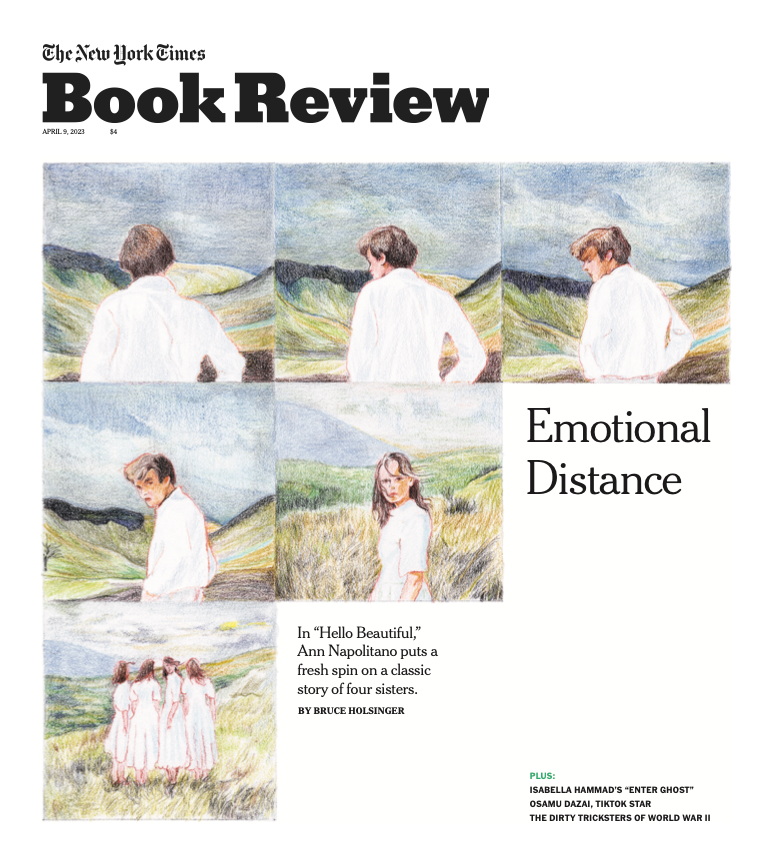
This is a series of six small drawings of men and women dressed in white, standing in a hilly rural landscape.
Credit…Kristina Tzekova

In “Hello Beautiful,” Ann Napolitano puts a fresh spin on the classic story of four sisters.

“It is your God-given right as an American fiction writer,” Ursula K. Le Guin once said, to change point of view. But “you need to know that you’re doing it,” she warned, and “some American fiction writers don’t.”

Osamu Dazai, With Help From TikTok, Keeps Finding New Fans

A black-and-white photograph of the author Osamu Dazai, who is resting his chin on his hand and looking to his left.
The Japanese novelist Osamu Dazai.

The enduring appeal of a midcentury Japanese novelist who wrote of alienation and suicide.

The first thing you hear is an eerie synth tone, followed by a portentous, insinuating voice. “Tell me, Dazai,” it says. “Why is it you wish to die?”

“Let’s turn that question around,” someone earnestly replies. “Is there really any value to this thing we call … living?” Then a beat drops, accompanied by distorted shouts.

Real People, Reincarnated in the Pages of New Novels

This is an illustration featuring six coin-like drawings in orange, teal, purple in pink, layered over a monochromatic street scene.
Credit…Michelle Mildenberg

These hefty books explore the lives of a former poet, a polarizing artist and a Scottish rebel from unexpected angles.

One of the great attractions of historical fiction is its ability to approach the past from unexpected angles, allowing us to consider famous figures in surprising ways. It’s a tactic that pays off brilliantly in Stephen May’s elegantly acerbic SELL US THE ROPE (Bloomsbury, 240 pp., paperback, $18), which features a thuggish former poet who calls himself Koba. The world will later know him as Stalin.

Books: The New York Times Book Review – Jan 15, 2023

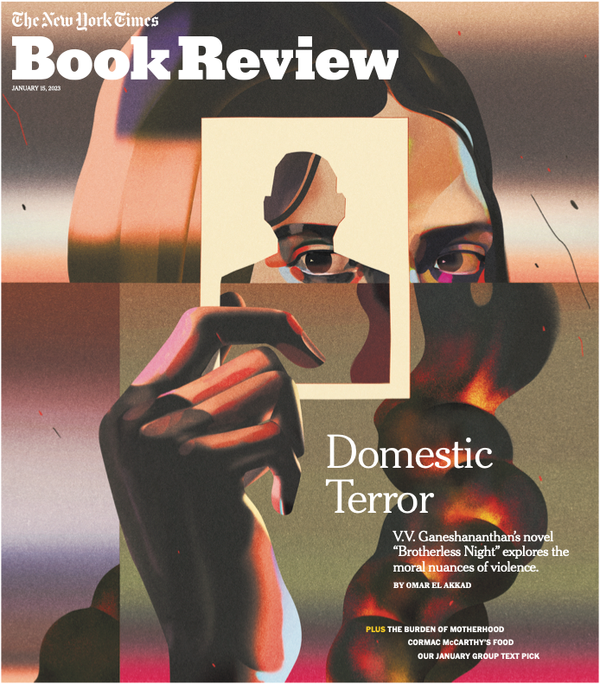
Illustration by Ibrahim Rayintakath

The New York Times Book Review (January 15, 2023):

‘Terrorist’ — to Whom?

V.V. Ganeshananthan’s novel “Brotherless Night” reveals the moral nuances of violence, ever belied by black-and-white terminology.

The Highland Heroine Who Helped Rescue a Prince

Since her daring mission in 1746, Flora Macdonald has lived on in myth. A new biography by Flora Fraser attempts to sort fact from fiction.

Where Adventurous, Curious Women Rule

In three new historical novels, female protagonists defy odds and push limits.

Books: The New York Times Book Review – Sept 25, 2022

the_new_york_times_bo58d8n.jpg

The New York Times Book Review – 25 September 2022

Historical Novels With a Few Tricks Up Their Sleeves

Special powers, avian obsession and visions of the future fuel these transporting and entertaining tales. By ALIDA BECKER

When Your Star Has Faded but There’s Time Left to Shine

Jonathan Coe’s novel “Mr. Wilder and Me” explores the late career of a legendary Hollywood director. By BENJAMIN MARKOVITS

Inteviews: 67-Year Old British Author Hilary Mantel – “Extraordinarily Probable Fiction” (NYT)

Excerpts from a New York Times interview (Feb 24, 2020):

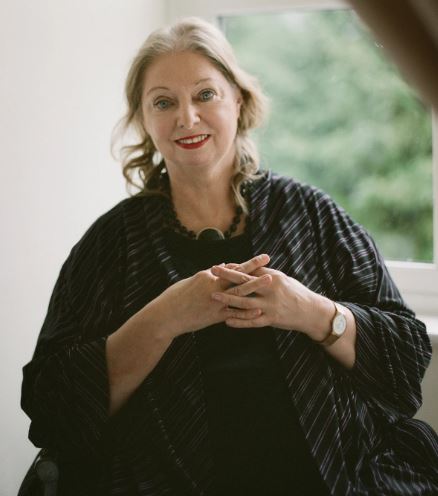
Hilary Mantel by Ellie Smith for the New York Times
“All that time I was listening to the past, and now I’m almost talking for a living,” Mantel said, “and it feels very frivolous and empty compared to the stillness that there used to be in every day.”Credit…Ellie Smith for The New York Times

“Hilary has reset the historical patterns through the way in which she’s reimagined the man,” said Diarmaid MacCulloch, an Oxford theology professor who published a new Cromwell biography in 2018. “It’s fiction which is extraordinarily probable, and it’s remarkably like the Cromwell I’d been excavating myself.”

Hilary Mantel has a recurring anxiety dream that takes place in a library. She finds a book with some scrap of historical information she’s been seeking, but when she tries to read it, the words disintegrate before her eyes.

“And then when you wake up,” she said, “you’ve got the rhythm of a sentence in your head, but you don’t know what the sentence was.”

To an unusual degree for a novelist, Mantel feels bound by facts. That approach has made her latest project — a nearly 1,800-page trilogy about the 16th-century lawyer and fixer Thomas Cromwell — more complicated than anything she’s undertaken in her four decades of writing.

Read full interview article

New Historical Fiction: “To Calais, In Ordinary Time” By James Meek Is “Inventive And Original”

From a Canongate.co.uk online release:

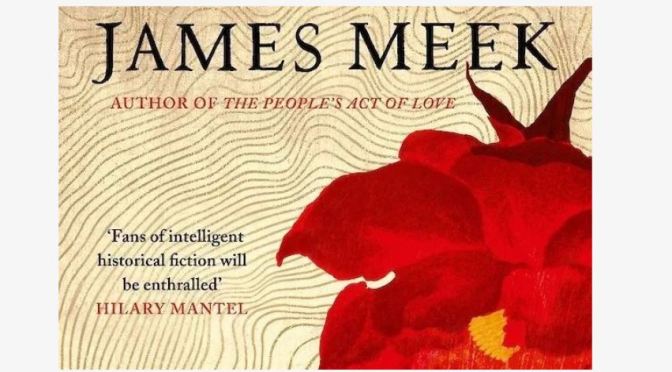
to-calais-in-ordinary-time-hardback-cover-9781786896742.600x0“Fans of intelligent historical fiction will be enthralled by a story so original and so fully imagined. Meek shows the era as alien, which it is, and doesn’t falsify it by assimilating it to ours. But his characters are recognisably warm and human”
HILARY MANTEL

“An inventive and original novel that captures the distant past and pins it to the page”
The Times, Book Of The Month

Three journeys. One road.

England, 1348. A gentlewoman flees an odious arranged marriage, a Scots proctor sets out for Avignon and a young ploughman in search of freedom is on his way to volunteer with a company of archers. All come together on the road to Calais.

Coming in their direction from across the Channel is the Black Death, the plague that will wipe out half of the population of Northern Europe. As the journey unfolds, overshadowed by the archers’ past misdeeds and clerical warnings of the imminent end of the world, the wayfarers must confront the nature of their loves and desires.

https://canongate.co.uk/books/2764-to-calais-in-ordinary-time/