
Tag Archives: Healthcare

 In a WTOP-FM interview, Health Affairs Editor-In-Chief Alan Weil assesses how consumers may (or may not) benefit from two long-anticipated rules, recently unveiled by the Trump Administration, that increase price transparency for both hospitals and insurers.
Emergency Medicine: When “Treating Everyone” Meets “Triage”, Patients And Healthcare Must Wait
From a STAT online article:
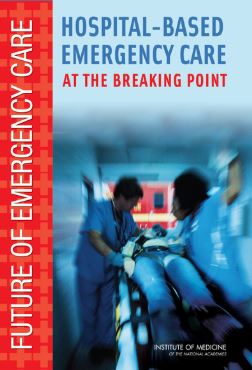 The specialty of emergency medicine is firmly grounded in social justice and providing access to expert care to everyone who comes in. That means treating anyone, with any condition, at any time. And yet, embedded into emergency department operations is a system that might be perceived as unjust: the concept of triage. The emergency queue isn’t “first come, first served.” It’s nonlinear by design, since triage prioritizes the severity of illness. The severely ill or injured receive immediate attention. Everyone else, to various degrees, must wait.
There are situations when waiting feels immoral to me, not merely inconvenient. Being an emergency doctor means shouldering burdens for perceived injustices that we have little, if any, control over. Most of the beds were locked up with patients boarding in the ED, which means they are waiting for an inpatient bed to become available in the hospital.
Hospitals have high expectations regarding how quickly patients are seen in the emergency department, and my colleagues and I share that goal. But there’s less urgency when it comes to discharging patients from the hospital, which would unclog the backup in the emergency department — and its waiting room.
Health: UnitedHealthcare To Open Medicare Centers In Walgreens In 2020
From a Becker’s Hospital Review online release:
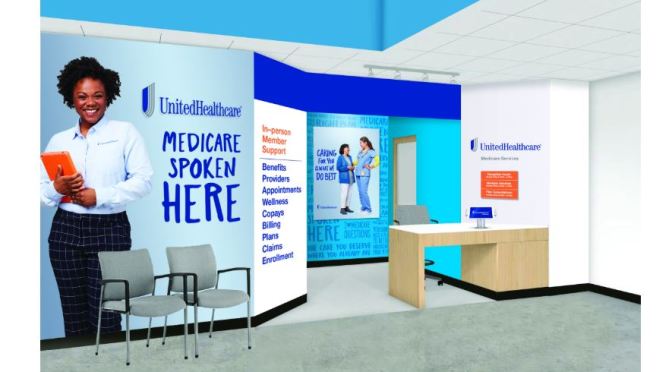
 The purpose of the centers is to increase customers’ understanding of Medicare, match them with people who can talk with them about their benefits or new plans to enroll in, and access in-store annual wellness visits.
In addition, Walgreens and UnitedHealthcare are partnering for a new AARP Medicare Advantage Walgreens health plan. The health plan aims to deliver lower prescription drug costs to members, as many of the plans have $0 premiums and $0 copays on primary care visits, preventive care and some generic drugs. The 46 plans will be sold across 24 states.
Under a multiyear agreement, UnitedHealthcare will open 14 Medicare service centers in Walgreens stores across the U.S., the organizations said Nov. 25.
UnitedHealthcare, the health insurance arm of UnitedHealth Group, will operate Medicare service centers in Walgreens stores across five cities: Las Vegas, Phoenix, Cleveland, Denver and Memphis, Tenn. The centers are slated to open in January 2020.
Healthcare: Geriatric Assessment Helps Select Proper Treatments For Cancer In Elderly Patients
From an NPR online article:
 More than 60% of cancers in the U.S. occur in people older than 65. As the population grows older, so will the rate of cancer among seniors. The cancer incidence in the elderly is expected to rise 67% from 2010 to 2030, according to a 2017 study in the Journal of Clinical Oncology. Yet many oncologists don’t have geriatric training.
“When the doctor saw how physically active and mentally sharp my father was at 89 years of age, but that he had several chronic, serious medical problems, including end stage kidney disease, she didn’t advise him to have aggressive treatment like the first time around,” says Griggs, who lives in Rochester, N.Y.
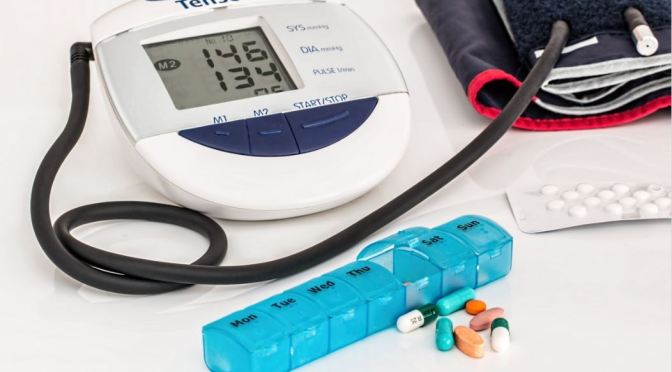
Geriatric assessment is an approach that clinicians use to evaluate their elderly patients’ overall health status and to help them choose treatment appropriate to their age and condition. The assessment includes questionnaires and tests to gauge the patients’ physical, mental and functional capacity, taking into account their social lives, daily activities and goals.

Healthcare Surveys: Nursing Shortage Threatens System As Baby Boomers & Nurses Retire
From a Healthcare Finance news article:
 A third of the nurses who took the survey are baby boomers and 20% of survey takers said they planned to retire in the next five years. More than a quarter, 27%, said they were unlikely to be working at their current job in a year.
The shortage threatens to collide with the impending retirement of the baby boomers, all of whom will be 65 years old by 2030, said the survey titled “A Challenging Decade Ahead.” People over 65 are hospitalized three times as often as middle-aged individuals, according to the Center for Disease Control and Prevention.
Amid a nursing shortage, hospitals are struggling to hire and keep nurses, with burnout and workplace violence cited as contributing factors, according to a new survey.
Flexibility and work-life balance had the most influence for 39% of nurses in whether they decided to stick with a job, though 31% say compensation and benefits were the biggest driving factor, according to AMN Healthcare’s 2019 Survey of Registered Nurses.
To read more: https://www.healthcarefinancenews.com/node/139458

Health Care: VillageMD Opens First Primary Clinic Called Village Medical At Walgreens In Houston
From a Becker’s Hospital Review online release:
 The VillageMD primary care clinic, called Village Medical at Walgreens, is the first of five sites to open in Houston. Four more clinics are slated to open by the end of the year. The Village Medical clinics are located next to Walgreens stores and offer services including annual preventive care, women’s health services, vaccinations, diagnostic testing, smoking cessation, chronic care management and some specialty care. The clinics offer same-day, walk-in appointments, as well as house calls and virtual visits. The clinics are staffed by primary care physicians, nurses, pharmacists and social workers.
Chicago-based primary care company VillageMD is celebrating the opening Nov. 20 of its first primary care clinic at a Walgreens store in Houston, the company announced on Twitter. The Village Medical at Walgreens opening comes just weeks after Walgreens announced plans in October to shutter nearly 160 in-store health clinics.
To Improve Healthcare: A New, Unbiased “Health Information Agency” Would Transform System
From a HealthAffairs.org online article:
 This proposed agency could work like a seal of approval, like the Energy Star program run by the Environmental Protection Agency, for new software, apps, and vendors that will be handling sensitive health information. Just like dishwashers evaluated by Consumer Reports, apps that handle personal health information should have a similar unbiased review process.
The US health care system is finally at a tipping point of much needed and overdue modernization. While it promises a brave new world of streamlined and improved health care, we are facing nothing short of a revolutionary transformation that is based on a tsunami of readily accessible health information and digital tools.
Currently, there is no federal agency, public-private collaboration, or private industry mechanism that is prepared to handle the ensuing activity in its entirety. We need to get a handle on how best to protect our private health care data while also making sure that information is allowed to flow as freely as necessary to improve our delivery system and population’s health. We need a dedicated team of experts who speak the language of both information technology and public policy. We need a new federal agency that has jurisdiction and dedicated staff to oversee health information and the technology that will simplify and operationalize the information.

Health Care: Greater Use Of “Biosimilars” Could Save System $7 Billion
From a Health Care Finance News online article:
 But greater use of biosimilars could create significantly more savings. If biosimilars obtained a 75 percent market share, less than the share of these medicines in many European Union nations, the resulting annual savings for the U.S. healthcare system could be nearly $7 billion, based on Winegarden’s analysis.
Not all drugs are created the same. Take generics and biologics: The former is a chemical-based medicine whose manufacture is easily replicated, while the latter is created using biological processes.
But there’s another key difference between those two classes of drugs, and it pertains to the financial state of the healthcare industry and to U.S. taxpayer dollars. Stated plainly, biosimilars have the opportunity to bring significant savings to state Medicaid programs and consumers with commercial insurance. That gives them a leg up over their chemical-based counterparts.

Future Of Hospital Design: EIR Healthcare’s Prefab “MedModular” Hospital Rooms Are Customizable
From the EIRHealthcare.com website:
 EIR Healthcare collaborates with each hospital to customize the optimal space. Through our technology and design, doctors, nurses and any healthcare professional interacting with patients in a MedModular room are equipped to provide nothing short of excellence within every interaction. EIR Healthcare was presented with a 2018 iF Design Award for our “Hospital of the Future” professional concept.
When a MedModular room is delivered, it is done so with every detail already executed from both technology and space design standpoints, which results in optimizing the efficiency in which hospitals and other healthcare environments are constructed – and completed.
Website: https://eirhealthcare.com/EIR

Health Technology: First Successful Tele-Robotic Heart Surgery Performed
From an InterestingEngineering.com online article:
 “Remote procedures have the potential to transform how we deliver care when treating the most time-sensitive illnesses such as heart attack and stroke. The success of this study paves the way for large-scale, long-distance telerobotic platforms across the globe, and its publication in Lancet’s EClinicalMedicine demonstrates the transformative nature of telerobotics,” said in a press statement Mark Toland, President and Chief Executive Officer of Corindus Vascular Robotics.
A surgeon in India has performed a series of five percutaneous coronary intervention (PCI) procedures on patients who were on operating tables 32 kilometers (20 miles) away from him. The event marks the first long-distance heart surgery.
The operation was performed in patients who have atherosclerosis, a condition where plaque builds up in the blood vessels and restricts blood flow. In this special remote procedure, a robot called the CorPath GRX robot and controlled by the surgeon inserted a small instrument called a stent in order to open blood vessels in the heart.
 Boomers Daily