Tag Archives: Health

Studies: Antibiotics Impair Microbiome Composition, Reducing Flu Immunity

From a Science Magazine online article:

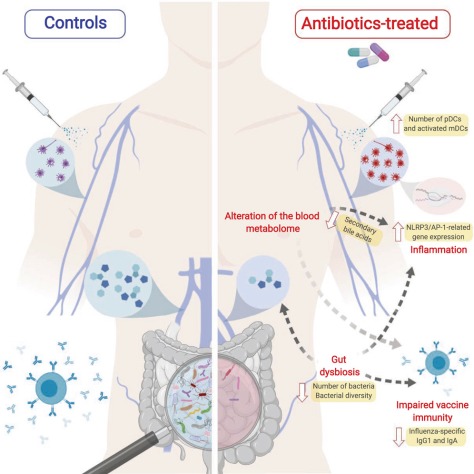
Antibiotic use diminished the gut microbiome composition and impaired the ability of the immune system to generate antibodies. Treatment with antibiotics also disturbed bile acid metabolism and caused inflammatory responses.

From the original findings the Journal “Cell.com”:

Emerging evidence indicates a central role for the microbiome in immunity. However, causal evidence in humans is sparse. Here, we administered broad-spectrum antibiotics to healthy adults prior and subsequent to seasonal influenza vaccination. Despite a 10,000-fold reduction in gut bacterial load and long-lasting diminution in bacterial diversity, antibody responses were not significantly affected. However, in a second trial of subjects with low pre-existing antibody titers, there was significant impairment in H1N1-specific neutralization and binding IgG1 and IgA responses.
Web

In addition, in both studies antibiotics treatment resulted in (1) enhanced inflammatory signatures (including AP-1/NR4A expression), observed previously in the elderly, and increased dendritic cell activation; (2) divergent metabolic trajectories, with a 1,000-fold reduction in serum secondary bile acids, which was highly correlated with AP-1/NR4A signaling and inflammasome activation. Multi-omics integration revealed significant associations between bacterial species and metabolic phenotypes, highlighting a key role for the microbiome in modulating human immunity.

Diet Studies: “Dietary Fructose” In Soft Drinks, Foods Impairs The Body’s Ability To Burn Fat

From a Cell Metabolism online release:

Cell Metabolism Journal CoverIn summary, dietary fructose, but not glucose, supplementation of HFD impairs mitochondrial size, function, and protein acetylation, resulting in decreased fatty acid oxidation and development of metabolic dysregulation.

Dietary sugars, fructose and glucose, promote hepatic de novo lipogenesis and modify the effects of a high-fat diet (HFD) on the development of insulin resistance. Here, we show that fructose and glucose supplementation of an HFD exert divergent effects on hepatic mitochondrial function and fatty acid oxidation. This is mediated via three different nodes of regulation, including differential effects on malonyl-CoA levels, effects on mitochondrial size/protein abundance, and acetylation of mitochondrial proteins. HFD- and HFD plus fructose-fed mice have decreased CTP1a activity, the rate-limiting enzyme of fatty acid oxidation, whereas knockdown of fructose metabolism increases CPT1a and its acylcarnitine products. Furthermore, fructose-supplemented HFD leads to increased acetylation of ACADL and CPT1a, which is associated with decreased fat metabolism.

To read more: https://www.cell.com/cell-metabolism/fulltext/S1550-4131(19)30504-2?_returnURL=https%3A%2F%2Flinkinghub.elsevier.com%2Fretrieve%2Fpii%2FS1550413119305042%3Fshowall%3Dtrue

Health Technology: Digital Therapeutics Startup “Kaia” Targets Chronic Pain With AI-Guided Exercise

From a VentureBeat.com online review:

Kaia Digital ExerciseKaia’s iOS and Android apps were developed with the help of physiotherapists, pain management physicians, orthopedic surgeons, and clinical psychologists, the company claims, and are registered as Class 1 medical devices with the Food and Drug Administration. They serve up video clips covering basic back and COPD pain information and step-by-step physiotherapy exercises, in addition to psychological strategies, such as mindfulness and muscle relaxation.

During each of the over 120 15-minute exercises, in-app computer vision models track connective points on the body through a device’s front-facing camera while an on-screen wireframe model illustrates the steps. Audio feedback informs users whether they’re performing exercises correctly and how they might improve, and a built-in chat tool allows them to consult with a physiotherapist or sports scientist on questions related to specific moves.

To read more: https://venturebeat.com/2019/09/17/kaia-raises-8-million-to-treat-chronic-pain-with-ai-guided-exercise/

Health Studies: Epidemic Of Physical Inactivity, Processed Foods Results In “Stiffer Hearts” Which Compromises Endurance

From Phys.org online article:

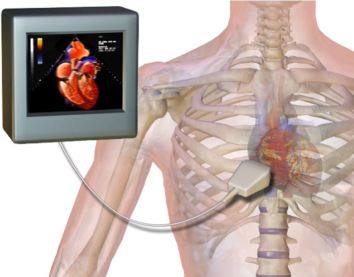
Echocardiogram wikipedia“As a result, today’s epidemic of physical inactivity in conjunction with highly processed, high-sodium diets contributes to thicker, stiffer hearts that compromise the heart’s ability to cope with endurance physical activity, and importantly this may start to occur prior to increases in resting blood pressure,” explains Shave.

The landmark study analyzed 160 humans, 43 chimpanzees and five gorillas to gain an understanding of how the heart responds to different types of physical activity. In collaboration with Harvard University’s Daniel Lieberman and Aaron Baggish, UBC Professor Robert Shave and colleagues compared left ventricle structure and function in chimpanzees and a variety of people, including some who were sedentary but disease-free, highly active Native American subsistence farmers, resistance-trained football linemen and -trained long-distance runners.

To read more: https://phys.org/news/2019-09-evolution-heart.html

Health Studies: Reducing Skin Inflammation With “Topical Emollient” Cream Reduces Chronic Disease

From a Wall Street Journal online article:

nci-vol-4604-150…a new small study in humans suggests that using a barrier-forming cream, such as those with an ingredient called ceramide, to treat and prevent problems associated with aging skin—such as dryness, itching and cracking—may help reduce the low-grade inflammation that occurs in otherwise healthy people as they age. Researchers from the University of California, San Francisco and the San Francisco Veterans Hospital say reducing age-related inflammation could help slow the progression of age-related disorders associated with chronic inflammation, such as Type 2 diabetes, heart disease and loss of muscle mass.

Systemic disease usually stems from multiple sources, so skin protection alone is unlikely to be a panacea, experts say. But the hope is that it can help slow the onset or progression of chronic conditions that often crop up in patients with skin disorders such as psoriasis. And the UCSF study, which was published in the Journal of the European Academy of Dermatology and Venereology in March, provides the first hint in humans that protecting the skin with a barrier cream might benefit otherwise healthy adults whose skin invariably starts to lose its barrier function around middle age.

To read PDF of study, click below:

https://onlinelibrary.wiley.com/doi/epdf/10.1111/jdv.15540?referrer_access_token=lXsArqMcf5AHrI-R4oiwg4ta6bR2k8jH0KrdpFOxC67kdqa5-Q_Q8ltT6uQSa3kUEZMm6mEN7_8mvDywkPe9AOCn7aCLNi_CV3iAMck0BQxAu1SyLpdlTkFwF7hXxUCR6TazFFGPRwZ_EfW2P-26dA%3D%3D

To read more: https://www.wsj.com/articles/skin-protection-may-offer-surprising-benefits-for-overall-health-11568599320

Health Of The Elderly: Hearing Loss Is Resulting In Severe Loneliness, Depression And Demetia

From an NPR online article:

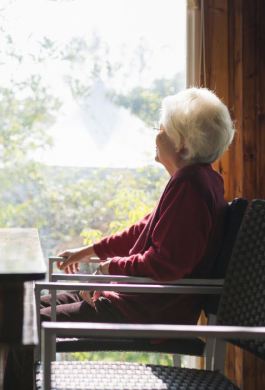
Untreated hearing loss increases the risks of social isolation, dementia and depression, research finds. NPR - Leren Lu Getty ImagesThere may be no easy fix for the loneliness epidemic plaguing the nation, but helping people cope with hearing loss could be one key to tackling this complex problem. Hearing loss affects 1 of every 5 people and is strongly linked to loneliness: Every decibel drop in perception in people under 70 increases the odds of becoming severely lonely by 7%, one Dutch study showed.

As hearing declines, loneliness can intensify — and set off a cascade of detrimental health effects. Now considered as hazardous as smoking 15 cigarettes a day, loneliness vastly raises the risks of depression, dementia and early death.

Yet the vast majority of people who suffer from hearing loss don’t know they have a problem — or don’t want to know. The changes happen gradually, and often earlier than expected.

To read more: https://www.npr.org/sections/health-shots/2019/09/12/760231279/untreated-hearing-loss-linked-to-loneliness-and-isolation-for-seniors?utm_source=npr_newsletter&utm_medium=email&utm_content=20190915&utm_campaign=health&utm_id=46633831&orgid=

Nutrional Health Studies: Mediterranean Diet Improves Cognitive Function In Older People

From a Nutritional Neuroscience online release:

Nutritional NeuroscienceOur findings suggest that higher adherence to a Mediterranean diet is associated with better cognitive performance, and therefore less cognitive decline, in older but not middle-aged individuals.

Over a period of five years, higher adherence to a Mediterranean diet was associated with improvements in Global Cognitive Function, Visual-Spatial Organisation and Memory and scanning and tracking in participants ≥70 years.

Adherence to a Mediterranean diet is associated with higher cognitive function and reduced risk of dementia in Mediterranean populations. However, few studies have investigated the association between Mediterranean diet adherence and cognition in populations outside of the Mediterranean basin.

To read more: https://www.tandfonline.com/doi/full/10.1080/1028415X.2019.1655201

Medical Innovations: BioLife4D Creates First 3D “Bioprinted” Human Heart From Cardiac Tissue

From an InterestingEngineering.com online article:

BioLife4D Logo“We are extremely proud of what we have accomplished, from the ability to 3D bioprint human cardiac tissue last summer to a mini heart with full structure now. These milestones are a testament to the hard work of our team and the proprietary process we have developed that enables this type of scientific achievement,” said Birla in a press release.  “We believe we are at the forefront of whole heart bioengineering, a field that has matured quickly over the last year, and well-positioned to continue our rapid scientific advancement.”

BIOLIFE4D, the biotech company based out of Chicago, announced it has successfully demonstrated the ability to 3D bioprint a mini human heart, a big step in someday printing out a full-sized human heart that can be used for a transplant.

To read more: https://interestingengineering.com/a-company-creates-the-first-3d-printed-mini-heart?_source=newsletter&_campaign=EVmJjW5YyX1pq&_uid=46dBBxnxd7&_h=0c209d493fa27bb2c39469a873cbbd733289c833&utm_source=newsletter&utm_medium=mailing&utm_campaign=Newsletter-10-09-2019

Medical Innovations: Researchers Successfully “Supercool” Human Livers For Later Transplant

From an MIT Technology Review online article:

Doctors have put human livers in suspended animation - MIT Technology ReviewResearchers say they’ve successfully plunged human livers to subzero temperatures and then warmed them back up.

The “supercooled” organs were still in good shape after 27 hours, adding nearly a day to how long livers can last outside the body.

The supply of donor hearts, kidneys, and livers from accident victims is sharply limited. In the US, a nationwide system of registries and transplant centers coordinates to move them around by air in coolers for what are invariably emergency surgeries.

The research is part of a wider effort to learn how to keep organs operational outside the body for longer periods of time. 

To read more: https://www.technologyreview.com/s/614283/doctors-have-put-human-livers-in-suspended-animation/?utm_campaign=the_download.unpaid.engagement&utm_source=hs_email&utm_medium=email&utm_content=76642352&_hsenc=p2ANqtz-_y-4VMsKkIwnBGtCLujBv0huOO8iZmVLSHmpZKga1LGyMuwA7smhGhHb-93ZZm9yIU9jR1xGWj9jujn8i-r8U3O0NAOA&_hsmi=76642352