Toyota World Runners Films (August 4, 2023) – An overland travel tour of the Pan-American Highway. This video features Guatemala, a Central American country south of Mexico, is home to volcanoes, rainforests and ancient Mayan sites. The capital, Guatemala City, features the stately National Palace of Culture and the National Museum of Archaeology and Ethnology. Antigua, west of the capital, contains preserved Spanish colonial buildings. Lake Atitlán, formed in a massive volcanic crater, is surrounded by coffee fields and villages.
At its fullest extent the Pan-American Highway is a network of roads stretching from Prudhoe Bay, Alaska, to Ushuaia, Argentina, a distance of around 48,000 kilometres (30,000 miles).
The Globalist, April 3, 2023: The latest from Ukraine, Donald Trump’s indictment and impending court appearance, and Antony Blinken touches down in Europe. Plus: Taiwan’s Tsai Ing-wen’s tour of Belize and Guatemala, fashion news and Parisians vote on e-scooters.
On this week’s show: Climate change is killing critical soil organisms in arid regions, and early evidence for the Maya calendar from a site in Guatemala.
Staff Writer Elizabeth Pennisi joins host Sarah Crespi to discuss how climate change is affecting “biocrust,” a thin layer of fungi, lichens, and other microbes that sits on top of desert soil, helping retain water and create nutrients for rest of the ecosystem. Recent measurements in Utah suggest the warming climate is causing a decline in the lichen component of biocrust, which is important for adding nitrogen into soils.
Next, Sarah talks with Skidmore College anthropologist Heather Hurst, who directs Guatemala’s San Bartolo-Xultun Regional Archaeological Project, and David Stuart, a professor of art history and director of the Mesoamerica Center at the University of Texas, Austin, about their new Science Advances paper. The study used radiocarbon dating to pin down the age of one of the earliest pieces of the Maya calendar. Found in an archaeological dig in San Bartolo, Guatemala, the character known as “seven deer” (which represents a day in the Maya calendar), was dated to 300 B.C.E. That early appearance challenges what researchers know about the age and origins of the Maya dating system.
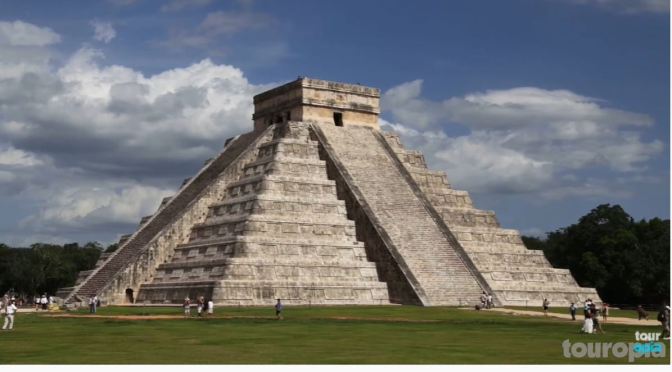
For almost a millennium, the ancient ruins of great architecture lay buried beneath the jungle vegetation on the Yucatan Peninsula. Abandoned by their creators these ancient temples and pyramids are a stunning reminder of a powerful civilization that once ruled the people of Central America. Although the accomplishments of the ancient Mayans are astonishing, no city would escape the inevitable collapse. One by one they were swallowed by the rainforest leaving the amazing Mayan ruins hidden, waiting to be discovered.
The Maya civilization was a Mesoamerican civilization developed by the Maya peoples, and noted for its logosyllabic script—the most sophisticated and highly developed writing system in pre-Columbian Americas—as well as for its art, architecture, mathematics, calendar, and astronomical system.


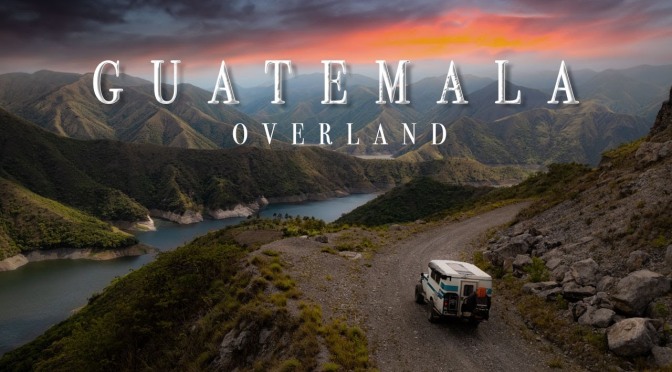
 Toyota World Runners


 Boomers Daily