Tag Archives: Green Buildings

The Future Of Cities: CO2 Absorbing & Repurposed

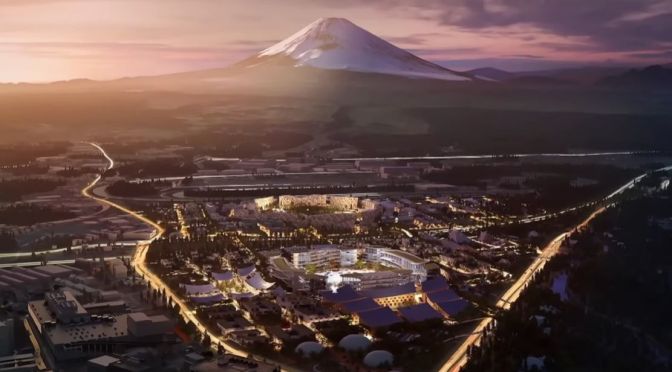
Will the cities of the future be climate neutral? Might they also be able to actively filter carbon dioxide out of the air? Futurologist Vincente Guallarte thinks so. In fact, he says, our cities will soon be able to absorb CO2, just like trees do.

To accomplish this, Guallarte wants to bring sustainable industries and agriculture to our urban centers, with greenhouses atop every building. But in order for Guallarte’s proposal to work, he says, cities will have learn to submit to the laws and principles of nature. Urban planners also have big plans for our energy supply. In the future, countries like Germany could become energy producers.

In Esslingen am Neckar, residents are working on producing green hydrogen in homes, to be used as fuel for trucks. It’s a project that‘s breaking new ground, says investor Manfred Norbert. Our future cities will be all about redefining a new normal. Architects and urban planners are expecting to see entirely new approaches to communal living, as well as new urban concepts for autonomous supply chains. The repurposing of old buildings, and the generation of food as well as energy, are other important topics.

The architect Arno Brandhuber thinks the current building stock available, and the possibilities it offers, have been underestimated. His spectacular business headquarters are located in an old silo in Berlin’s Lichtenberg district. His most provocative project, something he calls his “Anti-villa,” is a repurposed East German factory for cotton knitwear. It‘s a prime example of sustainable design.
Magazine Previews: ‘Monocle – March 2021’

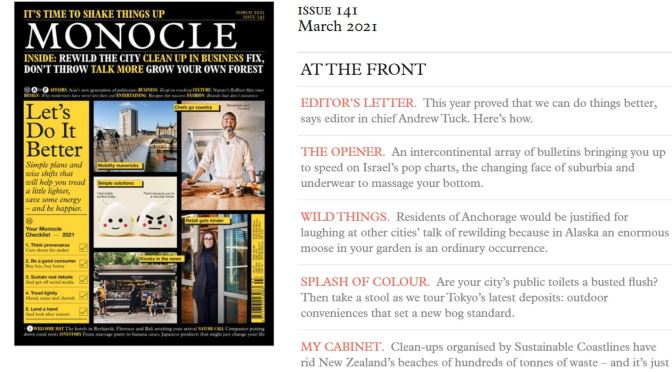
Monocle’s optimistic March issue challenges us to do it better, whether that be by growing your own forest or running a cleaner, leaner business. We visit the cities bringing the wilderness back to urban life and find out why you can mend almost anything. Plus: nature’s fluffiest film stars.

Available now at The Monocle Shop: https://monocle.com/shop/product/1916…

Green Buildings: ‘Science & Energy Complex’ At Harvard (Video Tour)

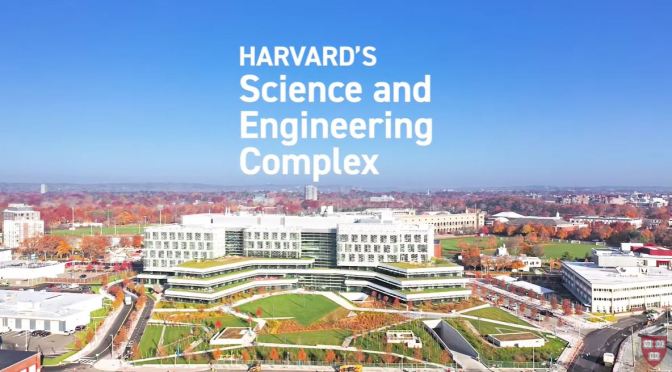
Harvard’s much-anticipated Science and Engineering Complex (SEC) in Allston is complete. The SEC is home to a portion of Harvard’s John A. Paulson School of Engineering and Applied Sciences (SEAS). Labs are setting up (some are already operational), furniture has been moved in, and offices are being transitioned. Assuming continued progress in controlling the virus, it will be open to students in the Fall of 2021. Join us for a look inside the new SEC – one of the most innovative, healthiest and energy-efficient buildings in the world!

Green Renovation: ‘1970 Manchester, UK Building’ By TP Bennett Architects

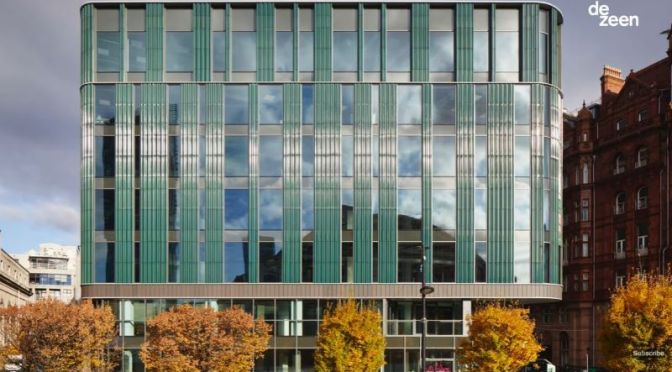
This video produced by Dezeen for TP Bennett reveals how the architecture practice has transformed an old building in Manchester into an “ultra sustainable” mixed-use office building.

Called Windmill Green, the office building is a conversion of an unused 1970s structure in the heart of the city that was due to be demolished. The site has been transformed into a mixed-use co-working space fitted with several sustainable additions geared towards carbon reduction and biodiversity, such as solar panels, beehives, and “Manchester’s largest living wall”.

“Sustainability was a key driver with this scheme and we transferred a derelict and vacant building into an ultra sustainable and high-spec workplace” said Yvette Hanson, the principal director of TP Bennett, in the video. “At TP Bennett, we bring a deep commitment to carbon reduction to deliver buildings that better reflect the way people live, work and interact, while at the same time fostering a positive social impact,” she added.

Developed in collaboration with real estate investment boutique FORE Partnership, the building features a ground level dedicated to retail and a facade covered with the green terracotta tiles that are typical of buildings in Manchester.