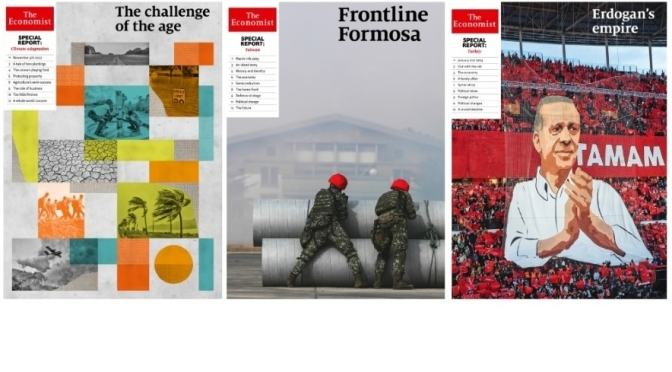

THE ECONOMIST SPECIAL REPORT: Governments going broke – In many of the world’s big economies, public finances are heading for a crisis. Henry Curr argues the consequences will be profound

THE ECONOMIST SPECIAL REPORT: Governments going broke – In many of the world’s big economies, public finances are heading for a crisis. Henry Curr argues the consequences will be profound
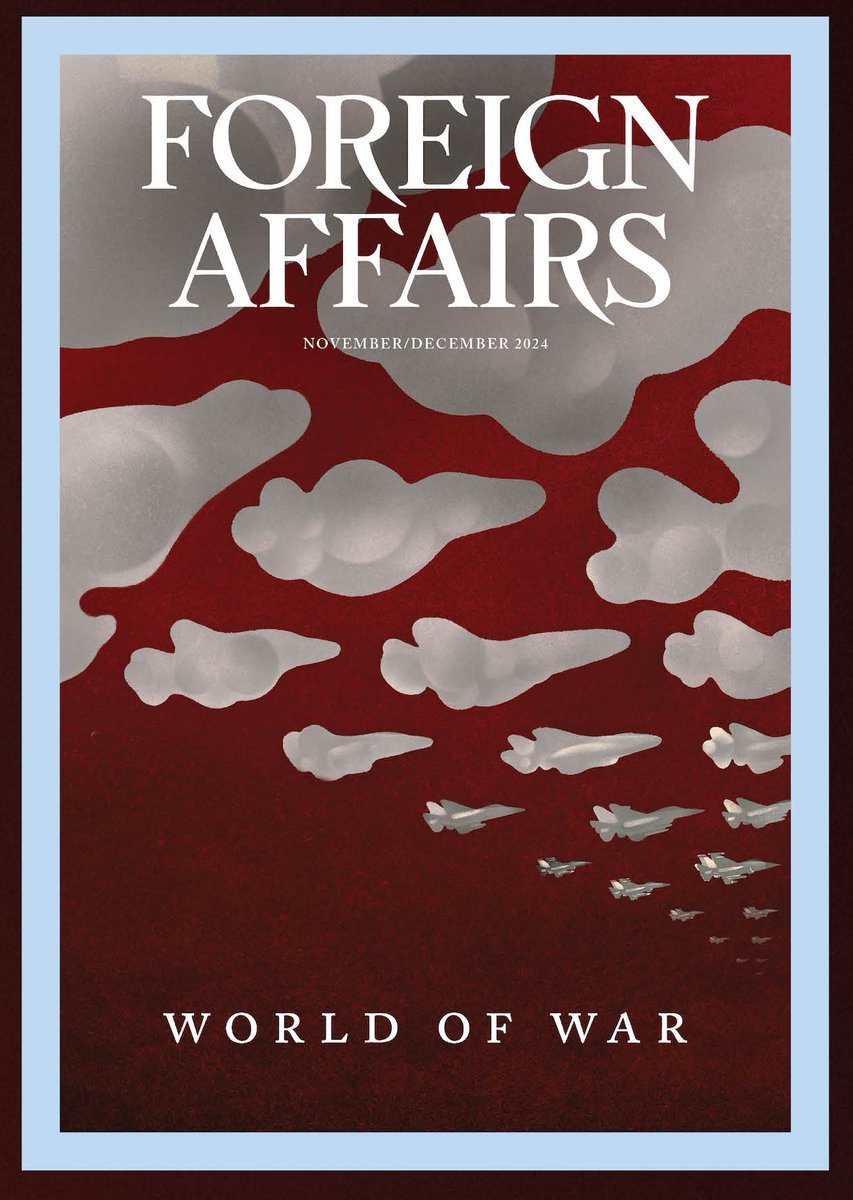

Understanding—and Preparing for—a New Era of Comprehensive Conflict
By Mara Karlin
Managing Risk in the Face of Escalation

The World Still Needs America—and America Still Needs the World by Condoleezza Rice
And They’re Already Here by Mark A. Milley and Eric Schmidt

Biden and the Search for a New American Strategy
“America is back.” In the early days of his presidency, Joe Biden repeated those words as a starting point for his foreign policy. The phrase offered a bumper-sticker slogan to pivot away from Donald Trump’s chaotic leadership. It also suggested that the United States could reclaim its self-conception as a virtuous hegemon, that it could make the rules-based international order great again. Yet even though a return to competent normalcy was in order, the Biden administration’s mindset of restoration has occasionally struggled against the currents of our disordered times. An updated conception of U.S. leadership—one tailored
Making the Case for Trump’s Foreign Policy
Si vis pacem, para bellum is a Latin phrase that emerged in the fourth century that means “If you want peace, prepare for war.” The concept’s origin dates back even further, to the second-century Roman emperor Hadrian, to whom is attributed the axiom, “Peace through strength—or, failing that, peace through threat.”
And China Is Reaping the Benefits

And What America Should Learn From It
By now, Chinese President Xi Jinping’s ambition to remake the world is undeniable. He wants to dissolve Washington’s network of alliances and purge what he dismisses as “Western” values from international bodies. He wants to knock the U.S. dollar off its pedestal and eliminate Washington’s chokehold over critical technology. In his new multipolar order, global institutions and norms will be underpinned by Chinese notions of common security and economic development, Chinese values of state-determined political rights, and Chinese technology. China will no longer have to fight for leadership. Its centrality will be guaranteed.
America’s Competition With China Must Be Won, Not Managed
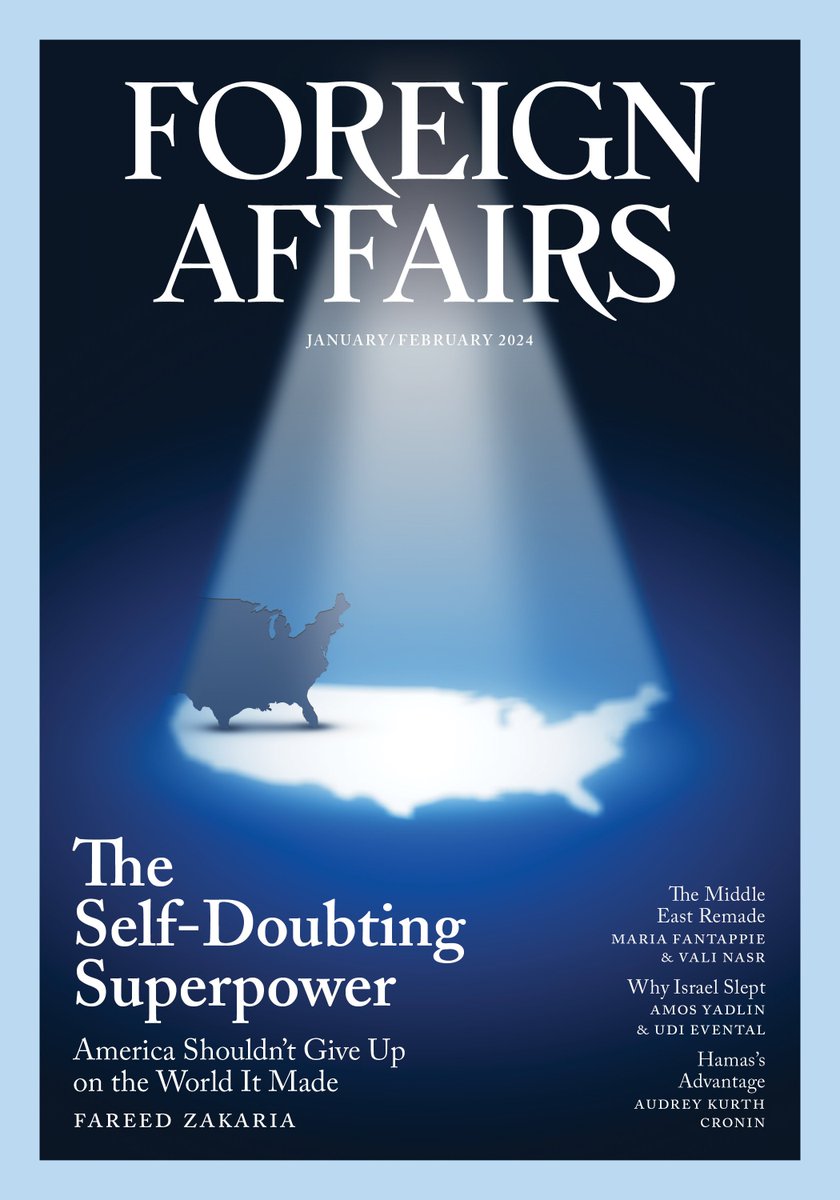
America Shouldn’t Give Up on the World It Made
Most Americans think their country is in decline. In 2018, when the Pew Research Center asked Americans how they felt their country would perform in 2050, 54 percent of respondents agreed that the U.S. economy would be weaker. An even larger number, 60 percent, agreed that the United States would be less important in the world. This should not be surprising; the political atmosphere has been pervaded for some time by a sense that the country is headed in the wrong direction. According to a long-running Gallup poll, the share of Americans who are “satisfied” with the way things are going has not crossed 50 percent in 20 years. It currently stands at 20 percent.
The War in Gaza and the Search for Security
By Amos Yadlin and Udi Evental
In a barbaric surprise attack launched by Hamas on October 7, more Jews were slaughtered than on any day since the Holocaust. Thousands of elite Hamas militants from the Gaza Strip infiltrated small communities and cities in southern Israel, where they proceeded to commit sadistic, repulsive crimes against humanity, filming their vile deeds and boasting about them to friends and family back home.
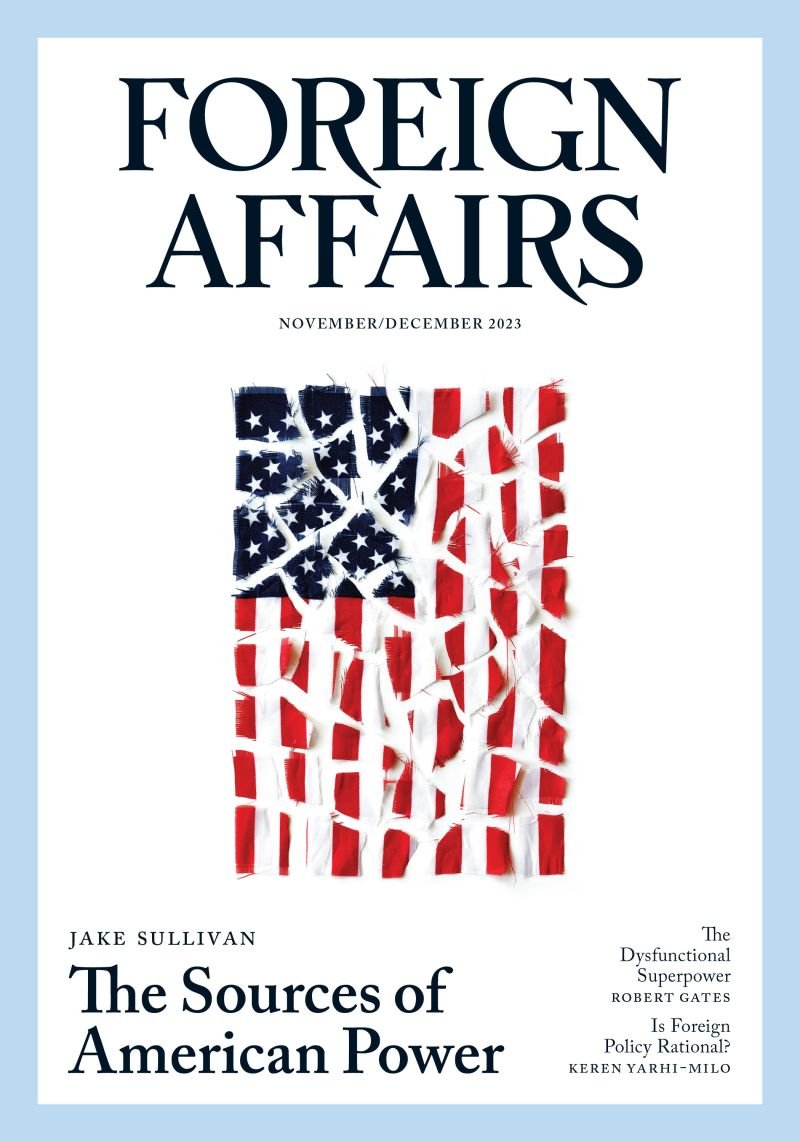
A Foreign Policy for a Changed World
Nothing in world politics is inevitable. The underlying elements of national power, such as demography, geography, and natural resources, matter, but history shows that these are not enough to determine which countries will shape the future. It is the strategic decisions countries make that matter most—how they organize themselves internally, what they invest in, whom they choose to align with and who wants to align with them, which wars they fight, which they deter, and which they avoid.
Can a Divided America Deter China and Russia?
The United States now confronts graver threats to its security than it has in decades, perhaps ever. Never before has it faced four allied antagonists at the same time—Russia, China, North Korea, and Iran—whose collective nuclear arsenal could within a few years be nearly double the size of its own. Not since the Korean War has the United States had to contend with powerful military rivals in both Europe and Asia. And no one alive can remember a time when an adversary had as much economic, scientific, technological, and military power as China does today.

The problem, however, is that at the very moment that events demand a strong and coherent response from the United States, the country cannot provide one. Its fractured political leadership—Republican and Democratic, in the White House and in Congress—has failed to convince enough Americans that developments in China and Russia matter. Political leaders have failed to explain how the threats posed by these countries are interconnected. They have failed to articulate a long-term strategy to ensure that the United States, and democratic values more broadly, will prevail.

Why America and China Will Be Enduring Rivals
With U.S.-Chinese relations worse than they have been in over 50 years, an old fairy tale has resurfaced: if only the United States would talk more to China and accommodate its rise, the two countries could live in peace. The story goes that with ample summitry, Washington could recognize Beijing’s redlines and restore crisis hotlines and cultural exchanges. Over time and through myriad points of face-to-face contact—in other words, reengagement—the two countries could settle into peaceful, if still competitive, coexistence.
What It Will Take to Break Putinism’s Grip
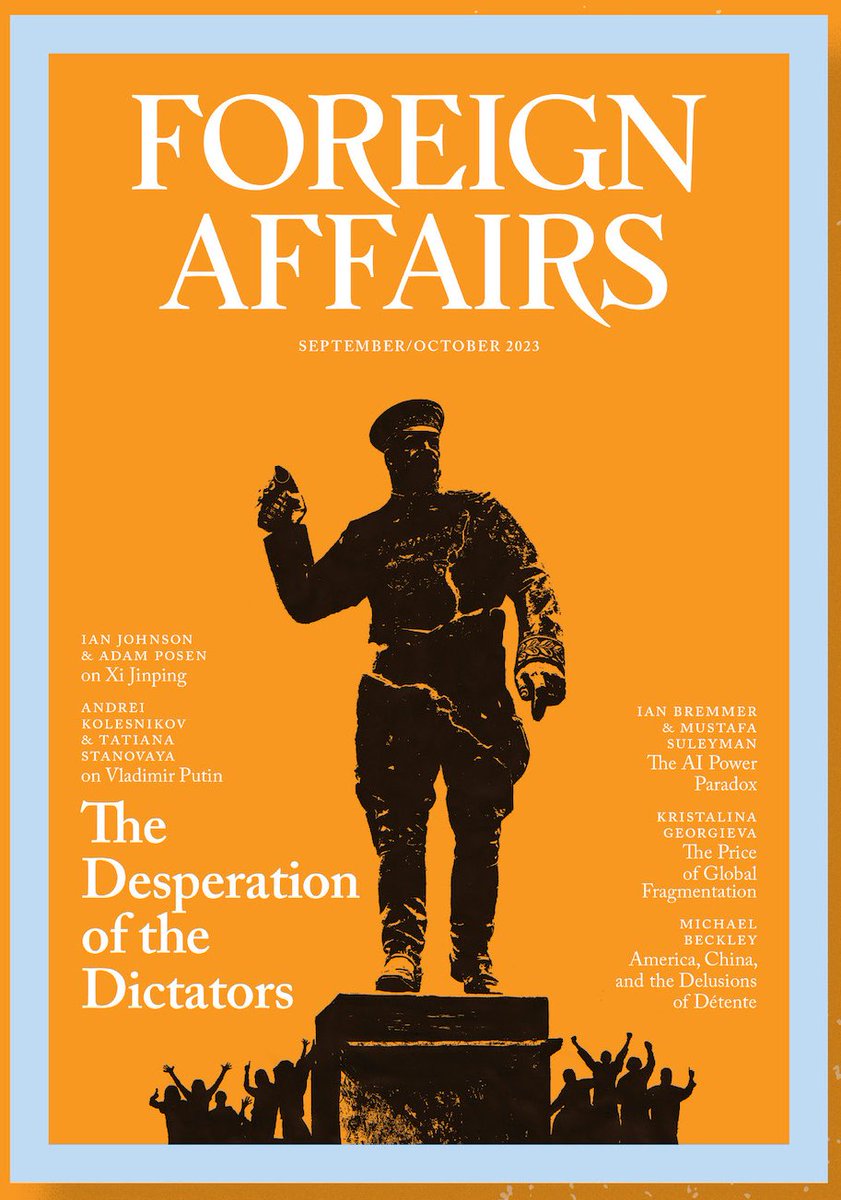
In June 17, 2023, Russian President Vladimir Putin staged a special ceremony on the St. Petersburg waterfront to mark the anniversary of three flags: the flag of the Russian Federation, otherwise known as Peter the Great’s tricolor, formally unfurled in 1693; the imperial Russian flag, introduced by Tsar Alexander II in 1858; and the Red Banner, the Soviet Union’s hammer and sickle, adopted by the Soviet state 100 years ago and later used by Joseph Stalin. Putin watched the event from a boat as the National Philharmonic and the St. Petersburg State Choir performed the national anthem, which, thanks to a law Putin enacted in 2000, has the same melody as its Stalin-era counterpart.
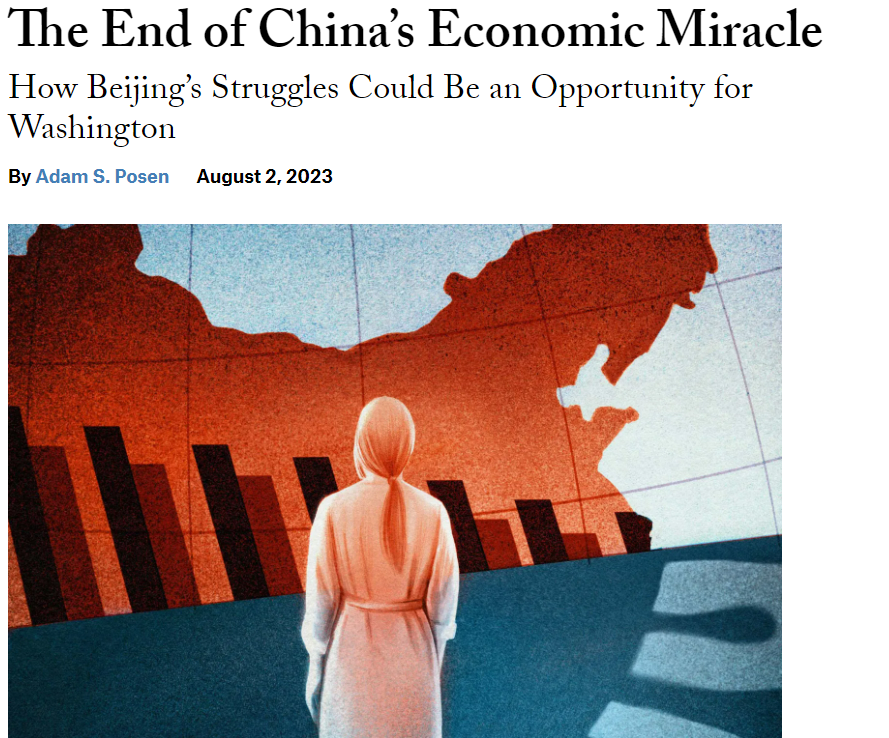
In the weeks following the policy change, global prices of oil, copper, and other commodities rose on expectations that Chinese demand would surge. In March, then Chinese Premier Li Keqiang announced a target for real GDP growth of around five percent, and many external analysts predicted it would go far higher.
 Boomers Daily