

Speedy grocery delivery is booming, but competition and high running costs could hinder growth. Startups are promising to deliver groceries to your doorstep in minutes, stepping up competition in the industry. Their strategy: to operate out of “dark stores.” WSJ visits some of these hyperlocal warehouses to see how they operate and the challenges they face. Photo/Video: Michelle Inez Simon
Tag Archives: Food Delivery

Morning News: Biden’s $6 Trillion Budget, Post-Pandemic Food Delivery
A.M Edition for May 28. Can food-delivery companies be profitable? WSJ’s Heather Haddon looks at their strategies. Details of President Biden’s proposed $6 trillion budget are expected to be released today. The Jersey Shore sees a revival. Marc Stewart hosts.
Morning News Podcast: U.S. Pipeline Cyberattack, Food Delivery Prices Rise
A.M. Edition for May 10. WSJ’s Heather Haddon discusses the additional fees associated with food delivery. A cyberattack forced the shutdown of America’s largest fuel pipeline. Corn sees its prices pop.
And, Tesla CEO Elon Musk’s debut on “Saturday Night Live”. Marc Stewart hosts.
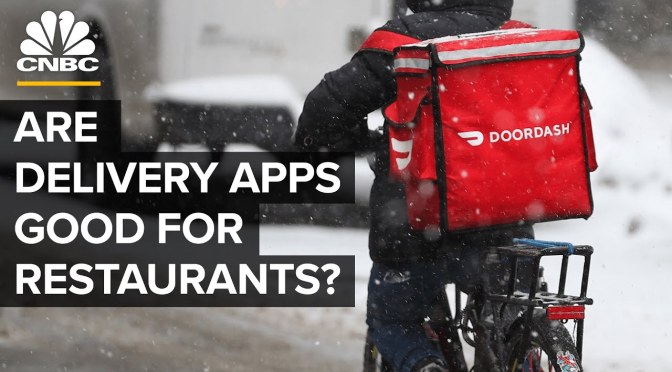
Analysis: Are Delivery Apps Good For Restaurants?
While indoor dining has dropped way down during the pandemic, food delivery has grown considerably. DoorDash and Uber Eats, the two largest delivery apps by market share both saw their sales double from the end of 2019 to the end of 2020.
But while it might be an easy decision for customers to use these third-party delivery apps, the decision for restaurants is not so easy. There is a lot to consider, and it’s not a one-size-fits-all solution.
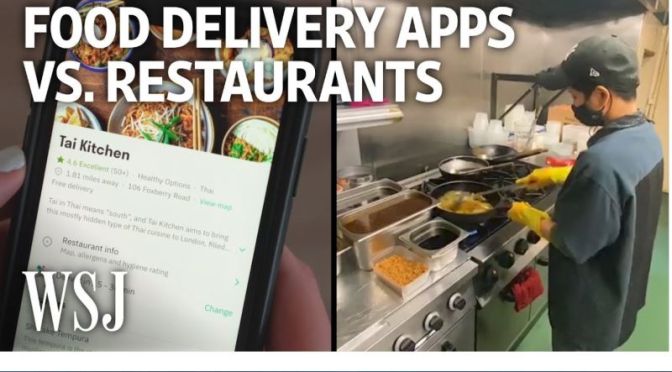
Analysis: ‘Food Delivery Apps vs Restaurants’ (WSJ)
Demand for food delivery has soared amid the pandemic, but restaurants are struggling to survive. In a fiercely competitive industry, delivery services are fighting to gain market share while facing increased pressure to lower commission fees and provide more protection to their workers. Video/Photo: Jaden Urbi/WSJ
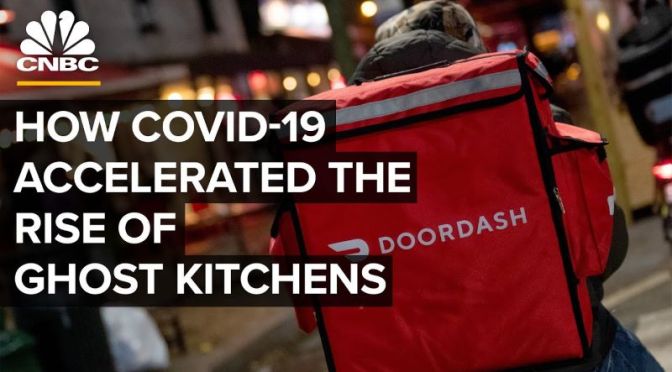
Delivery-Only Dining: ‘How Covid Accelerated Rise Of Ghost Kitchens’
Ghost kitchens are kitchens designed for delivery-only businesses, without dine-in areas or customer facing storefronts. The pandemic has ravaged dine-in eateries, and companies that have focused on delivery could come out on top if the current trends continue. Watch the full video to see why ghost kitchens are taking over the restaurant industry.
Here are some of the top Ghost Kitchens:
Kitchen United
With a $10 million dollar investment from Google Ventures, Kitchen United has been one of the leanest (and fastest-growing) startups in the space. Founder Jim Collins has turned down hundreds of millions of investment dollars to focus on growing more organically. Currently, Kitchen United plans on conquering the global restaurant space — with 5,000 kitchens planned in the next four years.
All in all, Kitchen United offers a turn-key, light-capital model, delivering a complete, code-safe kitchen replete with appliances and cooking implements. All that’s left to do is to…cook.
CloudKitchens
The fastest-growing and most investor-friendly ghost kitchen startup, CloudKitchens, has already taken in over $400 million from investors. $150 million interestingly invested by its founder (former Uber superstar) Travis Kalanick. Like Kitchen United, CloudKitchens offers fully-equipped kitchens (branded as “smart kitchens”) for the delivery-only model. Honestly, you can’t ignore a project that Travis is a part of.
DoorDash Kitchens
Another not-so-surprising entry into the ghost kitchen space is DoorDash, which has already premiered locations in San Francisco and Redwood City. Currently, DoorDash’s model is focused on catering to high-delivery areas for established brands like Chic-Fil-A, but we’re sure they have plans in the works for new locations, as well.
For the time being, DoorDash Kitchens is still in the experimentation phase, with only a few locations. And, like others on this list, it provides everything a restauranteur would need for a single monthly fee.
UberEats
For the moment, we’ll set aside the possible conflicts associated with Uber’s ex co-founder Travis Kalanick — who’s also operating CloudKitchens. We’re sure that bridge will need crossing at some point if Uber expands its operations. For the time being, the ridesharing company has been keeping a low profile in the ghost kitchen space. To date, it has been testing ghost kitchens in a few markets, though it remains curiously reluctant to share the delicious details pertaining to its Paris operations.
Virtual Kitchen Co.
Another new entry is Virtual Kitchen Co. — which already operates several successful ghost kitchens. They plan to open 15 more kitchens over the next few years, driven by $15 million dollar Series A. Again, Virtual Kitchen Co. offers a similar pricing structure: Restaurants can pay a monthly fee for everything.
The one small difference here is that Virtual Kitchen Co. seems to be targeting existing restaurants that want to enter the delivery space.
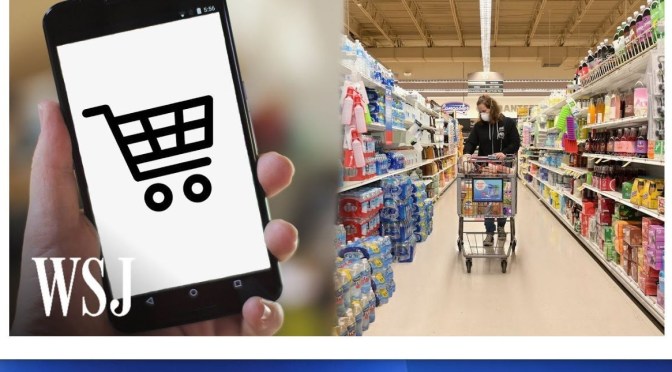
Health & Consumers: “How Coronavirus Is Changing Grocery Shopping” (WSJ)
Will the coronavirus pandemic lead to long-term changes in how we shop for food? To better understand the challenges facing grocery stores, WSJ’s Alexander Hotz spoke with an industry insider, a store owner and a Walmart executive.
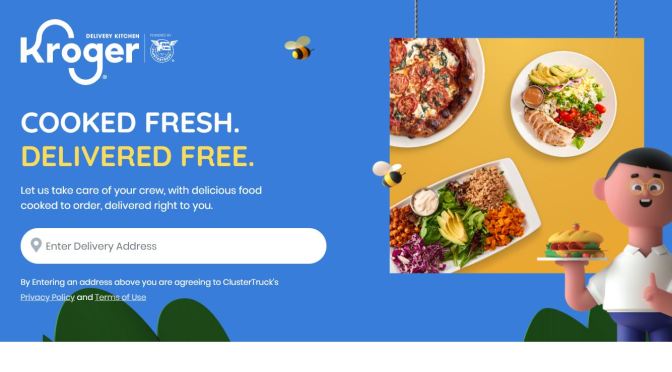
Food Trends: Kroger Launches Meal Delivery With ClusterTruck
From a Kroger Press release:
 “The way our customers order and receive meals is evolving, and ClusterTruck’s innovative culinary and digital design is cracking the code for the future of profitable meal delivery,” said Yael Cosset, Kroger’s CIO. “Kroger is leveraging ClusterTruck’s advanced technology to ensure our customers don’t have to sacrifice quality and value for convenience when it comes to meal delivery. Kroger Delivery Kitchen Powered by ClusterTruck will allow our customers to access restaurant-quality fresh and delicious meals like never before and without having to pay excessive service or delivery fees.”
The Kroger Co. (NYSE: KR), America’s favorite grocer, and ClusterTruck, a software platform that powers profitable, vertically integrated delivery-only kitchens, today launched a partnership that will change the way Americans access freshly prepared meals. By offering multiple menus from one central scratch kitchen, Kroger Delivery Kitchen will deliver fresh and delicious meals on-demand without service or delivery fees.
To read more: http://ir.kroger.com/file/Index?KeyFile=401318028

Future Of Dining: Door Dash Kitchens Launches First “Ghost Restaurant” In Redwood City, CA
From a The Spoon online article:
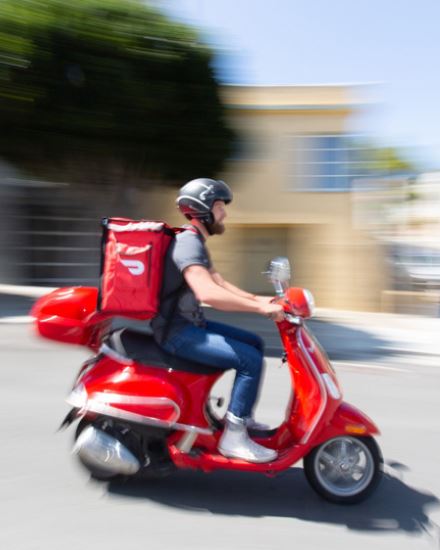 DoorDash customers can now order from a handful of chain restaurants and either pick up food right at the commissary or have it delivered. This first location of DoorDash Kitchens, located in Redwood City, CA, will serve several cities in the California Peninsula area, including Menlo Park, Palo Alto, and Woodside, among others.
With more and more restaurants, food entrepreneurs, and delivery services using ghost kitchens, it seemed only a matter of time before DoorDash built one of its own. So it’s not too surprising that today, the San Francisco-based company announced the launch of its first ever shared commissary kitchen, dubbed DoorDash Kitchens, which will house multiple to-go restaurant concepts under a single roof, according to an email sent to The Spoon.
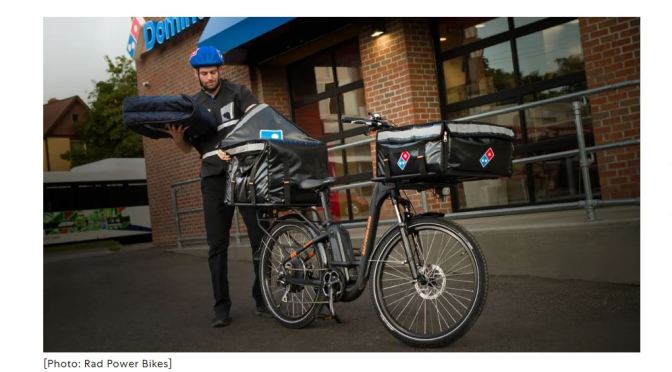
Future Of Food Delivery: Dominos Pizza To Go With Fleet Of Electric Bikes
From a Fast Company online article:
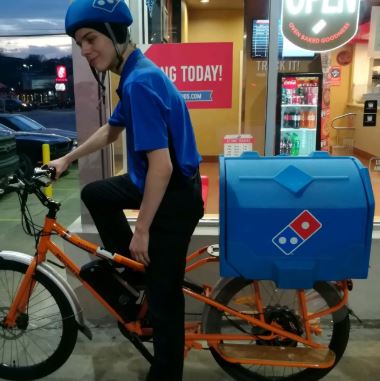 The national pizza chain recently announced a partnership with Rad Power Bikes, a Seattle-based electric cycle startup, in which Rad will provide Domino’s franchise owners with e-bikes to replace vehicle deliveries. Through the exclusive partnership, Domino’s franchise owners will have the option to purchase a custom-outfitted e-bike for up to $1,400. Switching from vehicle deliveries is not mandatory, but according to Brian Rinckenberger, commercial sales director for Rad Power Bikes, it’s likely to be an appealing option for Domino’s franchises as e-bikes could help speed up delivery times and create opportunities to have more people making deliveries at once.
That is what played out when Domino’s tested out making deliveries by e-bike in Houston, Miami, and New York City earlier this year. According to Rinckenberger, stores saw improvements in overall delivery time and service, as e-bikes are able to skirt around congested vehicle traffic lanes and can be parked much more easily.
To read more click on following link: https://www.fastcompany.com/90390713/the-dominos-delivery-of-the-future-will-arrive-by-electric-bike?utm_campaign=eem524%3A524%3As00%3A20190821_fc&utm_medium=Compass&utm_source=newsletter
 Boomers Daily