THE NEW YORK TIMES MAGAZINE (December 7 2024): The 12.8.24 Issue features William Langewiesche on the secret Pentagon war game how nuclear escalation spirals out of control; Daniel Bergner on a mysterious gap in psychosis rates; Alexis Okeowo on an endless war in Ethiopia; and more.
Black Americans experience schizophrenia and related disorders at twice the rate of white Americans. It’s a disparity that has parallels in other cultures. By Daniel Bergner
THE NEW YORK TIMES MAGAZINE (November 30, 2024): The 12.1.24 Issue features Susan Dominus on an I.V.F. mix-up; Amir Ahmadi Arian on the director Mohammad Rasoulof; Francesca Mari on deadly superbugs bred by modern warfare; and more.
An I.V.F. Mix-Up, a Shocking Discovery and an Unbearable Choice
Two couples in California discovered they were raising each other’s genetic children. Should they switch their girls?
Modern Warfare Is Breeding Deadly Superbugs. Why?
Researchers are trying to understand why resistant pathogens are so prevalent in the war-torn nations of the Middle East.
THE NEW YORK TIMES MAGAZINE (November 2, 2024): The 11.24.24 Issue features Philip Montgomery on two weeks in the life of Pennsylvania’s Luzerne County before, during and after the election; Emily Bazelon on how the abortion rights movement won in many states in the election; Tomas Weber on how Ozempic is turning people off from eating junk food; and more.
Facing an eight-year prison sentence, Mohammad Rasoulof had to make the most difficult decision of his life. We spent two weeks there before and after the election to understand what’s driving these changes.
In her first extended interview after the election, the former House speaker was not interested in analyzing Democratic losses and was eager to put a sunny spin on the future. By Lulu Garcia-Navarro
He fled brutal repression — only to discover, as so many Uyghur refugees have, that China’s power stretches far beyond its borders.By Nyrola Elimä and Ben Mauk
THE NEW YORK TIMES MAGAZINE (November 2, 2024): The 11.3.24 Issue In this issue, Jim Rutenberg on the potential for an election certification crisis in the weeks ahead; Amanda Taub on the game theory of democracy; Ariel Lown Lewiton on her grandparents’ protest pin collection; and more.Read this issue
THE NEW YORK TIMES MAGAZINE (October 27, 2024): The latest issue features David Gaubey Herbert on building a cheerleading empire; Elisabeth Zerofsky on the historian Robert Paxton; Jonathan Mahler on the tech billionaires who became major G.O.P. donors; and more.
For decades, the sport has been shaped in large part by one company — and one man.
Nikki Jennings started cheering when she was 4 years old. She was small and flexible and became a flyer, a human baton spinning and twisting through the air before being caught by teammates. Until sometimes she wasn’t: She got her first concussion in the third grade.
Is It Fascism? A Leading Historian Changes His Mind.
Robert Paxton thought the label was overused. But now he’s alarmed by what he sees in global politics — including Trumpism.
Local authorities and the police are facing a globally organised far right they barely understand By Paul Mason
“I think the protests are great,” the far-right influencer James Goddard told subscribers to his Telegram channel, in a video the day after the Sunderland riot. “But we need to clean up the optics… Number one, please stay away from religious buildings, places of worship, mosques, Islamic centres. Just stay away from them. You’re going to cause a conflict that we don’t need to have… yet.”
The oldest constitution in the world was not made for the political culture of modern America. The Supreme Court’s decision in Trump v United States is a symptom of its crisis
Standing in a huge crowd of counter-protesters, I’m more aware than ever that racist violence is part of a structural problem and an inevitable extension of mainstream Islamophobia
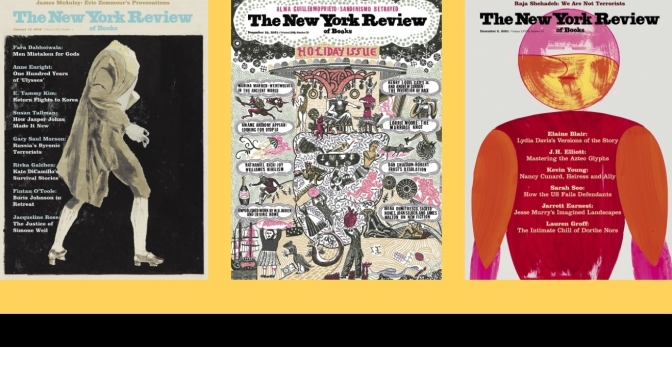
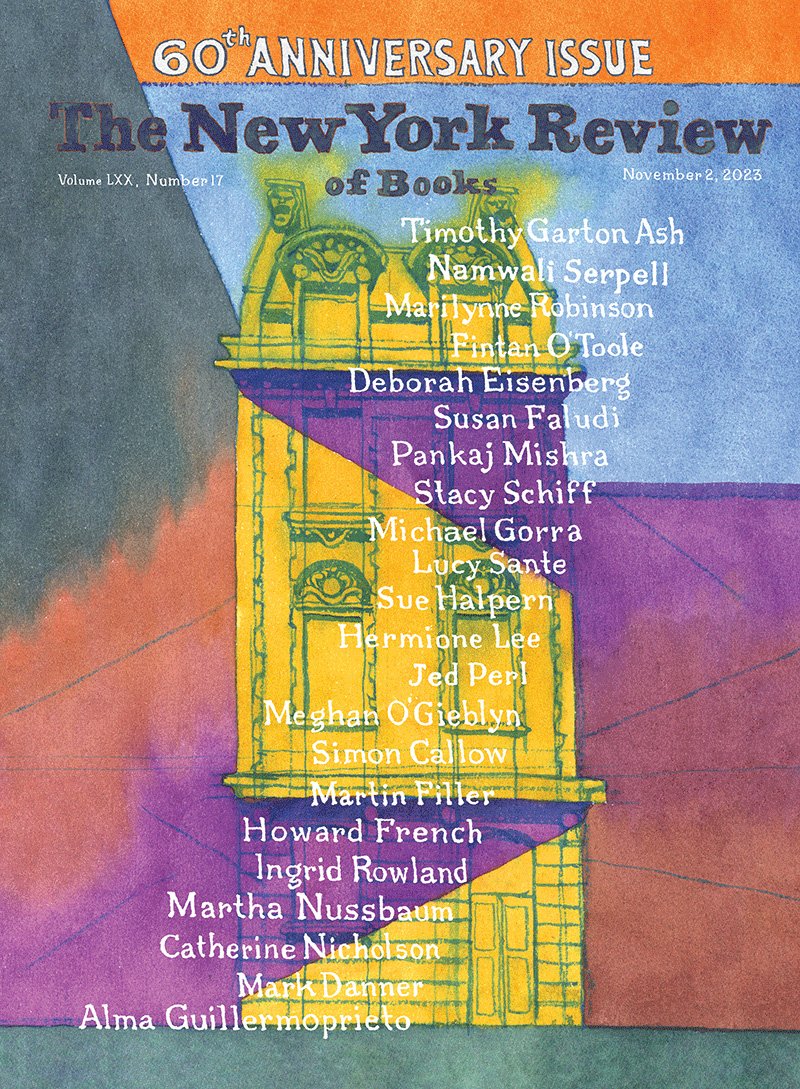
The New York Review of Books (November 2, 2023) – The latest features the 60th Anniversary Issue— with Pankaj Mishra on writing in the face of fascism, Lucy Sante on the kaleidoscopic Blaise Cendrars, Fintan O’Toole on the battles over wokeness, Deborah Eisenberg on the enchantments of Elsa Morante, Timothy Garton Ash on the dream of a free Europe, Simon Callow on vertiginous Mozart, Jed Perl on the Warholization of Picasso, Marilynne Robinson on Iowa’s tattered ideals, Catherine Nicholson on Shakespeare’s First Folio, Susan Faludi on abortion in the nineteenth century, Martha Nussbaum on the rights of whales, poems by Anne Carson and Ishion Hutchinson, and much more.
Uwe Wittstock’s new account of writers considering whether to flee or to remain in Germany during Hitler’s rise to power sheds light on the choices faced by many writers in India and Russia today.
by Uwe Wittstock, translated from the German by Daniel Bowles
“It will have become clear to you now,” Joseph Roth wrote to Stefan Zweig in mid-February 1933, “that we are heading for a great catastrophe.” Two weeks previously, on January 30, Germany’s eighty-five-year-old president, Paul von Hindenburg, had appointed as chancellor a man who for more than a decade had spoken and written frankly about his resolve to extirpate democracy and Jews from the country. Roth, who left Berlin the same morning Adolf Hitler came to power and never returned to Germany, was desperate to make his complacent friend recognize the perils before them.
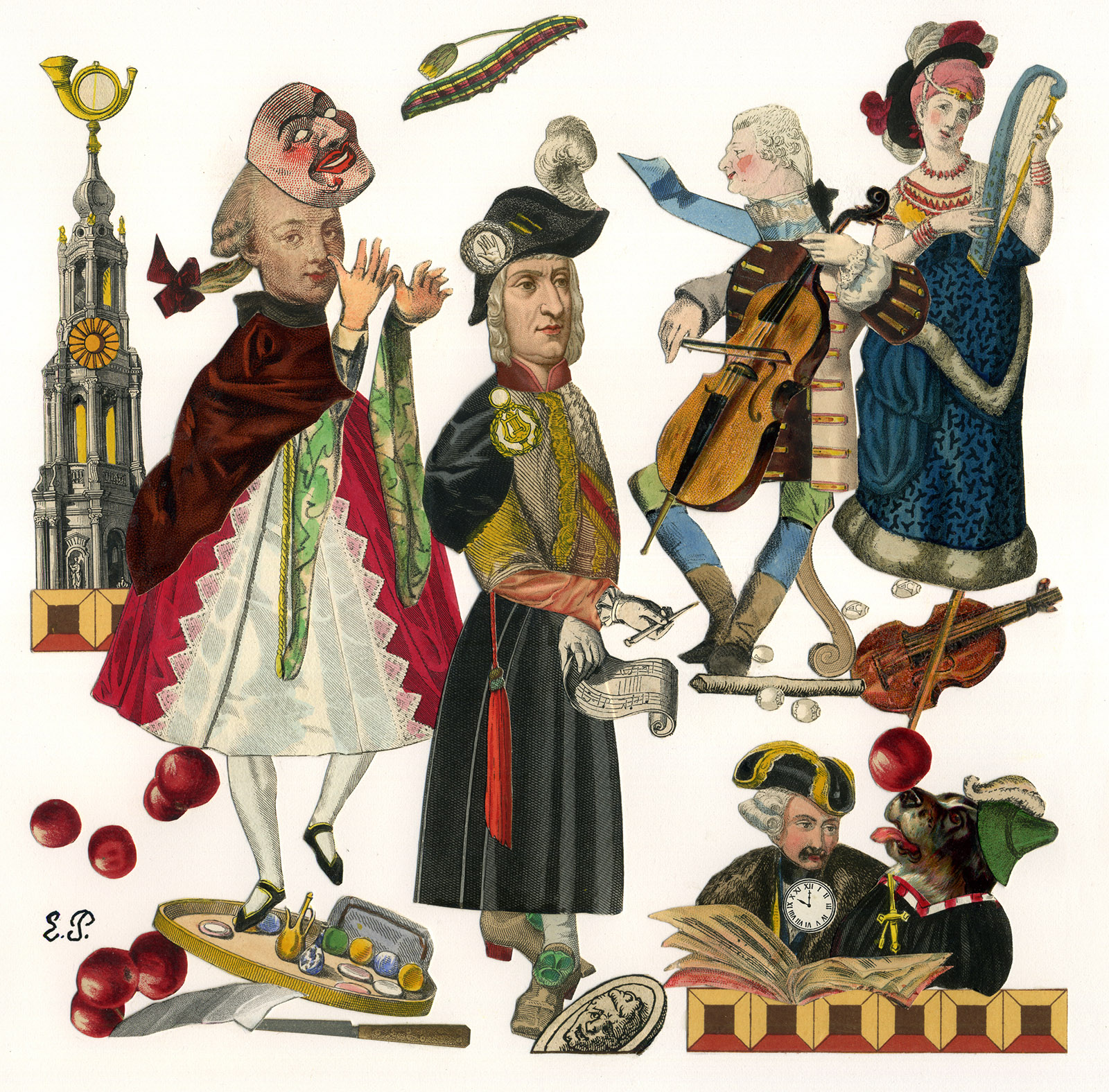
Biographies of composers are a relatively recent genre; those of Mozart were among the first examples.Though his life was not as sensational as that of Gesualdo, for example, who murdered his wife, Mozart was, from his early years, an international celebrity whose very personality posed questions beyond the eternal riddle of creativity. How could a mere child—he started performing publicly on the clavichord at the age of six—be so astoundingly versatile? As he toured Europe, going from court to court and salon to salon with his father, Leopold, and his older sister, Maria Anna—a talented musician as well—the delightful little boy in his nattily embroidered outfits enchanted his listeners, readily obliging them with requests, however crass: now playing with the keys covered, now with only one finger, to delighted applause.
News, Views and Reviews For The Intellectually Curious







 Boomers Daily