
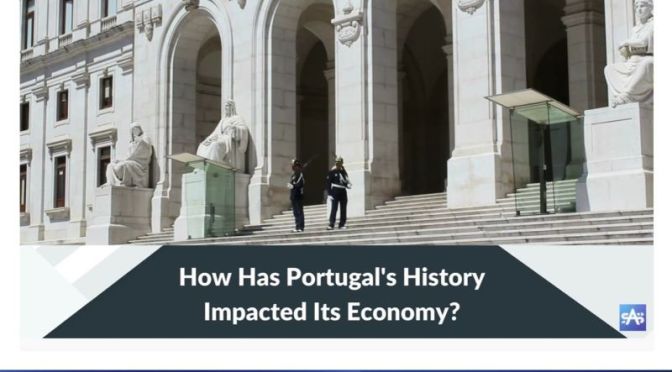
In the lead up to the Eurozone Crisis, Portugal’s Economy was an outlier. Whilst many economies went on an incredible run, the Portuguese Economy did not have such a good time. Not only underperforming the average eurozone growth rate, but unemployment actually rose from 3.8% to 7.5% between the millennium and 2008. Compare this against the likes of Greece, Spain and Italy, all of which had seen significant declines in unemployment. Raising the question of why? Why had Portugal’s Economy stagnated in what were supposed to be the good times? What was the impact of its long history as a colonial power? And to what extent did a 19th Century letter from Pope Leo the 13th influence its wider economic approach?
Tag Archives: European History
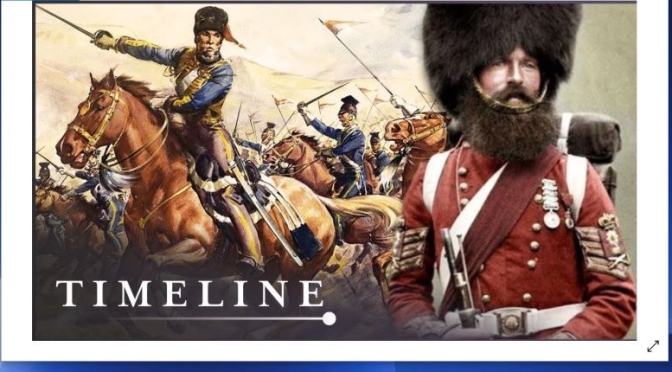
History: ‘Charge Of The Light Brigade, 1854’ (Video)
The true story of the suicidal mission of British forces to overrun the Imperial Russian fortifications with a courageous but foolhardy mass charge.
The Charge of the Light Brigade was a failed military action involving the British light cavalry led by Lord Cardigan against Russian forces during the Battle of Balaclava on 25 October 1854 in the Crimean War.
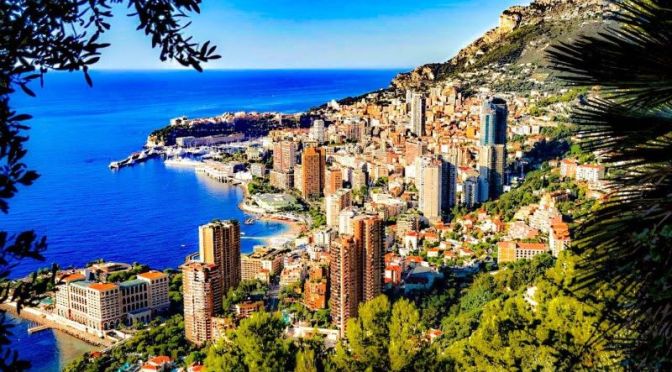
Europe: ‘Monaco – History Of The Microstate’ (Video)
Monaco, officially the Principality of Monaco, is a sovereign city-state, and microstate on the French Riviera in Western Europe. It is bordered by France to the north, east and west, and by the Mediterranean Sea to the south.
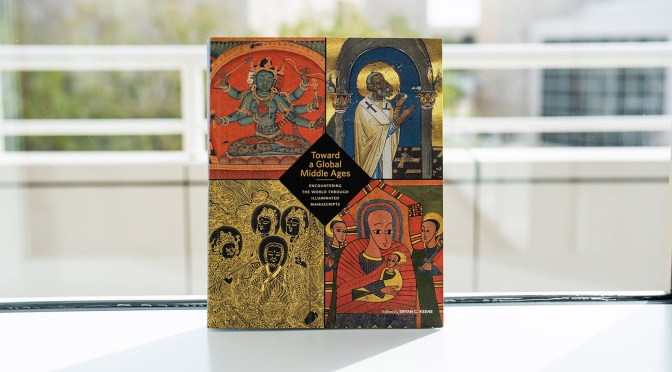
Art History Podcasts: “Understanding the Medieval World through Books” (Getty Museum)
 What was the world like from 500 to 1500 CE? This period, often called medieval or the Middle Ages in European history, saw the rise and fall of empires and the expansion of cross-cultural exchange.
Getty curator Bryan C. Keene argues that illuminated manuscripts and decorated texts from Africa, Asia, Australasia, the Americas, and Europe are windows through which we can view the interconnected history of humanity. In this episode, he discusses his recent book Toward a Global Middle Ages: Encountering the World through Illuminated Manuscripts, highlighting the challenges and opportunities of the emerging discipline known as the Global Middle Ages.

Top New Podcasts: “The History Of Coffee” And Its Social Impact (BBC Radio)
 Melvyn Bragg and guests discuss the history and social impact of coffee. From its origins in Ethiopia, coffea arabica spread through the Ottoman Empire before reaching Western Europe where, in the 17th century, coffee houses were becoming established.
There, caffeinated customers stayed awake for longer and were more animated, and this helped to spread ideas and influence culture. Coffee became a colonial product, grown by slaves or indentured labour, with coffea robusta replacing arabica where disease had struck, and was traded extensively by the Dutch and French empires; by the 19th century, Brazil had developed into a major coffee producer, meeting demand in the USA that had grown on the waggon trails.
With
Judith Hawley
Professor of 18th Century Literature at Royal Holloway, University of London
Markman Ellis
Professor of 18th Century Studies at Queen Mary University of London
And
Jonathan Morris
Professor in Modern History at the University of Hertfordshire
Producer: Simon Tillotson
Best New History Books: “Escape From Rome” By Walter Scheidel (Oct 2019)
From a Princeton University Press release:
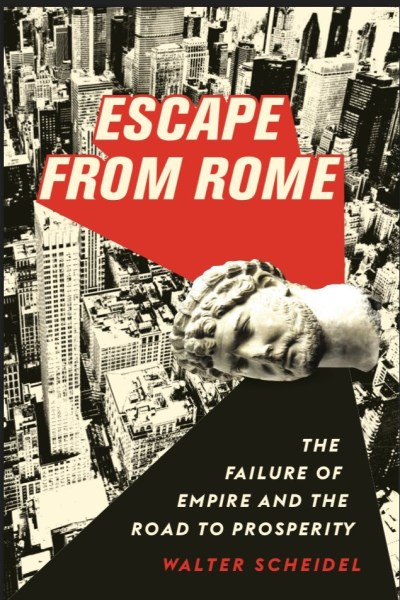 The fall of the Roman Empire has long been considered one of the greatest disasters in history. But in this groundbreaking book, Walter Scheidel argues that Rome’s dramatic collapse was actually the best thing that ever happened, clearing the path for Europe’s economic rise and the creation of the modern age. Ranging across the entire premodern world, Escape from Rome offers new answers to some of the biggest questions in history: Why did the Roman Empire appear? Why did nothing like it ever return to Europe? And, above all, why did Europeans come to dominate the world?
In an absorbing narrative that begins with ancient Rome but stretches far beyond it, from Byzantium to China and from Genghis Khan to Napoleon, Scheidel shows how the demise of Rome and the enduring failure of empire-building on European soil ensured competitive fragmentation between and within states. This rich diversity encouraged political, economic, scientific, and technological breakthroughs that allowed Europe to surge ahead while other parts of the world lagged behind, burdened as they were by traditional empires and predatory regimes that lived by conquest. It wasn’t until Europe “escaped” from Rome that it launched an economic transformation that changed the continent and ultimately the world.
To read more: https://press.princeton.edu/titles/13581.html
 Boomers Daily