

Tag Archives: Environment

Opinion: Burdens Of CEOs, Weather Guesses, The Gen Z Guerrillas Of Myanmar
‘Editor’s Picks’ Podcast (July 31, 2023) – Three essential articles read aloud from the latest issue of The Economist. This week: what to do about overstretched CEOs, how to better predict the weather (9:00) and we meet Myanmar’s Gen Z guerrillas (15:00).
Opinion: Technology Of Babymaking, Overly-Rosy Economics, Barbenheimer
‘Editor’s Picks’ Podcast (July 24, 2023) – Three essential articles read aloud from the latest issue of The Economist. This week: a report on the technology behind babymaking, why optimism about the world economy might be premature (10:30), and what the hype over Barbenheimer says about the movie industry (16:17).
Opinion: Trump 2024, NATO Promises To Ukraine, New Anthropocene Thinking
‘Editor’s Picks’ Podcast (July 17, 2023) – Three essential articles read aloud from the latest issue of The Economist. This week: how populist Republicans plan to make Donald Trump’s second term count, NATO’s promises to Ukraine mark real progress, but there is still much more to do (10:12) and what matters about the human-dominated Anthropocene geological phase is not when it began, but how it might end (14:41).
Opinion: Future Of War In Ukraine, A New Asia Family, U.S. Lab-Monkey Shortage
‘Editor’s Picks’ Podcast (July 10, 2023) – Three essential articles read aloud from the latest issue of The Economist. This week: how the war in Ukraine will affect the future of combat, the new Asian family (10:36) and why a lab-monkey shortage in America is encouraging smuggling (19:07).
Opinion: A Humbled Putin, Environmentalism Harms The Poor, The Better Flags
‘Editor’s Picks’ Podcast (July 3, 2023) – A selection of three essential articles read aloud from the latest issue of The Economist: The humbling of Vladimir Putin, how misfiring environmentalism risks harming the world’s poor (10:20) and some tips to design better flags (18:55).
The humbling of Vladimir Putin

The Wagner mutiny exposes the Russian tyrant’s growing weakness. But don’t count him out yet
The last pretence of Vladimir Putin to be, as he imagines, one of his nation’s historic rulers was stripped away on June 24th. A band of armed mercenaries swept through his country almost unopposed, covering some 750km (470 miles) in a single day, seizing control of two big cities and getting to within 200km of Moscow before withdrawing unharmed.
How misfiring environmentalism risks harming the world’s poor

The trade-off between development and climate change is impossible to avoid
Thank goodness for the enthusiasts and the obsessives. If everyone always took a balanced view of everything, nothing would ever get done. But when campaigners’ worldview seeps into the staid apparatus of policymaking and global forums, bad decisions tend to follow. That, unfortunately, is especially true in the world of climate change.
How to design better flags

Some tips to avoid having an embarrassing emblem
Have you ever met a vexed vexillologist? This is someone who frets when flags are badly designed. Sadly, too many flags flutter to deceive: they are cluttered with imagery, a mess of colours and all too easily forgettable. Yet flags matter. Witness Ukraine’s blue-and-yellow banner, which now serves as a potent symbol around the world (not to mention on this newspaper’s covers).
Opinion: Sticky Inflation Issues, Building Ukraine 2.0, A New King Of Beers
‘Editor’s Picks’ Podcast (June 12, 2023) – A selection of three essential articles read aloud from the latest issue of The Economist including the trouble with sticky inflation, the challenge of building Ukraine 2.0 and why Modelo Especial is the new king of beers.
Investors must prepare for sustained higher inflation

The costs of taming price rises could prove too unpalatable for central banks
The trouble is that the inflation monster has not truly been tamed. Britain’s problem is the most acute. There, wages and “core” prices, which exclude energy and food, are rising by around 7%, year on year.
Building Ukraine 2.0

For Russia’s war to fail, Ukraine must emerge prosperous, democratic and secure
Ukraine’s nation-builders face formidable obstacles. The greatest is that, while Mr Putin is in power, this war is unlikely to end with a solid peace treaty. The two sides may talk—if only to avoid being seen as war-crazy.
The new king of beers is a Mexican-American success story

Move over, Bud Light. Heed the power of the Hispanic market
The king is dead. ¡Viva el rey! That is the cheer ringing through drinking dens this summer as Bud Light, America’s self-styled “king of beers” for 22 years, is dethroned by Modelo Especial, a Mexican brew.
Opinion: U.S. & India Draw Closer, UK As An AI Power, Lula Can’t The Amazon
‘Editor’s Picks’ Podcast (June 12, 2023) – Three essential articles read aloud from the latest issue of The Economist. This week, why India is indispensable to America, how to make Britain an AI superpower (10:35) and Lula’s unsustainable plans to save the Amazon (18:45).
Joe Biden and Narendra Modi are
drawing their countries closer

India does not love the West, but it is indispensable to America
India’s prime minister has been afforded the honour of a state visit by President Joe Biden. Mr Modi will be one of the few foreign leaders, along with Winston Churchill, Nelson Mandela and Volodymyr Zelensky, to address a joint session of Congress more than once.
How Britain can become an AI superpower

Rishi Sunak’s enthusiasm is welcome. But his plans for Britain fall short
Britain, says Mr Sunak, will harness ai and thus spur productivity, economic growth and more. As he told an audience in London this week, he sees the “extraordinary potential of ai to improve people’s lives”.
Lula’s ambitious plans to save the Amazon clash with reality

The Brazilian president faces resistance from Congress, the state oil company and agribusiness
“There should be no contradiction between economic growth and environmental protection,” he said. Yet Lula’s green agenda is suffering setbacks.
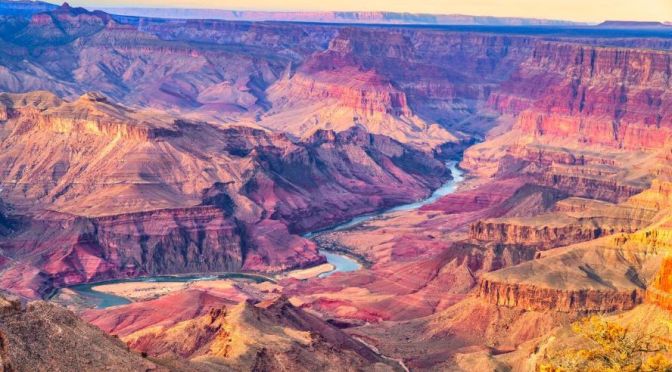
Environment: The Grand Canyon Is Losing Its River


The Grand Canyon, a Cathedral to Time, Is Losing Its River
Written and photographed by Raymond Zhong, who joined scientists on a 90-mile raft expedition through the canyon.

Since 1963, the Glen Canyon Dam has been backing up the Colorado for nearly 200 miles, in the form of America’s second-largest reservoir, Lake Powell. Engineers constantly evaluate water and electricity needs to decide how much of the river to let through the dam’s works and out the other end, first into the Grand Canyon, then into Lake Mead and, eventually, into fields and homes in Arizona, California, Nevada and Mexico.
Spend long enough in the canyon, and you might start feeling a little unmoored from time yourself.

The immense walls form a kind of cocoon, sealing you off from the modern world, with its cell signal and light pollution and disappointments. They draw your eyes relentlessly upward, as in a cathedral.
You might think you are seeing all the way to the top. But up and above are more walls, and above them even more, out of sight except for the occasional glimpse. For the canyon is not just deep. It is broad, too — 18 miles, rim to rim, at its widest. This is no mere cathedral of stone. It is a kingdom: sprawling, self-contained, an alternate reality existing magnificently outside of our own.
And yet, the Grand Canyon remains yoked to the present in one key respect. The Colorado River, whose wild energy incised the canyon over millions of years, is in crisis.
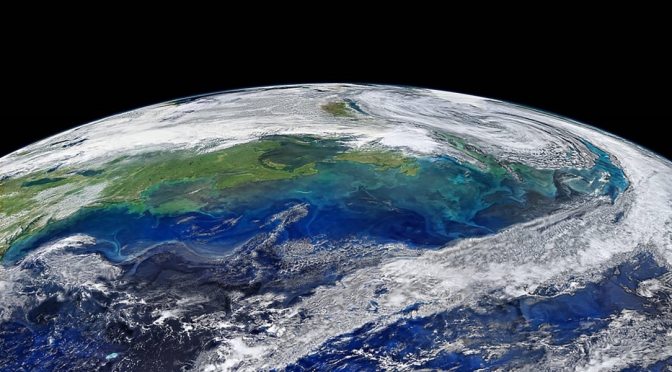
Science: How Advanced Computer Models Project Future Climate Scenarios

Over many decades, researchers at Princeton University have played a leading role in the development of advanced computational models that simulate interactions among these elements to inform an understanding of future climate scenarios under varying conditions.
In this video, climate scientists Gabe Vecchi and Laure Resplandy discuss how computational models are used to project future climate scenarios and inform mitigation strategies.
 Boomers Daily