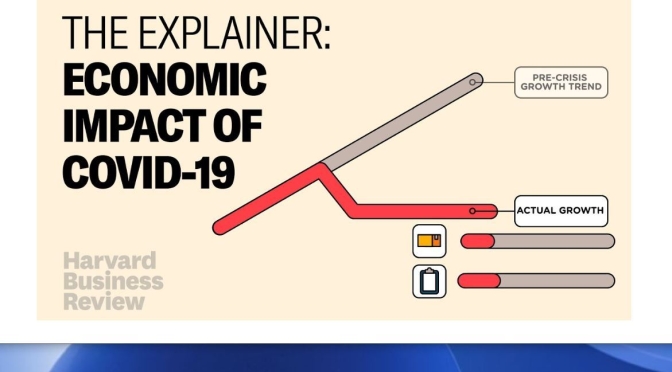
Predicting the path ahead has become nearly impossible, but we can speculate about the size and scale of the economic shock. Economic contagion is now spreading as fast as Covid-19 itself. Social distancing, intended to physically disrupt the spread, has severed the flow of goods and people, stalled economies, and is in the process of delivering a global recession.
Predicting the path ahead has become nearly impossible, as multiple dimensions of the crisis are unprecedented and unknowable. Pressing questions include the path of the shock and recovery, whether economies will be able to return to their pre-shock output levels and growth rates, and whether there will be any structural legacy from the coronavirus crisis.
This Explainer explores several scenarios to model the size and scale of the economic shock and the path ahead.
Based on the HBR article by Philipp Carlsson-Szlezak, Martin Reeves and Paul Swartz
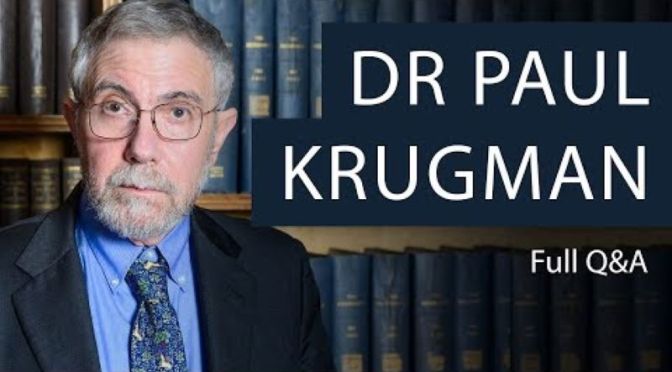
Dr. Paul Krugman is a Nobel Prize-Winning economist, and a regular commentator for the New York Times. Though academically recognised for his contributions to international trade theory, he writes about a wide range of economic issues, and is well known for making economic theory accessible to non-academics through his columns and numerous popular books. A liberal, Dr. Krugman is a fierce opponent of the modern Republican party, though he previously served as an economic advisor in Reagan’s White House.
ABOUT THE OXFORD UNION SOCIETY: The Oxford Union is the world’s most prestigious debating society, with an unparalleled reputation for bringing international guests and speakers to Oxford. Since 1823, the Union has been promoting debate and discussion not just in Oxford University, but across the globe.
Bloomberg Opinion columnist Barry Ritholtz interviews economist, bestselling author and New York Times columnist Paul Krugman, whose most recent book is “Arguing With Zombies: Economics, Politics, and the Fight for a Better Future.”
Paul Robin Krugman (born February 28, 1953) is an American economist who is the Distinguished Professor of Economics at the Graduate Center of the City University of New York, and a columnist for The New York Times. In 2008, Krugman was awarded the Nobel Memorial Prize in Economic Sciences for his contributions to New Trade Theory and New Economic Geography. The Prize Committee cited Krugman’s work explaining the patterns of international trade and the geographic distribution of economic activity, by examining the effects of economies of scale and of consumer preferences for diverse goods and services.
Krugman was previously a professor of economics at MIT, and later at Princeton University. He retired from Princeton in June 2015, and holds the title of professor emeritus there. He also holds the title of Centenary Professor at the London School of Economics. Krugman was President of the Eastern Economic Association in 2010, and is among the most influential economists in the world. He is known in academia for his work on international economics (including trade theory and international finance),economic geography, liquidity traps, and currency crises.
Krugman is the author or editor of 27 books, including scholarly works, textbooks, and books for a more general audience, and has published over 200 scholarly articles in professional journals and edited volumes. He has also written several hundred columns on economic and political issues for The New York Times, Fortune and Slate. A 2011 survey of economics professors named him their favorite living economist under the age of 60.[13] As a commentator, Krugman has written on a wide range of economic issues including income distribution, taxation, macroeconomics, and international economics. Krugman considers himself a modern liberal, referring to his books, his blog on The New York Times, and his 2007 book The Conscience of a Liberal. His popular commentary has attracted widespread attention and comments, both positive and negative. According to the Open Syllabus Project, Krugman is the second most frequently cited author on college syllabi for economics courses.
In this much-anticipated book, a leading economist argues that many key problems of the American economy are due not to the flaws of capitalism or the inevitabilities of globalization but to the concentration of corporate power. By lobbying against competition, the biggest firms drive profits higher while depressing wages and limiting opportunities for investment, innovation, and growth.
Why are cell-phone plans so much more expensive in the United States than in Europe? It seems a simple question. But the search for an answer took Thomas Philippon on an unexpected journey through some of the most complex and hotly debated issues in modern economics. Ultimately he reached his surprising conclusion: American markets, once a model for the world, are giving up on healthy competition. Sector after economic sector is more concentrated than it was twenty years ago, dominated by fewer and bigger players who lobby politicians aggressively to protect and expand their profit margins. Across the country, this drives up prices while driving down investment, productivity, growth, and wages, resulting in more inequality. Meanwhile, Europe―long dismissed for competitive sclerosis and weak antitrust―is beating America at its own game.
Philippon, one of the world’s leading economists, did not expect these conclusions in the age of Silicon Valley start-ups and millennial millionaires. But the data from his cutting-edge research proved undeniable. In this compelling tale of economic detective work, we follow him as he works out the basic facts and consequences of industry concentration in the U.S. and Europe, shows how lobbying and campaign contributions have defanged antitrust regulators, and considers what all this means for free trade, technology, and innovation. For the sake of ordinary Americans, he concludes, government needs to return to what it once did best: keeping the playing field level for competition. It’s time to make American markets great―and free―again.
Right now, you tend to have investment advisors for retirees, and insurance advisors or salespersons for retirees, and it’s fairly rare to go to somebody who can sell you annuities or invest your money and has no financial incentive to tilt one way or the other. Ultimately, what I’d like to see are people who have knowledge of both annuities and investments, and who are compensated in a way that doesn’t influence the decision.
The idea is that you segment your money. It’s similar to using “buckets” but with a time component. A retiree might have a box for 2020 and a box for 2021, and 2022, etc.
Nobel Prize–winning economist William Sharpe has spent most of his career thinking about risk. He’s behind the Capital Asset Pricing Model for gauging systemic risk and the eponymous Sharpe ratio, which captures risk-adjusted return.

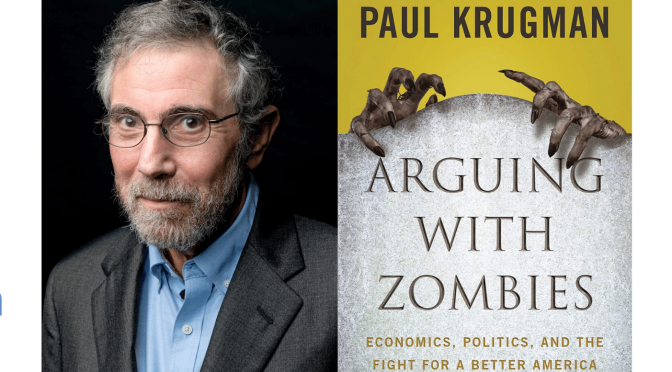
 Bloomberg Opinion columnist Barry Ritholtz interviews economist, bestselling author and New York Times columnist Paul Krugman, whose most recent book is “Arguing With Zombies: Economics, Politics, and the Fight for a Better Future.”
 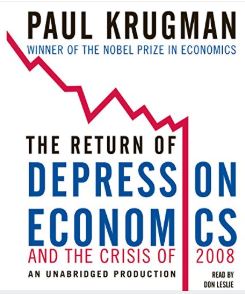 Paul Robin Krugman (born February 28, 1953) is an American economist who is the Distinguished Professor of Economics at the Graduate Center of the City University of New York, and a columnist for The New York Times. In 2008, Krugman was awarded the Nobel Memorial Prize in Economic Sciences for his contributions to New Trade Theory and New Economic Geography. The Prize Committee cited Krugman’s work explaining the patterns of international trade and the geographic distribution of economic activity, by examining the effects of economies of scale and of consumer preferences for diverse goods and services.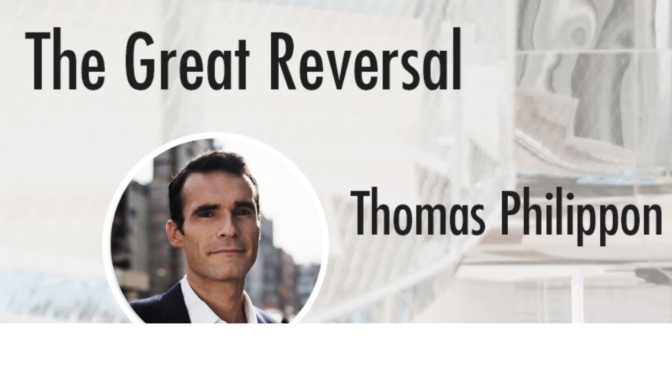
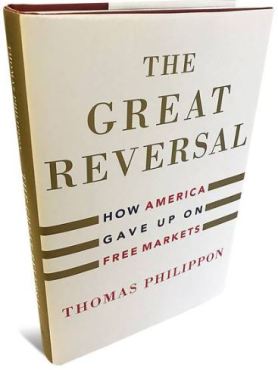 inevitabilities of globalization but to the concentration of corporate power. By lobbying against competition, the biggest firms drive profits higher while depressing wages and limiting opportunities for investment, innovation, and growth.
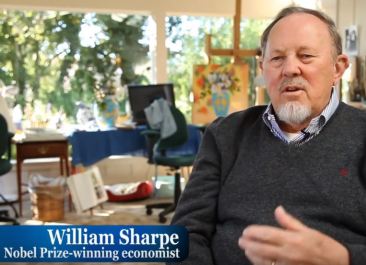 Right now, you tend to have investment advisors for retirees, and insurance advisors or salespersons for retirees, and it’s fairly rare to go to somebody who can sell you annuities or invest your money and has no financial incentive to tilt one way or the other. Ultimately, what I’d like to see are people who have knowledge of both annuities and investments, and who are compensated in a way that doesn’t influence the decision.
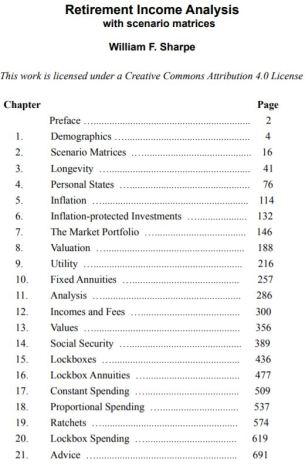 Nobel Prize–winning economist William Sharpe has spent most of his career thinking about risk. He’s behind the Capital Asset Pricing Model for gauging systemic risk and the eponymous Sharpe ratio, which captures risk-adjusted return.
 Boomers Daily