Tag Archives: East Asia

Mountain Views: ‘Aoni Village – Nagano, Japan’

This is a very small village in Hakuba, and unfortunately there is no public transport to get there. After driving up the mountain for about 20 minutes from Hakuba-station, you will come to an amazing view
with 14 large traditional Japanese houses and 7 warehouses, that were build during the Edo period (1603-1868) and the Meiji period (1868-1912).

This village is stated to be Japan’s important preservation district of historic buildings. It keeps it traditional atmosphere, has not been turned into a tourist spot.

You will be able to enjoy the primitive relaxing walk here just like the olden times. It is also famous for their beautiful terraced rice-fields.
If you visit Aoni Village, you should definitely go up the terraced rice-fields and take a look at the wonderful view of the Northern Alps over the village.

Timeline: 00:00​ タイトル(title) 00:23​ 青鬼集落(Aoni Village) 06:37​ 青鬼神社(Aoni Shrine) 07:38​ 棚田(Rice Terraces)

Architecture: ‘M+ Museum Hong Kong’ By Herzog & De Meuron (2021-Video)

M+ has completed the construction of its museum building, which is set to open to the public at the end of 2021. designed by herzog & de meuron in partnership with TFP farrells and arup, the landmark building is seeking to become a new addition to the global arts and cultural landscape. located in hong kong’s west kowloon cultural district on the victoria harbour waterfront, it provides a permanent space for M+ — the first global museum of contemporary visual culture in asia dedicated to collecting, exhibiting, and interpreting visual art, design and architecture, moving image, and hong kong visual culture of the 20th and 21st centuries.

Read more at DesignBoom

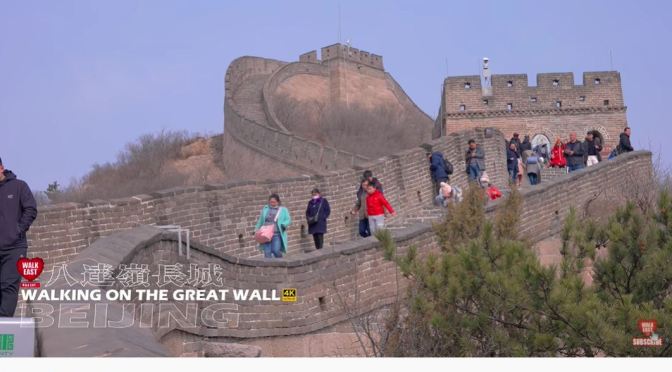
Walks: The Great Wall Of China – Badaling Section, Beijing (4K HDR Video)

The Great Wall of China is a series of fortifications that were built across the historical northern borders of ancient Chinese states and Imperial China as protection against various nomadic groups from the Eurasian Steppe. 

The Great Wall was continuously built from the 3rd century BC to the 17th century AD on the northern border of the country as the great military defense project of successive Chinese Empires, with a total length of more than 20,000 kilometers.

The Great Wall begins in the east at Shanhaiguan in Hebei province and ends at Jiayuguan in Gansu province to the west. Its main body consists of walls, horse tracks, watch towers, and shelters on the wall, and includes fortresses and passes along the Wall. The Great Wall reflects collision and exchanges between agricultural civilizations and nomadic civilizations in ancient China.

It provides significant physical evidence of the far-sighted political strategic thinking and mighty military and national defense forces of central empires in ancient China, and is an outstanding example of the superb military architecture, technology and art of ancient China. It embodies unparalleled significance as the national symbol for safeguarding the security of the country and its people.

Documentary: ‘Fukushima – The Age Of Radioactivity’

The USS Ronald Reagan cruised into a radioactive cloud from the Fukushima nuclear power plant in March 2011. Sailors on the aircraft carrier were exposed to radiation. This documentary looks at the event and what came before it. The discovery of the atom and radioactivity are among the most important advances in 20th Century science. This film provides a comprehensive, historical examination of a century of radioactivity. At the same time it remembers the victims – from the Curies to Fukushima.

The film-makers visit Japanese families who sued Tepco, the operator of the Fukushima reactor, after their children developed thyroid cancer following the tsunami and subsequent nuclear disaster. Sent to help tsunami victims, sailors from the USS Ronald Reagan give detailed accounts of what happened on board the carrier. Radiation victims on both sides of the Pacific recount their difficulties in getting information. The film also introduces others harmed by industrial and military secrecy over the issue. Among them are fishermen and veterans exposed to radiation during the nuclear bomb tests on Bikini Atoll, Hiroshima survivors and young women who worked with radium in US factories in the 1920s. Radioactivity is invisible and odorless, yet very harmful to life. A Japanese doctor tells viewers how radioactivity affects the human body, why it causes cancer, and what can be done to shield people against it.

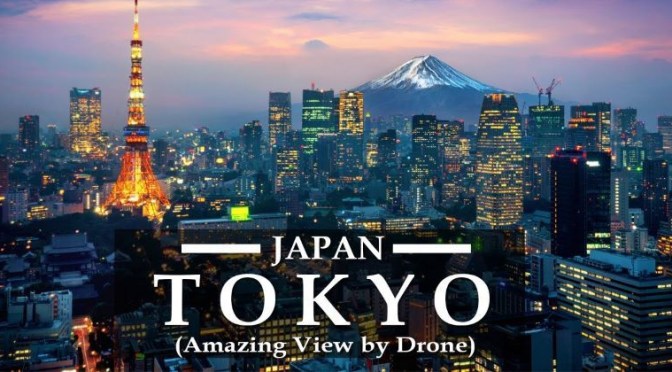
Aerial Skyline Views: ‘Tokyo – Japan’ (Video)

Tokyo, Japan’s busy capital, mixes the ultramodern and the traditional, from neon-lit skyscrapers to historic temples. The opulent Meiji Shinto Shrine is known for its towering gate and surrounding woods. The Imperial Palace sits amid large public gardens. The city’s many museums offer exhibits ranging from classical art (in the Tokyo National Museum) to a reconstructed kabuki theater (in the Edo-Tokyo Museum). 

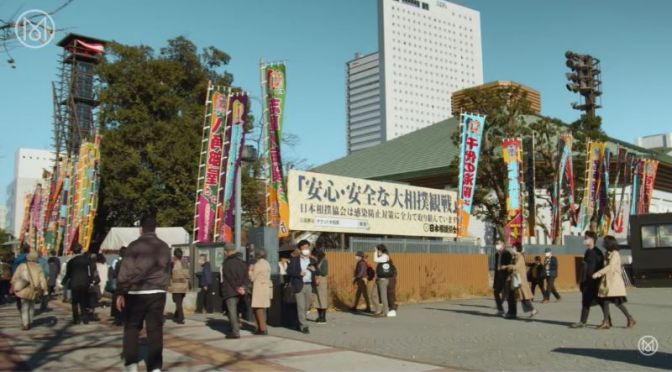
Travel Guides: ‘Ryogoku And Kuramae’, Tokyo, Japan

With any luck you’ll spot a sumo wrestler out and about in Ryogoku, the riverside neighbourhood that is home to Kokugikan, Tokyo’s distinctive sumo stadium. Across the water is Kuramae, another old neighbourhood that has long been famous for its craft workshops and still hums with industry.

The historic center of Japanese wrestling, riverside Ryogoku is home to Ryogoku Kokugikan arena, which hosts sumo and boxing, as well as classical concerts. Nearby Ryogoku Edo Noren is a dining street resembling an Edo-period village, where restaurants serve chanko nabe, the traditional protein-rich stew favored by wrestlers. In the striking, modern Edo-Tokyo Museum, scale and life-sized models recreate feudal life.

Travel Guides: ‘Harajuku & Aoyama’ In Tokyo (Video)

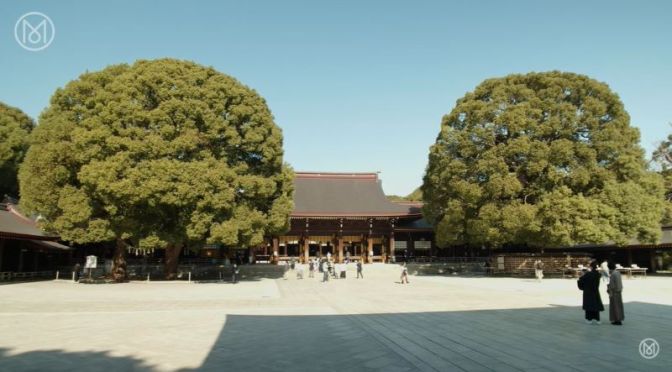
Harajuku is a neighbourhood of contrasts, home to the Meiji Shrine, which is surrounded by one of Tokyo’s largest green spaces, and a dense network of small streets packed with shops and cafés. Aoyama attracts a more grown-up crowd. Here, chic boutiques sit alongside one of the city’s most exquisite museums.

Buzzing Harajuku is renowned for colorful street art and youth fashion, with quirky vintage clothing stores and cosplay shops along Takeshita Street, and traditional, upmarket boutiques on leafy Omotesando Avenue. Small, trendy bars fill the surrounding lanes, while dessert shops and carts specialize in sweet crêpes, donuts, and bubble tea. Watari Museum of Contemporary Art hosts cutting-edge temporary exhibitions. 

Aoyama is one of the wealthiest neighborhoods of Tokyo, located in the northwest portion of Minato Ward. The area is well known for its international fashion houses, cafes and restaurants. 

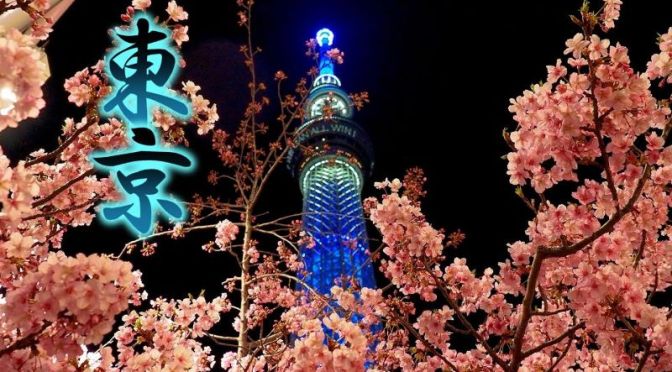
Spring City Views: Cherry Blossom Season (Sakura) Begins In Tokyo (Video)

Date taken: February 27, 2021.

The Japanese cherry blossom, or sakura, has long been adored by people across the globe. It is regarded as a symbol of renewal, vitality, and beauty. During the spring season of each year, thousands travel to Japan to view the wondrous spectacle of these white or pink flowers blooming en masse.

Video timeline: 0:00​ TOKYO SKYTREE https://bit.ly/3sAQ2Xs1:32​ Sakura-Jingu shrine https://bit.ly/2ZVmec1 2:34​ Nihonbashi https://bit.ly/3bOz4OC5:58​ Ueno park https://bit.ly/3kuthBM7:41​ Kanda jinbocho https://bit.ly/3aXUABo

Travel Guide: ‘Kanda Neighborhood, Tokyo’

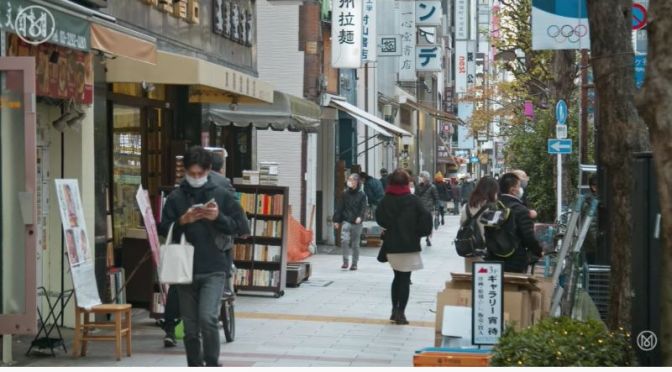
This historic corner of northeast Tokyo was once described as a place for “universities, bookshops and intellectuals”. Academic institutions are still there – along with the Holy Resurrection Cathedral – but Kanda is also home to electronics district Akihabara, a huge shrine and dozens of Japanese curry restaurants too.

Sprawling Kanda covers central districts like neon-lit Akihabara, known for its electronics stores, and Jimbocho, filled with bookshops. Students from the area’s many universities pack into bars, noodle shops, and karaoke rooms at night. Shinto shrines are found on quieter backstreets, including the nearly 1,300-year-old Kanda Myojin Shrine, with its crimson gate and altars to ancient gods of good fortune.