Tag Archives: Culture

REBUILDING A BROKEN PATH FROM BOYHOOD TO MAN

By Michael Cummins, Editor, August 14, 2025

Imagine a world where, in a single decade, half the laughter shared between friends vanishes. Imagine a childhood where time spent outdoors is cut by a third and the developmental benefits of reading are diminished by two-thirds. This is not a dystopian fantasy. According to social psychologist Jonathan Haidt, in a “Prof G Podcast with Scott Galloway published on August 14, 2025, it is the stark reality for a generation that has been systematically disconnected from the real world and shackled to the virtual. “We have overprotected our children in the real world,” Haidt argues, “and underprotected them in the virtual world.”

This profound dislocation is the epicenter of a “perfect storm” disproportionately harming boys and young men—a crisis fueled by predatory technology, economic precarity, and the collapse of institutions that once guided them into manhood. It is a crisis, as a growing chorus of thinkers like Haidt, Brookings scholar Richard Reeves, and professor Scott Galloway have illuminated, born not from a single cause, but from a collective, intergenerational failure. It is a betrayal of the implicit promise that each generation will leave the world better for the next, a promise broken by a society that has become, in Galloway’s stark assessment, “a generation of takers, not givers.”

The Digital Dislocation: A Generation Adrift Online

The most abrupt change to the landscape of youth has been technological. Haidt identifies the years between 2010 and 2015 as the “pivot point” when a “play-based childhood” was supplanted by a “phone-based childhood.” This was not a simple evolution from the television sets of the past. The smartphone is a uniquely invasive tool—a supercomputer delivering constant, algorithmically curated interruptions. It extracts data on its user’s deepest desires while creating a feedback loop of social comparison and judgment, resulting in a documented catastrophe for mental health. It is no coincidence that between 2010 and 2021, the suicide rate for American boys aged 10-14 nearly tripled, according to CDC data highlighted by Haidt.

The Lure of the Manosphere

This digital vacuum has been eagerly filled by what Scott Galloway calls the “great white sharks” of the tech industry. The most insidious outcome of their engagement-at-all-costs model is the weaponization of social validation into a system of industrialized shame. “Imagine growing up in a minefield,” Haidt suggests. “You would walk really carefully.” This pervasive fear suppresses healthy risk-taking, a crucial component of adolescent development, particularly for boys who learn competence through trial, error, and recovery.

This isolation is especially damaging for boys who, as scholar Warren Farrell argues, already suffer from a crisis of “dad-deprivation” and a lack of positive male mentorship. “A boy’s search for a father,” Farrell writes in The Boy Crisis, “is a search for a purpose-driven life.” Into this void step not fathers or coaches, but the algorithmic sirens of the “manosphere.” These figures thrive because they offer a counterfeit version of the very thing Farrell identifies as missing: a strong, authoritative male voice providing direction, however misguided. Figures like Andrew Tate have built empires by offering lonely or insecure young men a seductive, off-the-shelf identity, often paired with dubious get-rich-quick schemes that prey directly on their economic anxieties. The algorithms on platforms like TikTok and YouTube are ruthlessly efficient, creating a pipeline that can push a boy from mainstream gaming content to nihilistic or misogynistic ideologies in a matter of weeks. This is not a moral failing of young men; it is the predictable result of a human need for guidance meeting a machine optimized for radicalizing engagement.

The Economic Squeeze: A Broken Promise of Prosperity

This digital betrayal is compounded by an economic one, as the foundational promises of prosperity have been broken for an entire generation. The traditional path to stability—education, career, family, homeownership—has become fractured. As Galloway argues, older generations have effectively “figured out that the downside of democracy is that old people… can continue to vote themselves more money,” leaving the young to face a brutal housing market and stagnant wages. He describes it as a conscious “pulling up of the ladder,” where asset inflation benefits the old at the direct expense of the young.

From Precarious Work to Deaths of Despair

This economic anxiety shatters the “get rich slowly” ethos and replaces it with a desperate search for a shortcut. And in 2018, the state effectively handed this desperate generation a loaded gun in the form of frictionless, legalized sports betting. The Supreme Court decision placed, as Reeves describes it, a “casino in everyone’s pocket,” making gambling dangerously accessible to a demographic of young men who are biologically more prone to risk-taking and socially more isolated than ever. The statistics are damning: young men are the fastest-growing group of problem gamblers, and in states that legalize online betting, bankruptcy filings often spike.

The consequences are existential. This trend is the leading edge of the “deaths of despair” phenomenon identified by economists Anne Case and Angus Deaton, who documented rising mortality among men without college degrees from suicide, overdose, and alcohol-related illness. Their research concluded these deaths were “less about the sting of poverty and more about the pain of a life without meaning.” When a young man, steeped in economic anxiety and disconnected from real-world support, takes a huge financial risk and fails, the shame can be unbearable. Haidt delivers a chillingly direct warning of the foreseeable consequences: “you’re gonna have dead young men.”

The Social Vacuum: An Abandonment of Guidance and Guardrails

Underpinning both the technological and economic crises is a deeper social one: the systematic dismantling of the institutions, norms, and rituals that once guided boys into healthy manhood. Society has become deinstitutionalized, removing the “guardrails” that once channeled youthful energy.

The Crisis in the Classroom

This is acutely visible in education. The modern classroom, with its emphasis on quiet compliance and verbal-emotive skills, is often a poor fit for the learning styles more common in boys. As author Christina Hoff Sommers has argued for years, “For more than a decade, our schools have been enforcing a zero-tolerance policy for any behavior that suggests boyishness.” The result is a widening gender gap at every level. Women now earn nearly 60% of all bachelor’s degrees in the U.S. Boys are more likely to be diagnosed with a learning disability, more likely to face disciplinary action, and have largely abandoned reading for pleasure. We are, in effect, pathologizing boyhood and then wondering why boys are checking out of school.

The Search for Structure

This deinstitutionalization extends beyond the schoolhouse. The decline of institutions like the Boy Scouts, whose membership has plummeted in recent decades, local sports leagues, and church groups has removed arenas for mentorship and character formation. From an anthropological perspective, this is a catastrophic failure. “Wherever you have initiation rights,” Haidt notes, “they’re always harsher, stricter, tougher for boys because it’s a much bigger jump to turn a boy into a man.” This journey requires structure, discipline, and challenge. Yet modern society, in its quest for safety, has stripped away opportunities for healthy risk, leaving boys to “just vegetate.”

Into this vacuum has rushed a toxic cultural narrative that pits the sexes against each other. But the hunger for meaning has not disappeared. Reeves’s powerful anecdote of visiting a Latin Mass in Denver on a Sunday night and finding it “full of young men, most of them on their own,” speaks volumes. They are not seeking chaos; they are desperately searching for “structure and discipline and purpose and institutions that will help them become men.” They are looking for the very things society has stopped providing.

Forging a New Path: A Framework for Renewal

Recognizing this betrayal is the first step. The next is to act. This requires moving past the gender wars and embracing a bold, pro-social agenda to rebuild the structures that turn boys into thriving men.

1. Rebuild the Guardrails: Institutional and Economic Solutions The most immediate need is to create viable, non-collegiate pathways to success and dignity. We must champion a massive expansion of vocational and technical education, celebrating the mastery of a trade as equal in status to a four-year degree. As Mike Rowe, a vocal advocate for skilled labor, has stated, “We are lending money we don’t have to kids who can’t pay it back to train them for jobs that no longer exist. That’s nuts.” Imagine a modern Civilian Conservation Corps, where young men from all backgrounds work side-by-side to rebuild crumbling infrastructure or restore national parks—learning a trade while forging bonds of shared purpose and earning a tangible stake in the country they are helping to build.

2. Create Modern Rites of Passage: Community and Mentorship Communities must step into the void left by failing institutions. This means a national push to fund and expand mentorship programs. Research from MENTOR National shows that at-risk youth with a mentor are 55% more likely to enroll in college and 130% more likely to hold leadership positions. It means local leaders creating their own modern “rites of passage”—challenging, team-based programs that teach resilience, problem-solving, and civic responsibility through tangible projects. As Reeves bluntly puts it, “pain produces growth,” and we must reintroduce healthy, structured struggle back into the lives of boys.

3. A Pro-Social Vision: Redefining Honorable Masculinity The most crucial task is cultural. We must stop telling boys that their innate nature is toxic and instead offer them a noble vision of what it can become. We must define honorable manhood not as domination or material wealth, but as competence, responsibility, and protectiveness. This means redefining competence not just as physical strength, but as technical skill, emotional regulation, and intellectual curiosity. It means redefining protectiveness not just against physical threats, but against the digital and psychological dangers that poison our discourse and harm the vulnerable. It is a masculinity defined by what it builds and who it cares for—the courage to be a provider for one’s family, a pillar of one’s community, and a steward of a just society.

Conclusion: Repairing the Intergenerational Compact

We have stranded a generation of boys in a digital “Guyland,” a perilous limbo between a childhood they were forced to abandon and an adulthood they see no clear path to reaching. We have told them their natural instincts are a problem while simultaneously exposing them to the most predatory, high-risk temptations ever devised. This is more than a crisis; it is a profound societal malpractice.

The choice we face is stark. We can continue our slide into a zero-sum society of horizontal, gendered conflict, or we can recognize this crisis for what it is: a vertical, intergenerational failure that harms everyone. We must have the courage to declare that the well-being of our sons is not in opposition to the well-being of our daughters. As Richard Reeves has said, the goal is to “get to a world which is better for both men and women.” This is not a zero-sum game; it is a positive-sum imperative.

This requires a new intergenerational compact, one rooted in action, not grievance. It demands we stop pathologizing boyhood and start building the institutions that mold it. It requires that we offer our young men not frictionless temptation, but meaningful struggle. It insists that we provide them not with algorithmic influencers, but with real-world mentors who can show them the path to an honorable life.

The hour is late, and the damage is deep. But in the quiet hunger of young men for purpose, in the fierce love of parents for their children, and in the courage of thinkers willing to speak uncomfortable truths, lies the hope that we can yet forge a new path. The work is not to turn back the clock, but to build a better future—one where we finally keep our promise to the next generation.

THIS ESSAY WAS WRITTEN AND EDITED UTILIZING AI

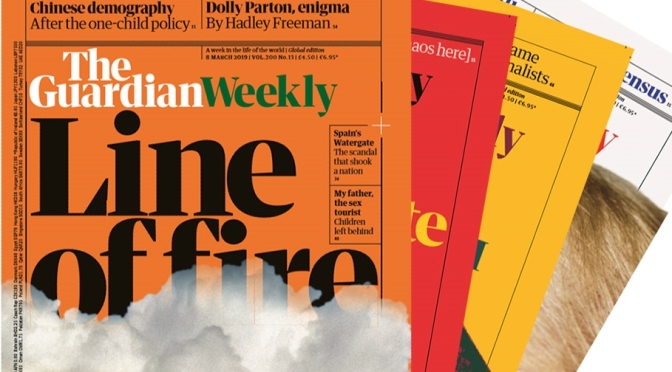
THE GUARDIAN WEEKLY – AUGUST 15, 2025 PREVIEW

THE GUARDIAN WEEKLY: The latest issue features Sudan’s hidden horror: The inside story of a refugee camp massacre. Plus: The films that capture a nation’s soul

While the wars raging in Ukraine and Gaza have dominated global news agendas for months turning into years, relatively little attention has been paid to the ongoing civil war in Sudan – which for many western media outlets remains out of sight and largely out of mind.

This can’t be said of the Guardian’s Mark Townsend, who has reported tirelessly on the effects of the war between the Arab-led Rapid Support Forces and Sudanese military since it broke out in April 2023. It’s a conflict that has been characterised by repeated atrocities, forcing millions from their homes and causing the world’s largest humanitarian crisis.

In April this year, just as a British-led conference was being held in London to explore how to end the war, one such atrocity was unfolding in Zamzam refugee camp in North Darfur. Details were at first sketchy, but only now – thanks to the piecing together of intelligence reports and witness testimony – can it be revealed what happened during the attack on the camp by RSF forces and why it was not stopped.

As Mark’s remarkable account reveals, the 72-hour rampage in April may have taken the lives of more than 1,500 civilians in one of the most notorious war crimes of Sudan’s catastrophic conflict.

Five essential reads in this week’s edition

The big story | The ruins of Gaza, as seen from above
Guardian international correspondent Lorenzo Tondo joins a Jordanian military airdrop for a rare chance to observe a landscape devastated by Israel’s offensive. With photography by Alessio Mamo

Science | The truth about sunscreen
Too much exposure to the sun has traditionally been seen as a danger. Now claims that sunscreen is toxic flood the internet. Our science editor, Ian Sample, weighs up the evidence

Interview | Demis Hassabis, the cautious AI optimist
The head of Google’s DeepMind tells Steve Rose how artificial intelligence could usher in an era of ‘incredible productivity’ and ‘radical abundance’. But who will it benefit?

Opinion | The world is in flames. But I’ve found some hope amid the gloom
Columnist Jonathan Freedland makes a moral case for escapism, as a means of retaining the ability to see the world – and the people – around us

Culture | The films that capture a nation’s soul
What single film best represents a nation? Twelve writers choose the one work they believe most captures their home’s culture and cinema – from a bold cricket musical to a nine-hour documentary, gritty crime dramas to frothy tales of revenge

The Multi-Faith Prosperity Of 10th-Century Córdoba

By Michael Cummins, Editor, August 13, 2025

While much of Christian Europe was mired in the intellectual and economic stagnation of the so-called “Dark Ages,” 10th-century Córdoba, the capital of the Umayyad Caliphate of al-Andalus, blazed as a singular exception in the medieval world. It was not merely its population of over 250,000, its paved streets, or its public baths that made it a marvel. The true marvel of Córdoba lay in its unprecedented model of intellectual and economic collaboration, a model that harnessed the talents of its diverse Muslim, Jewish, and Christian populations. While modern historians like [suspicious link removed] have rightly challenged the romanticized notion of a perfect convivencia—or coexistence—there is no denying that the collective contributions of its Jewish and Christian communities were not peripheral. They were, in fact, integral to the caliphate’s rise as a preeminent power, forging a society so unique that it stands apart in human history.

This era’s success was a testament to a pragmatic, collaborative environment. As scholar María Rosa Menocal eloquently argued in her book, The Ornament of the World, the period was defined by a culture where “tolerance was an inherent aspect of Andalusian society,” allowing for an extraordinary degree of exchange and innovation. In this multi-faith environment, Jewish and Christian communities were not simply tolerated subjects; they were indispensable collaborators. Their contributions were so intertwined with the caliphate’s achievements that its success would have been impossible without them. This collaborative ethos also extended to the roles of women, who, despite the era’s patriarchal legal framework, rose to prominence as scholars, poets, scribes, and even political figures, further enriching the city’s intellectual and cultural life.


The Engine of Scholarship: A Shared Knowledge Base

The intellectual life of 10th-century Córdoba was a testament to the power of a shared, multilingual knowledge base, a system that was virtually without parallel in the medieval world. The Umayyad rulers, particularly Caliph al-Hakam II, created the institutional framework for learning. A dedicated bibliophile, al-Hakam II amassed a caliphal library that some sources claim numbered as many as 400,000 volumes, commissioning scribes and bookbinders to produce new copies.

While monastic libraries in Christian Europe contained only a few hundred manuscripts, often focused on religious dogma, the caliphal library was a dynamic workshop where scholars of all faiths worked side by side to translate ancient Greek and Latin texts, a process that preserved and expanded upon classical knowledge largely lost to the rest of Europe. The caliph’s agents were dispatched across the Islamic world and beyond to acquire rare manuscripts on every conceivable subject, from medicine and astronomy to poetry and philosophy.

The caliph’s patronage extended to a diverse group of intellectuals who curated the collection, and the role of women in this intellectual flowering was particularly striking. Among them was Lubna of Córdoba, a remarkable intellectual, poet, and mathematician who rose from slavery to become one of al-Hakam II’s most trusted secretaries, instrumental in the administration of the library itself. Her story is a powerful example of the city’s unique meritocratic ethos, where talent and intellect could transcend social barriers.

The contributions of women in scholarship were not limited to Lubna; records show that hundreds of women worked as professional scribes and copyists, transcribing books and manuscripts for the royal library. Beyond the library, the era produced celebrated female poets and scholars whose work was highly regarded, such as ‘A’isha bint Ahmad al-Qurtubiyya, a renowned poet and calligrapher, and the poet Wallada bint al-Mustakfi, famous for her sharp wit and love poems.

The Great Mosque of Córdoba served as the city’s de facto university, a hub of religious and secular learning where scholars and students from diverse backgrounds gathered for instruction. The caliphs funded chairs for distinguished professors, and the mosque’s courtyards provided a space for open intellectual exchange, fostering a culture of critical inquiry and debate. As Dr. Nowar Nizar Al-Ani and his colleagues noted, this institutional framework was designed to “foster a kind of intellectual pluralism that was revolutionary for its time.”

It was in this environment that Jewish and Christian scholars were not just conduits for old ideas but active contributors to new ones. The Jewish community, in particular, experienced a golden age under this system. Hasdai ibn Shaprut, a Jewish court physician and scholar, was at the forefront of medical research and botanical studies. He was also a major patron of Jewish intellectual life, sponsoring scholars and poets who would compose masterpieces of Hebrew literature and helping to establish Córdoba as a new center for Jewish scholarship, eclipsing the traditional academies in Baghdad.

This era also produced pioneering scientific advancements, such as those of the physician Abulcasis (Al-Zahrawi), a key figure of the late 10th century. He wrote a comprehensive 30-volume medical encyclopedia, Al-Tasrif, which was revolutionary for its detailed descriptions of surgical procedures and instruments, many of which he invented. His work would become a standard medical text in Europe for centuries, directly influencing the development of surgery.

The fusion of knowledge and faith led to a unique intellectual environment where, as Jerrilynn D. Dodds‘s edited volume, Al-Andalus: The Art of Islamic Spain, suggests, “the arts of the mind were as celebrated as the arts of the hand.” This collaborative spirit permeated scholarly life: a Christian monk might have been translating a Greek medical treatise in one corner of a library while a Jewish botanist analyzed a new plant in another. It was this cross-pollination of ideas, made possible by the linguistic and cultural fluency of the Christian and Jewish communities, that truly powered Córdoba’s intellectual engine.


The Foundation of Prosperity: Economic and Diplomatic Contributions

The wealth and political stability of the Umayyad Caliphate did not emerge in a vacuum; they were built on the contributions of its non-Muslim subjects, who served as a vital economic and diplomatic backbone. In a period when European feudal society was strictly hierarchical and exclusive, Córdoba’s pragmatic approach was historically unique.

The Jewish community was essential to Córdoba’s sophisticated diplomatic network, with its members highly valued for their linguistic skills and relative neutrality in disputes between Muslim and Christian rulers. The elevation of Hasdai ibn Shaprut to a position of such immense influence—a Jewish diplomat and physician serving as a key advisor to the caliph—was a political innovation without parallel in the medieval West. Fluent in Arabic, Hebrew, and Latin, Hasdai was an indispensable intermediary in diplomatic missions to Christian kingdoms like León and the Holy Roman Empire, skillfully navigating political tensions and securing alliances. He also served as the head of the Jewish community, centralizing cultural life in Córdoba and fostering its independence from the Jewish academies in Baghdad.

The economic engine of Córdoba was also powered by its minorities. The Jewish community was instrumental in the city’s robust international trade, acting as merchants and financiers. Their extensive networks across Europe and the Mediterranean were crucial to Córdoba’s commercial success, helping to establish trade routes that brought precious silks, spices, and other luxury goods into al-Andalus. This immense wealth funded the caliphate’s ambitious building projects. As L. P. Harvey notes in his work, Islamic Spain, 1250 to 1500, the caliphate’s political authority rested on a “pragmatic reliance on a professional class of civil servants, many of whom came from the dhimmi communities, whose loyalty and expertise were a cornerstone of the administrative apparatus.”

Christians, known as Mozarabs, also played critical, though often different, roles. While the highest offices were reserved for Muslims, some Christians rose to positions of influence. For example, a Christian cleric named Recemund served as a civil servant for ‘Abd al-Rahman III and even undertook a diplomatic mission to the Holy Roman Emperor, Otto I. However, the majority of the Christian population was essential to the agricultural economy in the surrounding rural areas. Their contributions as farmers and artisans, who continued many of the traditions and techniques from the Visigothic period, were fundamental to the food supply and wealth of the caliphate.


The Unique Fabric: Cultural and Artistic Synthesis

The artistic and cultural identity of 10th-century Córdoba was a magnificent tapestry woven from the threads of all three religions. The caliphs’ patronage of the arts led to a unique blending of styles that is most famously showcased in the Great Mosque. Its most significant and elaborate expansion, led by Caliph al-Hakam II, featured intricate polylobed arches, ribbed domes, and the lavish use of mosaics—a technique learned directly from Byzantine Christian craftsmen. According to the article “Historical restorations of the Maqṣūrah glass mosaics from the Great Mosque of Córdoba” by J. V. Tarín et al., the caliph specifically sought out Byzantine craftsmen, a profound act of cultural confidence that integrated Christian artistic tradition into the very heart of Islamic worship. In a world often defined by sectarian art, this was a revolutionary aesthetic vision.

Beyond the grand monuments, this cultural synthesis permeated everyday life. The “Mozarabic” style of art and architecture—a blend of Christian and Islamic design—flourished. Christian artisans were not only employed on royal projects but also developed their own unique style that incorporated elements of Islamic geometric patterns and calligraphy. This fusion was also evident in language and literature. Many Christians and Jews adopted Arabic as their language for daily life and scholarship, leading to a unique body of work where Jewish poets composed in a sophisticated Hebrew deeply influenced by Arabic meter and rhyme schemes. As the volume Al-Andalus: The Art of Islamic Spain captures, the art of the period was a “visual dialogue between cultures.” The result was a truly syncretic culture, a unique and irreplaceable expression of the people who created it.

The caliphate’s immense wealth also fueled a boom in refined artistic crafts. Cordoban artisans were celebrated for their skills in calligraphy, which adorned not only architecture but also the lavish ivory caskets and boxes that were prized possessions of the caliph’s court. These caskets, often carved with intricate scenes and calligraphic inscriptions, are a perfect example of how different artistic traditions were fused. Similarly, the city was famous for its fine metalwork, glazed tiles, and high-quality textiles, which were not only major economic drivers but also expressions of a sophisticated and cosmopolitan taste. The creation of the palatine city of Madinat al-Zahra, a new capital built by ‘Abd al-Rahman III, further exemplified this artistic ambition. Its lavish palaces and gardens, described in scholarly works as “a testament to the state’s power and artistic ambition,” were a massive undertaking that drew on the combined skills of Muslim, Jewish, and Christian artisans, cementing the visual legacy of the golden age.


Conclusion

Córdoba in the 10th century was more than just a powerful city; it was a testament to the potential for a pluralistic society to flourish. Its success was a collaborative endeavor, with Jewish, Christian, and female communities providing the crucial intellectual, economic, and cultural components that enabled the Umayyad Caliphate to achieve its zenith. Through their roles as translators, scholars, diplomats, merchants, and artisans, these groups were not simply tolerated subjects but indispensable collaborators in the creation of a sophisticated civilization.

The modern scholarship of historians like Kenneth Baxter Wolf has rightly challenged the romanticized “myth of coexistence,” pointing to the complex realities of power dynamics. But even with this more critical lens, the story that emerges is not one of a failed paradise, but a more compelling and historically significant narrative: a society where, for a sustained period, deep cultural and intellectual collaboration was possible. The lessons of Córdoba continue to resonate today, reminding us that cultural exchange is often the true catalyst for progress.

This legacy is perhaps best captured by a post on the Jewish Andalusian Heritage Route, which describes how the Jewish sages of Andalusia “loved the Torah but understood existence and Judaism as a whole that encompassed religion, spirituality, science, poetry and literature, music, medicine and philosophy.” This powerful insight tells a more complete and hopeful story of how diverse people, bound together by a shared quest for knowledge and prosperity, can build an enduring legacy.

THIS ESSAY WAS WRITTEN AND EDITED UTILIZING AI

THE NEW YORKER MAGAZINE – AUGUST 18, 2025 PREVIEW

The illustrated cover of the August 18 2025 issue of The New Yorker in which people hike on a colorful landscape.

THE NEW YORKER MAGAZINE: The latest cover features ‘Lorenzo Mattotti’s “Summer Rays” – The art of wandering.

Can Democrats Fight Back Against Trump’s Redistricting Scheme?

Fleeing lawmakers in Texas are unlikely to stop Republicans from redrawing the state’s congressional maps, but their effort has offered a rallying cry—and a reminder of the Democratic Party’s weaknesses. By Jonathan Blitzer

How an Ultra-Rare Disease Accelerates Aging

Teen-agers with progeria have effectively aged eight or nine decades. A cure could help change millions of lives—and shed light on why we grow old. By Dhruv Khullar

How Much Is Trump Profiting Off the Presidency?

An honest accounting of our Executive-in-Chief’s runaway self-enrichment. By David D. Kirkpatrick

Judiciary On Trial: States Rights vs. Federal Power

By Michael Cummins, Editor, August 10, 2025

The American system of government, with its intricate web of checks and balances, is a continuous negotiation between competing sources of authority. At the heart of this negotiation lies the judiciary, tasked with the unenviable duty of acting as the final arbiter of power. The Bloomberg podcast “Weekend Law: Texas Maps, ICE Profiling & Agency Power” offers a compelling and timely exploration of this dynamic, focusing on two seemingly disparate legal battles that are, in essence, two sides of the same coin: the struggle to define the permissible boundaries of government action.

This essay will argue that the podcast’s true essence lies in its powerful synthesis of these cases, presenting them not as isolated political events but as critical manifestations of an ongoing judicial project: to determine the limits of legislative, executive, and administrative power in the face of constitutional challenges. This judicial project, as recent scholarly works have shown, is unfolding within a broader shift in American federalism, where a newly assertive judiciary and a highly politicized executive branch are rebalancing the relationship between federal and state power in unprecedented ways.

“The judiciary’s role is not merely to interpret the law, but to act as the ultimate check on a government’s temptation to consolidate power at the expense of its people.” — Emily Berman, law professor, Texas Law Review (2025)

The Supreme Court’s role as the final arbiter of these powers is not an original constitutional given, but rather a power it asserted for itself in the landmark 1803 case Marbury v. Madison. In that foundational ruling, Chief Justice John Marshall established the principle of judicial review, asserting that “it is emphatically the province and duty of the judicial department to say what the law is.” This declaration laid the groundwork for the judiciary to act as a check on both the legislative and executive branches, a power that would be tested and expanded throughout history. The two cases explored in the “Weekend Law” podcast are the latest iterations of this long-standing judicial project, demonstrating how the courts continue to shape the contours of governance in the face of contemporary challenges.

This is particularly relevant given the argument in the Harvard Law Review note “Federalism Rebalancing and the Roberts Court: A Departure from Historical Patterns” (March 2025), which contends that the Roberts Court has consciously moved away from historical trends and is now uniquely pro-state, often altering existing federal-state relationships. This broader jurisprudential shift provides a crucial backdrop for understanding Texas’s increasingly assertive actions, as it suggests the state is operating within a legal landscape more receptive to its claims of sovereignty.

Legislative Power and the Gerrymandering Divide

The first case study, the heated Texas redistricting battle, serves as a vivid illustration of the tension between legislative power and fundamental voting rights. The podcast effectively frames the drama: Texas Democrats, in a last-ditch effort, fled the state to deny the Republican-controlled legislature a quorum, thereby attempting to block the passage of a new congressional map. The stakes of this political chess match are immense, as the proposed map, crafted following the census, could solidify the Republican party’s narrow majority in the U.S. House. The legal conflict hinges on the subtle but consequential distinction between “racial” and “political” gerrymandering, a dichotomy that the Supreme Court has repeatedly struggled to define.

While the Court has held that drawing district lines to dilute the voting power of a racial minority is unconstitutional under the Fourteenth Amendment’s Equal Protection Clause and the Voting Rights Act of 1965, it has also ruled in cases like Rucho v. Common Cause (2019) that political gerrymandering is a “political question” beyond the purview of federal courts. The Bipartisan Policy Center’s explainer, “What to Know About Redistricting and Gerrymandering” (August 2025), is particularly relevant here, as it directly references a similar 2003 case where the Supreme Court allowed a Texas mid-decade map to stand. This history of judicial deference provides the specific legal precedent that empowers Texas to pursue its current redistricting efforts with confidence, and it helps contextualize the judiciary’s reluctance to intervene.

The Texas case exploits this judicial gray area. The state legislature, while acknowledging its aim to benefit the Republican Party—a seemingly permissible “political” objective—faces accusations from Democrats and civil rights groups that the new map disproportionately dilutes the power of Black and Hispanic voters, particularly in urban areas. The podcast highlights the argument that race and political preference are often so tightly intertwined that it becomes nearly impossible to separate them. This is precisely the kind of argument the Supreme Court has had to grapple with, as seen in recent cases like Alexander v. South Carolina State Conference of the NAACP (2024). In that case, the Court’s majority, led by Justice Alito, held that challengers must provide direct, not just circumstantial, evidence that race, rather than politics, was the “predominant” factor in drawing a district. This ruling, and others like it, effectively “stack the deck” against plaintiffs, creating novel and significant roadblocks to a successful racial gerrymandering claim.

“The Supreme Court has relied upon the incoherent racial gerrymandering claim because the Court lacks the right tools to police certain political conduct that might be impermissibly racist, partisan, or both.” — Rick Hasen, election law expert

Legal experts like Rick Hasen, whose work on election law is foundational, would likely view this trend with deep concern. Hasen has long argued for a more robust defense of voting rights, noting the Constitution’s surprising lack of an affirmative right to vote and the Supreme Court’s incremental, often restrictive, interpretations of voting protections. The Texas situation, in his view, is not a bug in the system but a feature of a constitutional framework that has been slowly eroded by a Court that has become increasingly deferential to state legislatures. The podcast’s narrative here is a cautionary tale of a legislative body wielding its power to entrench itself, and of a judiciary that, by its own precedents, may be unable or unwilling to intervene effectively.

The political theater of the Democrats’ walkout, therefore, is not merely a symbolic act; it is a desperate attempt to use the legislative process itself to challenge a power grab that the judiciary has made more difficult to contest. This is further complicated by the analysis in Publius – The Journal of Federalism article “State of American Federalism 2024–2025” (July 2025), which explores the concept of “transactional federalism,” where presidents reward loyal states and punish those that are not. This framework provides a vital lens for understanding how a state like Texas, with a strong political alignment to the executive branch, might feel empowered to take such aggressive redistricting actions.

Reining in Executive Overreach: The ICE Profiling Case

On the other side of the legal spectrum, the podcast turns to the Ninth Circuit’s ruling against U.S. Immigration and Customs Enforcement (ICE) in Southern California. This case shifts the focus from legislative overreach to executive overreach, particularly the conduct of an administrative agency. The court’s decision upheld a lower court’s temporary restraining order, barring ICE agents from making warrantless arrests based on a broad “profile” that included apparent race, ethnicity, language, and location. This is a critical challenge to the authority of a federal agency, forcing it to operate within the constraints of the Fourth Amendment. The court’s ruling, as highlighted in the podcast, was predicated on a “mountain of evidence” demonstrating that ICE’s practices amounted to unconstitutional racial profiling.

“The Ninth Circuit’s decision is a critical affirmation that the Fourth Amendment does not have a carve-out for immigration enforcement. A person’s skin color is not probable cause.” — David Carden, ACLU immigration attorney (July 2025)

The legal principles at play here are equally profound. The Fourth Amendment protects “the right of the people to be secure in their persons, houses, papers, and effects, against unreasonable searches and seizures.” The Ninth Circuit’s ruling essentially states that a person’s appearance, the language they speak, or where they work is not enough to establish the “reasonable suspicion” necessary for a warrantless stop. This decision is a powerful example of the judiciary acting as a check on the executive branch, affirming that even in the context of immigration enforcement, constitutional rights apply to all individuals within the nation’s borders. The podcast emphasizes the chilling effect of these raids, which created an atmosphere of fear and terror in communities of color. The court’s decision serves as a crucial bulwark against an “authoritarian” approach to law enforcement, as noted by ACLU attorneys.

Immigration attorney Leon Fresco, who is featured in the podcast, provides a nuanced perspective on the case, discussing the complexities of agency authority. While the government argued that its agents were making stops based on a totality of factors, not just race, the court’s rejection of this argument underscores a significant judicial shift. This is not a new conflict, as highlighted in the Georgetown Law article “Sovereign Resistance To Federal Immigration Enforcement In State Courthouses” (published after November 2020), which examines the historical and legal foundation for state and individual resistance to federal immigration enforcement. The article identifies the “normative underpinnings” of this resistance and explores the constitutional claims that states and individuals use to challenge federal authorities.

This historical context is essential for understanding the sustained nature of this conflict. This judicial skepticism toward expansive agency power is further illuminated by the Columbia Law School experts’ analysis of 2025 Supreme Court rulings (July 2025), which focuses on the federalism battle over immigration law and the potential for a ruling on the federal government’s ability to condition funding on state compliance with immigration laws. This expert commentary shows that the judicial challenges to federal immigration authority, as seen in the Ninth Circuit case, are part of a broader, ongoing legal battle at the highest levels of the judiciary.

The Judicial Project: Unifying Principles of Power

The true genius of the podcast is its ability to weave these two disparate threads into a single, cohesive tapestry of legal thought. The Texas redistricting fight and the ICE profiling case, while geographically and thematically distinct, are both fundamentally about the limits of power. In Texas, we see a state legislature exercising its power to draw district lines in a way that, critics argue, subverts democratic principles. In Southern California, we see a federal agency exercising its power to enforce immigration laws in a way that, the court has ruled, violates constitutional rights. In both scenarios, the judiciary is called upon to step in and draw a line.

“It is emphatically the province and duty of the judicial department to say what the law is.” — Chief Justice John Marshall, Marbury v. Madison (1803)

The podcast’s synthesis of these cases highlights the central role of the Supreme Court in this ongoing process. The Court, through its various rulings, has crafted the very legal tools and constraints that govern these conflicts. The precedents it sets—on gerrymandering, on the Voting Rights Act, and on judicial deference to agencies—become the battleground for these legal fights. The podcast suggests that the judiciary is not merely a passive umpire but an active player whose decisions over time have shaped the very rules of the game. For example, the Court’s decisions have made it harder to sue over gerrymandering and, simultaneously, have recently made it harder for agencies to act without judicial scrutiny. This creates a fascinating and potentially contradictory legal landscape where the judiciary appears to be simultaneously retreating from one area of political contention while advancing into another.

Conclusion: A New Era of Judicial Scrutiny

Ultimately, “Weekend Law” gets to the essence of a modern American dilemma. The legislative process is increasingly characterized by partisan gridlock, forcing a reliance on executive and administrative actions to govern. At the same time, a judiciary that is more ideological and assertive than ever before is stepping in to review these actions, often with a skepticism that questions the very foundations of the administrative state.

The cases in Texas and Southern California are not just about voting maps or immigration sweeps; they are about the fundamental structure of American governance. They illustrate how the judiciary, from district courts to the Supreme Court, has become the primary battleground for defining the scope of constitutional rights and the limits of state and federal power. This is occurring within a new legal environment where, according to the Harvard Law Review, the Roberts Court is uniquely pro-state, and where the executive branch, as discussed in the Publius article, is engaging in a form of “transactional federalism.”

The podcast masterfully captures this moment, presenting a world where the most profound political questions of our time are no longer settled in the halls of Congress, but in the solemn chambers of the American courthouse. As we look ahead, we are left to ponder a series of urgent questions. Will the judiciary’s new skepticism toward administrative power lead to a more accountable government or a paralyzed one? What will be the long-term impact on voting rights if the courts continue to make it more difficult to challenge gerrymandering?

“When the map is drawn to silence the voter, the very promise of democracy is fractured. The judiciary’s silence is not neutrality; it is complicity in the decay of a fundamental right.” — Professor Sarah Levinson, University of Texas School of Law (2025)

And, in an era of intense political polarization, can the judiciary—a branch of government itself increasingly viewed through a partisan lens—truly be trusted to fulfill its historic role as a neutral arbiter of the Constitution? The essence of the podcast, then, is a sober reflection on the state of American democracy, filtered through the lens of legal analysis. It portrays a system where power is constantly tested, and the judiciary, despite its own internal divisions and evolving doctrines, remains the indispensable mechanism for mediating these tests.

“A government that justifies racial profiling on the streets is no different from one that seeks to deny justice in its courthouses. The Ninth Circuit has held a line, declaring that our Constitution protects all people, not just citizens, from the long shadow of authoritarian overreach.” — Maria Elena Lopez, civil rights attorney, ACLU of Southern California (2025)

The podcast’s narrative arc—from the political brinkmanship in Texas to the constitutional defense of individual rights in California—serves as a powerful reminder that the rule of law is a dynamic, living concept, constantly being shaped and reshaped by the cases that come before the courts and the decisions that are rendered. It is a story of power, rights, and the enduring, if often contentious, role of the American judiciary in keeping the two in balance.


THIS ESSAY WAS WRITTEN AND EDITED UTILIZING AI

ADVANCING TOWARDS A NEW DEFINITION OF “PROGRESS”

By Michael Cummins, Editor, August 9, 2025

The very notion of “progress” has long been a compass for humanity, guiding our societies through eras of profound change. Yet, what we consider an improved or more developed state is a question whose answer has shifted dramatically over time. As the Cambridge Dictionary defines it, progress is simply “movement to an improved or more developed state, or to a forward position.” But whose state is being improved? And toward what future are we truly moving? The illusion of progress is perhaps most evident in the realm of technology, where breathtaking innovation often masks a troubling truth: the benefits are frequently unevenly shared, concentrating power and wealth while leaving many behind.

Historically, the definition of progress was a reflection of the era’s dominant ideology. In the medieval period, progress was a spiritual journey, a devout path toward salvation and the divine kingdom. The great cathedrals were not just architectural feats; they were monuments to this singular, sacred definition of progress. The Enlightenment shattered this spiritual paradigm, replacing it with the ascent of humanity through reason, science, and the triumph over superstition and tyranny. Thinkers like Voltaire and Condorcet envisioned a linear march toward a more enlightened, rational society.

This optimism fueled the Industrial Revolution, where figures like Auguste Comte and Herbert Spencer saw progress as a social evolution—an unstoppable climb toward knowledge and material prosperity. But this vision was a mirage for many. The steam engines that powered unprecedented economic growth also subjected workers to brutal, dehumanizing conditions, where child labor and dangerous factories were the norm. The Gilded Age, following this revolution, enriched railroad magnates and steel barons, while workers struggled in poverty and faced violent crackdowns on their efforts to organize.

Today, a similar paradox haunts our digital age. Meet Maria, a fictional yet representative 40-year-old factory worker in Flint, Michigan. For decades, her livelihood was a steady source of income for her family. But last year, the factory where she worked introduced an AI-powered assembly line, and her job, along with hundreds of others, was automated away. Maria’s story is not an isolated incident; it is a global narrative that reflects the experiences of billions. Technologies like the microchip, the algorithm, and generative AI promise to lift economies and solve complex problems, yet they often leave a trail of deepened inequality in their wake. Her story is a poignant call to arms, demanding that we re-examine our collective understanding of progress.

This essay argues for a new, more deliberate definition of progress—one that moves beyond the historical optimism rooted in automatic technological gains and instead prioritizes equity, empathy, and sustainability. We will explore the clash between techno-optimism, a blind faith in technology’s ability to solve all problems, and techno-realism, a balanced approach that seeks inclusive and ethical innovation. Drawing on the lessons of history and the urgent struggles of individuals like Maria, we will chart a course toward a progress that uplifts all, not just the powerful and the privileged.


The Myth of Automatic Progress

The allure of technology is undeniable. It is a siren’s song, promising a frictionless world of convenience, abundance, and unlimited potential. Marc Andreessen’s 2023 “Techno-Optimist Manifesto” captured this spirit perfectly, a rallying cry for the belief that technology is the engine of all good and that any critique is a form of “demoralization.” However, this viewpoint ignores the central lesson of history: innovation is not inherently a force for equality.

The Industrial Revolution, while a monumental leap for humanity, was a masterclass in how progress can widen the chasm between the rich and the poor. Factory owners, the Andreessens of their day, amassed immense wealth, while the ancestors of today’s factory workers faced dangerous, low-wage jobs and lived in squalor. Today, the same forces are at play. A 2023 McKinsey report projected that up to 30% of jobs in the U.S. could be automated by 2030, a seismic shift that will disproportionately affect low-income workers, the very demographic to which Maria belongs.

Progress, therefore, is not an automatic outcome of innovation; it is a result of conscious choices. As economists Daron Acemoglu and Simon Johnson argue in their pivotal 2023 book Power and Progress, the benefits of technology are not predetermined.

“The distribution of a technology’s benefits is not predetermined but rather a result of governance and societal choices.” — Daron Acemoglu and Simon Johnson, Power and Progress: Our Thousand-Year Struggle Over Technology and Prosperity

Redefining progress means moving beyond the naive assumption that technology’s gains will eventually “trickle down” to everyone. It means choosing policies and systems that uplift workers like Maria, ensuring that the benefits of automation are shared broadly, rather than being captured solely as corporate profits.


The Uneven Pace of Progress

Our perception of progress is often skewed by the dizzying pace of digital advancements. We see the exponential growth of computing power, the rapid development of generative AI, and the constant stream of new gadgets, and we mistakenly believe this is the universal pace of all human progress. But as Vaclav Smil, a renowned scholar on technology and development, reminds us, this is a dangerous illusion.

In his recent book, The Illusion of Progress, Smil meticulously dismantles this notion, arguing that while digital technologies soar, fundamental areas of human need—like energy and food production—are advancing at a far slower, more laborious pace.

“We are misled by the hype of digital advances, mistaking them for universal progress.” — Vaclav Smil, The Illusion of Progress: The Promise and Peril of Technology

A look at the data confirms Smil’s point. According to the International Energy Agency (IEA), the global share of fossil fuels in the primary energy mix only dropped from 85% to 80% between 2000 and 2022—a change so slow it is almost imperceptible. Simultaneously, despite technological advancements, global crop yields for staples like wheat have largely plateaued since 2010, according to a 2023 report from the Food and Agriculture Organization (FAO). This stagnation, combined with global population growth, has left an estimated 735 million people undernourished in 2022, a stark reminder that our most fundamental challenges are not being solved by the same pace of innovation we see in Silicon Valley.

Even the very tools of the digital revolution can be a source of regression. Social media, a technology once heralded as a democratizing force, has become a powerful engine for division and misinformation. For example, a 2023 BBC report documented how WhatsApp was used to fuel ethnic violence during the Kenyan elections. These platforms, while distracting us with their endless streams of content, often divert our attention from the deeper, more systemic issues squeezing families like Maria’s, such as stagnant wages and rising food prices.

Yet, progress is possible when innovation is directed toward systemic challenges. The rise of microgrid solar systems in Bangladesh, which has provided electricity to millions of households, demonstrates how targeted, appropriate technology can bridge gaps and empower communities. Redefining progress means prioritizing these systemic solutions over the next shiny gadget.


Echoes of History in Today’s World

Maria’s job loss in Flint is not a modern anomaly; it is an echo of historical patterns of inequality and division. It resonates with the Gilded Age of the late 19th century, when railroad monopolies and steel magnates like Carnegie amassed colossal fortunes while workers faced brutal, 12-hour days in unsafe factories. The violent Homestead Strike of 1892, where workers fought against wage cuts, is a testament to the bitter class struggle of that era. Today, wealth inequality rivals that gilded age, with a recent Oxfam report showing that the world’s richest 1% have captured almost two-thirds of all new wealth created since 2020. Families like Maria’s are left to struggle with rising rents and stagnant wages, a reality far removed from the promise of prosperity.

“History shows that technological progress often concentrates wealth unless society intervenes.” — Daron Acemoglu and Simon Johnson, Power and Progress

Another powerful historical parallel is the Dust Bowl of the 1930s. Decades of poor agricultural practices and corporate greed, driven by a myopic focus on short-term profit, led to an environmental catastrophe that displaced 2.5 million people. This environmental mismanagement is an eerie precursor to our current climate crisis. A recent NOAA report on California’s wildfires and other extreme weather events shows how a similar failure to prioritize long-term well-being over short-term gains is now displacing millions more, just as it did nearly a century ago.

In Flint, the social fabric is strained, with some residents blaming immigrants for economic woes—a classic scapegoat tactic that ignores the significant contributions of immigrants to the U.S. economy. This echoes the xenophobic sentiment of the 1920s Red Scare and the anti-immigrant rhetoric of the Great Depression. The rise of modern nationalism, fueled by social media and political leaders, mirrors the post-WWI isolationism that deepened the Great Depression. Unchecked AI-driven misinformation and viral “deepfakes” on platforms like X are the modern equivalent of 1930s radio propaganda, amplifying fear and division in our daily feeds.

“We shape our tools, and thereafter our tools shape us, often reviving old divisions.” — Yuval Noah Harari, Homo Deus: A Brief History of Tomorrow

Yet, history is not just a cautionary tale; it is also a source of hope. Germany’s proactive refugee integration programs in the mid-2010s, which trained and helped integrate hundreds of thousands of migrants into the workforce, show that societies can learn from past mistakes and choose inclusion over exclusion. A new definition of progress demands that we confront these cycles of inequality, fear, and division. By choosing empathy and equity, we can ensure that technology serves to bridge divides and uplift communities like Maria’s, rather than fracturing them further.


The Perils of Techno-Optimism

The belief that technology will, on its own, solve our most pressing problems—a phenomenon some scholars have termed “technowashing”—is a seductive but dangerous trap. It promises a quick fix while delaying the difficult, structural changes needed to address crises like climate change and social inequality.

In their analysis of climate discourse, scholars Sofia Ribeiro and Viriato Soromenho-Marques argue that techno-optimism is a distraction from necessary action.

“Techno-optimism distracts from the structural changes needed to address climate crises.” — Sofia Ribeiro and Viriato Soromenho-Marques, The Techno-Optimists of Climate Change

The Arctic’s indigenous communities, like the Inuit, face the existential threat of melting permafrost, which a 2023 IPCC report warns could threaten much of their infrastructure. Meanwhile, some oil companies continue to tout expensive and unproven technologies like direct air capture to justify continued fossil fuel extraction, all while delaying the real solutions—a massive investment in renewable energy—that could save trillions of dollars. This is not progress; it is a corporate strategy to externalize costs and delay accountability, echoing the tobacco industry’s denialism of the 1980s. As Nathan J. Robinson’s 2023 critique in Current Affairs notes, techno-optimism is a form of “blind faith” that ignores the need for regulation and ethical oversight, risking a repeat of catastrophes like the 2008 financial crisis, which cost the global economy trillions.

The gig economy is a perfect microcosm of this peril. Driven by AI platforms like Uber, it exemplifies how technology can optimize for profits at the expense of fairness. A recent study from UC Berkeley found that a significant portion of gig workers earn below the minimum wage, as algorithms prioritize efficiency over worker well-being. This echoes the unchecked speculative frenzy of the 1990s dot-com bubble, which ended with trillions in losses. Today, unchecked AI is amplifying these harms, with a 2023 Reuters study finding that a large percentage of content on platforms like X is misleading, fueling division and distrust.

“Technology without politics is a recipe for inequality and instability.” — Evgeny Morozov, The Net Delusion: The Dark Side of Internet Freedom

Yet, rejecting blind techno-optimism is not a rejection of technology itself. It is a demand for a more responsible, regulated approach. Denmark’s wind energy strategy, which has made it a global leader in renewables, is a testament to how pragmatic government regulation and public investment can outpace the empty promises of technowashing. Redefining progress means embracing this kind of techno-realism.


Choosing a Techno-Realist Path

To forge a new definition of progress, we must embrace techno-realism, a balanced approach that harnesses innovation’s potential while grounding it in ethics, transparency, and human needs. As Margaret Gould Stewart, a prominent designer, argues, this is an approach that asks us to design technology that serves society, not just markets.

This path is not about rejecting technology, but about guiding it. Think of the nurses in rural Rwanda, where drones zip through the sky, delivering life-saving blood and vaccines to remote clinics. According to data from the company Zipline, these drones have saved thousands of lives. This is technology not as a shiny, frivolous toy, but as a lifeline, guided by a clear human need.

History and current events show us that this path is possible. The Luddites of 1811, often dismissed as anti-progress, were not fighting against technology; they were fighting for fairness in the face of automation’s threat to their livelihoods. Their spirit lives on in the European Union’s landmark AI Act, which mandates transparency and safety standards to protect workers like Maria from biased algorithms. In Chile, a national program is retraining former coal miners to become renewable energy technicians, creating thousands of jobs and demonstrating that a just transition to a sustainable future is possible when policies prioritize people.

The heart of this vision is empathy. Finland’s national media literacy curriculum, which has been shown to be effective in combating misinformation, is a powerful model for equipping citizens to navigate the digital world. In communities closer to home, programs like Detroit’s urban gardens bring neighbors together to build solidarity across racial and economic divides. In Mexico, indigenous-led conservation projects are blending traditional knowledge with modern science to heal the land.

As Nobel laureate Amartya Sen wrote, true progress is about a fundamental expansion of human freedom.

“Development is about expanding the freedoms of the disadvantaged, not just advancing technology.” — Amartya Sen, Development as Freedom

Costa Rica’s incredible achievement of powering its grid with nearly 100% renewable energy is a beacon of what is possible when a nation aligns innovation with ethics. These stories—from Rwanda’s drones to Mexico’s forests—prove that technology, when guided by history, regulation, and empathy, can serve all.


Conclusion: A Progress We Can All Shape

Maria’s story—her job lost to automation, her family struggling in a community beset by historical inequities—is not a verdict on progress but a powerful, clear-eyed challenge. It forces us to confront the fact that progress is not an inevitable, linear march toward a better future. It is a series of deliberate choices, a constant negotiation between what is technologically possible and what is ethically and socially responsible. The historical echoes of inequality, environmental neglect, and division are loud, but they are not our destiny.

Imagine Maria today, no longer a victim of technological displacement but a beneficiary of a new, more inclusive model. Picture her retrained as a solar technician, her hands wiring a community-owned energy grid that powers Flint’s homes with clean energy. Imagine her voice, once drowned out by economic hardship, now rising on social media to share stories of unity and resilience, drowning out the divisive noise. This vision—where technology is harnessed for all, guided by ethics and empathy—is the progress we must pursue.

The path forward lies in action, not just in promises. It requires us to engage in our communities, pushing for policies that protect and empower workers. It demands that we hold our leaders accountable, advocating for a future where investments in renewable energy and green infrastructure are prioritized over short-term profits. It requires us to support initiatives that teach media literacy, allowing us to discern truth from the fog of misinformation. It is in these steps, grounded in the lessons of history, that we turn a noble vision into a tangible reality.

Progress, in its most meaningful sense, is not about the speed of a microchip or the efficiency of an algorithm. It is about the deliberate, collective movement toward a society where the benefits of innovation are shared broadly, where the most vulnerable are protected, and where our shared future is built on the foundations of empathy, community, and sustainability. It is a journey we must embark on together, a progress we can all shape.

Progress: movement to a collectively improved and more inclusively developed state, resulting in a lessening of economic, political, and legal inequality, a strengthening of community, and a furthering of environmental sustainability.


THIS ESSAY WAS WRITTEN AND EDITED UTILIZING AI

The Humanist Genius Of Boccaccio’s “Dirty Tales”

By Michael Cummins, Editor, August 8, 2025

The enduring literary fame of the Italian writer and humanist Giovanni Boccaccio (1313-1375) is a monument to paradox. His name has been synonymous with the ribald, lascivious, and often obscene tales of the Decameron, a reputation that stands in stark opposition to the scholarly humanist who devoted his life to promoting Dante, meticulously copying ancient manuscripts, and writing a monumental work of literary theory. This seemingly irreconcilable contradiction, however, was not a sign of a conflicted personality but a masterfully deployed strategy.

Boccaccio’s genius lay in his ability to harness this paradox—juxtaposing the vulgar with the profound, the entertaining with the intellectual, the vernacular with the classical—to achieve his most ambitious goals. As Barbara Newman writes in her review “Dirty Books,” Boccaccio “used the irresistible allure of obscenity as a Trojan horse” to advance a revolutionary literary and intellectual agenda, ultimately establishing a new standard for vernacular literature and its relationship with the reader. He even feared this reputation, fretting that female readers, to whom he had dedicated the book, would consider him:

“a foul-mouthed pimp, a dirty old man.”

It was this very anxiety, however, that Boccaccio would so expertly exploit. His work, far from being a moral compromise, was a brilliant act of subversion. It offered a compelling blend of popular entertainment and intellectual rigor, creating a new literary space that transcended the rigid social and intellectual hierarchies of his time. The Decameron was not just a collection of tales but a comprehensive literary project, a direct challenge to the staid Latin humanism of his peers, and a deliberate attempt to shape the future of a nascent Italian literary tradition.

The “Light Fare” of Romance

Boccaccio’s first and most crucial strategic maneuver was the deliberate choice to write for an audience that had been largely ignored by the literary establishment: the common people, and especially women. In an era dominated by humanists who saw the Latin language as the only worthy vehicle for serious intellectual thought, Boccaccio’s decision to compose his masterpiece in the Italian vernacular was a revolutionary act. The review of his biography notes that few women could read Latin, and that his vernacular works were, in part, a response to their plight, offering them a mind-broadening occupation beyond their cloistered chambers. The “light fare” of romance and other stories was the key that unlocked this new readership, and Boccaccio brilliantly understood that the most effective way to captivate this audience was through sheer entertainment.

The scandalous and titillating stories, such as the tale of Alibech and Rustico, served as an irresistible hook. These seemingly frivolous tales were the attractive exterior of the Trojan horse, designed to slip past the defenses of literary elitism and cultural propriety, and gain access to an audience that was hungry for engaging material. In doing so, Boccaccio laid the groundwork for a literary future where the vernacular would reign supreme and where the lines between high art and popular entertainment would be forever blurred. He openly admitted to this strategy, telling his critics:

“the fact is that ladies have already been the reason for my composing thousands of verses, while the Muses were in no way the cause.”

This statement, with its characteristic blend of humility and boldness, was both a gracious dedication to his female audience and a powerful declaration of his revolutionary purpose: to create a new form of literature for a new kind of reader.

Once inside the gates, Boccaccio’s Trojan horse began its true work, embedding profound scholarly and social critiques within the entertaining narratives. The first of these, and one of the most powerful, was his use of satire to expose the hypocrisies of popular piety and clerical corruption. The tale of Ser Ciappelletto, the heinous villain who, on his deathbed, fakes a pious confession to an unwitting friar, is not merely a funny story. It is a brilliant, inverted hagiography that exposes the emptiness of a religious system based on appearances rather than genuine faith.

a scholarly and theological examination of popular piety, raising serious questions about the nature of sin, redemption, and the efficacy of the Church’s authority.

Boccaccio’s meticulous description of Ciappelletto’s fabricated saintliness and the friar’s unquestioning credulity is a scathing critique of a society that would venerate a man based on a convincing lie. This tale, disguised as a vulgar joke, functions as a scholarly and theological examination of popular piety, raising serious questions about the nature of sin, redemption, and the efficacy of the Church’s authority. This intellectual core is hidden beneath the surface of a simple, bawdy tale, a testament to Boccaccio’s strategic genius.

Entertaining Tales to Present Shockingly Progressive Philosophical Ideas

Boccaccio also used his entertaining tales to present shockingly progressive philosophical ideas. The story of Saladin and the Jewish moneylender Melchisedek is a prime example. The core of this story is the “Ring Parable,” in which a father with three equally beloved sons has three identical rings made, so that no one son can prove he holds the “true” inheritance. Melchisedek uses this parable to cleverly sidestep Saladin’s theological trap about which of the three Abrahamic religions is the true one. This tale, with its message of religious tolerance and the indeterminacy of religious truth, is an astonishingly modern concept for the 14th century.

Boccaccio’s decision to embed this complex philosophical lesson within a compelling narrative about a clever Jewish moneylender and a benevolent sultan was a stroke of genius. It made a difficult and dangerous idea palatable and memorable, allowing it to be discussed and absorbed by an audience that would likely never have read a dry theological treatise. It is no wonder that centuries later, Gotthold Lessing would make this same parable the centerpiece of his own play, Nathan the Wise, an impassioned plea for interreligious peace.

“a Jewish man who converts to Christianity despite witnessing the total debauchery of the pope and his clerics. He reasons that no institution so depraved could have survived without divine aid.”

The most politically charged of Boccaccio’s embedded critiques is the tale of the Jewish man Abraham, who, after a visit to Rome, converts to Christianity despite witnessing the total debauchery of the pope and his clerics. He reasons that no institution so depraved could have survived without divine aid. While the tale is a humorous inversion of the traditional conversion story, its message is deeply subversive and profoundly serious.

It serves as a devastating critique of clerical corruption, an attack so potent that it resonated for centuries, even finding an admirer in the less-than-tolerant Martin Luther. The review notes that Luther preferred this story for its “vigorous anti-Catholic message,” a clear indication that Boccaccio’s seemingly simple tale had a scholarly and political weight far beyond mere entertainment. This tale, along with the others, reveals that the Decameron was not just a collection of stories but a well-orchestrated assault on the religious and social institutions of his day, all delivered under the guise of an amusing “dirty book.”

Shifting Moral Blame

Boccaccio’s most explicit defense of his method can be found in his own writings, where he articulated a revolutionary literary theory that placed the moral responsibility for a work squarely on the reader. In the introduction to Book 4 and his conclusion to the Decameron, Boccaccio confronts his prudish critics head-on. He disarmingly accepts their accusations that he wrote to please women, arguing that the Muses themselves are ladies. But his most significant contribution is his groundbreaking theory of “reader responsibility.” Drawing on St. Paul, he argues that “to the pure all things are pure,” and that a corrupt mind sees nothing but corruption everywhere. This was not a flimsy excuse for his bawdy tales but a serious philosophical statement about the nature of interpretation and the autonomy of fiction. He drove this point home with a pointed command to his detractors:

“the lady who is forever saying her prayers or baking… cakes for her confessor should leave my tales alone,”

Boccaccio was, in effect, defending the right to write for amusement while simultaneously ensuring that those who sought a deeper meaning would be rewarded with profound truths.

The “Feminine” Chain

This revolutionary theory was not an isolated thought but was, as the review so eloquently puts it, “braided together and gendered feminine.” This final act cemented his position as a far-sighted innovator, one who saw the future of literature not in the elitist cloisters of humanism but in the hands of the wider public. Boccaccio’s defense of vernacularity, writing for entertainment, and reader responsibility all coalesced into a single, cohesive argument about the nature of literature. In his Latin masterpiece, the Genealogy of the Pagan Gods, Boccaccio defined poetry as a:

“fervent and exquisite invention” proceeding from the bosom of God.

By dedicating his works to women, by championing the vernacular language they could read, and by giving them the power to interpret the stories for themselves, Boccaccio was creating a new and enduring literary canon. He was not only writing for a new audience; he was creating it, and he was giving it the tools to appreciate literature on its own terms, free from the conservative constraints of his era.

Conclusion

Boccaccio’s reputation as a purveyor of “dirty” tales is not a stain on his scholarly legacy, but the very tool he used to forge it. His strategic use of popular, entertaining stories was a brilliant, multilayered gambit to achieve his most ambitious goals: to create a new literary audience, to disseminate challenging intellectual and philosophical ideas, and to articulate a groundbreaking theory of literature itself. By packaging his sharp wit, profound social critiques, and revolutionary ideas within the guise of a “commedia profana,”

His genius, as a biographer would later note, lay in his “psychological fragility” that led to a restlessness and a willingness to “experiment in genre and style.”

Boccaccio bypassed the conservative gatekeepers of his time and proved that literature could be both enjoyable and intellectually rigorous. His genius, as a biographer would later note, lay in his “psychological fragility” that led to a restlessness and a willingness to “experiment in genre and style.” This willingness, combined with his strategic mind, secured his place as a foundational figure of the Renaissance and as a truly modern writer—one who understood that the most effective way to change minds was to first capture hearts and imaginations, even with the “dirtiest” of stories.

Boccaccio’s influence stretches far beyond his immediate contemporaries. His work became a cornerstone for a new literary tradition that valued realism and human psychology. Writers like Chaucer, despite his reluctance to name him, were clearly influenced by Boccaccio’s narrative structures and characterizations. Later, in the English Renaissance, Shakespeare drew inspiration from Boccaccio’s plots for plays like All’s Well That Ends Well and Cymbeline. The development of the modern novel, with its emphasis on detailed character portraits and the use of dialogue to drive the plot, owes a significant debt to Boccaccio’s innovations. He was among the first to give voice to the full spectrum of humanity, from the most pious to the most profane, laying the groundwork for the rich, multifaceted characters we see in literature today. His legacy is not merely that of a storyteller, but of a literary architect who built the foundations of a new, more expansive, and more humanistic form of writing.

Works Cited: Newman, Barbara. “Dirty Books.” Review of Boccaccio: A Biography, by Marco Santagata, and Boccaccio Defends Literature, by Brenda Deen Schildgen. London Review of Books, 14 August 2025.

THIS ESSAY WAS WRITTEN AND EDITED UTILIZING AI

The Peril Of Perfection: Why Utopian Cities Fail

By Michael Cummins, Editor, August 7, 2025

Throughout human history, the idea of a perfect city—a harmonious, orderly, and just society—has been a powerful and enduring dream. From the philosophical blueprints of antiquity to the grand, state-sponsored projects of the modern era, the desire to create a flawless urban space has driven thinkers and leaders alike. This millennia-long aspiration, rooted in a fundamental human longing for order and a rejection of present-day flaws, finds its most recent and monumental expression in China’s Xiongan New Area, a project highlighted in an August 7, 2025, Economist article titled “Xi Jinping’s city of the future is coming to life.” Xiongan is both a marvel of technological and urban design and a testament to the persistent—and potentially perilous—quest for an idealized city.

By examining the historical precedents of utopian thought, we can understand Xiongan not merely as a contemporary infrastructure project but as the latest chapter in a timeless and often fraught human ambition to build paradise on earth. This essay will trace the evolution of the utopian ideal from ancient philosophy to modern practice, arguing that while Xiongan embodies the most technologically advanced and politically ambitious vision to date, its top-down, state-driven nature and astronomical costs raise critical questions about its long-term viability and ability to succeed where countless others have failed.

The Philosophical and Historical Roots

The earliest and most iconic examples of this utopian desire were theoretical and philosophical, serving as intellectual critiques rather than practical blueprints. Plato’s mythological city of Atlantis, described in his dialogues Timaeus and Critias, was not just a lost city but a complex philosophical thought experiment. Plato detailed a powerful, technologically advanced, and ethically pure island society, governed by a wise and noble lineage. The city itself was a masterpiece of urban planning, with concentric circles of land and water, advanced canals, and stunning architecture.

However, its perfection was ultimately undone by human greed and moral decay. As the Atlanteans became corrupted by hubris and ambition, their city was swallowed by the sea. This myth is foundational to all subsequent utopian thought, serving as a powerful and enduring cautionary tale that even the most perfect physical and social structure is fragile and susceptible to corruption from within. It suggests that a utopian society cannot simply be built; its sustainability is dependent on the moral fortitude of its citizens.

Centuries later, in 1516, Thomas More gave the concept its very name with his book Utopia. More’s work was a masterful social and political satire, a searing critique of the harsh realities of 16th-century England. He described a fictional island society where there was no private property, and all goods were shared. The citizens worked only six hours a day, with the rest of their time dedicated to education and leisure.

“For where pride is predominant, there all these good laws and policies that are designed to establish equity are wholly ineffectual, because this monster is a greater enemy to justice than avarice, anger, envy, or any other of that kind; and it is a very great one in every man, though he have never so much of a saint about him.” – Utopia by Thomas More

The society was governed by reason and justice, and there were no social classes, greed, or poverty. More’s Utopia was not about a perfect physical city, but a perfect social structure. It was an intellectual framework for political philosophy, designed to expose the flaws of a European society plagued by poverty, inequality, and the injustices of land enclosure. Like Atlantis, it existed as an ideal, a counterpoint to the flawed present, but it established a powerful cultural archetype.

The city as a reflection of societal ideals. — Intellicurean

Following this, Francis Bacon’s unfinished novel New Atlantis (1627) offered a different, more prophetic vision of perfection. His mythical island, Bensalem, was home to a society dedicated not to social or political equality, but to the pursuit of knowledge. The core of their society was “Salomon’s House,” a research institution where scientists worked together to discover and apply knowledge for the benefit of humanity. Bacon’s vision was a direct reflection of his advocacy for the scientific method and empirical reasoning.

In his view, a perfect society was one that systematically harnessed technological innovation to improve human life. Bacon’s utopia was a testament to the power of collective knowledge, a vision that, unlike More’s, would resonate profoundly with the coming age of scientific and industrial revolution. These intellectual exercises established a powerful cultural archetype: the city as a reflection of societal ideals.

From Theory to Practice: Real-World Experiments

As these ideas took root, the dream of a perfect society moved from the page to the physical world, often with mixed results. The Georgia Colony, founded in 1732 by James Oglethorpe, was conceived with powerful utopian ideals, aiming to be a fresh start for England’s “worthy poor” and debtors. Oglethorpe envisioned a society without the class divisions that plagued England, and to that end, his trustees prohibited slavery and large landholdings. The colony was meant to be a place of virtue, hard work, and abundance. Yet, the ideals were not fully realized. The prohibition on slavery hampered economic growth compared to neighboring colonies, and the trustees’ rules were eventually overturned. The colony ultimately evolved into a more typical slave-holding, plantation-based society, demonstrating how external pressures and economic realities can erode even the most virtuous of founding principles.

In the 19th century, with the rise of industrialization, several communities were established to combat the ills of the new urban landscape. The Shakers, a religious community founded in the 18th century, are one of America’s most enduring utopian experiments. They built successful communities based on communal living, pacifism, gender equality, and celibacy. Their belief in simplicity and hard work led to a reputation for craftsmanship, particularly in furniture making. At their peak in the mid-19th century, there were over a dozen Shaker communities, and their economic success demonstrated the viability of communal living. However, their practice of celibacy meant they relied on converts and orphans to sustain their numbers, a demographic fragility that ultimately led to their decline. The Shaker experience proved that a society’s success depends not only on its economic and social structure but also on its ability to sustain itself demographically.

These real-world attempts demonstrate the immense difficulty of sustaining a perfect society against the realities of human nature and economic pressures. — Intellicurean

The Transcendentalist experiment at Brook Farm (1841-1847) attempted to blend intellectual and manual labor, blurring the lines between thinkers and workers. Its members, who included prominent figures like Nathaniel Hawthorne, believed that a more wholesome and simple life could be achieved in a cooperative community. However, the community struggled from the beginning with financial mismanagement and the impracticality of their ideals. The final blow was a disastrous fire that destroyed a major building, and the community was dissolved. Brook Farm’s failure illustrates a central truth of many utopian experiments: idealism can falter in the face of economic pressures and simple bad luck.

A more enduring but equally radical experiment, the Oneida Community (1848-1881), achieved economic success through manufacturing, particularly silverware, under the leadership of John Humphrey Noyes. Based on his concept of “Bible Communism,” they practiced communal living and a system of “complex marriage.” Despite its radical social structure, the community thrived economically, but internal disputes and external pressures ultimately led to its dissolution. These real-world attempts demonstrate the immense difficulty of sustaining a perfect society against the realities of human nature and economic pressures.

Xiongan: The Modern Utopia?

Xiongan is the natural, and perhaps ultimate, successor to these modern visions. It represents a confluence of historical utopian ideals with a uniquely contemporary, state-driven model of urban development. Touted as a “city of the future,” Xiongan promises short, park-filled commutes and a high-tech, digitally-integrated existence. It seeks to be a model of ecological civilization, where 70% of the city is dedicated to green space and water, an explicit rejection of the “urban maladies” of pollution and congestion that plague other major Chinese cities.

Its design principles are an homage to the urban planners of the past, with a “15-minute lifecycle” for residents, ensuring all essential amenities are within a short walk. The city’s digital infrastructure is also a modern marvel, with digital roads equipped with smart lampposts and a supercomputing center designed to manage the city’s traffic and services. In this sense, Xiongan is a direct heir to Francis Bacon’s vision of a society built on scientific and technological progress.

Unlike the organic, market-driven growth of a city like Shenzhen, Xiongan is an authoritarian experiment in building a perfect city from scratch. — The Economist

This vision, however, is a top-down creation. As a “personal initiative” of President Xi, its success is a matter of political will, with the central government pouring billions into its construction. The project is a key part of the “Jing-Jin-Ji” (Beijing-Tianjin-Hebei) coordinated development plan, meant to relieve the pressure on the capital. Unlike the organic, market-driven growth of a city like Shenzhen, Xiongan is an authoritarian experiment in building a perfect city from scratch. Shenzhen, for example, was an SEZ (Special Economic Zone) that grew from the bottom up, driven by market forces and a flexible policy environment. It was a chaotic, rapid, and often unplanned explosion of economic activity. Xiongan, in stark contrast, is a meticulously planned project from its very inception, with a precise ideological purpose to showcase a new kind of “socialist” urbanism.

This centralized approach, while capable of achieving rapid and impressive infrastructure development, runs the risk of failing to create the one thing a true city needs: a vibrant, organic, and self-sustaining culture. The criticisms of Xiongan echo the failures of past utopian ventures; despite the massive investment, the city’s streets remain “largely empty,” and it has struggled to attract the talent and businesses needed to become a bustling metropolis. The absence of a natural community and the reliance on forced relocations have created a city that is technically perfect but socially barren.

The Peril of Perfection

The juxtaposition of Xiongan with its utopian predecessors highlights the central tension of the modern planned city. The ancient dream of Atlantis was a philosophical ideal, a perfect society whose downfall served as a moral warning against hubris. The real-world communities of the 19th century demonstrated that idealism could falter in the face of economic and social pressures, proving that a perfect society is not a fixed state but a dynamic, and often fragile, process. The modern reality of Xiongan is a physical, political, and economic gamble—a concrete manifestation of a leader’s will to solve a nation’s problems through grand design. It is a bold attempt to correct the mistakes of the past and a testament to the immense power of a centralized state. Yet, the question remains whether it can escape the fate of its predecessors.

The ultimate verdict on Xiongan will not be about the beauty of its architecture or the efficiency of its smart infrastructure alone, but whether it can successfully transcend its origins as a state project. — The Economist

The ultimate verdict on Xiongan will not be about the beauty of its architecture or the efficiency of its smart infrastructure alone, but whether it can successfully transcend its origins as a state project to become a truly livable, desirable, and thriving city. Only then can it stand as a true heir to the timeless dream of a perfect urban space, rather than just another cautionary tale. Whether a perfect city can be engineered from the top down, or if it must be a messy, organic creation, is the fundamental question that Xiongan, and by extension, the modern world, is attempting to answer.

THIS ESSAY WAS WRITTEN AND EDITED UTILIZING AI

THE GUARDIAN WEEKLY – AUGUST 8, 2025 PREVIEW

THE GUARDIAN WEEKLY: The latest issue features ‘We are dying slowly, save us’ – The horror of famine in Gaza.

Images of starving Palestinians have appeared with increasing insistency across the world’s media over the past few weeks. Deciding whose child and which picture best illustrates the territory’s slide into famine is a grim task. Five-year-old Lana Salih Juha, on this week’s cover, weighed just 8kg when this photograph was taken in Gaza City on 28 July.

As Malak A Tantesh reports from Gaza for this week’s big story, Lana’s parents are among many inside the territory forced to watch children waste away as deliberate aid restrictions from Israel mean hunger is becoming a killer. It was, as Malak reports, a week when two milestones were reached: a Palestinian official record of 60,000 deaths and the Integrated Food Security Phase Classification, a group of UN and aid organisations, stating that the whole population of 2.2 people were now living in a state of famine.

Five essential reads in this week’s edition

Spotlight | Transatlantic barbs traded over social media safety
The UK’s new law restricting under-18s’ internet access has only just come into force but already US tech giants and rightwing commentators are bolstering Nigel Farage’s efforts to turn restriction into a free speech issue, reports Dan Milmo

Environment | The best job in the world
Matthew Jeffery explains to Donna Ferguson how he became Cambridge University’s first expedition botanist since Darwin and how he prepared for his new post

Feature | Has nature writing strayed off the path of success?
In the footsteps of the controversy over The Salt Path, Alex Clark explores how, despite public appetite, memoirs of redemption through the natural world may have reached journey’s end

Opinion | A good jigsaw is simply champion
Why did the Lionesses bring Lego, sourdough starters and a puzzle or two to the Women’s Euro 2025? Because they are perfect ways to build mental resilience, explains Amy Izycky

Culture | AI rescues Woody Guthrie’s basement tapes
The legendary folk singer’s daughter and granddaughter tell Dave Simpson how they became custodians of his vast archive, including tracks that have now been released

Passion Unleashed Or Reason Restrained: The Tale Of Two Theaters

By Michael Cummins, Editor, August 6, 2025

The theatrical landscapes of England and France, while both flourishing in the early modern period, developed along distinct trajectories, reflecting their unique cultural, philosophical, and political climates. The English Renaissance stage, exemplified by the towering figures of Christopher Marlowe and William Shakespeare, embraced a sprawling, often chaotic, exploration of human experience, driven by individual ambition and psychological depth. In contrast, the French Neoclassical theatre, championed by masters like Molière and Jean Racine, championed order, reason, and a more focused examination of societal manners and tragic passions within a stricter dramatic framework.

This essay will compare and contrast these two powerful traditions by examining how Marlowe and Shakespeare’s expansive and character-driven dramas differ from Molière’s incisive social comedies and Racine’s intense psychological tragedies. Through this comparison, we can illuminate the divergent artistic philosophies and societal preoccupations that shaped the dramatic arts in these two influential European nations.

English Renaissance Drama: The Expansive Human Spirit and Societal Flux

The English Renaissance theatre was characterized by its boundless energy, its disregard for classical unities, and its profound interest in the multifaceted human psyche. Playwrights like Christopher Marlowe and William Shakespeare captured the era’s spirit of exploration and individualism, often placing ambitious, flawed, and deeply introspective characters at the heart of their narratives. These plays, performed in bustling public theaters, offered a mirror to an English society grappling with rapid change, shifting hierarchies, and the exhilarating—and terrifying—potential of the individual.

Christopher Marlowe (1564–1593), a contemporary and rival of Shakespeare, pioneered the use of blank verse and brought a new intensity to the English stage. His plays often feature protagonists driven by overwhelming, almost superhuman, desires—for power, knowledge, or wealth—who challenge societal and divine limits. In Tamburlaine the Great, the Scythian shepherd rises to conquer empires through sheer force of will, embodying a ruthless individualism that defied traditional hierarchies. Marlowe’s characters are often defined by their singular, often transgressive, ambition.

“I hold the Fates bound fast in iron chains, / And with my hand turn Fortune’s wheel about.” — Christopher Marlowe, Tamburlaine the Great

Similarly, Doctor Faustus explores the dangerous pursuit of forbidden knowledge, with its protagonist selling his soul for intellectual mastery and worldly pleasure. Marlowe’s drama is characterized by its grand scale, its focus on the exceptional individual, and its willingness to delve into morally ambiguous territory, reflecting a society grappling with new ideas about human potential and the limits of authority. His plays were often spectacles of ambition and downfall, designed to provoke and awe, suggesting an English fascination with the raw, unbridled power of the individual, even when it leads to destruction. They spoke to a society where social mobility, though limited, was a potent fantasy, and where traditional religious and political certainties were increasingly open to radical questioning.

William Shakespeare (1564–1616) built upon Marlowe’s innovations, expanding the scope of English drama to encompass an unparalleled range of human experience. While his historical plays and comedies are diverse, his tragedies, in particular, showcase a profound psychological realism. Characters like Hamlet, Othello, and King Lear are not merely driven by singular ambitions but are complex individuals wrestling with internal conflicts, moral dilemmas, and the unpredictable nature of fate. Shakespeare’s plays often embrace multiple plots, shifts in tone, and a blend of prose and verse, reflecting the messy, unconstrained reality of life.

“All the world’s a stage, / And all the men and women merely players; / They have their exits and their entrances; / And one man in his time plays many parts…” — William Shakespeare, As You Like It

Hamlet’s introspection and indecision, Lear’s descent into madness, and Othello’s tragic jealousy reveal a deep fascination with the inner workings of the human mind and the devastating consequences of human fallibility. Unlike the French emphasis on decorum, Shakespeare’s stage could accommodate violence, madness, and the full spectrum of human emotion, often without strict adherence to classical unities of time, place, or action. This freedom allowed for a rich, multifaceted exploration of the human condition, making his plays enduring studies of the soul. These plays vividly portray an English society grappling with the breakdown of traditional order, the anxieties of political succession, and the moral ambiguities of power. They suggest a national character more comfortable with contradiction and chaos, finding truth in the raw, unfiltered experience of human suffering and triumph rather than in neat, rational resolutions.

French Neoclassical Drama: Order, Reason, and Social Control

The French Neoclassical theatre, emerging in the 17th century, was a reaction against the perceived excesses of earlier drama, favoring instead a strict adherence to classical rules derived from Aristotle and Horace. Emphasizing reason, decorum, and moral instruction, playwrights like Molière and Jean Racine crafted works that were elegant, concentrated, and deeply analytical of human behavior within a structured society. These plays offered a reflection of French society under the centralized power of the monarchy, particularly the court of Louis XIV, where order, hierarchy, and the maintenance of social appearances were paramount.

Molière (Jean-Baptiste Poquelin, 1622–1673), the master of French comedy, used wit and satire to expose the follies, hypocrisies, and social pretensions of his contemporary Parisian society. His plays, such as Tartuffe, The Misanthrope, and The Miser, feature characters consumed by a single dominant passion or vice (e.g., religious hypocrisy, misanthropy, avarice). Molière’s genius lay in his ability to create universal types, using laughter to critique societal norms and encourage moral rectitude. His comedies often end with the restoration of social order and the triumph of common sense over absurdity.

“To live without loving is not really to live.” — Molière, The Misanthrope

Unlike the English focus on individual transformation, Molière’s characters often remain stubbornly fixed in their vices, serving as satirical mirrors for the audience. The plots are tightly constructed, adhering to the classical unities, and the language is precise, elegant, and witty, reflecting the French emphasis on clarity and rational thought. His plays were designed not just to entertain, but to instruct and reform, making them crucial vehicles for social commentary. Molière’s comedies reveal a French society deeply concerned with social decorum, the perils of pretense, and the importance of maintaining a rational, harmonious social fabric. They highlight the anxieties of social climbing and the rigid expectations placed upon individuals within a highly stratified and centralized court culture.

Jean Racine (1639–1699), the preeminent tragedian of the French Neoclassical period, explored the destructive power of human passions within a highly constrained and formal dramatic structure. His tragedies, including Phèdre, Andromaque, and Britannicus, focus intensely on a single, overwhelming emotion—often forbidden love, jealousy, or ambition—that inexorably leads to the protagonist’s downfall. Racine’s plays are characterized by their psychological intensity, their elegant and precise Alexandrine verse, and their strict adherence to the three unities (time, place, and action).

“There is no greater torment than to be consumed by a secret.” — Jean Racine, Phèdre

Unlike Shakespeare’s expansive historical sweep, Racine’s tragedies unfold in a single location over a short period, concentrating the emotional and moral conflict. His characters are often members of the aristocracy or historical figures, whose internal struggles are presented with a stark, almost clinical, precision. The tragic outcome is often a result of an internal moral failing or an uncontrollable passion, rather than external forces or a complex web of events. Racine’s work reflects a society that valued order, reason, and a clear understanding of human nature, even when depicting its most destructive aspects. Racine’s tragedies speak to a French society that, despite its pursuit of order, recognized the terrifying, almost inevitable, power of human passion to disrupt that order. They explore the moral and psychological consequences of defying strict social and religious codes, often within the confines of aristocratic life, where reputation and controlled emotion were paramount.

Divergent Stages, Shared Human Concerns: A Compelling Contrast

The comparison of these two dramatic traditions reveals fundamental differences in their artistic philosophies and their reflections of national character. English Renaissance drama, as seen in Marlowe and Shakespeare, was expansive, embracing complexity, psychological depth, and a vibrant, often chaotic, theatricality. It reveled in the individual’s boundless potential and tragic flaws, often breaking classical rules to achieve greater emotional impact and narrative freedom. The English stage was a mirror to a society undergoing rapid change, where human ambition and internal conflict were paramount, and where the individual’s journey, however tumultuous, was often the central focus.

French Neoclassical drama, in contrast, prioritized order, reason, and decorum. Molière’s comedies satirized social behaviors to uphold moral norms, while Racine’s tragedies meticulously dissected destructive passions within a tightly controlled framework. Their adherence to classical unities and their emphasis on elegant language reflected a desire for clarity, balance, and a more didactic approach to theatre. The French stage was a laboratory for examining universal human traits and societal structures, often through the lens of a single, dominant characteristic or emotion, emphasizing the importance of social harmony and rational control.

The most compelling statement arising from this comparison is that while English drama celebrated the unleashing of the individual, often leading to magnificent chaos, French drama sought to contain and analyze the individual within the strictures of reason and social order. The English stage, with its public accessibility and fewer formal constraints, became a crucible for exploring the raw, unvarnished human condition, reflecting a society more comfortable with its own contradictions and less centralized in its cultural authority. The French stage, often patronized by the monarchy and adhering to strict classical principles, became a refined instrument for social critique and the dissection of universal passions, reflecting a society that valued intellectual control, social hierarchy, and the triumph of reason over disruptive emotion.

Despite these significant stylistic and philosophical divergences, both traditions ultimately grappled with universal human concerns: ambition, love, betrayal, morality, and the search for meaning. Whether through the grand, sprawling narratives of Shakespeare and Marlowe, or the concentrated, analytical dramas of Molière and Racine, the theatre in both nations served as a vital arena for exploring the human condition, shaping national identities, and laying groundwork for future intellectual movements. The “stages of the soul” in the Renaissance and Neoclassical periods, though built on different principles, each offered profound insights into the timeless complexities of human nature.

THIS ESSAY WAS WRITTEN AND EDITED UTILIZING AI