
From a Genetic Engineering & Biotechnology News release:
 “These results show quite clearly that there’s a very specific part of the brain network that’s affected by inflammation,” noted Mazaheri. “This could explain ‘brain fog’.”
Raymond added that “this research finding is a major step forward in understanding the links between physical, cognitive, and mental health and tells us that even the mildest of illnesses may reduce alertness.”
Researchers at the University of Birmingham’s Centre for Human Brain Health in collaboration with the University of Amsterdam say they have uncovered a possible explanation for the mental sluggishness that often accompanies illness. The team investigated the link between “mental fog” and inflammation, the body’s response to illness. In a study (“Selective effects of acute low-grade inflammation on human visual attention”) published in Neuroimage, they showed that inflammation appears to have a particularly negative impact on the brain’s readiness to reach and maintain an alert state.
 …the optimal strategy when faced with two propositions is to sum up the values associated with the memories you have of each choice, then calculate the difference between these two sums (do I have more positive memories linked to chocolate eclairs or macaroons?). The decision is made when this difference reaches a threshold value, fixed in advance, which determines the time taken in making the decision. This model leads to rapid decision-making when the values of the two possibilities are very far apart. But when two choices have almost the same value, we need more time, because we need to draw on more memories so that this difference reaches the decision threshold.
 “What is memory without forgetting?” asks Oliver Hardt, a cognitive psychologist studying the neurobiology of memory at McGill University in Montreal, Canada. “It’s impossible,” he says. “To have proper memory function, you have to have forgetting.”
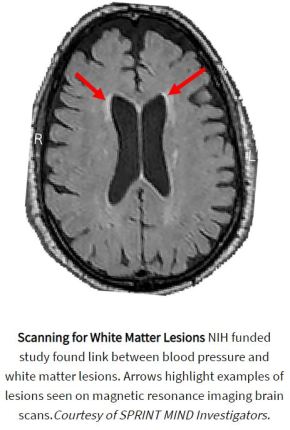 “These initial results support a growing body of evidence suggesting that controlling blood pressure may not only reduce the risk of stroke and heart disease but also of age-related cognitive loss,” said Walter J. Koroshetz, M.D., director of the NIH’s National Institute of Neurological Disorders and Stroke (NINDS). “I strongly urge people to know your blood pressure and discuss with your doctors how to optimize control. It may be a key to your future brain health.”
 Low and high levels of hemoglobin are associated with an increased risk of dementia, including AD, which may relate to differences in white matter integrity and cerebral perfusion.
 “A healthy diet and lifestyle are generally recognized as good for health, but this study is the first large randomized controlled trial to look at whether lifestyle changes actually influence Alzheimer’s disease-related brain changes,” said Susan Landau, a research neuroscientist at Berkeley’s Helen Wills Neuroscience Institute, and principal investigator of the add-on study.
 Boomers Daily