

From a MiddleTownPress.com online article:
 The quality scorecard rates health care organizations through a five-star system on more than 30 health measures outlined by an advisory council composed of consumer advocates, providers, community organizations, state agencies, and payers. The range of measures focus on the quality of care provided by primary care providers and span more than 10 areas, including behavioral health, children’s health, women’s health, chronic conditions, and preventative health.
Health care organizations are also evaluated on patient experience in four categories: office staff, provider communication, timely care, and an overall patient experience rating.
Users can access interactive tables and graphs to compare provider networks, like Hartford HealthCare and Western Connecticut Health Network, to each other and the state average for any given health measure, such as asthma or diabetes. In addition, users can compare the overall performance rating of provider networks against all networks across all quality measures.
To read more click on following link: https://www.middletownpress.com/middletown/article/New-CT-health-care-rating-system-helps-patients-14290596.php

 What does it mean for someone to flourish? Flourishing is more than just being happy—although that’s a part of it. But the idea of flourishing expands beyond happiness to look at a person’s overall well-being, taking into account things like life satisfaction or someone’s sense of purpose. That’s why studying flourishing is an interdisciplinary science drawing on public health, philosophy, psychology, and more.
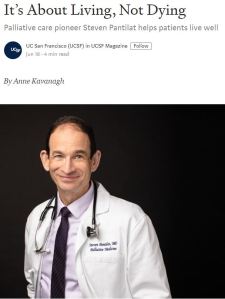 “Doctors and patients are increasingly recognizing the benefits of palliative care. People want care that helps them live as well as possible for as long as possible. Once people learn what palliative care is, they want it. So we’re training experts to meet this growing demand. We have one of the largest fellowship programs in the state, and we also train nursing students, medical students, and residents. We want all clinicians to know the basics of palliative care: how to manage pain, shortness of breath, and nausea and how to talk to patients about the things that matter most to them.”
 From time immemorial, an invariable feature of doctor–patient interaction has been that it takes place in person. But the status quo is changing. A large portion of patient care might eventually be delivered via telemedicine by virtualists, physicians who treat patients they may never meet.
 Fragility fractures occur in structurally weak bones due to aging and bone loss – osteoporosis. Dr. Anthony Ding explains what “fragility fractures” are, where they occur, what they mean to you, and how they are treated. Series: “Mini Medical School for the Public”.
 “Will price transparency lower health care costs? Economic theory and hospital opposition suggest it would, but the answer is not as straightforward as you might expect and could differ from market to market. Health care is a


 Boomers Daily