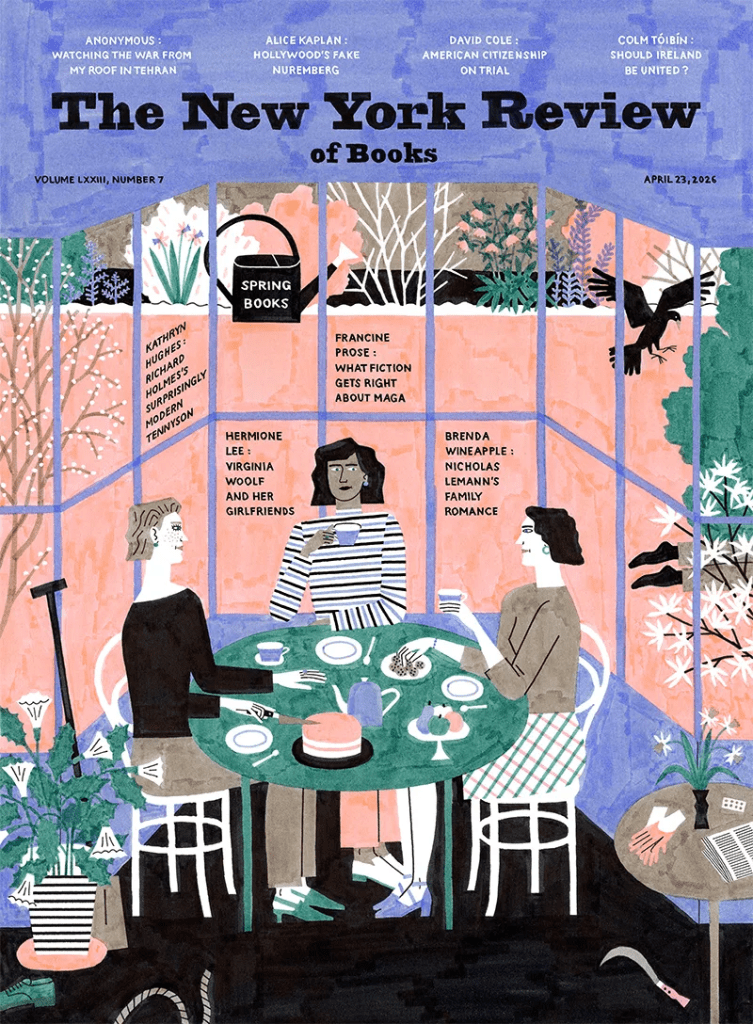
Tag Archives: Book Review

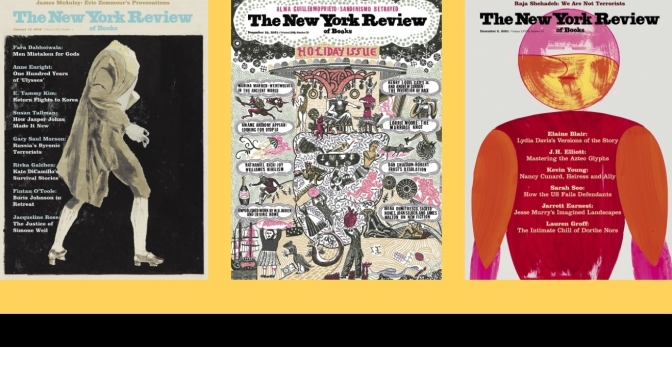
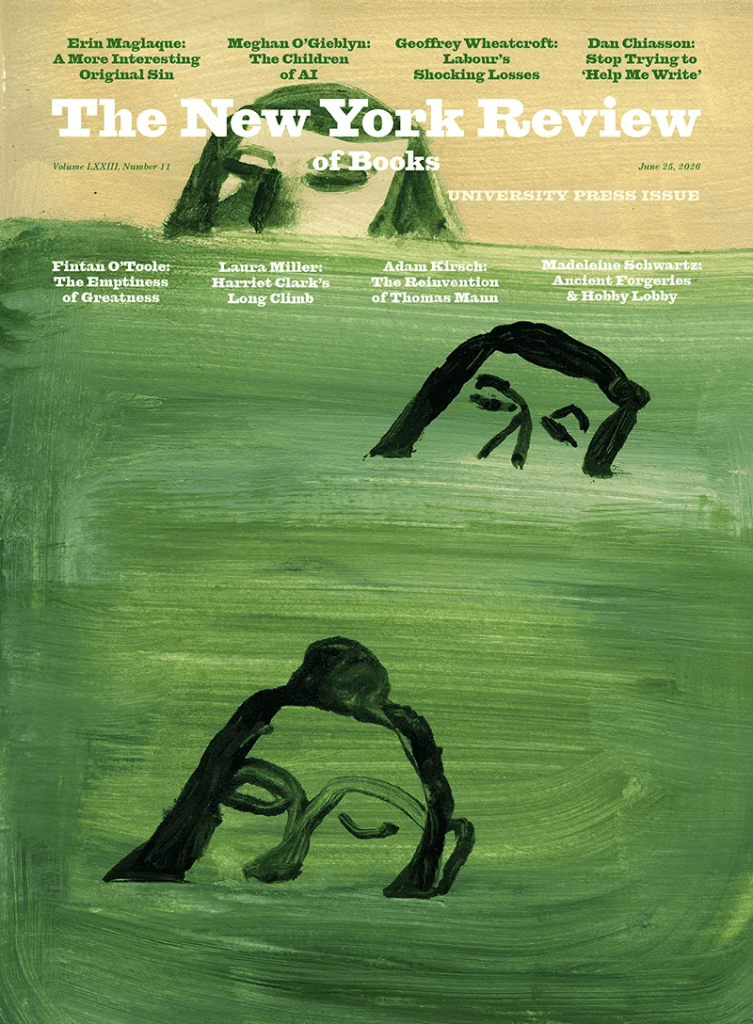
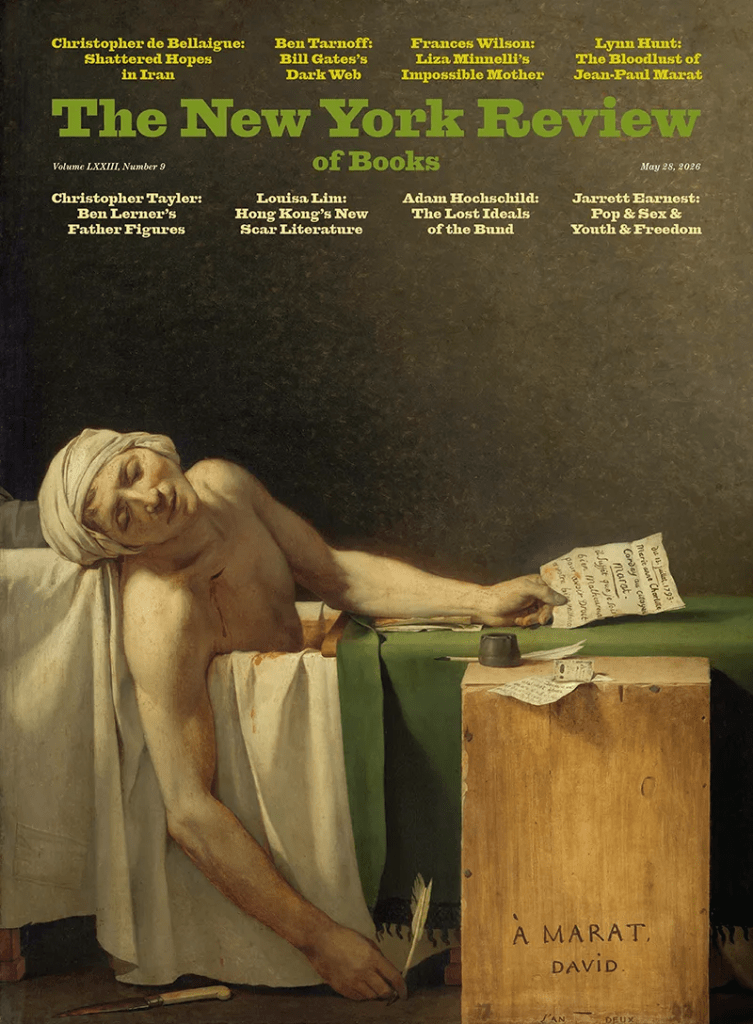
THE NEW YORK REVIEW OF BOOKS – FEBRUARY 26, 2026

THE NEW YORK REVIEW OF BOOKS: The latest issue features Fintan O’Toole on the murders in Minneapolis, Trevor Jackson on the problem with central banks, Ingrid D. Rowland on Fra Angelico, Namwali Serpell on Toni Morrison’s sense of humor, Julian Gewirtz on the new microchip race, Vivian Gornick on Arundhati Roy, Joy Neumeyer on Poland’s far right, Ian Tattersall on all creatures great and small, Maurice Samuels on escaping the Nazis in Vichy France, Ben Rhodes on Robert McNamara’s sins, poems by Mary Jo Salter and James Arthur, and much more.

The Crime of Witness

Fintan O’Toole

Renee Good and Alex Pretti were murdered for daring to interfere with the Trump administration’s efforts to normalize abductions and state violence.


The Struggle for the Fed

Trevor Jackson

The Fed is under attack. Can it be both protected and held accountable?

Our Money: Monetary Policy As If Democracy Matters by Leah Downey

Private Finance, Public Power: A History of Bank Supervision in America by Peter Conti-Brown and Sean H. Vanatta

Our Dollar, Your Problem: An Insider’s View of Seven Turbulent Decades of Global Finance, and the Road Ahead by Kenneth Rogoff

When the Chips Are Down

President Trump’s reversal of a ban on sales of advanced semiconductors to China undercut the strategic logic behind years of American policy that was meant to keep the US ahead in the race to develop AI systems.

The Gilded Cage: Technology, Development, and State Capitalism in China by Ya-Wen Lei

The Thinking Machine: Jensen Huang, Nvidia, and the World’s Most Coveted Microchip by Stephen Witt

The Nvidia Way: Jensen Huang and the Making of a Tech Giant by Tae Kim

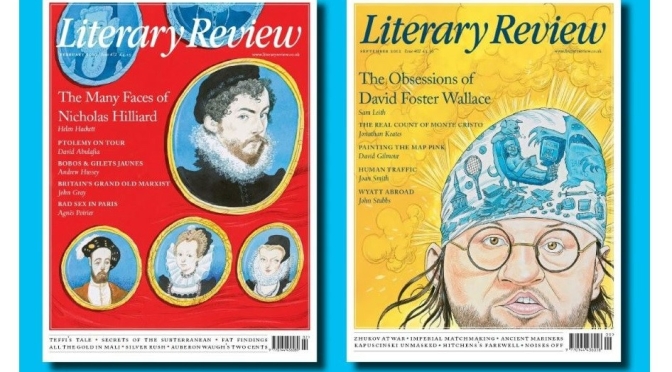
LITERARY REVIEW —- FEBRUARY 2026

LITERARY REVIEW : The latest issue features Norma Clarke on Charlie Chaplin’s London; Richard Bourke on revolution; Lucasta Miller on George Sand; Peter Davidson on Constable; Philippe Marlière on far-right France; Munro Price on the Marquis de Morès; Piers Brendon on Trotsky’s demise; Mark Glancy on Hitchcock’s scores

High-Builded Clouds – Constable’s Year: An Artist in Changing Seasons By Susan Owens

Where Fry Met Laurie – The Cambridge Footlights: A Very British Comedy Institution By Robert Sellers

Partners in Suspense – Hitchcock and Herrmann: The Friendship and Film Scores That Changed Cinema By Steven C Smith

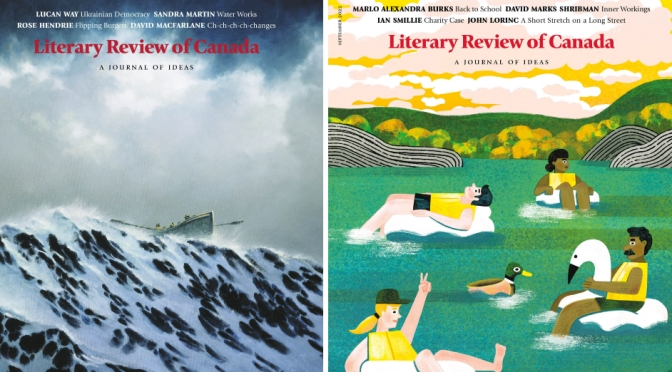
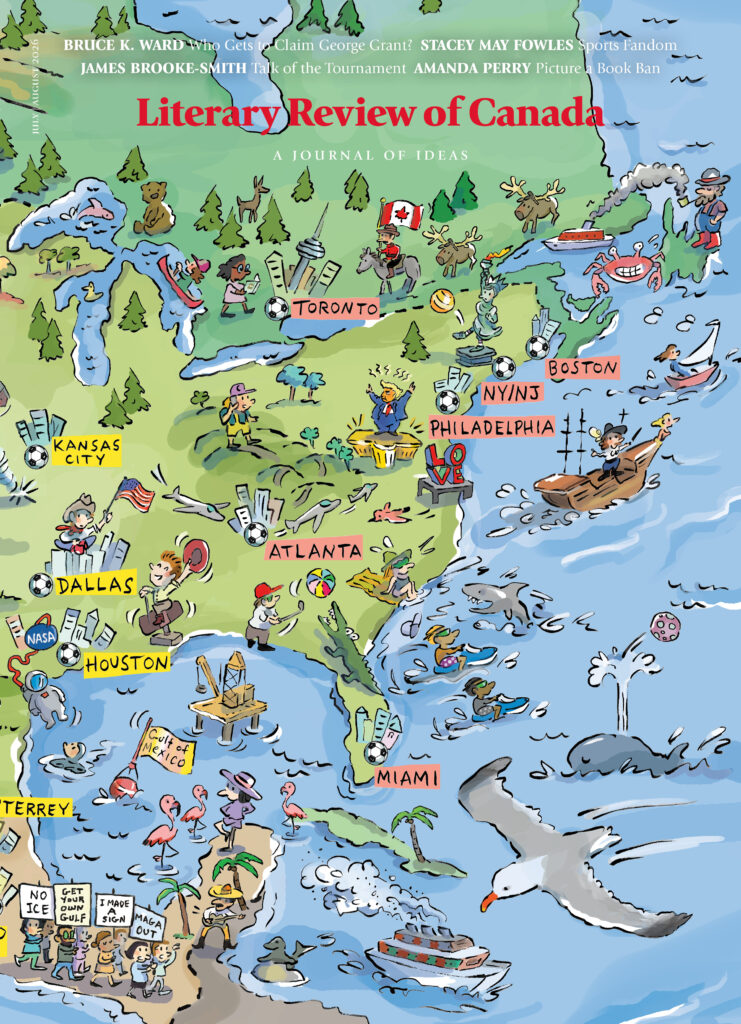
Literary Review Of Canada – March 2026 Preview

March 2026 Archives | Literary Review of Canada

Literary Review of Canada The latest issue features:

Ulysses Unbound

Navigating this Age of Appetite by Krzysztof Pelc

Here’s a question I often bat around with graduate students in my International Political Economy seminar: In book 12 of the Odyssey, how do the shipmates know which Ulysses to trust?

You know the story. Ulysses and his crew have been on Circe’s island for a year. They’re finally about to depart when the goddess takes Ulysses aside and warns him of the dangers that await them. The first of these is the “piercing songs” of the Sirens. “So listen,” she says, “I will give you good instructions; another god will make sure you remember.”

Circe tells Ulysses to put wax in his sailors’ ears but that he can listen to the Sirens if he wants to — as long as his shipmates bind him “hand and foot” to the mast: “So bound, you can enjoy the Sirens’ song. But if you beg your men to set you free, they have to tie you down with firmer knots.”

As their ship approaches the Sirens’ sharp rocks, the wind dies down, they pull the sails, and they begin to row. As predicted, Ulysses yells out to his men to set him free. He is still their captain. But instead of obeying his orders, Eurylochus and Perimedes stand up and “tie him down with firmer knots.” How, I ask my students, do they know to trust the first Ulysses over the second? How is it that as readers, we never question their choice?

Cemented Legacy

Form follows Ford by Kelvin Browne 

Albert Kahn has been called “the father of industrial architecture” and “the architect of Detroit.” His firm was certainly prolific: it was responsible for the Ford Motor Company of Canada factory in Toronto, near a laneway that bears his name, and the General Motors assembly plant in Regina, along with nearly 900 buildings in Motor City alone. Kahn’s oeuvre encompassed offices, grand homes for his industrialist clients, and libraries and fraternity houses at the University of Michigan, in Ann Arbor, not to mention a post office, a synagogue, and multiple hospitals and skyscrapers. Many of Kahn’s buildings reflect a pastiche of styles that might be considered a precursor of a postmodern eclectic. Yet this prolific architect is relatively unknown today, especially outside of Michigan.

Albert Kahn Inc.: Architecture, Labor, and Industry, 1905–1961 by Claire Zimmerman

The MIT Press / 488 pages, hardcover

Floe State? – On trouble in Greenland

By Michael Strizic

The mood on the Sea Adventurer’s bridge was grim. “She’s only making eight knots,” said our expedition leader. “We need to hit at least fourteen to keep to our itinerary.” We were four days into a two-week sailing and anchored off Ilulissat, near a UNESCO World Heritage site nestled into the crenellated western coast of Greenland.

Earlier that day, I had found myself at the helm of a Zodiac, manoeuvring the rubberized craft through thick fog, near-freezing water, and growlers. The ten high-paying passengers under my care likely had no idea that this was my first trip with the tour operator or my first time north of the Arctic Circle.

THE NEW YORK REVIEW OF BOOKS – FEBRUARY 12, 2026

Table of Contents - February 12, 2026 | The New York Review of Books

THE NEW YORK REVIEW OF BOOKS: The latest issue features Alma Guillermoprieto on the US’s mad invasion of Venezuela; Fintan O’Toole on the nightmare of Trumpian imperialism; Hermione Lee on Gertrude Stein; Ian Frazier on the sea of chicken; Jérôme Tubiana on the crisis in Darfur; Jenny Uglow on precious stones; Beatrice Radden Keefe on Gothic fever; Aryeh Neier and Gara LaMarche on the dire state of philanthropy in Trump’s America; Regina Marler on Jane DeLynn; Laurence H. Tribe on Jill Lepore; poems by Fernando Pessoa, Ben Lerner, and Kathleen Ossip; and much more.

A More Pliant Chavista

President Trump’s decision to support Delcy Rodríguez as Venezuela’s new leader makes clear that oil, not democracy, is his main concern.

Whose Hemisphere?

The US capture of Venezuelan president Nicolás Maduro reinforces the Trump administration’s capacity to invent any pretext to justify the use of armed force.

Epic Ambitions

A new life of Gertrude Stein treats her as a philosopher of language to trust, not explain—and gathers force from archival discoveries and intriguing plots of her reception and reputation.

Gertrude Stein: An Afterlife by Francesca Wade

Is the Constitution ‘Dead, Dead, Dead’?

The difficulty of amending the Constitution does not mean that it is a flawed and outdated relic of a distant past.

We the People: A History of the US Constitution by Jill Lepore

THE NEW YORK REVIEW OF BOOKS – JANUARY 15, 2026

THE NEW YORK REVIEW OF BOOKS: The latest issue features Susan Tallman – Fairness for the Dispossessed; Kevin Power – David Szalay’s Wretched Men; Jeremy Donk – How Erik Satie Freed the Notes…

‘Minimum Victory’

Weary of war and staring down the likelihood of an unjust peace, Ukrainian intellectuals are plotting out a road map for the future. 

East Side Story

Josh Safdie’s new film, starring Timothée Chalamet, is both a character study of monomania and a moving fable of how the American century of table tennis was lost.

L’Affaire Carlson

Concern over antisemitism on the right has split the conservative world in two—and GOP gatekeepers have lost the ability to contain it.

‘They Killed Our People’

More than a century after white mobs in Elaine, Arkansas, murdered hundreds of black sharecroppers in 1919, the massacre’s memory remains contested. 

‘The Ancient and Long-Forgotten Language of Cinematography’

If the movies are dead, why does Bi Gan’s Resurrection feel so alive?

Cover: Claremont Review Of Books – Winter 2026

Claremont Review of Books: The latest issue features ‘Special Anniversary Double Issue’….

Palace Intrigues

by Barry Strauss

The Lives of the Caesars

Imagine sitting near the apex of power in an empire and then being shown the door. You might want to write a tell-all book about it. If so, however, you would be advised to proceed with caution. Now, imagine what would barely be conceivable today: that you undertook to write your exposé while you were still in office. You would need all the finesse of a tightrope walker. 

The Lives of the Caesars

One Score and Five

by Charles R. Kesler

This essay is adapted from remarks delivered at the Claremont Review of Books 25th anniversary gala, held at the Metropolitan Club in New York City on November 6, 2025.

Radical Republican

by Randy E. Barnett

Charles Sumner: Conscience of a Nation

Charles Sumner: Conscience of a Nation

In the early hours of March 11, 1874, word spread around Washington that Charles Sumner was on the brink of death. The 63-year-old senator from Massachusetts had suffered a massive heart attack the previous evening. By 9 a.m., a crowd of several hundred had gathered in front of his home on Lafayette Square. “Colored men and women mingled with white in knots about his home,” wrote The New-York Tribune. Government workers, merchants, shopmen, waiters, and even “old colored women with baskets and bundles on their arms” stood together. Many were crying and begging to be let inside. They were stopped by one of Sumner’s friends and two policemen standing guard at the front door.

LITERARY REVIEW – DECEMBER 2025

LITERARY REVIEW : The latest issue features  Peter Marshall on Holbein * Joanna Kavenna on Camus * Sophie Oliver on Margaret Atwood * Dorian Lynskey on George Orwell * Daisy Dunn on Clodia of Rome * David Andress on Jean-Paul Marat * John Foot on the Spanish Civil War * Jerry White on high-rise buildings * Edward Shawcross on Mexico * Daniel A Bell on the Chinese examination system * Anna Reid on Russian women * Charles Darwent on Barnett Newman * Robert Crawford on T S Eliot * Ian Sansom on William Golding * Mark Lawson on John Updike * Charles Shaar Murray on musicians * Patrick Porter on NATO * Thomas Morris on Renaissance diagrams * Diane Purkiss on palmistry *  Nigel Andrew on penguins * John Mullan on pedants * Molly Pepper Steemson on Anthony Bourdain * Mark Ford on Helen Vendler * Emma Smith on book

Holbein: Renaissance Master By Elizabeth Goldring

It’s an irony to savour: the man who invented the Tudors was a German. If Henry VIII, his wives and courtiers exercise a stronger hold on the public imagination than their Plantagenet precursors or Stuart successors, it is because we can all picture them so clearly. That, in turn, is due to an extraordinary sequence of portraits and drawings produced between the late 1520s and early 1540s by Hans Holbein of Augsburg (c 1497–1543), many of which have become instantly recognisable. 

Doublethink & Doubt

Orwell: 2+2=5 By Raoul Peck (dir)

George Orwell: Life and Legacy By Robert Colls

Nobody under the age of seventy-five has heard George Orwell’s voice. The only extant video footage is in a silent movie of the Eton Wall Game. None of his many wartime recordings for the BBC Eastern Service has survived. By all accounts his voice, damaged by a bullet to the throat during the Spanish Civil War, was thin, flat and weak. In fact, the controller of the BBC Overseas Service complained that putting on ‘so wholly unsuitable a voice’ made the BBC appear ‘ignorant of the essential needs of the microphone and of the audience’. 

Reviews: Best Books On Foreign Affairs Of 2025

Foreign Affairs Magazine: The very best of the hundreds of books on international politics, economics, and history that were featured in the magazine this year, selected by Foreign Affairs’ editors and book reviewers.

The Party’s Interests Come First: The Life of Xi Zhongxun, Father of Xi Jinping

by Joseph Torigian

In this prodigiously researched epic, Torigian details the life of Xi Zhongxun—the father of China’s current leader, Xi Jinping—to explain the history of the Chinese Communist Party. Along the way, readers gain a sense of how the younger Xi became the man he is today.

Read the review 

Zbig: The Life of Zbigniew Brzezinski, America’s Great Power Prophet

by Edward Luce

Luce, a gifted storyteller, chronicles the personal life and intellectual journey of former National Security Adviser Zbigniew Brzezinski, who played a significant but underappreciated role in opening the ​United States to China, bringing the Cold War to an end, and shaping the world that came after. In writing this gem of a book, Luce has rendered a genuine service to history.

Read the review 

Our Dear Friends in Moscow: The Inside Story of a Broken Generation

by Irina Borogan and Andrei Soldatov

Soldatov and Borogon, two Russian journalists, tell the story of their one-time group of friends and colleagues—young Russians who, over the course of the Putin years, steadily drift toward nationalist and illiberal ideas and end up as supporters of Russia’s war in Ukraine.

Read the review 

The West: The History of an Idea

by George Varouxakis

In this masterful study, Varouxakis tracks the meanings of “the West” from the late eighteenth century to the present—and argues that the modern notion of the term emerged in the 1830s as a way to distinguish western Europe from Russia. Today, for beleaguered countries such as Ukraine, “the West” is still a powerful idea.

Read the review 

THE NEW YORK REVIEW OF BOOKS – NOVEMBER 20, 2025

Table of Contents - November 20, 2025 | The New York Review of Books

THE NEW YORK REVIEW OF BOOKS: The latest issue features Fintan O’Toole on Kamala’s pointless campaign memoir, Jonathan Lethem on One Battle After Another, Anne Diebel on the trials of infertility, Colin B. Bailey on Watteau’s sad clowns, Linda Kinstler on the invention of sovereign states, Langdon Hammer on James Schuyler’s shimmering poetry, Samuel Stein on NIMBYs and YIMBYs, Miranda Seymour on Frankenstein’s mother, Adam Shatz on Alice Coltrane, a poem by Rae Armantrout, and much more.

The Lingering Delusion

107 Days by Kamala Harris

Kamala Harris’s memoir 107 Days succeeds at least in distilling the evasions and weaknesses of the modern Democratic Party.

Falling Off the Map

The Life and Death of States:  Central Europe and the Transformation of Modern Sovereignty by Natasha Wheatley

How States Die: Membership and Survival in the International System by Douglas Lemke

World War I set the stage a century ago for new ways of thinking about where states come from and what happens when they disappear.

THE ACADEMY AT CAREGGI

Marsilio Ficino and the Lost Art of Intellectual Friendship

By Michael Cummins, Editor, September 15, 2025

Earlier that day, a letter had arrived at each doorstep—written in Ficino’s careful Latin, sealed with the Medici crest. Come tonight, it read, for the stars are in accord and the soul requires company. It was invitation and summons at once. Poliziano scoffed at the astrology but tucked the note into his cloak. Pico, fresh from disputation, still had ink smudged on his fingertips when he broke the seal. Landino read it slowly, savoring the phrasing, then closed his worn Dante with a sigh. Gozzoli sharpened a charcoal stick and packed it beside a folded manuscript. Lorenzo glanced at the letter, smiled at its formality, and placed it beneath a pile of state papers, as if to remind himself that philosophy and politics were two halves of his life.

As evening drew in, the roads up to Careggi darkened. Lanterns swung from servants’ hands, lighting the cypresses along the ascent. Cloaks were drawn close, breath visible in the winter air. One by one they arrived—Poliziano striding quickly, as though words themselves propelled him; Pico lingering at the threshold, whispering a Hebrew phrase before stepping inside; Landino slow but steady, leaning on a servant’s arm; Gozzoli already sketching the turn of a staircase as he climbed; Lorenzo last, but never late, carrying the ease of a man for whom arrival was itself a ceremony.

In January 1486, at the Villa Medici in Careggi—north of Florence, in the hills of Rifredi—the villa seemed less a house than a harmony. Designed by Michelozzo di Bartolomeo, it bore the quiet precision of geometry translated into stone. Arcaded loggias opened onto citrus groves, terraces descended into the valley like measures of music, and every cornice seemed tuned to a mathematics of grace. Outside, the air was sharp with winter, the olive trees skeletal against a pale sky. But within the great hall, a fire crackled, filling the chamber with warmth. The walls, frescoed decades earlier, flickered as if alive in the candlelight. Tonight the villa was not a residence but a stage, and its occupants not merely guests but players in a drama older than Florence itself.

They gathered as friends, but each carried into the room the weight of reputation.

Poliziano, barely past thirty, was already Florence’s most brilliant poet. His Stanze per la Giostra, an unfinished hymn to Giuliano de’ Medici’s tournament, glittered with myth and memory. Quick of wit and sharper of tongue, he was both loyal to Lorenzo and ready to strike at those who questioned his genius.

Cristoforo Landino, older, stooped with age, was Florence’s commentator-in-chief. His lectures on Dante had turned the Commedia into a civic scripture, binding Florence’s destiny to its poet. If Poliziano was a flame, Landino was the lamp in which it burned steadily.

Giovanni Pico della Mirandola entered like lightning. Only twenty-three, he was preparing his audacious Oration on the Dignity of Man, a text that would dare to place human freedom on the same plane as angelic being. He had announced his intention to defend nine hundred theses, culled from Greek philosophy, Kabbalah, scholasticism, and Islamic thinkers, in a disputation that threatened to scandalize Rome. His learning was encyclopedic, his confidence dangerous, his youth incandescent.

Benozzo Gozzoli was quieter. His great achievement, the fresco cycle of the Procession of the Magi in the Medici chapel, was both sacred and political: angels mingled with courtiers, and the Holy Family arrived in Florence disguised as the Medici themselves. He preferred charcoal to disputation, sketching the turn of a head or the crease of a robe rather than wielding syllogisms. For him, philosophy was not abstract argument but the line that revealed the soul.

And then Lorenzo de’ Medici, il Magnifico, the center of the Florentine orbit. He had steered the city through the Pazzi conspiracy, outmaneuvered papal wrath, and cultivated a culture in which poets, painters, and philosophers could thrive. Half-banker, half-prince, he wrote verses of his own, presided over festivals, and wielded patronage as both weapon and blessing. His presence at Careggi made the evening not only intimate but official.

Marsilio Ficino, their host, sat at the head of the long table. Cloaked in scholar’s black, fingers resting on a lyre, he was the gravitational center of this circle. He had translated Plato, giving Florence back its philosophical ancestry, and wrote the Platonic Theology, arguing that the soul was immortal and divine. In his quieter moments, he prescribed music as medicine, believing that certain modes could cure melancholy as surely as herbs. He practiced a cautious astrology, binding celestial rhythms to bodily health.

Now, as the fire crackled, Ficino tuned his lyre and looked at his companions with quiet joy. These men—so brilliant, so flawed—were his constellation. He thought of Plato’s cave, of Plotinus’s ascent, of Florence’s restless brilliance, and wondered whether beauty could save it. Tonight, he wanted not to translate but to live a dialogue. He plucked a chord and listened not to the sound, but to the silence it left behind.

What survives when the body falls silent?

Landino spoke first, quoting Dante: L’anima nostra, che di sua natura è immortale… Death was no end but transition. His tone was measured, his gaze steady, as though Florence itself were listening.

Poliziano leaned forward, impatient. “But Plato required myth to prove it. Immortality may lie not in substance but in song. What survives is the echo, not the essence. My verses, your commentaries—those are what endure.”

Pico’s eyes burned. He leaned back slightly, his gaze still locked on Poliziano. “No, Angelo. The soul is indivisible, free, eternal. Your echoes are ash if not tethered to truth. Without immortality, justice collapses. Would you have us live as beasts, hoping only for memory?”

Gozzoli raised his parchment, showing the curve of a face. “I have painted expressions that gaze back centuries later. If souls endure, perhaps they endure through pigment and gesture. A fresco is a kind of eternity.”

Lorenzo swirled his goblet, amused. He let the silence linger before speaking. “You cling to your own crafts—reason, verse, paint. But power is remembered longer. Rome honors her emperors not for their souls but for their laws. If Florence endures, it will be for institutions, not verses.”

The fire snapped. Smoke traced its slow scroll into the rafters.

Is love a hunger, or a ladder to the divine?

Poliziano was quick, his words bright as sparks. “Love is hunger—sweet, bitter, wounding. It gnaws at the poet until words burst forth. To dress it as a ladder is to kill its fire. No poet climbs—he burns.”

Pico bristled, voice sharp. He gestured with his hand as though sketching the ladder in the air. “Plato teaches otherwise. In the Symposium, love begins in desire but ascends rung by rung until it gazes upon the divine. Hunger is only the first step. To remain in it is to remain chained.”

Landino, steady, mediated. “Love is both appetite and ascent. Dante saw it: love moves the sun and the other stars. The soul is pulled in both directions, and in that tension it lives.”

Gozzoli brushed a fleck of charcoal from his sleeve. “In art, love is light. Without it, color dies. When I painted angels, I painted not desire nor ascent, but radiance. That radiance is love.”

Lorenzo raised his goblet, amused. “If love is ascent, politics must climb as well. Yet a republic cannot live on love alone. Too little, it collapses; too much, it drowns. Love must be measured like wine—enough to warm, not enough to flood.”

The candles guttered.

Can beauty make a city just?

Landino’s answer was firm. “Yes. Beauty educates. A city shaped by harmony breeds citizens shaped by harmony. Florence’s dome, its piazzas, its frescoes—they teach order.”

Poliziano shook his head. “But beauty deceives. A poem can gild cruelty. A tyrant can mask injustice with marble. False beauty is the danger.”

Pico leaned forward, eyes alight. “Beauty is the soul recognizing itself in form. But to conscript it for politics is degradation. Beauty belongs to God.”

Gozzoli’s voice dropped. He smudged the charcoal with his thumb, as if testing his own words. “Every fresco I painted was persuasion. I gave Florence angels and saints, but I knew I was giving Lorenzo legitimacy. Was it justice or illusion? I cannot say. I only know that without beauty, citizens despair.”

Lorenzo’s smile was thin. He tapped the rim of his goblet. “Power without beauty is brutality. Beauty without power is decoration. Florence must have both, or she will falter.”

Do the stars heal, or do they bind?

Landino frowned. “Astrology is poetry mistaken for science. The stars inspire, but they do not compel.”

Poliziano smiled. “Yet I have written verses under moonlight as though cadence were whispered from above. If they bind, they bind in music.”

Pico’s voice cut sharp. “The stars compel nothing. To surrender to them is heresy. Grace alone governs man. To believe otherwise is to betray freedom.”

Gozzoli lifted his sketch of a face crowned with constellations. “The stars do not bind. They illuminate. They remind shepherds and kings alike that we are not alone in the dark.”

Lorenzo tilted his head. “The stars are politics written across the sky. Farmers plant, sailors sail, princes strike—all by their guidance. If they heal, it is belief. If they bind, it is because rulers use belief.”

Finally Ficino spoke, his tone calm but decisive. “The stars incline, but do not compel. Herbs, stones, melodies—all are instruments. They tune the body, but the soul remains free. Wisdom lies between denial and surrender—in harmony.”

The hall was quiet. Outside, olive groves bent in the winter wind. Inside, five men leaned closer, their words crossing like beams of light. It was not debate but something more fragile, more luminous: friendship turned into philosophy.

Centuries later, across the Atlantic, another landscape received that resonance. In the Hudson Valley of New York, winter light lay across the river like a mirror. At Olana, Frederic Church painted sunsets as though they were revelations, the sky itself a scripture of color. The Hudson River School sought not just landscape but transcendence: light as theology, horizon as hymn. A few miles north, at Bard College, a library with floor-to-ceiling windows overlooked the river’s bend, its glass walls holding a different kind of symposium.

Here, a circle gathered again—not princes or poets, but a painter, a philosopher, a civic activist, and a poet of the local hills. The painter spoke of light as memory, insisting every canvas was less depiction than resurrection. The philosopher invoked Spinoza, saying that God was not above but within, diffused through river, stone, and thought. The activist leaned forward, half in jest, half in earnest, and asked whether zoning laws might embody Platonic ideals. The poet, notebook open, wrote fragments, catching echoes of Careggi.

The fire was modern, a wood stove; the wine, from the Finger Lakes; the instruments, not lyres but laptops sleeping on a side table. Yet the air trembled with the same listening that had once filled Ficino’s villa. The Hudson, like the Arno, carried history but also invitation.

The true legacy of Ficino’s Academy is this: thought, when shared in friendship, becomes a kind of music.

THIS ESSAY WAS WRITTEN AND EDITED UTILIZING AI