Tag Archives: Astronomy

Top New Science Podcasts: Tooth Enamel And Decay, Heart Attack Patches, ‘Hot Neptune Deserts’ (Nature)

Nature PodcastsOn this week’s podcast, how the molecular structure of tooth enamel may impact decay, adhesive patches to heal heart attacks, and a mysterious planetary core from a half-formed gas giant.

In this episode:

00:46 Unravelling tooth enamel

Researchers have been looking into the structure and composition of enamel in an effort to better understand tooth decay. Research Article: DeRocher et al.

07:02 Research Highlights

An adhesive patch to help heal heart-attacks, and a new technique to inspect the structure of 2D ‘wonder materials’. Research Highlight: A healing patch holds tight to a beating heartResearch Highlight: A snapshot shows off super-material only two atoms thick

09:21 Unusual planet

In the region close to stars known as the ‘hot Neptune desert’ planets of Neptune’s size are rarely found, but this week scientists have uncovered one and are trying to untangle its mysteries. Research Article: Armstrong et al.

14:52 Briefing Chat

We take a look at some highlights from the Nature Briefing. This time we talk about the pitfalls of using CRISPR in human embryos, and renaming of moon craters inadvertently named after Nazi scientists. Nature News: CRISPR gene editing in human embryos wreaks chromosomal mayhemProspect Magazine: Astronomers unknowingly dedicated moon craters to Nazis. Will the next historical reckoning be at cosmic level?

Top New Science Podcasts: Poker’s Life Lessons, Peer Reviews & Mars’ Greenness

Nature PodcastsOn this week’s podcast, life lessons from poker, keeping things civil during peer review, a sweaty synthetic skin that can exude useful compounds, and Mars’s green atmosphere.

In this episode:

00:44 Deciding to play poker

When writer Maria Konnikova wanted to better understand the human decision making process, she took a rather unusual step: becoming a professional poker player. We delve into her journey and find out how poker could help people make better decisions. Books and Arts: What the world needs now: lessons from a poker player

09:12 Research Highlights

A sweaty synthetic skin that can exude useful compounds, and Mars’s green atmosphere. Research Highlight: An artificial skin oozes ‘sweat’ through tiny poresResearch Highlight: The red planet has a green glow

11:21 Developing dialogues

The peer-review process is an integral part of scientific discourse, however, sometimes interactions between authors and reviews can be less than civil. How do we tread the fine line between critique and rudeness? Editorial: Peer review should be an honest, but collegial, conversation

18:47 Briefing Chat

We take a look at some highlights from the Nature Briefing. This time we talk about research into racism, and a possible hint of dark matter. Nature News: What the data say about police brutality and racial bias — and which reforms might work; Nature News: Mathematicians urge colleagues to boycott police work in wake of killingsQuanta: Dark Matter Experiment Finds Unexplained Signal

Top New Science Podcasts: “Neutron Star Interior Composition Explorer”

Nature PodcastsAn instrument on the International Space Station is providing new insights into some of the Universe’s most baffling objects. Neutron stars have puzzled scientists for decades. It’s known that these ultra-dense objects are born from the remnants of supernovae, yet what’s under their surface, and what processes that go on within them, remain a mystery.

Now, an instrument called the Neutron Star Interior Composition Explorer is providing new information to help answer these questions, ushering in a new era of research into these strange stars.

This is an audio version of our feature: The golden age of neutron-star physics has arrived

New Science Podcast: New Artificial Eyes, Elephant Seals And Disk-Galaxies

nature-podcastsThis week, crafting an artificial eye with the benefits of a human’s, and understanding how disk-galaxies formed by peering back in time.

In this episode:

00:45 Biomimetic eye

Researchers fabricate an artificial eye complete with a human-like retina. Research Article: Gu et al.News and Views: Artificial eye boosted by hemispherical retina

09:27 Research Highlights

Dazzling elephant seals to avoid predation, and helping blind people ‘see’ through brain stimulation. Research Highlight: Mighty seals humbled by prey that flickers and flashesResearch Highlight: Blind people ‘read’ letters traced on their brains with electricity

11:36 Early disk-galaxy

There’s an open question about how disk-galaxies form, but now new observations are pointing to an answer, from the very early Universe. Research Article: Neeleman et al.News and Views: Galaxy disk observed to have formed shortly after the Big Bang

17:47 Pick of the Briefing

We pick our highlights from the Nature Briefing, including a HIV ‘vaccine’, and incredibly hardy bacteria. Science: Long-acting injectable drug prevents HIV infectionsQuanta Magazine: Inside Deep Undersea Rocks, Life Thrives Without the Sun

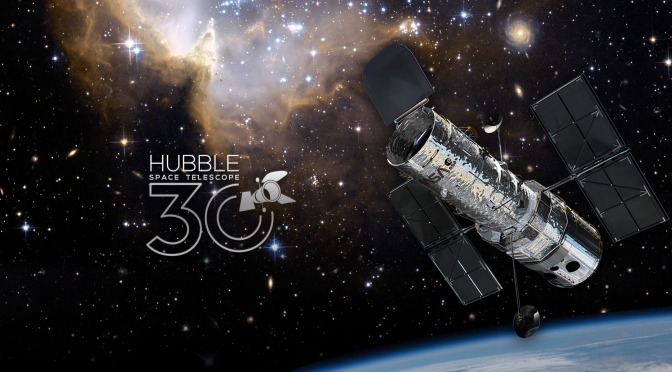
Astronomy: Hubble Space Telescope Celebrates 30th Anniversary April 24

On April 24, 2020, the Hubble Space Telescope celebrates its 30th year in orbit by premiering a never-before-seen view of two beautiful nebulas named NGC 2020 and NGC 2014.

Hubble’s senior project scientist, Dr. Jennifer Wiseman, takes us on a tour of this stunning new image, describes the telescope’s current health, and summarizes some of Hubble’s contributions to astronomy during its 30-year career.

Website

Top Science Podcasts: Orbiting A Black Hole, Parrots And Online Media Consumption (Nature)

Nature PodcastsListen to the latest from the world of science, brought to you by Benjamin Thompson and Nick Howe. This week, observations of objects orbiting a black hole, and rethinking how we measure screen-time.
In this episode:

00:45 Observing the centre of the galaxy

Researchers have uncovered a population of dust-enshrouded objects orbiting the supermassive black hole at the centre of the galaxy. Research Article: Ciurlo et al.

06:34 Research Highlights

A London landmark’s height lends itself to a physics experiment, and generous behaviour in parrots. Research Highlight: An iconic structure in London moonlights as a scientific toolResearch Highlight: Parrots give each other gifts without promise of reward

09:00 The human ‘screenome’ project

To understand the effects of online media consumption, researchers argue that the way it’s measured needs to change. Comment: Time for the Human Screenome Project

17:26 News Chat

A decline in human body temperature, and a new report on research culture. News: Not so hot: US data suggests human bodies are cooling downNews: Stressful, aggressive, damaging: huge survey reveals pressures of scientists’ working lives


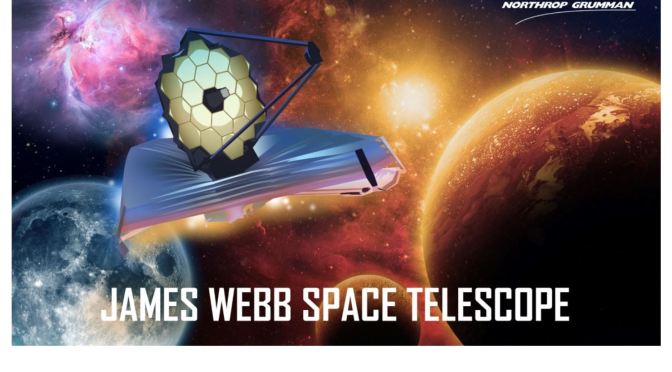
NASA: “James Webb Space Telescope” Mission (Video)

A look at the James Webb Space Telescope, it’s mission and the incredible technological challenge this mission presents.

Music credit: Universal Production
Music tracks: Future Generation Alternative Version by Dury; Moment of Anticipation Instrumental by Connolly; Dark Matter Instrumental by Beits
Credit: NASA’s Goddard Space Flight Center
Michael McClare (KBRwyle): Lead Producer
Michael McClare (KBRwyle): Lead Writer
Adriana Manrique Gutierrez (USRA): Animator
Jonathan North (USRA): Animator
Walt Feimer (KBRwyle): Animator
Michael Lentz (USRA): Animator
Bailee DesRocher (USRA): Animator
Michael McClare (KBRwyle): Lead Editor
Michael McClare (KBRwyle): Lead Videographer

This video is public domain and along with other supporting visualizations can be downloaded from the Scientific Visualization Studio

Website

Science & Technology: Reviewing Caltech’s “Decade Of Discovery”

From a Caltech online article:

Caltech LogoDuring this decade, as in previous decades, Caltech scientists and engineers reinvented the landscape of scientific endeavor: from the first detection of gravitational waves and the discovery of evidence for a ninth planet in the solar system; to bold missions to explore and understand the solar system; to the development of new methods to see inside the body and the brain and understand the universe around us; to the invention of devices to improve human health, some taking inspiration from nature; to the initiation of a transformative new effort to support research into the most pressing challenges in environmental sustainability.
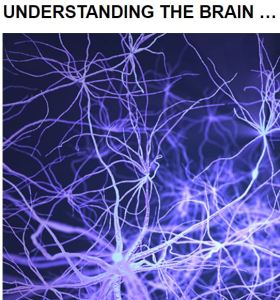
Caltech's Decade of Discovery Understanding the Brain December 19 2019Though the brain orchestrates how we experience the world, many questions remain about its complex workings. During the past 10 years, Caltech scientists have discovered how the brain recognizes faces and drives and quenches thirst, and learned about the pathways that govern sleep. A major focus has been on understanding the experience of non-neurotypical individuals, such as those who have autism or those who are missing a brain hemisphere. New realms of neuroscience research were made possible in 2016, when philanthropists Tianqiao and Chrissy Chen announced a gift to establish the Tianqiao and Chrissy Chen Institute for Neuroscience at Caltech.


Caltech's Decade of Discovery Advancing Medicin December 19 2019As modern technology advances, so do the possibilities for treating medical conditions that were previously considered untreatable. Caltech researchers used an electrode array to help a paralyzed patient stand and move his legs voluntarily and developed a novel method for preventing the spread of diseases, contact lenses for preventing blindness in diabetic patients, an app that monitors heart health, gene therapy for repairing nerves in the brain, and a robotic arm controlled by a paralyzed patient’s intent to move. The decade also saw the establishment of the Merkin Institute for Translational Research, which aims to advance medical technologies, and a continued commitment to the Donna and Benjamin M. Rosen Bioengineering Center.

To read more: https://www.caltech.edu/about/news/decade-of-discovery